Part 1: Stuff. . . and Change

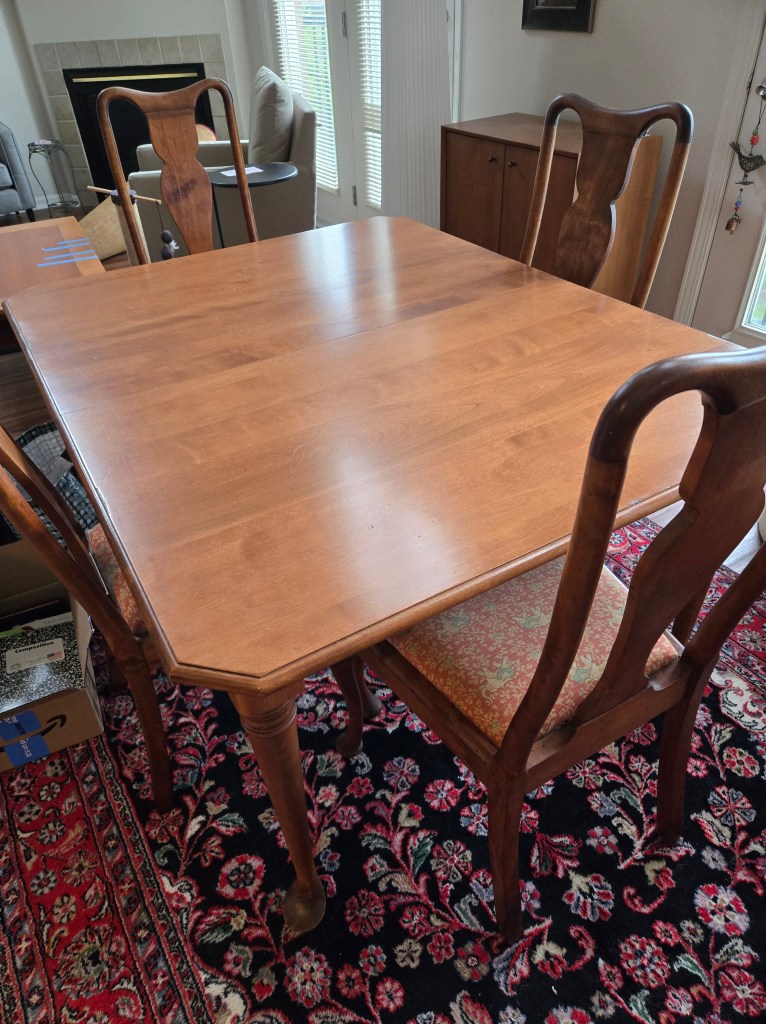
I rested my hand on my cherry dining room table, knowing they would soon load it on the moving truck. I’d contacted Bridging, a local organization that furnishes homes for families in need, to pick up items from our house that wouldn’t fit in my new, downsized, condo. The table was to be last on the truck, so I had time to linger.

My hand was still, but my heart screamed at my mind. “What are you doing? Remember those family dinners, ten people talking at once? Remember the times you used your china? You know, that is going to end up in a thrift shop, too.”

I saw the cards flying in bridge games with our friends, Karen and Dan. My husband, Jim, sitting opposite me, would maneuver the bidding so I’d be the one playing the hand.
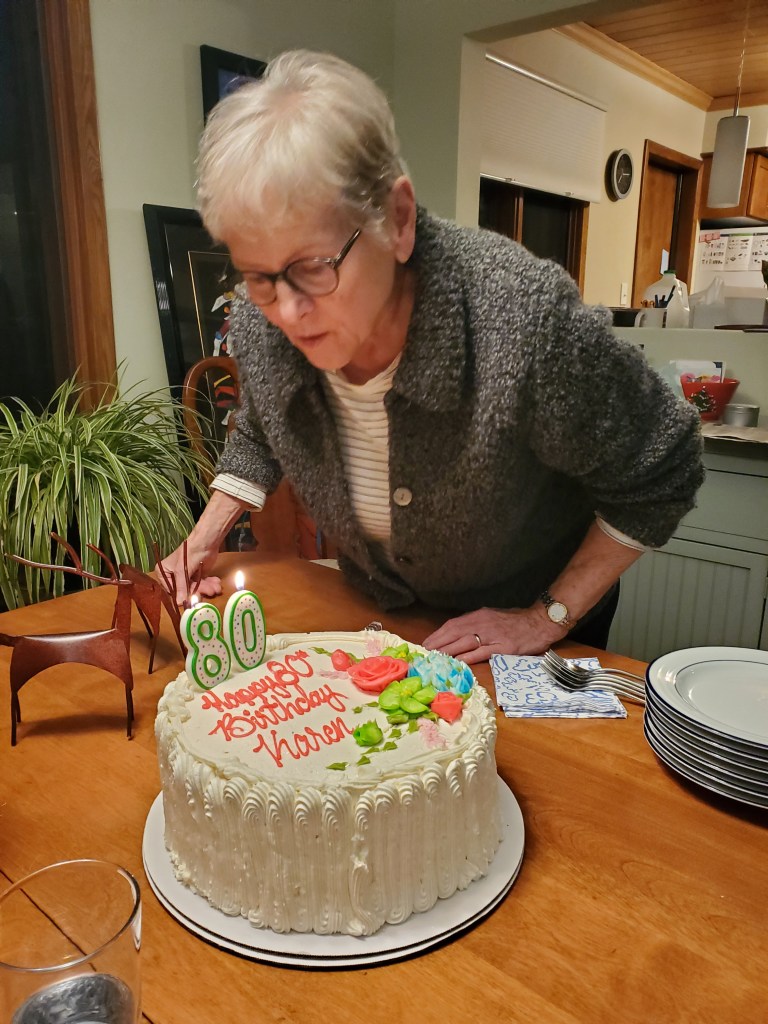
Birthday celebrations—I remembered my cake for my 80th—Jim had died three months prior, so we didn’t get to share the milestone birthday. We’d shared much at that table. During COVID, endless games of Scrabble—I played to win, and he played to engage.
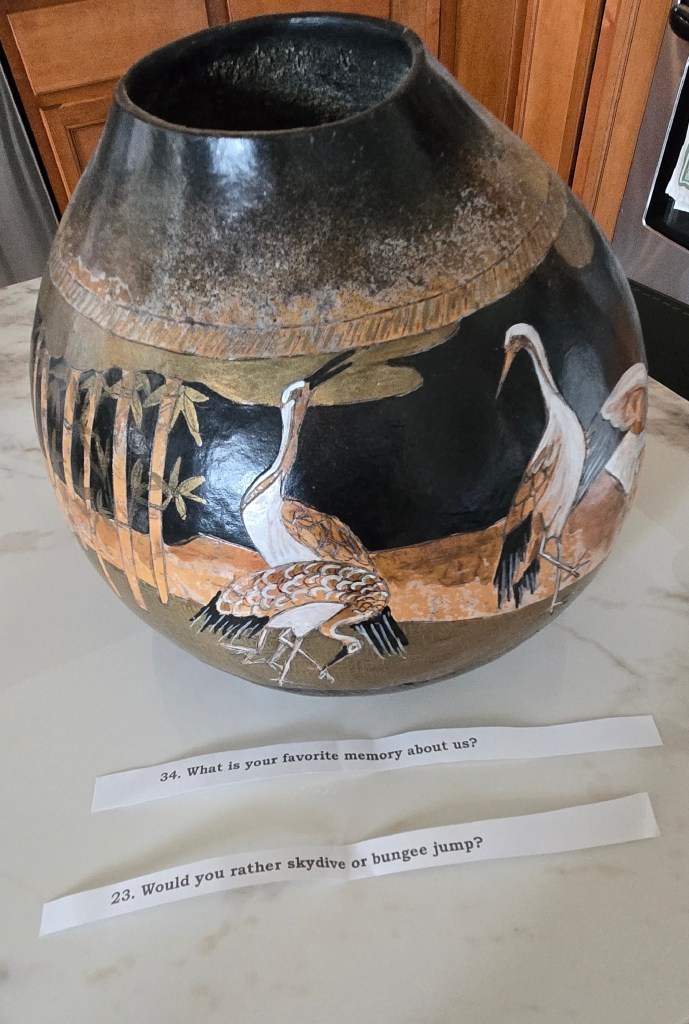
And my vase that I filled with questions about each other that we answered after meals. It was revealing fun.

“Don’t worry. Someone will love that table as much as you have.” The man from Bridging reassured me. I let my hand drop and they loaded the table, aghast when they started to put boxes on it.

“That’ll scratch it!” I shouted. They took the boxes off.

It was no longer my table. I didn’t want to think about what might happen next to it.

I bought the table at Dayton’s Warehouse Sale, back when Dayton’s existed. It wasn’t my style, but the beautiful wood caught my eye, and it was the right size. The legs matched chairs left to me by my second husband, Gary, who died at age 55. He didn’t value stuff, but he loved these chairs, which he’d bought in Pennsylvania, another memory. Every time I pulled a chair out, I’d see Gary at his desk, which was the dining room table.  

My table was hard to part with, but holding on felt like grasping at a life that used to be—the one filled with family, friends, careers, holidays, parties, the sad and the happy, around that central gathering place. My heart hoped that letting the table go would make room for my children to carry on traditions.

“Stop it!” my mind admonished. Stuff is work, and it takes up space. Remember how you had to store those leafs under the bed. They were so heavy, you needed help to slide them out and carry them to the dining room. Wake up! No one’s here to do that anymore. Let it go!”

My heart gave up, watching the door of the van close, the men getting in and driving the truck out of the lot. “Goodbye,” my heart whispered.

*****

What was I really grieving when I gave away the table?

Memories stay with me, whether I own the table or not. What I grieved are the roles the table signified, mother, grandmother, hostess, and the keeper of traditions. Beneath my sadness about the table was facing the problem of who I am as life shifts and changes, particularly in retirement

My husband, Jim, who was more sanguine in his approach to retirement, stayed involved, with people, sports interests, and adult education courses. He didn’t seem worried about roles, but then he never downsized as a widow either. One Easter, when our families were mostly busy, Jim suggested that we invite other people with no immediate plans for a light brunch. I look back and remember how interesting that day was. Roman Verotsko, a well-known artist and neighbor came. He spent much of the time talking art with my granddaughter, who came without parents. Other neighbors mixed with each other. The party created a new role for Jim and me. We didn’t need to be the grandparents who have everyone over. We could bring friends together.

Shortly after, Jim bought a big Bunn coffee maker and started inviting neighborhood men for coffee. He’d found his niche. My friend, Johan, used to hold what he called “musical soirees” about old jazz and Mozart. He’d invite all the people he knew who lived alone and had an interest in music. In my condo association, various people give short talks about finding and roasting coffee, astronomy, and even puppets.   

It’s not easy to find new ways of being in the world, yet the ubiquity of change requires adaptation. Roles, to some extent, are what we project to the world, but what about inside us, our personal authenticity. As I’ve aged, I’ve turned more inward to access that person.

Memories from the past, like the ones my table evokes, can cohere around life themes. Timelines of your life can also reveal these. The classic about doing this is Writing about Your Life, by William Zinsser. I participate in a church group called the Elder (wince) Gathering, and we are reading a book called The Inner Work of Age: Shifting from Role to Soul, a book I’d already read in another church group. Soul work seems to call people my age. But that’s a big topic for another blog.

Where does this leave me about the table?

I treasure my memories ‘round that table. It’s an album of my life. But now when I feel sad about giving it away, I imagine a family in their first real home. It’s tiny, but there’s room for a table—a lovely cherry one. Children are gathered at it doing their homework. Someone nearby is making dinner.

          “Put your stuff away,” she calls.

Books and pencils and paper and laptops are put away. Someone sets the table. Everyone sits down. Dinner time.

I smile. My table is home.

Stay tuned for Part 2
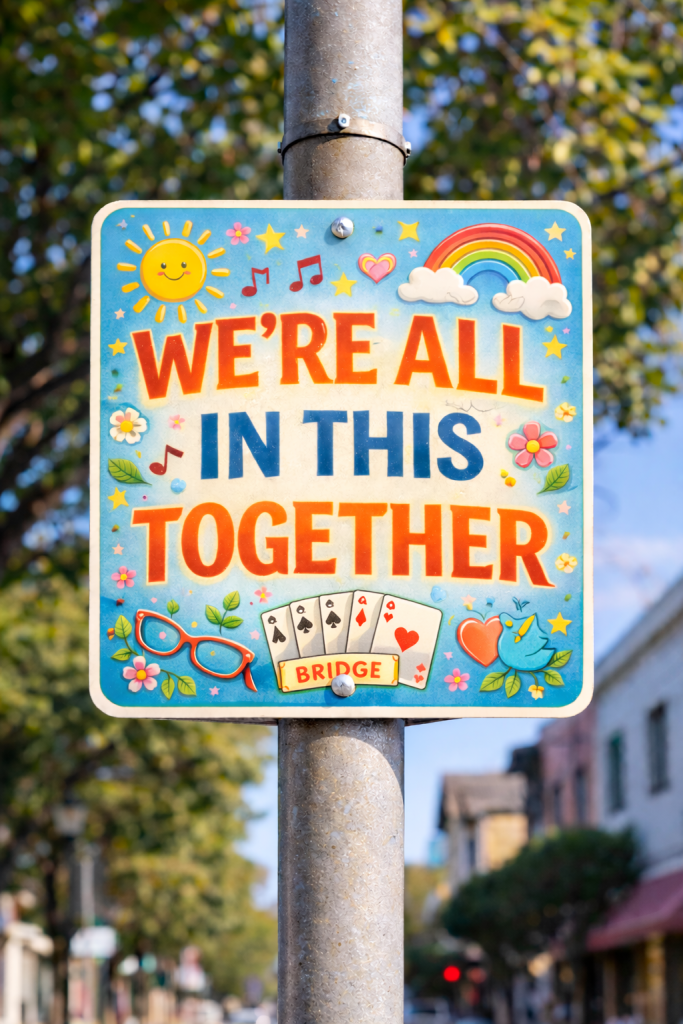
WE’RE ALL IN THIS TOGETHER

We’re All in This Together

Remember your senior year of high school? The prom, the senior banquet, graduation. Remember calling your friends and asking about their dresses? Who they hoped to go with, what to wear to the senior banquet, and then the rented graduation robe and hat that ruined our poufy hair? We shared every moment and activity with our closest friends and anyone who would listen. We were all in it together, the biggest transition of our lives for most of us, leaving home for college, getting that first job, or maybe entering the military. High schools can be cliquey, but they are also times of bonding around a shared experience.

Then there was that 25th reunion, when many of us came together again to share not only our stories about adulthood, but more importantly, our memories of a time when we were all in it together.

The other day a friend, Carla, and I were talking, and of course the conversation devolved to that painful (pun intended) litany about our aging bodies—eye problems that make it unsafe to drive at night, knees, achy shoulders, hand arthritis, heart issues—if you live in a body and are over 80, there’s probably some component that’s either on the fritz or on its way there. Carla mentioned one of her friends who is getting a knee replacement—but the friend didn’t tell anyone. She believes she needs to tough through it, not bother anyone, etc. Carla reminded her—and me—that we’re all in this aging business together. And we are.

I think of my new bridge group. Most of the members have known each other since they taught together at a local elementary school. There’s a kindness and consideration that I love being part of. Two members, sisters, have tremors, and one of them takes a medication that exacerbates the tremor, such that she needs two hands to bring a coffee cup to her lips. When it’s her turn to host, we help serve, clear the table and do whatever we can. One member fell and broke both ankles, so we took the club to her rehab facility and played bridge in a hallway with a pitcher of water, Styrofoam cups for our coffee, and paper plates for treats. Another member needs us to watch carefully so she doesn’t get lost as she plays the cards. We play bridge, no matter what, and some players are quite good. We also have great fun, supporting each other, including me with my creaky knees who needs time to get up from a chair. We’re all in this together.

But it’s more than supporting each other as we age. Being in it together is part of the human condition. I especially see that living in Minneapolis right now. I am honored to be part of a community where we help each other. One woman decided to collect coats because people are usually released from ICE detention with absolutely nothing but the clothes on their backs, and we’ve had a very cold January. So many coats were donated that she had to find other charities that need coats in other areas.

The nearest public transportation to the ICE detention center is a half mile away—a long walk when it’s cold. So volunteers wait to drive released people home, even though sometimes people are released in the middle of the night. At my son’s school, teachers put together a Christmas for a family that was afraid to leave their home for fear of being detained. The city council found a million dollars of funding for people who can’t pay their rent because they haven’t been able to work (many immigrant businesses have had to close, especially on Eat Street where Pretti was shot.).These are only a few of the ways in which people pitch in, because even if we’re US citizens and not in danger, in Minnesota, we’re all in this together.

Last Wednesday, at the University of Minnesota basketball game, two former players were introduced at half time. We all cheered for one man in his late 50’s who looked fit and trim. He then walked under the basket and wheeled out another player in a wheelchair, wearing his letter jacket from years ago. The announcer told us his name and years that he played and then said that he is battling ALS. Immediately balancing popcorn and drinks and ice cream everyone stood, everyone, even the children and band and students and press, and they clapped. The camera flashed to the player in the wheelchair and threw his image on the scoreboard. He was both sobbing and smiling. The clapping grew deafening, and as we clapped, his smile stretched across his face. Blinking back my tears, I realized again, young and old, we’re all in this together—and we mostly know it.

I have to brag that the Gophers, a nobody team with a new coach and only seven players beat Michigan State, ranked #10. As we left the arena, happily hustling to our cars in the cold, picking our way on the icy sidewalks, I tried to pry my hearing aid out of my ear. I have a bad habit of unconsciously fiddling with it and pushing it deeply into my ear. As I grabbed it, I dropped it. Oh no! Hearing aids are not cheap. How would I find it with everyone speeding to their cars around me. I bent to look. Someone said, “Did you lose something?” I replied, “My hearing aid, and they’re not cheap.” The crowd stopped, literally stopped, and everyone started looking. Within minutes a man found it in a nearby snowbank where apparently it had bounced. “Is this it?” he said handing it to me. . . And we all walked on. It wasn’t just Minnesota nice, it was the humanity that we all share.

As I get older and my body shows it, I am often discouraged. I want to hide my infirmities, but this past month, living in Minnesota, I have realized that we’re all in this life together whether it’s aging or something else. I promise myself not to hide, pretend I’m the Karen I was at forty when I’m not. It’s about accepting myself and doing my part to help others, knowing that we’re all in this together.

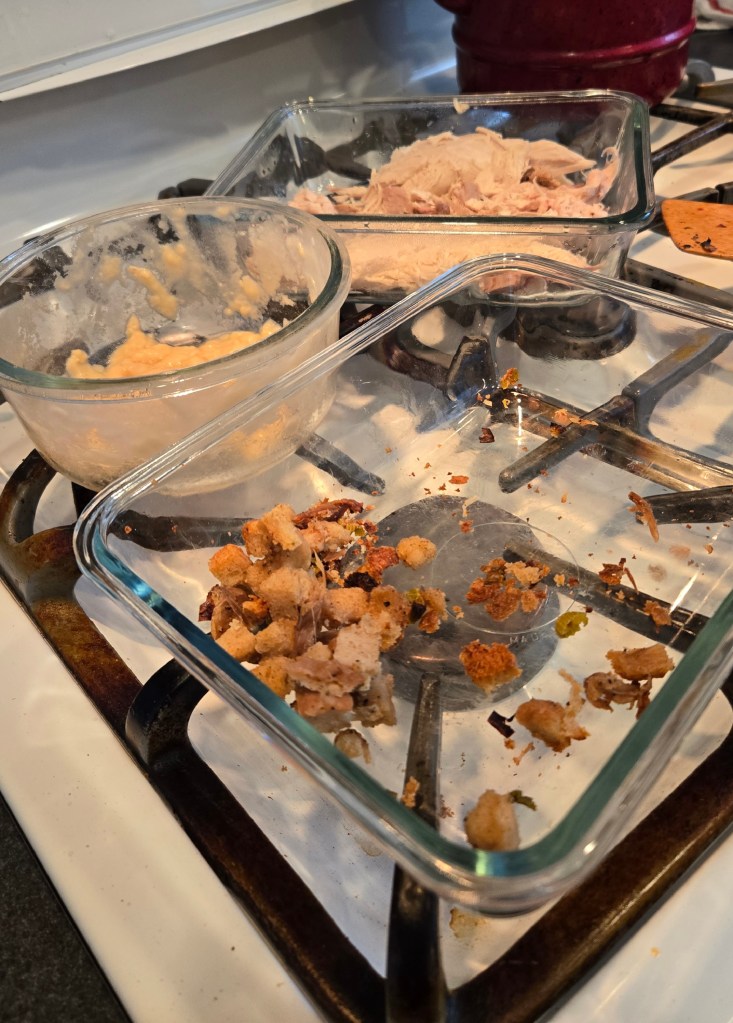
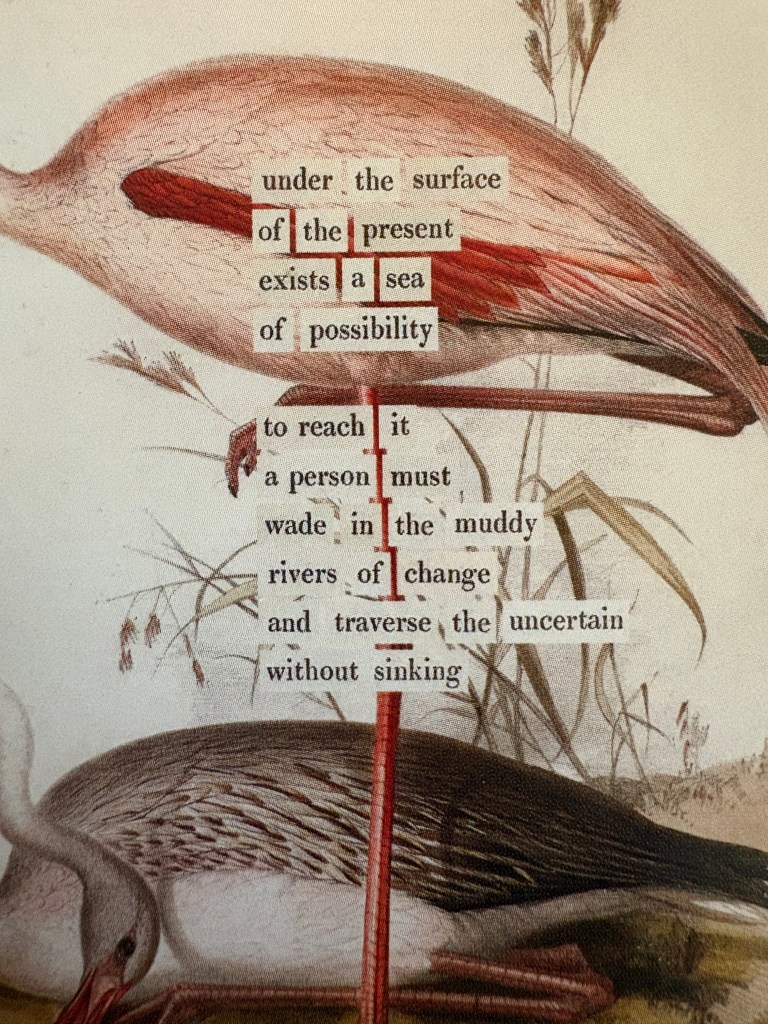
Heart Picture from Turgay Koca. Others thanks to ChatGPT

Leftovers

Phase 1 of the holiday season – Thanksgiving. I always say it’s my favorite because there are no presents involved. I’m not sure that’s true, but it suggests I have an altruistic side.

Now, with the holiday over and another approaching, I’m thinking about leftovers. Don’t you love them? The best part of Thanksgiving!

Leftover 1: Gratitude.  Last year neither of my two children and their spouses wanted to host Thanksgiving. They seemed to have caught the rest of the country’s malaise about it, too much work, with football and maybe turkey as the only reasons to get together. But, remember, I’m the person who says it’s my favorite of the holidays, so it seemed appropriate that I step up and host.

I was new in my apartment after selling Jim’s and my house, which had been the center of many family events. Could I possibly host Thanksgiving? In an apartment? I remembered a favorite movie, Hannah and Her Sisters, where Mia Farrow hosts her big family in a New York City apartment. If Hannah could do it, surely I could. So, I hosted Thanksgiving with good help from my family. And it worked. We gave Hannah some competition.

As that 2024 Thanksgiving grew to a close, we were scheduled to move to another family’s house for dessert, a tradition we started several years ago. But I was exhausted. I’d burned my wrist draining the potatoes, and it hurt. The kitchen was presentable, and all I wanted to do was sit and watch mindless TV—yes, something even more mindless than football. So I didn’t go. AND I announced that I was passing the baton—someone else had better step up and do Thanksgiving next year.

 “I am too old for all this work, and I’ve done my share!”

So, when Thanksgiving came around this year, my daughter stepped up, yet somehow, on the morning of Thanksgiving, I found myself responsible for an apple pie and the mashed potatoes. Everything that could go wrong did, and I barely finished in time to get to my daughter’s house.

During the entire time in my kitchen, I whined to myself, “I passed that baton. This is ridiculous. These potatoes are pathetic, mushed, not mashed potatoes, and the pie. Why did I agree to sit and peel apples and potatoes? And what’s wrong with my kids that they wanted mashed potatoes from Costco? Have I raised lazy children? . . . ya da ya da ya da.”

And then it hit me – sometimes the Universe does need to smack you pretty hard. I realized that husband #1; husband #2; husband #3; some old boyfriends and my sister (all deceased) would have given anything to be in my shoes: 81 and still mashing potatoes and partying with family

Who cares about potatoes or pie—I was getting to enjoy Thanksgiving with everyone I love. I was getting to make pie and potatoes for them. Getting to do this (see https://designingyour.life/), became my new mantra. My resentful, “I HAVE TO” went “puff” and left the room, leaving gratitude in its place.

Leftover 2: Intergenerational Conversation. Last year as dinner ended, we started a discussion about AI. Everyone at the table had a stake in AI. I was teaching an undergraduate writing course and struggling to convince students that you can’t learn to write if ChatGPT writes your paper.

The discussion was fast and fun; no one left the table to watch more football, which means something. We are a family of frogs, we jump into the pond quickly. Our one turtle, Luisa, is often left standing on the bank; she jumps in later, usually with great wisdom.

This year, we’d finished eating and were lingering in the kitchen, snitching bites of dressing and turkey. Elizabeth, my daughter-in-law, asked her 24-year-old son, Henrik, if he wants to have children. I don’t remember how we landed there, maybe because two of our young people are about to graduate from college. Henrik never did answer, but the question kicked off another great discussion about the uncertainty of the future, mainly the planet, and how grim it looks to Gen Z.

The future, by definition, is uncertain, but what my Gen Z grandchildren are feeling is more complicated than uncertainty. The word, “existential” kept floating up. Generation Z young people ask different questions about meaning, purpose and identity than the Silent Generation or even the Boomers did. As we talked, they hesitated to share their dreams for their futures, wary of the future of the planet and climate change.

I can’t recapture the opinions, but I concluded that young people are facing problems unique to our time with climate change at the heart of them, especially as the world responds. They are terrified, although they didn’t use that word. (Remember this is an “n” of 3, so ask your own Gen Zers). And yes, we hid under our desks because of nuclear bomb threats, but this is different.

Reflecting later, I realized we had had a family conversation that crossed generations. Gratitude welled even greater in me, couched in concern for my grandchildren. I was, nevertheless, grateful for the sharing across generations.

Leftover 3: Hope. We eventually moved to more mundane topics, but I worried that what I was hearing might be despair. I didn’t want them to throw in the towel for a life of hedonism. So, I later questioned the Gen Z grandchildren separately.

I started with Henrik, “You aren’t giving up on dreams for your life, are you? Embracing a life of hedonism—do you even know what that is?” (Who knows what they teach in college anymore.)

“Don’t worry, and yes, I know what hedonism is. For now, I don’t know what I’m doing after graduation, but you know me, I’m just curious about it all.”

Whew!

Later, in my car with Luisa, who you will remember is our family turtle, never jumping in too soon, I asked her about her aspirations. She gave me even more hope, summing her thoughts up as “I don’t want to miss my life waiting around for the end of the earth, so I’m living it.”

Upon hearing those words, my gratitude for the day swelled into hope. Yes, the situation in the US and worldwide, especially climate, looks dire, hopeless, gloomy, depressing. . . you get it. But along comes Thanksgiving, and the leftovers. We engage in meaningful conversations and emerge with hope, nurtured by connection and making meaning together.

Another LEFTOVER:

From Wendell Berry, Think Little

. . . the world is blessed beyond my understanding, more abundantly than I will ever know. What lives are still ahead of me here to be discovered and exulted in, tomorrow, or in twenty years?

Eighty Years, Eighty Letters

Photo by Joanna Kosinska on Unsplash

I have been obsessed with the minutia of aging, examining every new line, every wiry hair on my chin (prompting immediate removal), every unfamiliar ache in the morning. But when asked to write a tribute for a friend’s milestone birthday, I go whole-hog in the other direction– not just offering congratulations, but taking the opportunity to outline, sometimes in exhaustive detail, why their life has been well-lived.  I ignore tired jokes about wrinkles, slumping shoulders, or forgetfulness.

Almost as if I were writing their advance obituary.

But when it comes to my own Big Birthdays, I’ve mostly ignored them. When I turned 70, Dan planned a sweet mini reunion with friends and family, complete with a cruise on beautiful Lake Minnetonka. It was the first time since I turned 40 that I stopped to consider what another decade meant.

Looking back now at 40 – that was a downer. I was convinced life as I knew it was ending. I imagined myself turning into a wrinkled crone by the end of the week. I spent several hundred dollars on face creams that promised to forestall the ravages of age. Some of them made my eyes burn. I ended up tossing most of the unused jars when I realized I wasn’t actually disintegrating. I didn’t look that bad. I could continue to be vain!

Photo by Zoshua Colah on Unsplash

But this summer I turned 80, and although I didn’t anticipate it, I could feel agitation building as the date drew closer. I set boundaries:

No, no reunions, no celebrations. 

No, I don’t want anything special! 
No gifts – we have nowhere to put anything! 

Do I really have to go to the Sages Lunch this year, when I helped organize it last year?

At one point I even considered writing my own obituary, not out of despair, but practicality. After all, at 80, every year feels a bit more like a crapshoot. But then I remembered – I’m not very afraid of death, although like most people, I hope it will be quick and relatively painless. So if I wasn’t especially fearful, why the restlessness? Why the resistance?

A week before my birthday, I was meditating outdoors with a small group in the clear early morning light in Boulder. Someone read a John O’Donohue poem on longing before we began, and one line stuck with me like a mantra: May a secret Providence guide your thought…”

Fifteen minutes into the silence, Providence – The Great Whatever – answered “You are supposed to write letters to 80 people to tell them how they have changed you.”

It was loud.  It could not be ignored.  It was also rather weird –so clear, it startled me. The universe doesn’t usually shout at me.

And so I began. At first I wondered if I even knew 80 people well enough to write to. But it turns out that at 80, you’ve lived a long time and met a lot of people. As I started making a list, I quickly passed 80. I began to recall how each one was memorable, and why.  Some names were easy. The memories were warm, the lessons clear. Others required more work, were uncomfortable. I had to ask: how did this person change me, even if the change came through friction rather than closeness? Some were no longer living. Some I had lost touch with. In a few cases, I already had letters written – messages I’d sent to the families of friends who’d died, telling them what that person had meant to me. I had saved copies. I added them to the list.

And then I realized something else: not all letters would go to individuals. Sometimes it was groups of people who had shaped me — a writing class, a church committee, a circle of friends. And sometimes the letter could be to a thing — a dining room table from my childhood, or a familiar object that held memory like a sponge. Always, behind the inanimate, were people. Always, it came back to connection.

Oh my.  What seemed, when Providence’s voice boomed, at first like an impossible assignment –  80 letters for 80 years – suddenly feels doable. More than that, it feels necessary. Because in uncovering the people and memories that shaped me, I am also writing something else: a quiet testimony to what I’ve always known, deep down. 

I did not arrive at 80 on my own.

I got here on the shoulders of so many who walked beside me, talked me down, saved my bacon, gave me new direction, nudged me forward when I was stuck, or simply witnessed my becoming. Big influences, small gestures, words that stayed with me — it doesn’t really matter. What matters is the accumulation of moments, and the gratitude I feel for having been changed, again and again, by the presence of others.

In this photo, I am the white-haired 80-year-old, with some of my best friends from Tappan Junior High School, Ann Arbor Michigan.  We met this summer to remember how important we have been in each other’s lives.  This “letter” is for them…and the several who were there in body or spirit but not in this picture. My friend Elsa, second from the right, describes us as a hive…that’s the way that it feels, except there is no queen bee.

“Best friends” from the past and now…

And maybe, just maybe, Providence will answer if I become sufficiently agitated and self-centered and, therefore, speak again when I need a new assignment.

Oh — maybe most important: 80 is not a boundary, just another irrelevant human marker, an indicator our of our futile attempts to corral time.