Part 1: Stuff. . . and Change

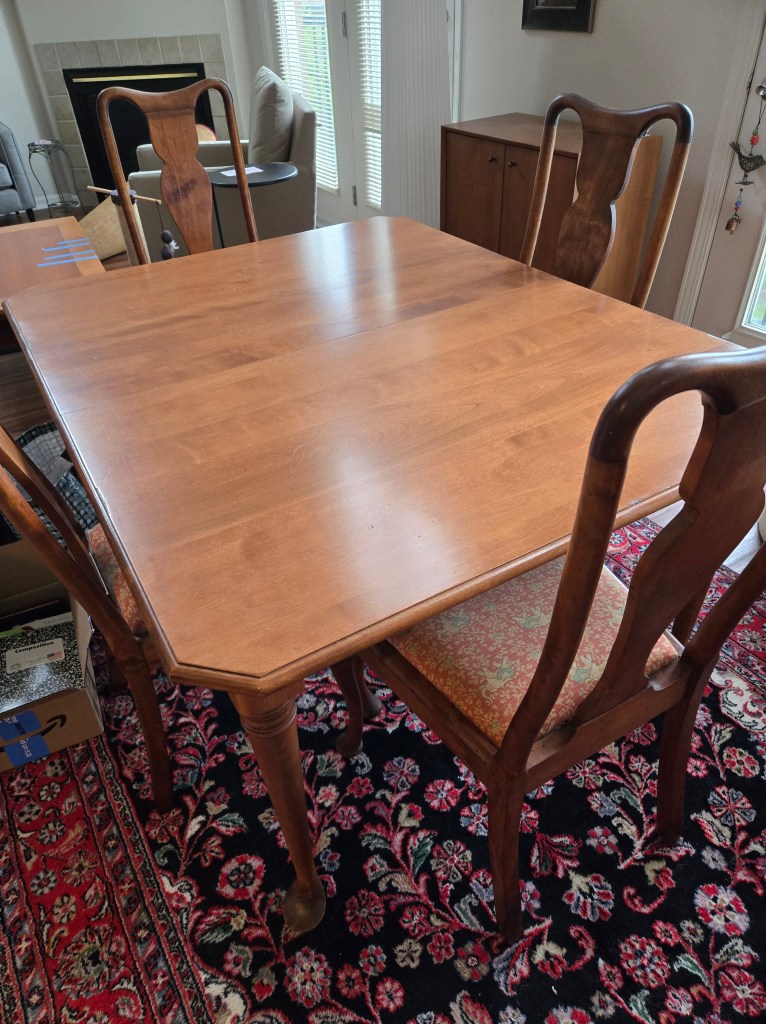
I rested my hand on my cherry dining room table, knowing they would soon load it on the moving truck. I’d contacted Bridging, a local organization that furnishes homes for families in need, to pick up items from our house that wouldn’t fit in my new, downsized, condo. The table was to be last on the truck, so I had time to linger.

My hand was still, but my heart screamed at my mind. “What are you doing? Remember those family dinners, ten people talking at once? Remember the times you used your china? You know, that is going to end up in a thrift shop, too.”

I saw the cards flying in bridge games with our friends, Karen and Dan. My husband, Jim, sitting opposite me, would maneuver the bidding so I’d be the one playing the hand.
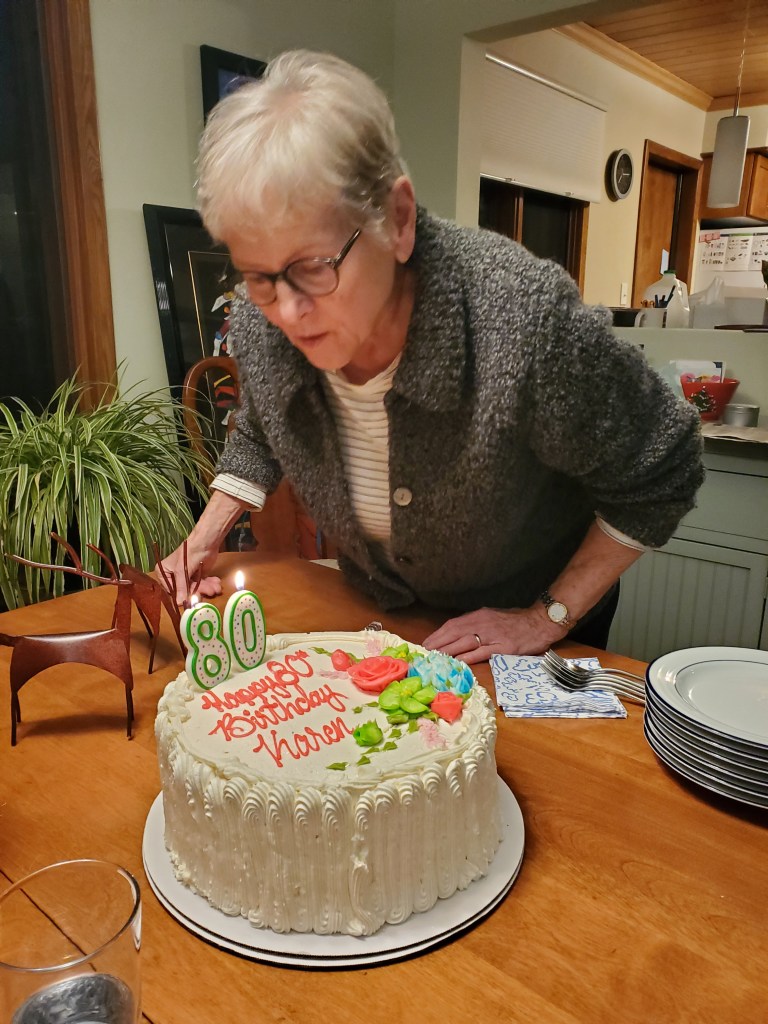
Birthday celebrations—I remembered my cake for my 80th—Jim had died three months prior, so we didn’t get to share the milestone birthday. We’d shared much at that table. During COVID, endless games of Scrabble—I played to win, and he played to engage.
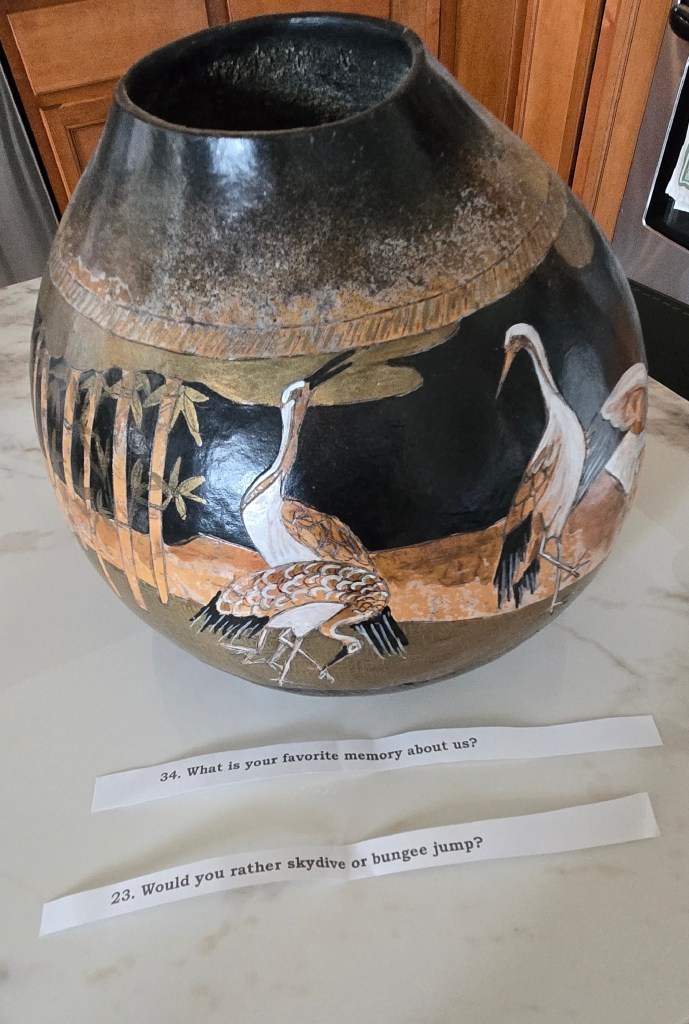
And my vase that I filled with questions about each other that we answered after meals. It was revealing fun.

“Don’t worry. Someone will love that table as much as you have.” The man from Bridging reassured me. I let my hand drop and they loaded the table, aghast when they started to put boxes on it.

“That’ll scratch it!” I shouted. They took the boxes off.

It was no longer my table. I didn’t want to think about what might happen next to it.

I bought the table at Dayton’s Warehouse Sale, back when Dayton’s existed. It wasn’t my style, but the beautiful wood caught my eye, and it was the right size. The legs matched chairs left to me by my second husband, Gary, who died at age 55. He didn’t value stuff, but he loved these chairs, which he’d bought in Pennsylvania, another memory. Every time I pulled a chair out, I’d see Gary at his desk, which was the dining room table.  

My table was hard to part with, but holding on felt like grasping at a life that used to be—the one filled with family, friends, careers, holidays, parties, the sad and the happy, around that central gathering place. My heart hoped that letting the table go would make room for my children to carry on traditions.

“Stop it!” my mind admonished. Stuff is work, and it takes up space. Remember how you had to store those leafs under the bed. They were so heavy, you needed help to slide them out and carry them to the dining room. Wake up! No one’s here to do that anymore. Let it go!”

My heart gave up, watching the door of the van close, the men getting in and driving the truck out of the lot. “Goodbye,” my heart whispered.

*****

What was I really grieving when I gave away the table?

Memories stay with me, whether I own the table or not. What I grieved are the roles the table signified, mother, grandmother, hostess, and the keeper of traditions. Beneath my sadness about the table was facing the problem of who I am as life shifts and changes, particularly in retirement

My husband, Jim, who was more sanguine in his approach to retirement, stayed involved, with people, sports interests, and adult education courses. He didn’t seem worried about roles, but then he never downsized as a widow either. One Easter, when our families were mostly busy, Jim suggested that we invite other people with no immediate plans for a light brunch. I look back and remember how interesting that day was. Roman Verotsko, a well-known artist and neighbor came. He spent much of the time talking art with my granddaughter, who came without parents. Other neighbors mixed with each other. The party created a new role for Jim and me. We didn’t need to be the grandparents who have everyone over. We could bring friends together.

Shortly after, Jim bought a big Bunn coffee maker and started inviting neighborhood men for coffee. He’d found his niche. My friend, Johan, used to hold what he called “musical soirees” about old jazz and Mozart. He’d invite all the people he knew who lived alone and had an interest in music. In my condo association, various people give short talks about finding and roasting coffee, astronomy, and even puppets.   

It’s not easy to find new ways of being in the world, yet the ubiquity of change requires adaptation. Roles, to some extent, are what we project to the world, but what about inside us, our personal authenticity. As I’ve aged, I’ve turned more inward to access that person.

Memories from the past, like the ones my table evokes, can cohere around life themes. Timelines of your life can also reveal these. The classic about doing this is Writing about Your Life, by William Zinsser. I participate in a church group called the Elder (wince) Gathering, and we are reading a book called The Inner Work of Age: Shifting from Role to Soul, a book I’d already read in another church group. Soul work seems to call people my age. But that’s a big topic for another blog.

Where does this leave me about the table?

I treasure my memories ‘round that table. It’s an album of my life. But now when I feel sad about giving it away, I imagine a family in their first real home. It’s tiny, but there’s room for a table—a lovely cherry one. Children are gathered at it doing their homework. Someone nearby is making dinner.

          “Put your stuff away,” she calls.

Books and pencils and paper and laptops are put away. Someone sets the table. Everyone sits down. Dinner time.

I smile. My table is home.

Stay tuned for Part 2
Growing Soup

When my daughter Jane was small, she would put her hands on her hips and declare indignantly, “When I grow up. .  . I’ll stay up as long as I want. I’ll watch as much TV as I want, or I won’t clean my room unless I want to.” We smiled and let her complain.

Sooner than I imagined, Jane was in her twenties, with an undergraduate degree, no job or clear vocation, wanting a car, and those things that come with growing up. I remember her declaring to me, “All my life, I’ve wanted to grow up, and now that I am, I don’t like it. Nothing is the way I thought it would be.”

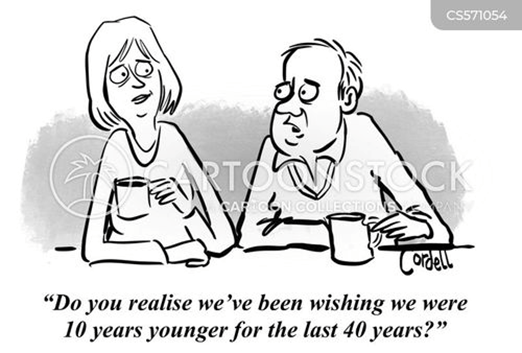
Those words could well apply to me and growing older. Unlike Jane, I was never in a rush to grow old, but still, I’ve been doing exactly that, making me inclined to say, “Nothing is the way I thought it would be. My body just can’t do what it once could.” Some days I rail against these changes. I want 45-year-old Karen back. I plan exercises and diets that will magically restore me. I adopt schedules to take better care of myself. I resolve to make new friends, find a passion or renewed purpose in an unknown something. Maybe I’ll paint a bird house, make a resistance hat, or start making my own bread. Maybe I’ll do all of these things – or something else that is different.

But I still go to bed another day older.

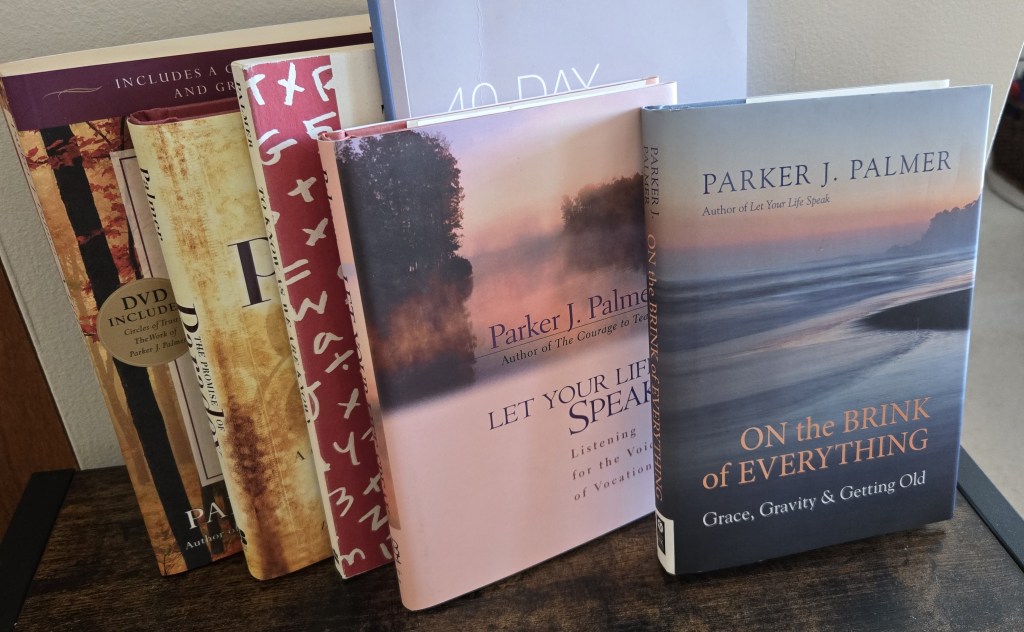
This morning, reading a Lenten meditation by Parker Palmer, I saw another way to consider growing older. He argues that although we were originally an agricultural society, tied to seasons of growth and rest, we are now a manufacturing one, and the “master metaphor of our era” comes from manufacturing. Rather than “growing” our lives, we make them. He notes our everyday speech: “We make time, make friends, make meaning, make money, make a living, make love”.

I wondered, could I reframe growing older into a positive perspective?: I could ask how can I grow time, grow friends, grow meaning, grow money, grow living, and grow love? I could move on from the “making” approach that probably fits much of adulthood and embrace the growing in growing old.

One suggestion for growing old is from Cynthis Bourgeault’s Ten Practical Guidelines for Conscious Aging.Number 5 is:

Watch what happens when you try to draw energy from an outmoded image of yourself.. . .You get an immediate rush of ‘Ah, I’m my old self again!!’ But that is exactly who you do not want to be. Your old self is the sacrificial lamb you will lay upon the altar of your deeper becoming.

Sounds like Bourgeault is talking about hanging onto our former self versus growing into a deeper becoming. I have no idea of what the “deeper becoming” might be, but I’m willing to find out.

As I engage with these ideas—growing instead of making myself into the perfect aging senior, I’m reminded of my second husband, Gary.  Gary did not cook at all. When I met him, he lived on Special K for breakfast and Healthy Choice frozen meals for lunch and dinner. When we married and forgot to say “no presents,” someone gave us a crock pot. Gary thought it was the greatest cooking invention ever.

He loved homemade soup, and the crock pot was perfect for making it. I’d be off to the office in the morning and he’d say. “I think I’ll make some soup today. What do you think should be in it?” I’d add some broth and maybe leftover chicken and, as I ran out the door, suggest that we could add noodles later.

While I was gone, Gary grew the soup, scouring the refrigerator for leftovers and the cupboards for things that might add flavor. I’d come home to a completely different amalgam of soup than the one I left. He grew the soup with what we had and with his imagination. And like many things that grow, some soups were forgettable, others unexpectedly outstanding.  But because they grew organically, there was no recipe for replicating any particular soup, and that’s what made his soups so interesting.

While I was busy making a life, I was also growing my own life soup, with a variety of personal experiences. Some have turned out great and others I wish I could do over and would just as soon forget. But in the end, it’s the growing that counted.

The other Karen mentioned in her blog, Who Is the Old Lady Directing the Circus? “growing down,” acting with greater spontaneity and less regard for the product than the process. Surely by 82, I’ve earned the right to grow up, down, or sideways. I hope I can grow like Gary’s soup, adding wisdom from my cupboard of life and a pinch of adventure, stirring in love and more love to taste. 

What Our Mothers Never Told Us

Photo by Natali Bredikhina on Unsplash

How much do we really know about our parents – and how much do we want to know?

We in the boomer generation grew up knowing that fathers never talked about their experiences in the 2nd World War.  They were raised in a time when we kids were supposed to view them as super-beings, who cared for us but didn’t have much emotion themselves (except the random yelling when frustrations boiled over). 

But our mothers often told us even less. My mother grew up in the Midwest during the Great Depression, and knew or observed significant hardship, although she and her sisters were housed and fed. I inherited some of what she learned: Saving string and rubber bands.  Washing and reusing tinfoil and plastic bags.  Now that we are in a new age of conservation to save the planet, the habits that were passed on in our childhood look remarkably prescient.  But her stories were slivers of a lived reality in an age where people rarely shared their deepest and more difficult experiences, and generally believed that therapy was for those who were weak and broken, as not for people like themselves. People who knew how to put one foot in front of the other and march on.  They were tough – and in the case of my mother, also tender in her care for my sister and me.

But my parents also told stories that gave me insight into the uncertainty that surrounded their lives as children and older adolescents – and also the lucky circumstances that allowed them to prosper when others did not. My mother told me about learning to clean the kerosene lamps, the only evening light in her home, when she was quite young.  Uncle Richard, a brilliant man, had no choice but to take any job he could during the depression to help support his family including a sister with significant disabilities.  He was a charming, well-read, funny – and a short-distance truck driver for his whole life. He never complained.

What our parents didn’t talk about was what it was like to be orphaned during the Great Depression.  In my father’s case, having a father die removed any certainty about the future, but he was lucky to have an uncle who was a professor (one of the few positions that was largely “safe” from unemployment during the depression) who gave him a place to live and attend college. Nothing was  said about moving from the family home, the separation from siblings and his mother, or the displacement and hunger that must have preceded his break.

I knew even less about my mother, and the slivers of hidden but still palpable trauma were always unconnected.  As a child, she told me that she was orphaned at 14 in “the accident” that killed her parents.  Decades later, I learned that she and her sisters were not allowed to go to the funeral in the tiny town of Scandia, Minnesota.  No relative could take all three girls, so they were quickly dispatched to live with people they barely knew in towns that were, at a time of poor roads and slow cars, impossibly distant from one another. As the oldest, my mother went to live with Uncle Sherman Johnson, in North Dakota, who was (for the time) economically privileged.  She very rarely mentioned her life there, but the tiny bits inserted into other stories made clear that she struggled to fit in.  There were younger children; she took on the role of older sister, but once said that she felt like hired help.  Although the Johnson family tried to stay in touch (their fondness for her was apparent in cards that I read) she rarely saw them after she left for college, also paid for by Uncle Sherman.  I never visited them as a child;  She never told any details about “the accident” to anyone, nor did I ever hear her talking about it with her sisters on the rare occasions when they visited.  When I was an adult, I was able to discern from tiny fragments that her father shot her mother while cleaning his gun and then shot himself. 

She survived by putting it behind her, to create a life that, on the outside, looked happy and vibrant.  It worked for a while. 

My mother and me, in 1956.

As I talk to other friends, the holes in our mother’s stories occupy vast spaces. A period of poverty that required them to give up their children for a time — but the decisions and events that caused that to occur and the struggle to reunite with them were hidden.  A grandmother who died in childbirth, leaving their mother to be raised without a sustained loving presence during a time when responsible relatives would have been consumed with making sure than there was food. A mother who never talked about being thrown out of her parent’s home when she was 14.

We now think of these events as trauma, and have developed strategies, therapeutic and educational, to support children’s resilience in the face of loss and deep uncertainty.  We read the newspaper and feel intense compassion for the children growing up in war zones or places of extreme poverty in our own country, who face even greater challenges. But, as a child of parents who lived through it, I had no access to their deepest places of pain, or the moments of joy that obviously sustained them since they managed to be caring and—on the surface, sometimes carefree—parents.

I have my own traumas, although not as deep as those of my parents.  I have shielded my children, who are now middle aged, from them.  Is this the way it is supposed to be, protecting my loved ones from knowledge of the places in my heart and life that have shattered, and stories about how I put the pieces back together?  Would knowing more make us compassionate or increase our desire for distance? Should we burn our journals and other evidence before we die in order to preserve our own fiction of wholeness?  Or, as I wish my mother had done, spill the beans and come clean….

I saw it first as suggestion

….We both drew in our breath and looked away

….And it magnifies in the eyes of those no longer young

Katherine Solniat, excerpted from Secrets About Nothing

Curiouser and Curiouser….

–          Alice in Wonderland illustration by Arthur Rackham (1907) [Public Domain

Grown-ups never understand anything or themselves, and it is tiresome for children to be always and forever explaining things to them (Antoine de St. Exupery, The Little Prince)

A few weeks ago, someone quoted from Brene Brown’s Atlas of the Heart: “Choosing to be curious is choosing to be vulnerable because it requires us to surrender to uncertainty”.  Brown goes on to associate curiosity with discomfort:  “We have to admit to not knowing, risk being told that we shouldn’t be asking.” Later, Brown links curiosity with the perception of an information gap that we commit to closing.   I immediately bristled – internally, since it would have been inappropriate to react to the nodding of heads and pervasive affirmation in the group. 

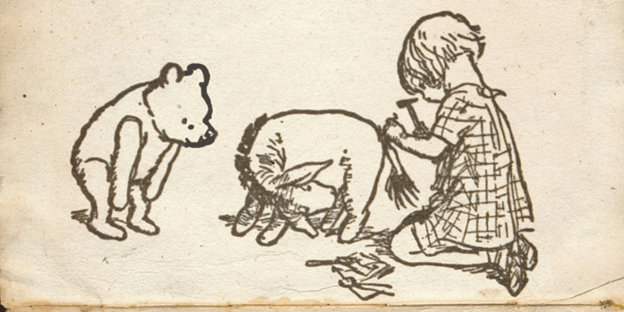
When I was a young child – and even when I was old enough to read them myself – two of my most beloved books were Alice in Wonderland and The House at Pooh Corner.  I read them joyfully to my children – and later to my grandchildren.  What I cherish about both of them is their exploration of simple, uncomplicated curiosity.  Alice hesitates only briefly before biting, although she knows that “one side will make you smaller, the other will make you large”, while the doorknob says “nothing’s impossible.”  Pooh looks at every day as a fresh adventure, whether it is confronting the loss of Eeyore’s tail or stalking the mysterious Heffalump.  While Alice sometimes bemoans a choice she has made, she quickly picks herself up and asks another impertinent question.  Pooh, on each day’s adventure, only hopes that there will be honey involved.

Curiosity may involve a risk, but it is not something that holds either Alice or Pooh back – more than momentarily.  Eeyore reminds us that worrying about not knowing – at least more than briefly – can be a path to cynicism and depression.  I took this lesson to heart:  Be curious.  Move on with the adventures.  Don’t do anything potentially life-threatening, but assume that the jams that you get in to will be temporary.  Don’t think about the “information gap” but move toward the unknown.  In other words, nurture the impulse to try stuff, and a full range of emotions that encompasses trepidation, but also the delight that comes with doing or learning about something new.

It turns out that Brown is talking to people who feel “stuck” in a comfort zone.  She covers all the research that says that we will be happier and freer if we respond to “I don’t really know” with curiosity. We all get stuck sometimes….certainly, retirement for someone like me, who loved going to work, meant that I had to allow myself to drive past the exit for my office without feeling lost and uncomfortable!  And although many routines nurture us (brushing our teeth, eating lunch, going to bed at roughly the same time on most days), it is easy to slip into ways of thinking and habits that constrain.  But getting stuck seems to be something that we choose more and more often as we exit adolescence.  With Alice, Pooh, and Thich Nhat Han as guides, however, we see that embracing vulnerability (which Brown endorses) is not a conscious decision to endure discomfort, but a practice of anticipating novelty and adventure – of embracing childish wonder and a Beginner’s Mind.  

And then there is the spiritual side.  One version of Genesis situates our humanness in “original curiosity”:  “And when the woman saw that the tree was good for food and that it was pleasant to the eyes, and a tree to be desired to make one wise, she took of the fruit…”  Albert Einstein echoes this, suggesting that “curiosity has its own reason for existing.  One cannot help but be in awe when one contemplates the mysteries of eternity, of life, of the marvelous structure of reality…Never lose a holy curiosity.”  Julia Cameron also argues that curiosity is a spiritual path rather than a cognitive decision, and that it requires habits – she suggests random writing in “morning pages”, scheduled “artist dates” to explore a new esthetic, and regular walks that have no purpose other than to look deeply at whatever is in one’s path. 

Photo by petr sidorov on Unsplash

I admit that I don’t do these as consistently as I once anticipated, but I have other habits that invoke the same opportunity to approach the world with a Pooh-like sense of wonderment.  Meditation – something that for years I thought that was beyond my capacities – clears my brain of monkey-mind, and creates space for hope that goes beyond ticking off items on the incessant to-do list.  Connecting every week with someone (or several people) who are willing to engage in authentic and vulnerable conversations about “big stuff” never fails to make me curious.

Of course, I take Brene Brown’s assertions about the benefits of curiosity to heart because it is particularly important as we age.  According to Henry Emmons and David Alter’s 9 Keys To Staying Sharp, curiosity comes only a few steps behind the basics of moving, eating well, and getting enough sleep in warding off mental decline.  Nor do I want to ignore Brown’s s admonitions against getting too comfortable and avoiding vulnerability.  If I am always afraid of falling, will I ever learn how to skip again?  However, I also note that as we age we can more easily choose to embrace vulnerability and become more playful, as long as we are willing to follow Shel Silverstein and  “grow down” (along with giving away our business attire and our mother’s china):

He got his trousers torn and stained,

He ran out barefoot in the rain,

Shouting to all the folks in town,

“It’s much more fun, this growin’ down.

 — Shel Silverstein