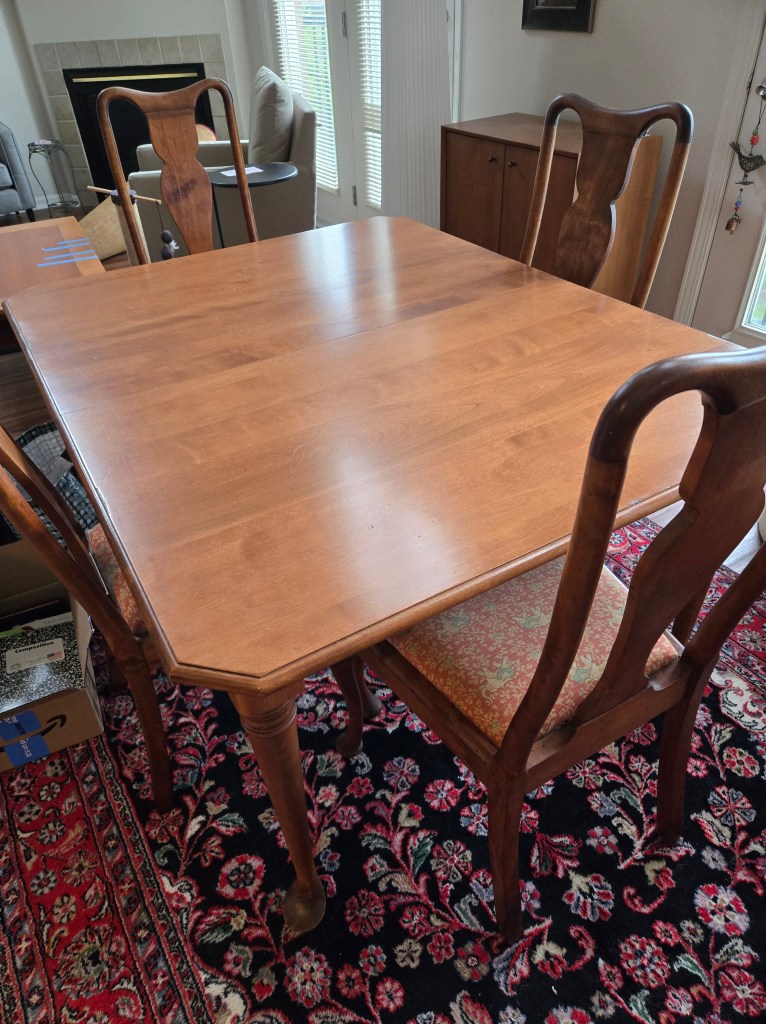
I rested my hand on my cherry dining room table, knowing they would soon load it on the moving truck. I’d contacted Bridging, a local organization that furnishes homes for families in need, to pick up items from our house that wouldn’t fit in my new, downsized, condo. The table was to be last on the truck, so I had time to linger.
My hand was still, but my heart screamed at my mind. “What are you doing? Remember those family dinners, ten people talking at once? Remember the times you used your china? You know, that is going to end up in a thrift shop, too.”
I saw the cards flying in bridge games with our friends, Karen and Dan. My husband, Jim, sitting opposite me, would maneuver the bidding so I’d be the one playing the hand.
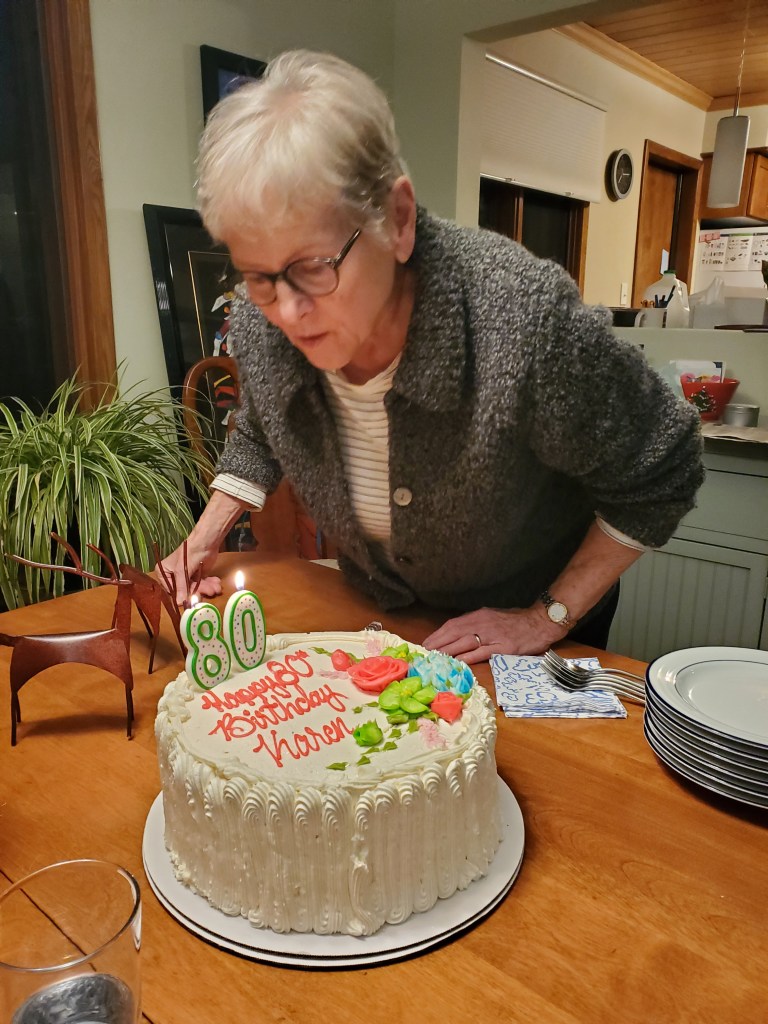
Birthday celebrations—I remembered my cake for my 80th—Jim had died three months prior, so we didn’t get to share the milestone birthday. We’d shared much at that table. During COVID, endless games of Scrabble—I played to win, and he played to engage.
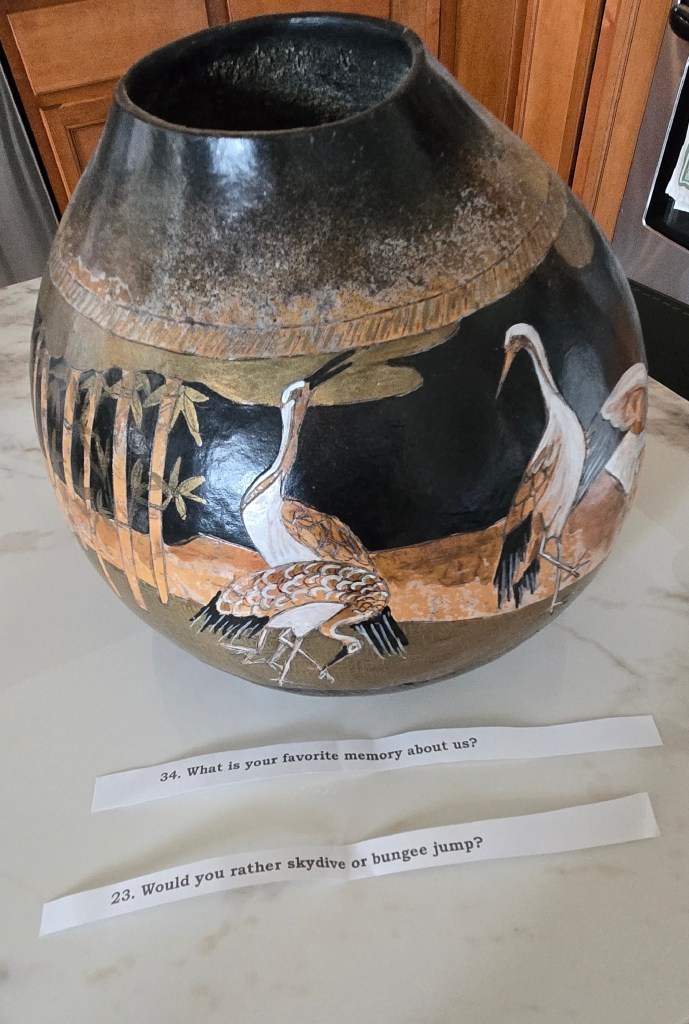
And my vase that I filled with questions about each other that we answered after meals. It was revealing fun.
“Don’t worry. Someone will love that table as much as you have.” The man from Bridging reassured me. I let my hand drop and they loaded the table, aghast when they started to put boxes on it.
“That’ll scratch it!” I shouted. They took the boxes off.
It was no longer my table. I didn’t want to think about what might happen next to it.
I bought the table at Dayton’s Warehouse Sale, back when Dayton’s existed. It wasn’t my style, but the beautiful wood caught my eye, and it was the right size. The legs matched chairs left to me by my second husband, Gary, who died at age 55. He didn’t value stuff, but he loved these chairs, which he’d bought in Pennsylvania, another memory. Every time I pulled a chair out, I’d see Gary at his desk, which was the dining room table.
My table was hard to part with, but holding on felt like grasping at a life that used to be—the one filled with family, friends, careers, holidays, parties, the sad and the happy, around that central gathering place. My heart hoped that letting the table go would make room for my children to carry on traditions.
“Stop it!” my mind admonished. Stuff is work, and it takes up space. Remember how you had to store those leafs under the bed. They were so heavy, you needed help to slide them out and carry them to the dining room. Wake up! No one’s here to do that anymore. Let it go!”
My heart gave up, watching the door of the van close, the men getting in and driving the truck out of the lot. “Goodbye,” my heart whispered.
*****
What was I really grieving when I gave away the table?
Memories stay with me, whether I own the table or not. What I grieved are the roles the table signified, mother, grandmother, hostess, and the keeper of traditions. Beneath my sadness about the table was facing the problem of who I am as life shifts and changes, particularly in retirement
My husband, Jim, who was more sanguine in his approach to retirement, stayed involved, with people, sports interests, and adult education courses. He didn’t seem worried about roles, but then he never downsized as a widow either. One Easter, when our families were mostly busy, Jim suggested that we invite other people with no immediate plans for a light brunch. I look back and remember how interesting that day was. Roman Verotsko, a well-known artist and neighbor came. He spent much of the time talking art with my granddaughter, who came without parents. Other neighbors mixed with each other. The party created a new role for Jim and me. We didn’t need to be the grandparents who have everyone over. We could bring friends together.
Shortly after, Jim bought a big Bunn coffee maker and started inviting neighborhood men for coffee. He’d found his niche. My friend, Johan, used to hold what he called “musical soirees” about old jazz and Mozart. He’d invite all the people he knew who lived alone and had an interest in music. In my condo association, various people give short talks about finding and roasting coffee, astronomy, and even puppets.
It’s not easy to find new ways of being in the world, yet the ubiquity of change requires adaptation. Roles, to some extent, are what we project to the world, but what about inside us, our personal authenticity. As I’ve aged, I’ve turned more inward to access that person.
Memories from the past, like the ones my table evokes, can cohere around life themes. Timelines of your life can also reveal these. The classic about doing this is Writing about Your Life, by William Zinsser. I participate in a church group called the Elder (wince) Gathering, and we are reading a book called The Inner Work of Age: Shifting from Role to Soul, a book I’d already read in another church group. Soul work seems to call people my age. But that’s a big topic for another blog.
Where does this leave me about the table?
I treasure my memories ‘round that table. It’s an album of my life. But now when I feel sad about giving it away, I imagine a family in their first real home. It’s tiny, but there’s room for a table—a lovely cherry one. Children are gathered at it doing their homework. Someone nearby is making dinner.
“Put your stuff away,” she calls.
Books and pencils and paper and laptops are put away. Someone sets the table. Everyone sits down. Dinner time.
I smile. My table is home.
Stay tuned for Part 2