Unknown's avatar

About Karen Seashore

I am a sociologist, life coach, policy wonk, and tarot reader. Other than reading a book, I always prefer to work with other people. Creating small changes -- in myself and in the world around me -- is my calling. You can find my scholarly publications under Karen Seashore Louis (or Louis, K.S.).

YES!

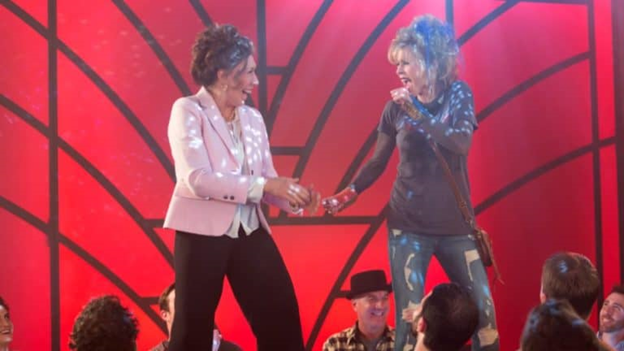
Dan and I recently decided to dip back in to Grace and Frankie, the comedic overview of aging, divorce, sexuality, friendship and family. Season 1 is, at its heart, about relationships, which go from testy to close when Grace (the retired uptight businesswoman) agrees to participate in a “Say Yes” evening with Frankie (the aging hippie) (Episode 12). Their compact was an obligation to agree to anything the other person proposed. The scene where Lily Tomlin and Jane Fonda, two 70-ish women, bond on a sidewalk curb after being  thrown out of a nightspot where they dared each other to dance on the bar (to the applause of the 30-something crowd) revealed the power of YES. It happened because they trusted each other to push the boundaries of their routines.

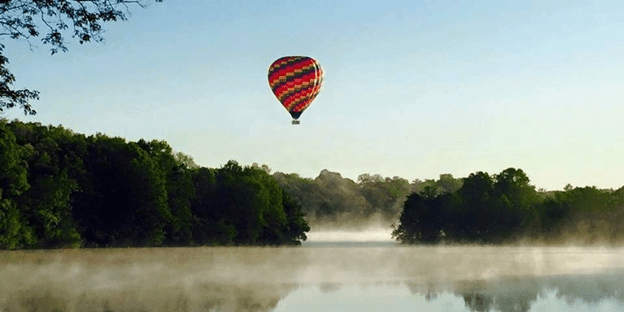
Pondering the power of YES, I was drawn back to one of my own memories. My father, recently widowed, began having a series of small stokes, each of which had equally small but incremental effects on his mobility (certainly not his brain or his wit). He would get sad and anxious for about a week, and then would pick himself up and say, “well, I can’t walk a mile with a cane, but I can….” Well, fill in the blank, because there was always something that he could do. When one of the later events left him unable to walk far without being in a wheelchair, his life changed again…but not his YES. On his 83rd birthday, a friend gave him a new chance — a 1 hour balloon ride over the St. Croix Valley in Minnesota, where we lived. It was quite an ordeal getting a wheelchair and my dad onto the field and into a little basket, along with his friend and the balloon operator, but he was game. He said YES to adventure, wherever possible.

Photo courtesy of Stillwater Hot Air Balloon

What does saying Yes involve? And what does it require of us? And why should we think about it anyway? For me, Grace, Frankie, and my father suggest that it is the importance of being open to something that is unfamiliar – and even a little scary. Something that is challenging, that requires more than you normally expect of yourself. It means going outside of your comfort zone – or at least pushing hard against the boundaries of your comfort zone.

It has been hard to say YES over the past five years. Covid accustomed us all to doing less, being out less, and interacting with strangers less.  This is not a mindset that promotes YES, which implies novel experiences that we can incorporate into the evolving story that we tell about ourselves. In the past, I have not had to think about this – opportunities have presented themselves and I decided to say YES – often with little rumination or thought — just as my father delighted in going up in a balloon in a wheelchair.

But the last years have meant that random adventures have become fewer and I  sometimes feel that I have gone from being brave to cautious. I am not happy about this. But simply hoping that the old opportunities will present themselves unannounced is about as reasonable as expecting anything else to “go back to the way it was.”  I realized, after seeing Grace and Frankie saying YES,  that I have to be responsible for creating prospects for YES rather than waiting for them to appear.

I need to be prepared, and like Grace and Frankie, it helps to have others along. Dan and I have started to plan a road trip to Washington, where we can try to reconnect with friends who have, for one reason or another, drifted from our day-to-day lives.

Every road trip provides many opportunities to Say YES by veering off the highway and into a small town with a place to stay, a museum and an adequate meal, so on our last trip to New Mexico we decided to stay in a converted cowboy bunkhouse on a 23,000 acre ranch rather than a hotel – and I know that we will be back (this time with food) to experience the solitude and stars. (No museums, but some strange flying bugs).

Fite Ranch, New Mexico, May 2022

Karen Martha and I committed to a week in in Rome – a city that I have not been in for over 40 years, where we will be unleashed from a hotel-and-planned itinerary mentality to allow us to choose our own adventures. That’s how I used to travel when I was in my 20s—and I can do it again.

I have already argued for breaking the rules that dictate appropriate behavior in older people! But it’s also my job to imagine opportunities to challenge my own easy routines in collusion with others who are willing to challenge theirs. To paraphrase Frankie, “You can’t say No until it’s over.” 

So bought a new pair of hiking boots in order to be ready — for something.

LET OLD THINGS PASS AWAY (2 Corinthians, 5:17)

Or

DO NOT GO GENTLY INTO THIS GOOD NIGHT (Dylan Thomas)

Or

NEVER WASTE A GOOD CRISIS (Milton Friedman)

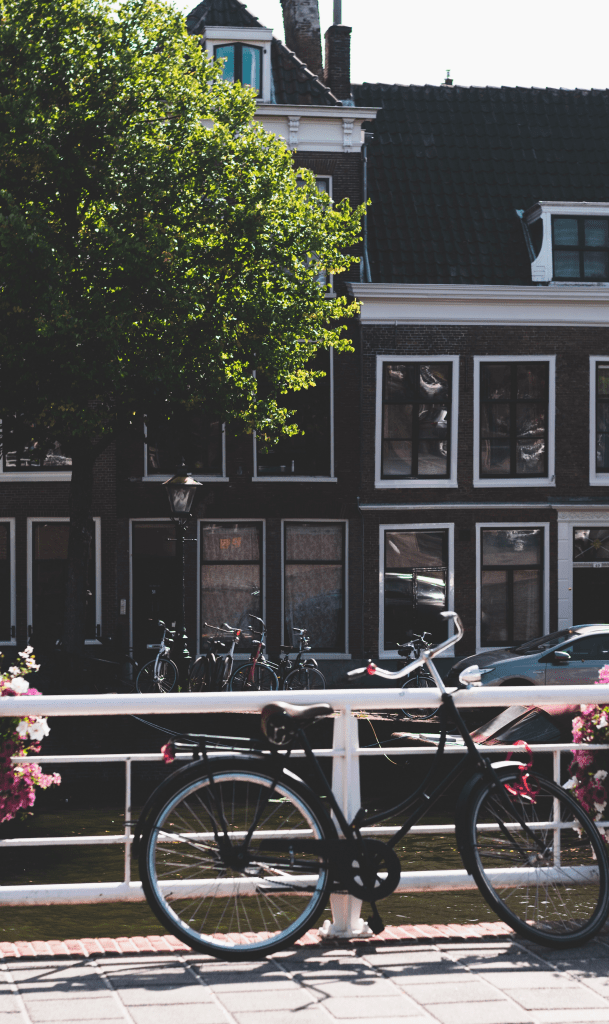
Photo by Peter Hermann on Unsplash

Perhaps an inevitable part of aging is looking backward, searching for meaning in the distinctive chapters of our lives. After moving past obvious markers (leaving home for college, getting married, etc.), I keep stumbling across the fact that there are periods that are less clearly marked by an anticipated beginning or a clear end.  Some of these are unpleasant: Queen Elizabeth had her annus horribililis,  Karen Storm writes about her past experience with prolonged grief, Katherine Malanga reflects on being in the middle of  figuring out the job of loving and caring for someone who is declining. 

For me, 1998 and 1999 were such a chapter.  Nothing exceptional happened that distinguishes me from other fallible human beings who experience suffering –  except that everything occurred in quick succession.

Photo by Damiano Baschiera on Unsplash

Well, to be perfectly honest, the symptoms started earlier, beginning with rocky transitions to college for my children.  The resultant stress and disagreements about how to handle myriad other issues tore at an already fragile marital relationship. By 1997, we were living together in 17th century house on a beautiful canal in the Netherlands (because we were on sabbatical) without our children (who were still causing us anxiety). 

With a lot of travel, living largely separate lives, we struggled through.  I responded by spending weekends with friends in another city and drinking Jenever (Dutch Gin, which smells a bit like rotten cabbages), straight from the freezer.

Back in the U.S.  The semi-separation became a real separation.  The children were gone.  Frisk, a beloved dog, was very old and barely able to move. My parents died, a little over a year apart.  My sister felt like my only support, but our grieving took different forms – she turned inward and to her family, and I wanted to turn outward because my family was….well, disintegrating.  I was able to briefly distract myself as International Karen — a 1999 Fulbright trip to examine the condition of higher education in post-Soviet Belarus, Kyrgyzstan and Czechoslovakia and an invitation to cheer in the new century with friends in London, accompanied by bagpipes in the Royal Park in Greenwich.  I am, however, here to let you know that, in spite of the popularity of Eat, Pray, Love, treating distress by relocation is overrated.

I thought that I needed a project, and foolishly took my half of the sale of the jointly owned elegant town home and bought a “fixer-upper” in Uptown, a densely populated, just-on-the-edge-of-becoming-trendy part of Minneapolis.  The house was owned by a blind woman, who lived with two alcoholic sons and a husband who had recently entered an assisted living facility.  Her sons assured her that they were maintaining the property and redoing the kitchen.  Hah…the ring of cigarette burns on the floor outlining their beds was evidence that only dumb luck kept them from burning the place down.  I am not a very handy person – I have no idea what inspired me to take on a neglected home despite its “good bones” and untouched quarter-sawn oak woodwork in all the rooms. My friends were worried.  But I barely saw them because I spent most of my time isolating when not at work. I was a contemporary version of the Prodigal Son, who after failing to maintain my social and financial assets, wanted to go home.  Except, although I had a house, I had no real home to turn to.


Photo by Stormseeker on Unsplash

One day, when walking the dog, I fainted and hit my head.  No concussion, but my doctor insisted on a sleep-deprived EKG.  Now, I am a person who could never stay up all night even when I was in college…I had no idea what to do other than to rent a machine that would pinch me regularly.  At a rare social gathering, I humorously asked where I could get one.  A bit later, Dan, who I barely recognized, approached me and said that he had worked nights, was easily able to stay up, and would be happy to help.  He suggested the local all-night Home Depot, followed by a very early breakfast in the café of a 24-hour grocery store.  Putting aside every caution – I, after all, had inhaled Judith Rossner’s Looking for Mr. Goodbar that left woman my age thinking that behind every eligible middle-aged man lurked a serial killer – I agreed.  And I thought about Carol, who was as close to an intimate friend as I had. I knew that I could cut the evening short because she got up ridiculously early and could get me to the test before 7.


When I least expected it, two people came into my life to accompany me on what turned out to be a quotidian medical adventure. A few years later, I married Dan, who never made the slightest pass or sign of flirtation during our 5 hours examining hoses, shovels, and industrial cleaning implements at the all-night Home Depot or the coffee shop.  Carol and I grew into closer friends over the years, even when our conversations were rare due to moves.  This modest, almost non-event was, in retrospect, a crack that widened and allowed me to see that things could be different.  I can only conclude that one mystery of life is that when I am experiencing the greatest turmoil, it is often a small voice that reminds me that relationships can change and heal. 

The prodigal son returned to his father’s home, but as a humbled and open person, ready to leave what he had become in order to be changed. There was no instant moment when I saw a way out, but Dan’s kindness and Carol’s support at a juncture where I felt my human frailty so intensely allowed me to see that I was not alone.  I was ready to be changed, but I needed to see that I had companions who could walk with me.

Unlike Dylan Thomas’ cry for an intense battle to grasp what joy is available, I was listening to gentler voices that recognized that chaos – what in 12 step groups is referred to as psychologically “hitting bottom” –  is often required to provide the courage to return to oneself.  I learned that it is precisely when I am in existential turmoil that I must depend on others to support me.  Milton Friedman’s assertion that  “Only a crisis – actual or perceived – produces real change”  is also time to remember John Donne:  “No (wo)man is an island.” This minimal insight has altered my life and the way I respond to those first inklings that “things are not going well….”  Instead of isolating, or throwing myself on the most immediate comfort or escape, I try to look closely for the small voices, usually of others, that remind me that I am worth saving.

What is My Footprint?

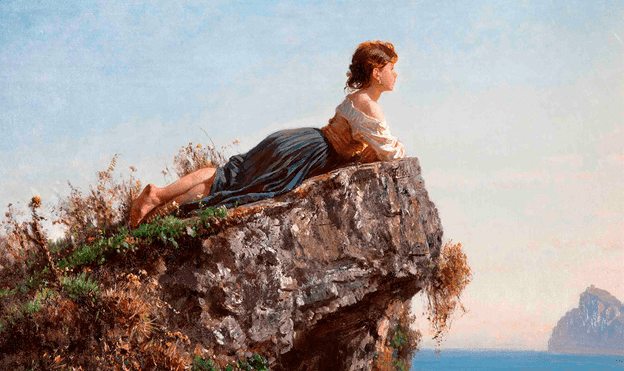
Fillipo Pallizi, Franciulla sulla roccia

Lives of great men all remind us
We can make our lives sublime,
And, departing, leave behind us
Footprints on the sands of tim
e

Henry Wadsworth Longfellow — A Song of Life

Geert Hofstede’s research suggests that striving for a life that will be noticed is fundamental to the American psyche.  And, in a big country, the longing is often equally big and broad.  From Patrick Henry to John Wayne, large and swaggering (and male) is what is noticed.  I saw myself in the narrative, but identified as a thoughtful visionary seeking a bigger world – like Pallizi’s romantic 19th c. portrait.  As I noted previously, my husband called this “International Karen” who, as frequently as possible, moved beyond contemplation to collaboration with people in other countries who also wanted to make their schools better. But, between Covid travel restrictions and a dwindling passion for experiences far from home, International Karen is coming to terms with the obvious:  the past will not be the future.  What is emerging is a different longing—to figure out how to leave smaller but still meaningful footprints.

Several years ago, some friends and I – (aka, The Retirement Biddies Workgroup) — read Sarah Susanka’s reflections on living a “not so big life”.    A well-known architect, she urges us to think about what really matters through analogies between designing a smaller home and designing a smaller life.  Some of her questions are relevant to anyone at any age:  How is what we are purchasing fitting in with what we need?  How are we using our resources?  When do we have enough?  But then, her zinger:  How have you wanted to change the world and how are you looking for related changes in yourself?  Her challenge suggests beginning with our biggest aspirations (do they come much bigger than changing the world?) and then look internally to see as if we are up to the task. 

But that question needs reframing in a life that has become radically smaller during Covid, while I am also busy considering a future that will inevitably be different from my expectations of a few years ago.  As I look at “international Karen” and cringe at the carbon offsets that I owe the world, I know that I could not go back, even if it were possible.  I pulled Susanka out of my bookshelf….

At a personal level, I have already made a commitment to a smaller life. A decade ago, Dan and I made a radical move from a rather large house to a condo, which was about the size of Susanka’s designs for a “not so big house”.  When The Retirement Biddies were contemplating the “not so big life”, Dan and I had given away many of our possessions, including furniture, books that we finished reading many years ago, and appliances that we rarely used.  We felt lighter and patted ourselves on the back, while filling every nook of our new walk-in closets.

But I was still working.  Although my home office was small, I had a bigger office at work for all the professional stuff.  The only question “not so big” question that had immediate resonance was a more thoughtful consideration of what we were buying. It was all about “the stuff.”

But now retirement-during-Covid is a reality, along with the unanticipated consequence of our decision to stay in Boulder, CO where we are engaged in a noble experiment: two people living peaceably in a 1000 square foot 1960s ranch that has only two interior doors that don’t lead to a toilet.  But this requires a different kind of decluttering.  The grand project of moving and starting over – just like those who are part of “the great resignation” or who have otherwise changed their lives in the last few years – requires a decluttering of the spirit and heart. 

The challenges are huge.  I have always been BUSY, largely with activities that are not essential. I  am easily distracted by emails or random thoughts.  I have never meditated, and have been totally unsuccessful at journaling because it requires discipline.  Since childhood, I have been unable to cope with boredom and have a long list of attractive projects that I can turn to if that awful feeling appears.  But these habits, some of which were functional when I was “busy working”, are now impediments.  In Susanka’s terms, I am unable to turn away from alluring “time clutter”. 


Clearing out the heart requires stillness – so different from concentration —  that does not come naturally.  I have taken a course on contemplative prayer.  I have read poetry out loud.  I have worked on a skill that never came naturally to me – listening to what other people are really saying rather than immediately generating a stimulating conversation.  I am even weaning myself off the computerized calendar that beeps too often, and writing out to-dos and appointments using a fountain pen.  More importantly, I am tracking a new habit – explicitly noticing, contemplating, and being grateful for something that is exquisitely beautiful, whether in nature (frost covered ornamental grass or snow on the Flatirons outside our house) or when making faces with a four-and-a-half-year-old.  And writing down a few of those things in turquoise ink.  I really love the turquoise ink. 

But what about changing the world?   I take heart in reading aloud Mary Oliver, who suggests that, at least for a poet, a large life can be inscribed through small acts: 

I don’t want to live a small life. Open your eyes,

open your hands. I have just come

from the berry fields, the sun

kissing me with its golden mouth all the way

(open your hands) and the wind-winged clouds

following along thinking perhaps I might

feed them, but no I carry these heart-shapes

only to you. Look how many small

but so sweet and maybe the last gift

I will bring to anyone in this

world of hope and risk, so do

Look at me. Open your life, open your hands.

Mary Oliver – I Don’t Want to Live a Small Life, Red Bird

To live a more open and intentional life, I need to consistently remind myself that small efforts, expanded over many committed people can make a difference in this world of hope and risk. I think of the years when I hauled dozens of yogurt containers to my office before my city started recycling – only to find out now that the containers were not actually recycled.  So, my Instant Pot and I now have a bi-weekly routine that involves yogurt making.  I find local issues that are pressing – affordable housing, unjust judicial practices, and the continued exclusion of the Native people who once owned this land – and find others who want to change them.  Goodbye International Karen:  You did good work and had fun.  Now I want to bring small gifts to the place where I live and to those I am with – and I also remind myself that large footprints in sand will be washed away.  

Doubt and Reflections

In this short Life that only lasts an hour

How much – how little – is within our power

-Emily Dickenson

Almost a year ago I asked Fran Vavrus if I could have a copy of her new book, Schooling as Uncertainty, and I would write a review in return.  I finished reading it some time ago, but pulling my thoughts together to prepare a review for a scholarly journal – something I am usually able to do easily – has been challenging.  As I texted Fran ( and have repeated to many other people), her work gob smacked me:  I thought I had signed up for an exegesis of her ethnographic experience studying women’s education in Tanzania – a country about which I know so little that I was sure that it would be an intriguing read.  Instead, what I encountered was a book that is equal parts scholarship, personal memoir, and a timeless story. 

Fran’s big message is that the accepted mantra, “get more education to get ahead and have a good life,”, may be accurate for some populations, but it obscures the circumstances that disrupt the narrative’s accuracy for individuals.  She recounts in loving and sometimes intimate details the histories of talented rural Tanzanian children, whose life paths she has followed for years.  Their journeys  through secondary or higher education – some successful, some not – often depended less on their own effort and more on the appearance (or disappearance) of family members or mentors who could afford school fees, or their family’s geographic location at  a convenient distance from schools for which they were qualified.  As she wrote searingly about those whose chances were permanently derailed by the AIDS crisis, which orphaned or impoverished many, I was struck less by the foreignness of their stories than by their congruence with my experience.    

I read Jonathan Kozol’s Death at an Early Age, when I was in graduate school in New York City.  It was the late 60s – a peak period of street crime and also the “great school wars”, where poor parents in Ocean Hill-Brownsville rallied for more say in their children’s schools and teachers called for more professional determination.  The conflict was a true dilemma – both sides had a point.  Those experiences led to my 40-year obsession with studying urban schools.  But, in the end, it is still often the children who have lost.  Big visions, like the Great Society or Eugene Lang’s I have a Dream, did not dent the immediate realities of family economics, under-resourced and segregated schools, and the distraction of immediate opportunities that promised survival.

Ok, so those are the facts, backed up by solid analysis.  But what about all the other unseen stories of uncertainty that are deeply painful although not associated with dramatic, newsworthy failure?  Even for my friends who are not impoverished, life has a way of interfering with the dream that education is easily available and can open all doors.  Just as in Tanzania, early marriage or unplanned pregnancy, a parent’s death, or temporary homelessness throw careful plans into disarray:  the hope for something big “out there” is abandoned (or delayed).  For my mother, being orphaned in the Great Depression meant that the generous uncle who paid her tuition at the University of Minnesota thoughtfully added a requirement that she become a teacher (sure employment) rather than a biologist (risky, especially for a woman). Karen Martha waved her sister off to college, but had to confront her parents’ financial collapse when it was her turn.

Uncertainty is always close to the surface as Fran interweaves her own life experiences in the U.S. with those of friends and colleagues in Tanzania.  Her personal stories make me cringe with recognition.  Fran’s dissertation was viewed as “theoretically inadequate” by a single faculty member, which required her to spend vast amounts of energy and time in revisions and prevented her from graduating on time; my experience was similar, although my advisor bulldozed the less powerful member of my committee.  Fran’s critical promotion to a tenured position was almost derailed, again by a single faculty member.  In my friend Doug’s case, an erratic committee in one of the U.S.’s most prestigious institutions sent his five years of post-graduate work into a black hole, to be resuscitated much later at a different institution.  I stepped off the tenure track for a decade to avoid the tenuous assistant professor role while I was a young mother (no, you can’t have it all….) and managed, largely through unanticipated opportunities, to get back on track. Those are happy accidents.  But I have seen other colleagues sidelined because they didn’t follow all the unwritten rules on the way to tenure – or had a dean who disliked them.  Conformity is required, but it does not eliminate uncertainty.

Speaking from my own vantage point, the timeless story in Fran’s book is more than a cautionary tale about the certainty of financial and personal payoff from education.  Instead, her narrative leads me to consider each of the uncertainties I have encountered and how my struggle and occasional despair remains within me but disappears from the abbreviated public arc of a life that looks seamlessly successful (my close friends know better).  As with Fran, thinking about my personal encounters with uncertainty at this juncture in my life has affected how I retell my story, not only to myself but to others.  Perhaps that is why I do not run out of things to write about for Karens’ Descant….

A final reaction to Fran’s description of the effects of Tanzania’s post-colonial turmoil on educational careers requires me to consider how individual experiences are situated in their larger context.  When and where we are born – in times of affluence, war, or environmental crisis – adds an existential uncertainty that we cannot escape.  Like most people, I have intense reactions to social unrest as it happens but often become aware of its long-term impact only much later.  I grew up aware of the magnetic evil of McCarthyism in the 1950s because academics were among those he targeted, and my father was at the beginning of his own career as a professor.  A lasting consequence is that I do not trust the wisdom of crowds and popular opinion. I grew into early adulthood in the 60’s and early 70s, when it felt as if the foundations of the country were at risk, so aptly captured in the last few months by Ken Burns’ probing visual chronicle of Mohammed Ali, and the (for me) very personal movie about the Boys Who Said No! to the Vietnam War.  Now, as the country feels, once again, as if it has lost its collective mind, I am pricked again by the menacing prescience of William Butler Yeats’ Second Coming, written in 1919, just after World War I:

Turning and turning in the widening gyre   

The falcon cannot hear the falconer;

Things fall apart; the centre cannot hold;

Mere anarchy is loosed upon the world,

The blood-dimmed tide is loosed, and everywhere   

The ceremony of innocence is drowned

Fran’s depiction of the larger conditions over which we have no control echoes throughout her story, initially set in one of the poorest countries in Africa, but also situated in her own experiences.  I am humbled by the resilience that accepting uncertainty brings to those who live with it as a fact of their own and other’s lives. The art of muddling through life’s inevitable ambiguities and failures is not a skill that we usually promote to our children (or grandchildren), but as I view events through the rear-view mirror, it feels like one of the most important lessons.  Fran has reminded me that, when I cling too closely to something, the universe is laughing.