Unknown's avatar

About Karen Seashore

I am a sociologist, life coach, policy wonk, and tarot reader. Other than reading a book, I always prefer to work with other people. Creating small changes -- in myself and in the world around me -- is my calling. You can find my scholarly publications under Karen Seashore Louis (or Louis, K.S.).

Memory and Story

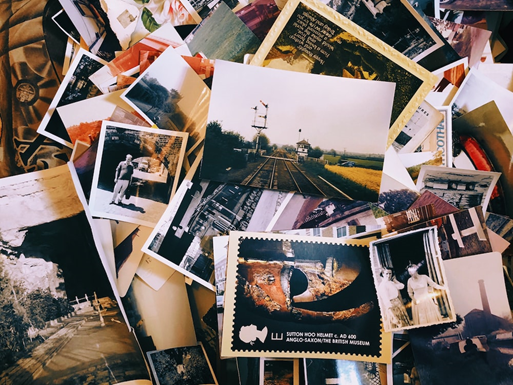
Photo by Jon Tyson on Unsplash

When to the sessions of sweet silent thought
I summon up remembrance of things past
(William Shakespeare)

A man needs such a narrative, a continuous inner narrative, to maintain his identity…(Oliver Sacks)

Much is made of the way in which memory erodes among the elderly – a group to which I am beginning to concede that I belong. Memory loss is considered normal, and it is true that my ability to recall information – the name of a restaurant that I loved in New York in 1970 or even the names of some of my childhood friends – is not immediate.  Now, my husband and I say that we are lucky to have two brains, which allows us to come up with a missing piece of information sooner.  Sometimes I kick myself when it is some simple, common word that has, slipped my mind.  Slipped my mind – memory is such a slippery thing indeed.

Recent research suggests that the slipperiness that I (and most of my friends) are experiencing is not the whole story.  We may have mild forgetfulness, but we are actually wiser:

“Some brain areas, including the hippocampus, shrink in size. …These changes can affect your ability to encode new information into your memory and retrieve information that’s already in storage. On the other hand… connections between distant brain areas strengthen. These changes enable the aging brain to become better at detecting relationships between diverse sources of information, capturing the big picture, and understanding the global implications of specific issues.” Harvard Health Newsletter

https://unsplash.com/plus/license

This may be comforting to some people, but memory is still important to me —  Not the name of a restaurant, but the people who were there, the conversations we had that made us laugh, and how the evening created a friendship and endured for years.  I want to be able to summon up not just the grief that I felt at my mother’s funeral and any wisdom that I may have acquired about how to anticipate and live within grief (wisdom?), but also to remember that my cousin Butch played “When the Saints Go Marching In”, what words were spoken by whom, and even what I wore.  I want both to feel it very specifically AND to connect it to other events of loss in my life.  But I can’t remember what I wore….yet. 

The older I am, the more memories I carry and the more I need to make sense of these past events, feelings and images in the context of my life today.  This is what the practice of telling our story, whether orally, by journaling, or in a memoir, is about.  Oliver Sacks argues that “Every act of perception, is to some degree an act of creation, and every act of memory is to some degree an act of imagination.” But given my capacity to invent a past out of whole cloth, I have to work hard to prevent my story from being fiction!  In addition to reconnecting with past feelings – anger, grief, lust, joy – I want to give them additional color, and come closer to something real, with specifics. 

Recently, Karen Storm and I attended a writer’s retreat, where we planned to spent a chunk of our writing time working on the Karensdescant blog.  Instead, I woke up before the workshop feeling unnerved and vaguely remembering events from decades ago. By the time I got to our idyllic hermitage, I knew that I had to write about it – but my memories were fuzzy and still unsettling.  Karen Storm came with a less clear idea of what she might want to noodle on in addition to the blog, but was struck on the first evening with two old memories of her own that called her. 

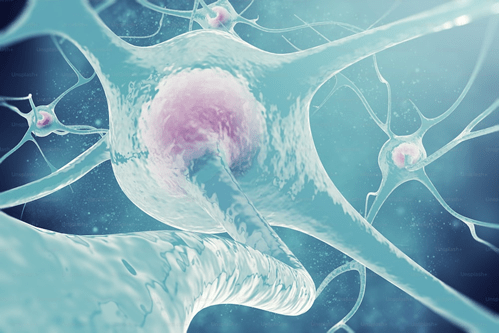
In the end, we never talked about Karensdescant.  But we both happened on something more important – something that those increasing, branching, interlinked dendrites in our brains – the privilege of being old – demanded we attend to.  We wrote like maniacs, multiple pages infused with both tender and crushing details about important events falling into our computers,  connecting past events and people and finding new links with our present lives.  We were recalling information, pulling out succulent details that were not immediately at our fingertips, and making new stories out of past circumstances. 

In my case, it was clear that my memory of a very old relationship was encapsulated in a very short story that that I repeated so often, both to myself and others, that it seemed to be as real as the door to a room or a book on a shelf:  “We met and loved in wonderful places.  But it was too complicated.  It ended.”  But there’s the rub:  when I open the door to a room in my mind, I am amazed at what lies behind it that is unexpected – or what isn’t there that I was sure that I put away a short time ago.  When I open a book to reread it, there are sections that I don’t remember, while others that I starred on the first reading no longer seem as important as they did.  Anna Karenina is like that for me – it has a different meaning in every decade of my life.

It is not that my memories about that particular relationship are especially elusive – it’s the details that I have left out because they were (deliberately?) buried, or seemed trivial, that demanded some major rewriting. The editing included dredging up more information, but also a desire to make sense of old, lost relationships in the context of the life that I have subsequently woven, together with many others who I did not know or were not yet born, in the decades since.

Photo by Daniel Schludi on Unsplash

During the retreat, I wrote a different narrative that is much longer and has changed the way that I think, not only about that relationship, but all of my relationships with people  I have loved. This was not the Shakespeare of Sonnet 30, who descends into rather weepy nostalgia, but an urge to reorder my house to see that old things that still intrigue me are put into places where they connect with others parts of my life.  I can almost feel the dendrites communicating with each other. 

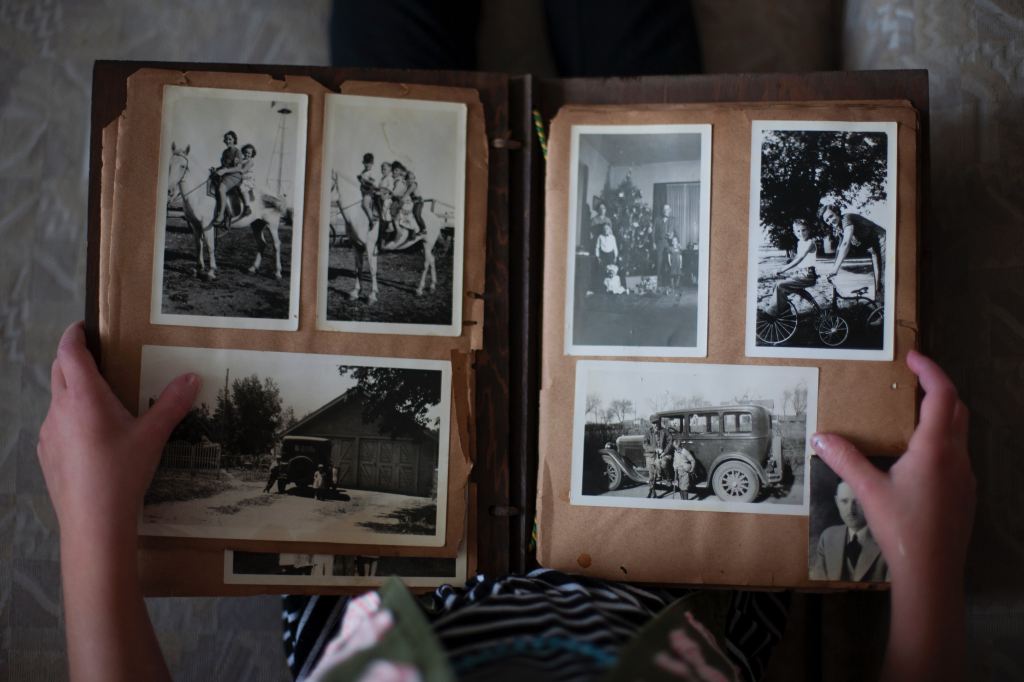
Friends who have worked with hospice patients talk about how they observe people holding on for a few more days to make sense of some aspect of their life that feel unfinished.  When I ask myself (or am asked) to remember more details, I find connections that I did not make in the past.  Or, I remember something that was said that changes the way I need to tell the story. What is different for many of us as we age is feeling a need to make sense of our lives more deliberately, with more care, whether we are writers, talkers, or scrapbookers.  When it comes down to it, we are all just trying to make a little more sense of this very non-linear project that is life.

Curiouser and Curiouser….

–          Alice in Wonderland illustration by Arthur Rackham (1907) [Public Domain

Grown-ups never understand anything or themselves, and it is tiresome for children to be always and forever explaining things to them (Antoine de St. Exupery, The Little Prince)

A few weeks ago, someone quoted from Brene Brown’s Atlas of the Heart: “Choosing to be curious is choosing to be vulnerable because it requires us to surrender to uncertainty”.  Brown goes on to associate curiosity with discomfort:  “We have to admit to not knowing, risk being told that we shouldn’t be asking.” Later, Brown links curiosity with the perception of an information gap that we commit to closing.   I immediately bristled – internally, since it would have been inappropriate to react to the nodding of heads and pervasive affirmation in the group. 

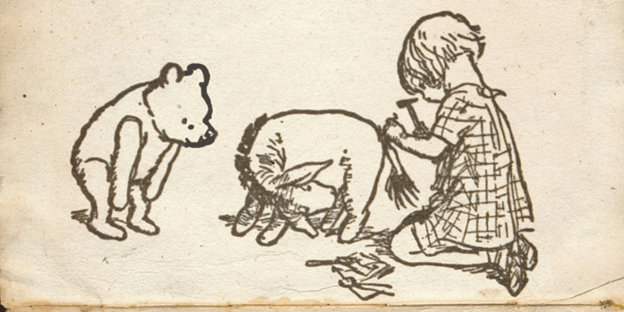
When I was a young child – and even when I was old enough to read them myself – two of my most beloved books were Alice in Wonderland and The House at Pooh Corner.  I read them joyfully to my children – and later to my grandchildren.  What I cherish about both of them is their exploration of simple, uncomplicated curiosity.  Alice hesitates only briefly before biting, although she knows that “one side will make you smaller, the other will make you large”, while the doorknob says “nothing’s impossible.”  Pooh looks at every day as a fresh adventure, whether it is confronting the loss of Eeyore’s tail or stalking the mysterious Heffalump.  While Alice sometimes bemoans a choice she has made, she quickly picks herself up and asks another impertinent question.  Pooh, on each day’s adventure, only hopes that there will be honey involved.

Curiosity may involve a risk, but it is not something that holds either Alice or Pooh back – more than momentarily.  Eeyore reminds us that worrying about not knowing – at least more than briefly – can be a path to cynicism and depression.  I took this lesson to heart:  Be curious.  Move on with the adventures.  Don’t do anything potentially life-threatening, but assume that the jams that you get in to will be temporary.  Don’t think about the “information gap” but move toward the unknown.  In other words, nurture the impulse to try stuff, and a full range of emotions that encompasses trepidation, but also the delight that comes with doing or learning about something new.

It turns out that Brown is talking to people who feel “stuck” in a comfort zone.  She covers all the research that says that we will be happier and freer if we respond to “I don’t really know” with curiosity. We all get stuck sometimes….certainly, retirement for someone like me, who loved going to work, meant that I had to allow myself to drive past the exit for my office without feeling lost and uncomfortable!  And although many routines nurture us (brushing our teeth, eating lunch, going to bed at roughly the same time on most days), it is easy to slip into ways of thinking and habits that constrain.  But getting stuck seems to be something that we choose more and more often as we exit adolescence.  With Alice, Pooh, and Thich Nhat Han as guides, however, we see that embracing vulnerability (which Brown endorses) is not a conscious decision to endure discomfort, but a practice of anticipating novelty and adventure – of embracing childish wonder and a Beginner’s Mind.  

And then there is the spiritual side.  One version of Genesis situates our humanness in “original curiosity”:  “And when the woman saw that the tree was good for food and that it was pleasant to the eyes, and a tree to be desired to make one wise, she took of the fruit…”  Albert Einstein echoes this, suggesting that “curiosity has its own reason for existing.  One cannot help but be in awe when one contemplates the mysteries of eternity, of life, of the marvelous structure of reality…Never lose a holy curiosity.”  Julia Cameron also argues that curiosity is a spiritual path rather than a cognitive decision, and that it requires habits – she suggests random writing in “morning pages”, scheduled “artist dates” to explore a new esthetic, and regular walks that have no purpose other than to look deeply at whatever is in one’s path. 

Photo by petr sidorov on Unsplash

I admit that I don’t do these as consistently as I once anticipated, but I have other habits that invoke the same opportunity to approach the world with a Pooh-like sense of wonderment.  Meditation – something that for years I thought that was beyond my capacities – clears my brain of monkey-mind, and creates space for hope that goes beyond ticking off items on the incessant to-do list.  Connecting every week with someone (or several people) who are willing to engage in authentic and vulnerable conversations about “big stuff” never fails to make me curious.

Of course, I take Brene Brown’s assertions about the benefits of curiosity to heart because it is particularly important as we age.  According to Henry Emmons and David Alter’s 9 Keys To Staying Sharp, curiosity comes only a few steps behind the basics of moving, eating well, and getting enough sleep in warding off mental decline.  Nor do I want to ignore Brown’s s admonitions against getting too comfortable and avoiding vulnerability.  If I am always afraid of falling, will I ever learn how to skip again?  However, I also note that as we age we can more easily choose to embrace vulnerability and become more playful, as long as we are willing to follow Shel Silverstein and  “grow down” (along with giving away our business attire and our mother’s china):

He got his trousers torn and stained,

He ran out barefoot in the rain,

Shouting to all the folks in town,

“It’s much more fun, this growin’ down.

 — Shel Silverstein

Stories and Legacy: A Dialogue

Photo by S O C I A L . C U T on Unsplash

Karen’s Descant is all about telling stories.  We resonate in our bones with Doris Lessing’s observation that stories are what make us human:

Humanity’s legacy of stories and storytelling is the most precious we have. All wisdom is in our stories and songs. A story is how we construct our experiences. At the very simplest, it can be: ‘He/she was born, lived, died.’ Probably that is the template of our stories – a beginning, middle, and end. This structure is in our minds.

Lessing’s appreciation of legacy has been reflected intermittently in our dialogues over the past few months.  What follows is a much edited summary.

Karen Martha:

Last fall one of my friends mentioned that for many of us, our children are our legacy. That has danced in my head all winter, because I have no idea what my legacy might be. I’ve never considered my children my legacy, more like my effort to enrich the human genetic pool, and they are on their own after that. I mean, what if one of them robs a bank? Would I be responsible for that?

This led me to start thinking about what a legacy is. As always, I love to pick your brain. What do you think of when you hear the word “legacy?”

Karen Rose

I think that our culture often asks us to focus on the tangible assets that we will leave behind, whether it is money, an endowed building, or objects that we have created – and that is the first dictionary definition.  And we have been wrestling with that obliquely – as in What is My Footprint.  But the other side of legacy is not what we will leave but what we have received from the past.  I am asked to see myself as a legacy, not from one or two people but also from what flows through them to me. 

Karen Martha:

I hadn’t thought of legacy as what flows through us from the past. It’s hard to get my mind around that since my mother refused to talk about the past, and I lost contact with my father when I was in third grade. My past feels like it starts with my parents.

Karen Rose:

I can be very concrete about some aspects of my past.  My “Swedish family” came to the United States, primarily to the Midwest, starting in the 1860s.  Through accident or karma, all of those who came early married other “Swedes” – mostly native born – up through my parent’s generation.  This legacy cannot be defined precisely because I know that I am truly American and not really Swedish-American. Yet, the family stories about all those distant relatives – people who I met before I had real memories or sometimes never met – which make me feel like a legacy. And I don’t even remember the specifics of most of the adult chatter that seemed endless when I was young! The most precious object that I own is a small box that accompanied my great-great grandmother on the boat to the US.

Other assets – or obstacles in some cases – are less obvious…but what do you think?

                Photo by Laura Fuhrman on Unsplash

Karen Martha: I resonate to the idea as carrying the past forward but what about someone like me who grew up in a family where there were no happy stories or family keepsakes? I’m inclined to tell myself that no legacy is, in fact, the legacy. It was impressed on me growing up that it was up to me and my sisters to do better than my family as a whole had. “You are going to college. You do not have a choice in this.” It was as though they were say that it was up to me to live out their dreams and start a legacy anew. That said, there was a darker side to this legacy. It built in me a strong desire to not only realize their dreams but also to avoid their mistakes, among them a strong thread of alcoholism. I was determined NOT to be like them.

Karen Rose:

But you have put considerable effort into retrieving legacies that you were not freely given in your nuclear family.  You looked for and found your biological father’s relatives, and you  visited them with your own children and their families.  You describe a hole that feels a bit similar to people who are adopted and want to find out more about their blood relatives, even if they are surrounded by love in their adoptive family.

Do you think that this need to feel the threads that tie us to those who have been before – even if we never knew them – is due (at least in part) to our sense of ourselves as peripatetic rather than firmly rooted?  You have moved 30 times since becoming a young adult; I can’t quite match that, but have lived in other countries and in six states, never settling anywhere long enough to feel as if I had a home place…

The underlying question is whether my sense of myself as legacy could have been tied to stories about place rather than only to people if my life had been very different…

Karen Martha:

When I think about place, I am reminded that the minute my grandfather stepped on a boat to the US from Norway, he was leaving his familial legacy behind. I believe that place does matter, probably more in some countries than the US. When I visited Norway I stood next to the fence dividing my grandfather’s farm from the farm my grandmother came from. My second cousin said, “This is where you started, your grandparents talking over this fence, falling in love, and moving to the US.” As she told that story, I felt firmly rooted, even though I’d not spent my life in that place and even though my grandfather had left to start a new life in a new country.

Karen Rose:

We are our history, which includes far more than any particular short story that we tell about ourselves…It is not just the stories that I overheard about distant family connections, but also those that I have incorporated based on events and relationships. The older I become, the more aware I am of how much of my identity is tied in with living in another country and becoming almost fully absorbed into another culture when I was old enough (11) to understand the differences but emotionally and socially very pliable. I have lost touch with everyone I knew then, but their faces and their stories loom very large in my own narrative. 

So, for both of us, a critical and unplanned encounter with place and people has shaped our story of who we are.

Photo by Markus Winkler on Unsplash

Life Connections

Photo by Alina Grubnyak on Unsplash

Retirement has put me in a stock-taking mood, less a search for meaning than simply an understanding of my past and present.  I often turn to internal story-telling….

My narratives change with new insights and reedits. These days, I have moved away from event-based stories (the college years; the productive 50s…). Julia Cameron, in her follow-up to The Artist’s Way focusing on the over-60 crowd, urges us to take our chronological age, divided it by 7, and write about the years included in each span.  As Dan and I watched the 7-Up series, which every 7 years revisits the lives of a randomly assembled set of English children, I thought of how powerful it is to break away from the constraints of decades or major events as chapter markers in our stories…

But in the past few months my internal storytelling has focused less on chronology and more on the way in which people intersect with each other and with loosely defined periods in my life.  Much of this happens when someone from my past seems to pop in to my mind for several days, causing me to rethink how and where they belong in the threads braided into my experience.

Last week a personal message on LinkedIn told me of the death of someone with whom I had lost contact.  That loose connection, between continents (my friend who died was Dutch) and across generations (the messenger is at least 20 years younger than I am), activated memories of a wider network of people who were meaningful to me over more than a decade, even though they did not constitute an identifiable social group.  What I was struck with again is the how this nebulous collection of colleagues, friends, acquaintances has provided meaning to my life, even though its members do not cohere into a usual life-story format.  They represent, collectively as well as individually, an extended period in which I felts as if I was learning about the world, other people, and professionally every day. 

Photo by Moritz Kindler on Unsplash

Thich Nhat Hanh’s idea of interbeing – the dependence of all beings and things upon one another captures this nostalgic gratitude:   

… I was looking for an English word to describe our deep interconnection with everything else. I liked the word “togetherness,” but I finally came up with the word “interbeing.” The verb “to be” can be misleading, because we cannot be by ourselves, alone … the action of interbeing reflects reality more accurately. We inter-are with one another and with all life…. Whether we’re at work or at home, we can practice to see all our ancestors and teachers present in our actions… We can experience profound connection and free ourselves from the idea that we are a separate self ( from The Art of Living)

While this way of thinking is still a bit mind boggling to a Westerner raised with Descartes’ individualistic claim that “I think therefore I am”, it leads me to pay attention to human connections beyond the people I love with all my heart.  Facebook, LinkedIn and Twitter can be a rabbit hole and a space to post the least interesting things that happen in my life (yes, I admit to occasionally bragging about Wordle), but they also allow me to contemplate the loose linkages that are part of my direct experience of interbeing.  

I smile when I read the words of adult children of friends whom I haven’t seen in years, and I am filled with awe as I look at them sending their own babies to college. At one level this seems trivial, but at another it reminds me that networks are never lost, even if they are not currently active.  And, as the miracle of Facebook informs me that a friend who meant the world to me from 7th through 12th grade had visited her childhood home, I became instantly reconnected to her parents, whose escape from Nazi Germany created the opportunity for hosting a gaggle of very ordinary American teenage girls, which in turn opened up other doors of connections, known and unknown.

Photo by Joshua Hoehne on Unsplash

I am also in awe of how my own (middle aged) “kids”, who grew up in a world of cheap phone calls, cheap flights, and the internet, keep consistent contact with beloved friends from high school as well as college.  I, however, grew up in an era when a long-distance call home to my parents from college was short because it was costly, and visits to relatives who lived a few states away were rare because they involved several days of driving.  Constant connection is a habit I never developed, and my life is littered with people—friends, relatives, mentors– with whom I lost touch with completely.  And now, increasingly, I think about those who died before I could reconnect and share the unspoken gratitude for what we meant to each other.

I regret these lapses as a byproduct of the dismal period when the art of letter writing had died but the internet was not yet born. However, I am persistently struck by the way in which inactive connections become potent with even a few exchanges.  During Covid, Google provided me with the email of someone who I knew in both college and grad school — I thought she would be amused that I had cited her 1972 dissertation in a paper.  We have been exchanging episodic emails with personal, professional and family news – almost as if there were not a 50-year gap in our shared experiences. Facebook and loose connections allowed my own adolescent gang of “cool nerds” to commit to our 50-year high school reunion and, more surprisingly, to two additional get togethers with some (including me) traveling long distances.  Our parents are gone, none of us live near where we grew up, and we are the only ones other than siblings who can tell stories about our teenage years that stir a sense of connection not only with each other but with place and time. 

I know that taking interbeing seriously requires more sustained spiritual practice.  But perhaps it is the enforced isolation from our closest friends and family during Covid that supports the deeper significance of our looser human connections, whether one-off conversations, attentive participation in group events, or the spontaneous reconnecting that seems to be happening in my life.  As I get older, the significance of loose ties that are filled with caring and compassion has never seemed more important.  I am committed to contacting at least one “loose” connection regularly, only to remind ourselves of how we fit into each other’s stories….