Unknown's avatar

About Karen Martha

I am a searcher and not always sure about what I’m looking for. I’ve lived in thirty-nine houses in four states and changed my name five times. One would think I embrace change, yet I find it discombobulating. My unrest is part of what inspires this blog on retirement. It’s like a last chance to live reflectively, instead of wandering helter-skelter into whatever shows up to keep me occupied. I’m interested in the soul work that presents itself at various times in our lives and in how that changes us. In past lives I taught middle school math and science, raised two children and helped with four grandchildren, finished four degrees, worked as a professor and researcher, and married three times—whew. In my present, retired life, I’m tutoring 4th graders, learning rosemaling, and when I’m not working out—writing—writing about this wonderful, often painful, and fascinating journey.

Woe Is Me

I found this on Google, and it's the exact picture Aunt Selma had.


Description automatically generated
This is exactly how Aunt Selma’s looked!

Karen Martha’s Take on Should I Stay or Should I go

June 14, 2020

Next to the bathroom door in my Aunt Selma’s house was an embroidery with a cross-stitched house and below it the saying: Let me live in the house by the side of the road and be a friend to all. (Actually, as you can see from the picture above, it said a friend to man, but over the years, I’ve revised it to a gender-neutral ending.) I have always imagined myself aging into a tiny woman, living in a nondescript house with overgrown bushes in front, doling out cookies to the neighborhood children and wisdom to their young mothers, and being a friend to all. In short, I wanted to age in my home. I didn’t think about marriage or any complications. It would be just me, in my own modest home, like Aunt Selma.  

Needless to say, things haven’t quite turned out this way. Here I am in south Minneapolis, near our lovely Minnehaha Creek Parkway, lakes, and hiking and bicycling paths. An abundant, green landscape greets me every morning—who would ever want to leave (It’s easy to forget winter in the midst of summer)? I’ve moved over 40 times in my life and putting down roots has been a pleasant surprise to me. I’m not sure that I believe this is the place, but it’s a good place overall.

I also live with a husband, so though I might be called tiny, and definitely aging, I’m not alone to hand out my cookies and wisdom, and truthfully, he’s much better at being a friend to all. Where I live, at least for now, is a decision we made mutually.

Idyllic as our home may sound, gradually our response to it has changed. The gardens that surround every corner of our yard, while giving us a lovely view from our windows, shout at us to get outside and weed, thin the overgrown phlox, and trim the bushes. Gardening, especially in the spring, weighs on us. Last spring the downstairs flooded, and we had to get new flooring. Then the aging air conditioner quit and had to be replaced. . . and the house needs paint. I could go on and on, but anyone who owns a house knows that there’s a price to pay, in sweat and money.

Meanwhile, our friends have moved from their houses into low maintenance townhomes, and in the case of our best friends, out of the Twin Cities, taking a piece of our hearts with them. So, we began to ask, what about us?

That’s when the serious discussion about moving began, much like Karen describes in her piece Should I Stay or Should I go?. Jim, my husband, gets wanderlust just about every morning, and he solves it with a long walk and a stop at the coffee shop—even during COVID. But periodically—I haven’t calculated the length of the interval—he ratchets it up and wants to move completely. When he mentioned moving again this May, at first I benignly ignored him and waited for him to cycle back to staying here.  But he didn’t. I started to listen and examine my own feelings.

Having an over-developed left brain, I immediately researched how to make decisions. I knew there were lots of formulas out there for processing information, but I didn’t know that there’s also a literature that says we older folks aren’t as good at it as younger people are. To quote: Aging may affect decision performance in more complex decision situations. The bright spot is that older people do well with decision making about that with which they have experience—in fact, we’re very good at drawing on our experience—and I am an expert in moving. 

So as not to compromise our decision-making performance, I copied down a list of questions from Forbes, not a perfect list, but somewhere to start so we wouldn’t be swept away by our feelings of loss and life moving forward for others but not us. I was determined that we would make a rational, as opposed to an emotional decision. The questions were helpful: How will you fill your days? Who will you spend time with? What is wrong with where I call home now? And, of course, Can I afford to move? They spurred a terrific discussion, and I recommend them to anyone considering a move after retirement.

It turns out that my vast experience in moving is not helpful because decisions in the past were largely career or family related. This decision has nothing to do with career or where we want our children to go to school. Instead, one factor alone permeates all decisions made in retirement—AGING. And we are learning that as we go. We ask ourselves: Will a move be largely lateral, meaning, we may want senior or assisted living within less than five years. What about one level living? Bad knees run in my family, and I have inherited that weakness. The questions pile up—How much space can we manage? How much space away from each other do we need and can we afford? How close to our children do we want to be? 

After considering many questions that we can’t completely answer, the decision for us comes down to a strong emotional pull—the need to feel that we are not living as though we’re getting ready to die. How to do that can mean different things to people. Some want a more communal setting because they want to stay engaged with others. Some want to garden, woodwork, own multiple pets, golf, or all of these. We want to move now for the adventure of it, the newness, the novelty of learning about and adapting to a new environment. We don’t know how long we have. I don’t know when my knees will give out, and Jim doesn’t know when his health issues will escalate. But meanwhile, if we want to live life to its fullest, living with fewer house-owning responsibilities seems like a start. So off we go!

July 15, 2020

A week ago we got a quote about painting our house.  We looked at each other and said, “Have we made a decision about moving?” We had our answer.

Musings. . . George Floyd. . . Dreams. . . Hope

The week after the murder of George Floyd, Karen Rose and I, as Minneapolitans, were too shocked to post, write, or even think about our blog. In a place we both love dearly and call home, something so tragic happened that the sadness was overwhelming. Because I am in Minneapolis, I mostly responded by following the news 24/7, putting aside worries about the pandemic for a bigger concern. Karen Rose, who’s been away from our city because of how the pandemic unfolded, said she kept thinking of Langston Hugh’s poem Dreams.

Dreams

Langston Hughes – 1902-1967

Hold fast to dreams 
For if dreams die
Life is a broken-winged bird
That cannot fly.

Hold fast to dreams
For when dreams go
Life is a barren field
Frozen with snow.

While the George Floyd tragedy unfolded, I remembered two African American students I encountered in my preservice teaching education. The first was Kenny, at the time a fourth grader at Irving Elementary School in Minneapolis. As young as he was, Kenny had charisma. Kids and adults wanted to be around him. He exuded friendliness and confidence in himself, even though he couldn’t read. When he learned that my husband had attended Irving and that his parents still lived in the neighborhood, Kenny started visiting my in-laws who were quite taken with him. Evelyn, my mother-in-law, would have him in for a piece of cake or cookies, whatever she was baking, and Kenny became a regular at her house.

The other boy was fittingly named George, and I worked with him at Willard Elementary where I was doing my student teaching under the supervision of an incredible Black woman who ran a disciplined classroom with warm caring. She assigned George to me. George had tested below average at the start of the year and was about to be labeled educable mentally retarded (the term at the time), but she saw a spark in George’s eyes and did not want this to be his fate. George responded because Mrs. Hendrieth believed in him, and she assigned me to give him the attention he so sorely needed but hadn’t been given. By the end of the school year, he was reading on grade level and tested a 106 IQ, well within normal range. (IQ testing was the fashion of the time).

As I thought about justice and opportunity and as Al Sharpton put it, “keeping a knee on Blacks’ necks” I remembered those two boys and wondered what happened to them. That’s when I realized how big hope can be, because I always hoped that they had the opportunities and lives they deserved, that all people deserve.  

So what is hope?  It’s not just the opposite of despair, but it’s what keeps dreams alive. In early May, when it seemed things couldn’t get much worse than the pandemic, Karen Rose wrote about hope. How prescient that blog is for where we find ourselves today. She noted, hope rests on our capacity to change, even with an incomplete vision of what will be asked of us. I believe that George Floyd’s death has reminded all Americans of the dreams we hold for this country. But it also screams at us that not everyone has had a fair chance at these dreams. 

The relentless protesting, as jarring and frightening it has been at times, made us start looking for what is hopeful in our current mess of a country. Here’s our list of what gives us hope about our capacity to change.

Our Top Ten Reasons for Hope

1. Youth are energized and leading the movement for justice. A few days into the protests, Minneapolis St. Paul high school students arranged their own protest on the grounds of the state capitol. Young artists are speaking out.

https://www.startribune.com/mother-of-george-floyd-s-daughter-speaks-out-thousands-crowd-state-capitol/570964242/

https://www.startribune.com/two-young-artists-create-a-cemetery-in-minneapolis-to-honor-victims-of-police-killings/571213142/

2. People of all ages, ethnicity, race, income are standing together for justice, even in these polarizing times. Maybe we have found our unifying cause.
https://theconversation.com/george-floyd-why-the-sight-of-these-brave-exhausted-protesters-gives-me-hope-139804

3. Some police and National Guard personnel crossed lines in support of justice.
https://www.cnn.com/2020/06/01/us/officers-protesters-images-george-floyd-trnd/index.html

4. Reforms in policing are already beginning.
https://www.vox.com/2020/6/10/21283966/protests-george-floyd-police-reform-policy

5. Small town newspapers, from Brainerd, Minnesota
https://www.brainerddispatch.com/news/crime-and-courts/6522127-George-Floyd-memorial-raises-hope-of-change to Marshfield,Massachusetts
https://www.marshfieldnewsherald.com/story/news/2020/06/04/george-floyd-protest-police-attendees-hope-rally-marshfield-brings-unity/3137900001/ report hope and a chance for unity in response to George Floyd’s death.

6. Confederate statues, symbols of those who fought to preserve slavery, are finally being taken down.
https://www.nbcnews.com/news/us-news/virginia-has-most-confederate-memorials-country-might-change-n1227756 and https://myfox8.com/news/residents-react-to-confederate-monument-removal-overnight-in-alabama/

7. Faith groups are coming together to work for justice.
https://www.southwestjournal.com/news/2020/06/faith-groups-respond-to-george-floyds-death/

8. Support and calls for justice are worldwide.
https://www.npr.org/2020/06/02/867578129/cities-around-the-world-hold-protests-in-response-to-george-floyds-death

9. Businesses are speaking up for justice.
https://www.businessinsider.com/corporate-responses-to-george-floyd-death-analysis-racism-diversity-inclusion-2020-6

10. Individuals are asking what they can do and how they need to change.
https://lithub.com/letter-from-minneapolis-why-the-rebellion-had-to-begin-here/?fbclid=IwAR3EyDdOqw4dNnJ1BoiVfWgANpvdjWl0qVj966sY-5gSrG3aAUWZSt0x0pU

And now for a story that always reminds me that I can make a difference. When my second husband, Gary Stout, was dying, he felt regret that he had been nominated to be secretary of HUD, but was not given the position. He felt that he could have had a real impact on housing and urban development. In the last weeks of his life, he received many calls and letters from people he had worked with on small projects throughout the United States, including Anoka, MN. These people thanked him for the work he had done in revitalizing their communities. He was astounded by these heartfelt expressions of gratitude. He told me that he never realized the impact small projects can make in individual lives and locally. He said that for the first time he realized he had not failed even though he hadn’t made it to the pinnacle in urban development. His work had made a difference after all.

I remind myself of this often, because it’s easy to dismiss the impact of our small lives, day-by-day, person-by-person, and in our small circles. As for the lessons of George Floyd, real justice can only come when each of us commits to small changes in how we individually work for justice. I urge us all to be part of the change.

TO BE CONTINUED

Reinvention: Take #10

Who knew that every time I’d sit down to write about the notion of reinvention, so strong in the retirement literature, I’d end up more bewildered than I started. That’s why I’m on my tenth try. Here’s what I do know: most articles and books about reinvention describe it as about finding a new career late in life, something novel when compared to a person’s past life, and something that fulfills a dream. There’s also a thread of reinvention tied to greater purpose, reinvention both and in and outside of work, with deeper understanding, definition, and authenticity to one’s self with an emphasis on service. Clearly, there’s enough here for more than one blog and possibly even blogs by some re-inventers (anyone out there hearing the call to share a blog with us?)

The other thing I know with some certainty about reinvention is how riled I get when I think about it for myself. Re-inventing suggests that there was some original, invented self, or, if we limit the definition to reinvention as about career, that my career path was a deliberate invention, not a marvelous amalgam of propensities, opportunities, decisions, life experiences, roads taken and not taken, circumstances beyond and under my control—although I’m less inclined as I get older to believe we have control over much of anything besides our response—and just plain luck. And this sidesteps the whole nature nurture debate, both of which surely influenced the amalgam that is this Karen.

As I sit with the idea of reinvention, I see what it is that pokes at me, scares me, if I’m being honest. It’s the idea that the current rough draft of this self and career was somehow not okay, such that I need to pursue reinvention.  Now I know that’s not the case for many who seek something new. I get it.  There are people who showed up for their lives and did what needed to be done, and now they have a chance to show up for themselves. I am completely in support of anything they decide to do in retirement, whether it’s career reinvention or a total self-reinvention. As for the scary part, well, most new things are, and surely a reinvention at age 76 implies risk.

          I like to believe that there’s something organic about who we become, that it’s neither all purposeful nor chance, rather an unfolding of who we need to be. The reason I hold this belief is that I became a teacher so I could have summers off and play golf, but also because I didn’t know what else I could become. Researchers who study vocation know that people seek vocations for which they have models. I had working class parents who wanted their children to go to college but didn’t have jobs that required college. My models of people who went to college were primarily teachers. Regardless of why I ended up teaching, it was right for me. I was painfully shy; I could barely speak in a social group of friends, I was so shy. As a teacher, I learned to stand up and speak every day, but in front of children, far less threatening, and I practiced my way out of shyness. I also have an altruistic streak, and teaching gave me an opportunity to serve.  Gradually, teaching lost its challenge and I sought more, so I went into academia. My career, as I view it, was not an invention, but an organic unfolding.

          So what does any of this matter. . . especially as I can’t untangle the reinvention question in one blog? It matters because of where I find myself, where we all find ourselves, socially distancing in what was to be a glorious retirement of new interests and ways to engage with the world. Ironically, it feels to me like the one thing I’ve held at bay, reinvention, is what I most need to be doing. Oh, it won’t be reinventing a new career or self as much as reinventing how to use time, how to stay meaningfully engaged while sheltering-in-place, where to find opportunities to serve from a laptop or a telephone. I do believe that for many retirees like myself, purpose does matter, whether it’s Big P or little p. That may even be part of the drive to reinvent, to add greater purpose to life. So how do I find it now?

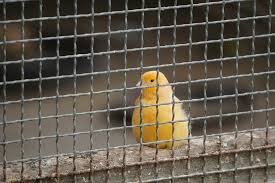
          To reinvent during COVID-19 times is a challenge unlike any other. I think of Jerry Seinfeld’s comment about living with COVID-19: It’s like you’re a bird and suddenly they change your cage. You’re just not sure who you are now. On good days I believe I will find that new direction—reinvention. Words like curiosity, opportunity, and imagination inspire me as do the amazing things I see young people doing. On not-so-good days, I’m terrified I’ll be in this new cage at least two years, consuming what life I have left, searching but finding no new way of living a meaningful life, that retirement I imagined.

For the present, I find myself holding on to interests, looking for ways to keep them alive in this changed environment, e.g., learning rosemaling from YouTube videos, supporting the youth in my life, my grandchildren, which takes the place of tutoring, which I dearly loved. Is there a way to truly reinvent my newly altered retirement? I’m not sure, and I’m running out of the time it takes for an organic evolution. I deplore ending this blog with more questions than answers. . . In front of us is a changed world, and from what I read, we will not be back to normal for some time. My eyes have been opened to reinvention. I wait expectantly to see how and if it comes about. 

Condition: Provisional

https://www.flickr.com/photos/rayandbee/5915105592
The Wheel of Life
Vigeland Sculpture in Frogner Park, Oslo

As I live through this COVID-19 pandemic, one phrase keeps popping up in my mind: the human condition. To me, the human condition is our imperfection, our inability to escape suffering, and that we live in a natural world indifferent to us. I keep reminding myself and my family that we are experiencing firsthand what can go wrong in a natural world that we thought we had mostly tamed. At the same time, our culture promotes an ethic of personal responsibility, suggesting that we have an influence on what happens to us. So what does it mean to be subject to the human condition but responsible at the same time?

Take my grandfather Nils Jacobsen’s life. In 1917, before the end of World War I and another pandemic, the Spanish flu, he brought his wife, Marthe, and two-year-old son, Alden, my father, from their farm in Norway to Racine, Wisconsin, where they hoped to build a new life. The 1920 census listed them living in a rental in Ward 8. They were still finding their footing. In 1926, Nils sold the family farm in Norway, which he inherited as the eldest son, to his brother.  It appears that life was going well in Wisconsin. Times were good! 

By the 1930 census, Marthe and Nils owned a home, a sweet bungalow that’s still standing, and they listed a second son, my father’s brother. But it was the start of the Great Depression. Soon after, Marthe died at age 51, and by the 1940 census, Nils, my father, my mother, my father’s brother, and my older sister were living in a rental flat. It was World War II, and the fishing on the Great Lakes had dried up.  My father and Nils struggled to find work they could do. Nils died in 1948, a bitter old man, as my mother described him. 

Not an altogether happy tale, but I suspect most families, if they dig, can find similar stories. How much of what happened was Nil’s responsibility? Maybe selling the farm? But surely not Marthe’s death, the loss of their home, and the loss of fishing for a living. I tend not to judge him harshly. Nils and his family lived through World War I, the Spanish Flu pandemic, the Great Depression, and World War II. As for Nils dying a bitter old man, I’d say he succumbed to the human condition

While Nils confronted the human condition writ large, until now, my own experience has been more personal.  After my second husband, Gary, died, I struggled, literally, for years with searching for meaning about his death.  I endured guilt that I had done something to bring this outrage on us, and I believed that if I could identify what I’d done, I could atone for it—I should atone for it. When I wasn’t feeling guilty, I was asking myself about the larger karmic meaning of his death—were the repercussions in our immediate world a way of balancing the scales, so to speak? I found no clear answers. 

Being a church-goer, I decided to take my pain to the minister, Pastor Rob. Pastor Rob didn’t like the idea of karma—that I bore responsibility for Gary’s death and, thus, for my grief.  He thought such thinking was where New Agers go wrong. Instead, he told me that Gary and I, like all humans, were subject to the human condition, which includes suffering. Neither of us had caused his death and I didn’t owe any atonement. Wow! I walked out his office feeling lighter, a new freedom. I still didn’t know the meaning, and in truth, I continued to seek it, but not finding it now felt okay. My search became part of my human condition. 

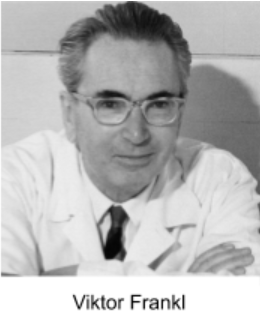
Later I learned about provisional existence. Viktor Frankl wrote that prisoners in concentration camps could not see an end to their suffering.  They could see no future so they lived a “provisional existence.” Pastor Rob had given me such an existence. I found no meaning, but I could live with that, provisionally, and keep looking. Frankl said something else that resonates with me in these times, that rather than me asking for the meaning of Gary’s death, I am being questioned by life and I need to find my own answer in my own terms.  In Frankl’s words: Each man is questioned by life; and he can only answer to life byanswering for his own life

So here I am, living in a world-wide pandemic. This isn’t the retirement I planned, stuck at home, worried about family, friends, and the world more generally. Worried about an uncertain future, are my savings withering so that I’ll be one of the people living solely on Social Security? Will we have a depression? What about my grandchildren, one in college who’s been forced to come home?  The other about to graduate into a precarious world, and there will be no celebration. I am being questioned by life, and how will I answer? 

I have choices. I can weather the pandemic, hopefully stay healthy, and go forward with what is available now.  I can support family and friends as they move forward, too. If my money’s gone . . . well, I’ll deal with that if I must.  My other choice, of course, is, like my grandfather, to grow bitter, that my glorious retirement has been denied me, that my plans have been slayed by a merciless nature. 

 Every day I take advantage of the one freedom still left, the opportunity to take a walk in the unfolding spring, oblivious to the havoc of a virus. It’s Minnesota, so it takes a while for spring to show its color, but because my life has so drastically slowed down, I linger on my walk and look for small signs of the turn towards spring.

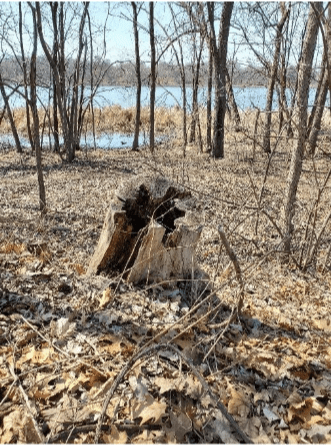
One day I noticed tree stumps, and I walked along eagerly photographing tree stumps, which mind you, are presumed to be dead, cut off. But then I noticed that some tree stumps don’t quit easily. They make the best of things and put out new shoots of life. Now and then there’s a hollowed out-stump that couldn’t regenerate itself. But everywhere in nature there are examples of persistence. Think about those weeds we so fervently pull. 

I have my share of human arrogance, but I’m learning to accept the indifference of our world—some natural and some human behavior—it is the human condition.  But in fact, indifference is a condition all life faces, human, stumps, and otherwise. So I carry on, knowing that as I’m questioned by life, I can keep on putting out shoots, it’s on me to find my own answer. 

A picture containing photo, fence, showing, outdoor

Description automatically generated

Later I learned that coppicing is a traditional method of woodland management that harnesses the ability of many species of trees to put out new shoots from their stump or roots if cut down.