Unknown's avatar

About Karen Martha

I am a searcher and not always sure about what I’m looking for. I’ve lived in thirty-nine houses in four states and changed my name five times. One would think I embrace change, yet I find it discombobulating. My unrest is part of what inspires this blog on retirement. It’s like a last chance to live reflectively, instead of wandering helter-skelter into whatever shows up to keep me occupied. I’m interested in the soul work that presents itself at various times in our lives and in how that changes us. In past lives I taught middle school math and science, raised two children and helped with four grandchildren, finished four degrees, worked as a professor and researcher, and married three times—whew. In my present, retired life, I’m tutoring 4th graders, learning rosemaling, and when I’m not working out—writing—writing about this wonderful, often painful, and fascinating journey.

Big P, Little p, or What I Make of It All

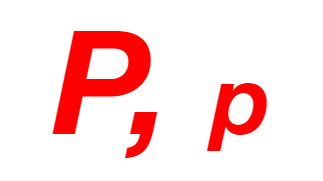
The ubiquity of retirement “experts” telling seniors they need a purpose borders on tiresome. Hammering about purpose as necessary for giving meaning to life seems quite male to me, a sort of Big P (and I don’t have to tell you what else begins with p). It’s as though the adjustment to retirement converges on this one construct—Purpose—as a solution. But what if my way of adjusting to retirement is constructed from my web of relationships, interests, opportunities, family, etc? What if it’s not only ONE big purpose that drives me and helps the world, but a series of small day-to-day purposes, little p’s. To me that would be a more female way to consider the idea of purpose.

Trying to scrub the Big P notion out of my mind and come to what gives me meaning led me to recall three women whose careers I’ve followed closely, probably because they are writers, but also because their lives took such different paths where purpose is concerned: Rachel Carson, Carolyn Heilbrun, and May Sarton. I’ve listed them in the order that they entered my life, because recalling them in that order has helped me form my idea of Big P, little p. 

I was an undergraduate at the University of Minnesota when I read Rachel Carson’s book, Silent Spring. I remember reading it during those big lectures of 300 or more students in biology, underlining it frantically; reading it whenever I had a break in my day; carrying it everywhere with me.

Carson, a woman with a Big P, believed that the rampant escalation of chemical use in our environment was harming the biosphere—she called these chemicals biocides. Carson wrote much of Silent Spring while undergoing chemotherapy and radiation for breast cancer.  She kept her illness quiet because she thought if the chemical industry knew, they would claim she had a personal vendetta in writing the book.  In fact, her entire career of nature writing culminated in this book. Sadly, Carson died of her cancer two years after the book was published.

As an idealistic freshman, Carson inspired me to want to do something big that would make the world better; I think we all hold similar aspirations at that point in our lives.  My direction turned out to be marriage, family, and teaching school, most of which kept me busy enough that I didn’t pause often to reflect on whether I was changing the world. I kept putting one foot forward—after all, aren’t raising happy, well-adjusted children and educating the young gifts to the world?

Many life events and years later, I encountered the Kate Fansler mysteries, written by Amanda Cross, a pseudonym for Carolyn Heilbrun, a professor at Columbia, and the first woman tenured in the English department. 

At the time, I was working on my Ph.D. so reading mysteries by a professor had special appeal. Later, during my MFA studies, I ran into Heilbrun again, this time in her book, Writing a Woman’s Life. Then, as I reached my late 60’s I encountered her a third time in The Last Gift of Time: Life Beyond Sixty. This was the book that held my attention. The prologue is essentially an argument for life being over at 70.  She notes, “is it not better to leave at the height of well-being rather than contemplate the inevitable decline and the burden one becomes upon others?” She also states, “I was—and am—one of those for whom work is the essence of life.” And that I think is where she sold short the possibilities life affords. Heilbrun committed suicide at age 77 by taking a sedative and putting a plastic bag over her head. She left a note that read, “The journey is over. Love to all.” 

I read about Heilbrun’s suicide mid stroke on my exercycle—She really did it. She meant what she said. It took me days to process her suicide.  I even wrote about it in my application to the MFA program at the University of Minnesota. Heilbrun had much to live for, a loving husband and family, grandchildren, good health, a successful career, respect, etc. It made no sense to me to define one’s life solely in terms of work, which I presume she did.  Once she anticipated a decline in the Big P of work, she wasn’t willing to construct a life that included both some, though less, Big P and also more of the many little p’s of everyday living. She was and still is for me a cautionary tale about nurturing both curiosity and flexibility.

Which brings me to my last admired female writer, May Sarton. I know Sarton primarily through her journals, which many critics believe to be the best of her 53 books, most of which are novels and books of poetry.

Starting with I Knew a Phoenix, published in 1959 until her last journal, At Eighty-Two, published in 1997, two years after her death, Sarton chronicled aging, isolation, solitude, friendship, building and loving a home, relationships and more. What stands out for me is that although Sarton started out with the Big P of an ambitious writer, she matured into a person who accepted, albeit with regret, that her work was not considered part of the literary canon of her time, and she went on to cultivate the many little p’s of her life. Her journals charm with details of daily life: ordering bulbs for the garden; walks with her beloved dog, Tamas; visits and long talks with lifelong friends; keeping a lively correspondence, sometimes with complete strangers; and following the antics of her various cats and neighborhood critters around her secluded house in Nelson and later on the coast of Maine. These were the small p’s of the solitude she captured in her journals into old age. I keep a Sarton journal next to my bed and read some every night before turning out the light.

I’m not writing to criticize anyone who has a Big P in their life. No way, it’s a gift. I myself will always sustain a passion for teaching and writing, the stuff of Big P. But I am arguing that a web of little p’s has the substance of a Big P and of a life well-lived. A few days ago, I woke up excited to attend my grandson’s senior speech—before the Corona Virus put a lock on outside life.  I had an exciting small p purpose for my day. Now, as I recall the day with my family, the speech, the cheers, the hugs, the brunch after, I realize that while the search for a new Big P to enliven retirement has been, for me, akin to finding a four-leafed clover in my lawn of Creeping Charly, most days I have little p’s everywhere. I walk my dog around a lake that changes with the seasons; I have lively lunches with friends; I enjoy dinners and vacations with family. My latent Big P for writing and teaching will always be part of me, and meanwhile, every day has something to savor, right until the moment when my cat walks across my face before settling at my feet for the night.  

Enjoy, Enjoy. . . Rosemåling

To begin, I need to establish that I am not artistic. I’ve read Drawing on the Right Side of the Brain, and I still can’t draw, even though I sincerely did the exercises in the book. I’m not drawn—ha—to trying to draw either. It’s not something that lies dormant in me (that which I’m constantly excavating in retirement), but I do like making things—I can still picture the Valentines box I made in 5th grade, a shoe box decorated as a bee (“Bee” My Valentine). It won first prize. I love making a fine edge on an apple pie, knitting a scarf that’s a perfect match to my jacket, like none I could buy. I once made nightgowns for my granddaughters and matching ones for their American Girl dolls.

Which brings me to the subject of this blog, rosemåling, a Norwegian folk art that dates to about 1750. Although different regions developed different styles, most of which are still taught and practiced, all emphasize ornamental flowers, structure, and the occasional dramatic flourish. After discovering my Norwegian relatives on the island of Radǿy, in the county of Hordaland, Norway, I wanted a tangible way to remember and honor my Norwegian roots, so I decided to try rosemåling.

Now I must confess that I’m not fond of kitschy stuff, and most of my exposure to rosemåling has been of items that I wouldn’t necessarily want in my home—the flowery cheese board, decorative plates, Velkommen signs, all with an abundance of hearts and sweet birdies that can overwhelm a house. I’m also not particularly drawn to big swirls and Rococo styling, which characterize some types of rosemåling, so I knew it might be a stretch to learn the craft—after all, what would I paint if I don’t like the patterns and objects? I promised myself that I wouldn’t do any borders around the ceilings in my house or force crafts I don’t want on my family and friends as Christmas gifts.

I signed up for a weekend class at the North Folk House in Grand Marais, Minnesota—I’d learn just about anything to spend a weekend in that lovely place. I had to paint something, hopefully not kitschy, so I started with a board and Christmas tree ornaments—who doesn’t like an ornament?

Turns out that even if you’re not artistic, you can learn enough to do a credible job at rosemåling. Its techniques can be taught, practiced, and “mastered.” As Shirley, my rosemåling idol says, “It’s 95% practice and 5% talent.” After the weekend I had two ornaments and some awkward leaves painted on a board. Not much, but I knew I wanted to learn more.


I later discovered ongoing classes at Richfield Community Education, just down the road from me. It’s a large group of women and a few men who all know and support each other in their art. Ages range from teenagers to retirees. I was immediately welcomed to the group, and whenever I balked at something too flowery, they reminded me that it’s my art, and I can do whatever pleases me. We meet on Tuesday evening or Wednesday morning in a dedicated classroom. In the summer, we paint outside at Minnehaha Falls. Although conversation is limited, we know each other well enough to support each other when someone is care-giving a spouse, making items to sell because money is short, or bringing up grandchildren. We always take a break and enjoy strong coffee with Norwegian goodies—lots of brown cheese, mormokake, sandbakelse, and, of course, lefse. It’s a community, of rosemålers, yes, but also of caring people.

Aside from my modest first projects are the many gifts rosemåling has given me. The value of disciplining myself to learning techniques and then practicing them over and over; the quiet in my mind as I work totally absorbed in pulling out a flower petal or doing fine line work on a leaf; the calm I experience hours after the class has ended; and the feeling of accomplishment that comes from learning something new later in life. Best of all, realizing that I don’t need to be an expert to totally immerse and enjoy myself. I leave class every Wednesday carrying two heavy bags of paints, brushes, oils, brush cleaners, carbon paper, tracing paper, practice boards, etc. with a sense of time well-spent.

And then there’s Shirley, my model for the good retirement. She’s a North Dakota school-teacher turned prize winning rosemåler. She keeps the craft alive, passing it to the next generation.  A tiny, compact, Norwegian woman, who brooks no nonsense. For example, even though most of us carry heavy bags of supplies, the school wants us to walk through the building rather than using a door near our classroom.  Shirley says it’s a rule meant to be discreetly broken.  On the other hand, some rules cannot be broken.  I’ll never forget hearing her say to one of my classmates, “Oh no! You can’t use that blue! That’s a Swedish blue. You need to paint over that!”

But where does my experience fit in the larger context of retirement? Retirement gave me permission to try rosemåling. I wouldn’t have had time or the inclination to add something to a busy schedule when I was working. And now, here I am, enjoying the community and discipline of learning something new. I’ll never be a prize winning rosemåler, and I doubt I’ll come to like some of the kitschy stuff I see people painting, but I have a new respect and understanding of what makes art “folk,” the idea that common, minimally talented people can create art of their own for the pure enjoyment of doing it—for themselves!

A Cabin In My Life

I consider myself reasonably tech savvy. I had a smart phone before my kids did—a Palm Pilot. I still remember my son saying, “There’s nothing we can give mom for Xmas that will make her as happy as that Palm Pilot has.”  And how right he was! I loved my Palm and my heart was broken when it was replaced with the androids and iphones. 

I’m the grandma who hides her phone under the table when my grandchildren are told, “No phones at the table.” I lease a car so I can have the latest technology—who wants to drive without it? I prefer texting to a phone call—why waste time on all that chit chat.

Savvy about using technology, I may be, but for the nitty gritty stuff, like malware, I’m not so informed. For starters, I was not aware of how easily it slithers onto your computer when you’re trying to download a video game for your step-grandchildren, unabashedly trying to win their favor but instead wreaking havoc with your files.  I took my laptop to my son, thinking he could fix it. After he clicked a bunch of screens I didn’t know existed (younger people don’t use the mouse; they prefer the keypad), he declared it beyond his scope of expertise. Then I took it to the Geek Squad at Best Buy. That’s when I found out that I had a virus/malware (they are not the same thing)—or my computer had it, and for $149, they could fix it—the catch was that they’d need to keep it three days, until Saturday afternoon.  And for $199 I could get protection. I, who thought protection was something men wore, signed up for the whole shebang.

I went home, immediately bereft, what would I do without my laptop? After a period of mourning, watching Home and Garden TV to distract myself, I decided that I could read a book —which I haven’t completely given up on. And as much as I like technology, I don’t have a Kindle or iPad—I like turning the pages, smelling the ink, or that little hint of mildew on older library books. I read through the afternoon, and then I decided to make a lovely dinner.  After dinner, I cleaned the closet with my tablecloths—decluttering, who needs all those now that my children are grown with children of their own. Then back to reading—I finished When We Were Orphans and started The Dutch House—all on the same day, no dragging out the process over a couple of weeks. 

Thursday was troublesome.  An entire day to entertain myself without a laptop.  Tutoring in the morning and time for a real workout and sauna afterwards—and I wasn’t looking at my watch the entire time, rushing to finish. More reading in the afternoon, and then a cleaning of my desk area—this no laptop stuff had potential.  

On Friday I realized just how much time I spend on email, Facebook, Instagram, karensdescant, news sites, etc., with not much to show for it. My shoulders started to unkink, with the help of the PowerPlate at the gym. Meanwhile, the Geek Squad called to say my computer was ready for pick-up, but with the catch that I’d need to schedule a new time if I wanted it sooner than Saturday.  But there were no new times that fit my schedule, so I’d have to wait for my appointment on Saturday. Gee, too bad, but I realized, I didn’t want to pick it up. I wanted another half day of freedom from my laptop addiction. 

In what felt like borrowed time, I observed that tasks that I delay day after day—like cleaning closets—don’t look so bad when the attraction of mindless roaming is removed. Time also seemed more expansive, and best of all, I rediscovered reading until my eyes give out—like I used to do under the blankets with a flashlight as a kid. I also wonder what would happen if I abandoned the computer for—dare I suggest—over a week—including the phone, which is really a tiny computer.  

Much has been written about declining attention span as we age. Quoting from the literature (as we academics are inclined to do) Subjects over 60 years of age show progressive slowing in processing of complex tasks and a reduced capacity to inhibit irrelevant stimuli (Commodari, Guarnera, 2008), what intrigues me is not so much the slowing—after all, our brains have much to sift through—but the “reduced capacity to inhibit irrelevant stimuli.”  If there was ever anything perfectly designed to generate “irrelevant stimuli” it has to be the computer!

My son has banned TV at his cabin, and his internet is terribly slow. One needs to be quite patient to read email or surf, and patience is not something I equate with technology. The result is that when the family visits, we hike outdoors, play games, listen to his LPs (he is a bit of a Luddite) or read. It’s not uncommon to see every chair or davenport occupied by someone snuggled under a comforter, book in hand. 

So where does that leave me? Definitely respectful of the power that innocent-looking, laptop has over me. Power always suggests to me getting out from under it. Two weeks later after the incident, I am more mindful of monitoring when and how I use my computer and phone. It’s supposed to serve me. . . not me, it.

That said, the first Monday after bringing my heart throb home, I was at my desk, typing on it, checking email, taking a minute to peek at Facebook. . . .  All of which reminded me that I need to keep the cabin in my life.

A person sitting at a desk in front of a computer

Description automatically generated

Resolved. . . to Be Kinder to Myself

Sunset at Round Lake, Nisswa, MN

“What convictions survive into dotage?” asks the main character in Jane Gardam’s book, Old Filth, surely a question worthy of a blog devoted to retirement and aging. When I ask myself this question, I hear my stepfather expounding on one of his own favorite convictions—that most people are afraid and lack the courage to look hard at themselves, to admit their failures. On the face of it, this appears a wise and reasonable caution, and as a young idealistic girl who wanted to be a person of courage, I grabbed on and internalized this notion, not realizing how harmful constant self-criticism would be.

Focusing on my failures assumed the negative, that I had failed in some way, even when a different perspective might have pointed out that I had also succeeded in another way, thereby polarizing the outcome. It was either a success or a failure; there was nothing in between or a mix of results.

Casting a critical eye, which I took to be a brave me facing my deficiencies, led to many dark nights of looking back with regrets. But Parker Palmer points out “the past isn’t fixed and frozen the way we think it is. Its meaning can change as time unfolds, if we pay attention.”

My second husband, Gary Stout, loved to go to the burning bowl service at Unity church on New Year’s Eve. If you are not familiar with a burning bowl ceremony, what happens is that you write something that you want to let go of on a piece of paper and put it into a bowl where it gets burned—presto, you are done with it, ready to move on and stop fretting—notice how fretting rhymes with regretting? Gary and I also freely told each other what we thought the other person ought to let go of—ouch! It made for a lively New Year’s Eve.

So, should we face our regrets about our failures and flagellate ourselves endlessly, as my step-father maintained; let go and burn them away in a burning bowl ceremony; or, as Palmer suggests—reframe them? In the spirit of growing older and wiser, as a start, I suggest we reframe them.

My choice to reframe leads me to a highly personal story, one that I hesitate to share, but acknowledging that one way to reframe regrets is to take their power away by telling their story.

A regret I’ve struggled with for years is that I was a failure in my professorial career. I started out, as a new professor at age 50 at the University of Utah, filled with ambition, ready to set the world on fire. Instead, about a year after I arrived, my world was set on fire when my new husband, Gary Stout, was diagnosed with pancreatic cancer and given about a year to live. I supported him, loved him with all I had, and watched him die over the next year.

His death flattened me, crushed me, rendered my ambition lifeless. The belief that I could do work that would improve schooling for the children I so had wanted to serve decayed into a hopeless cynicism. Except for a couple of bright moments, I never really got going in the traditional professor role.

In addition to being flattened, I had my stepfather’s voice, my “conviction” that I had to tell myself the truth, that I was a big fat failure. As you can guess, this truth did not have the effect of lifting me out of my despair, it only deepened it.

Then one day, another voice clamored to be heard, asking me what else I had done in my twenty years of failure. I believe I was reading Elizabeth Gilbert’s book Big Magic, when I had this breakthrough. I made a list of all the other things I had done in the twenty years, deciding I would subtract my failures from this list. It was a long list—I now have it posted near my desk. It includes such things as reading great books, hanging out with loved friends, seeing my children grow into fine adults, grandchildren, a couple of flings, travel, commitment to teaching, helping students achieve their dreams. . . and so on.

Not a bad way to spend twenty years, I realized. Better yet, I had told myself the truth, looked hard at myself. Palmer says, “regret shuts life down.” I would add that it also shuts memory down, freezes it on what didn’t work instead of opening us to what did.

Ocean Vuong, in his magnificent book, On Earth We’re Briefly Gorgeous, says:

History moves in a spiral, not the line we’ve come to expect. . . the past never a fixed and dormant landscape but one that is reseen. Whether we want to or not, we are traveling in a spiral, we are creating something new from what is gone (pgs. 27-28).

I’ve come to believe that to make sense of my life and my past I need to ignore the harsh voice I adopted from my stepfather and instead to not only reframe but to look again with new eyes, eyes that refuse to label good or bad, success or failure, eyes that are willing to “create something new from what is gone” by seeing the nuance and looking anew over and over.  I don’t mean the cliched “Everything happens for a reason,” but rather a willingness to be kind to myself and my past.

Which brings me to New Year’s resolutions, which I love—and I’m not talking about diet and exercise. I’m talking about resolutions that open life up, refresh it, if you will. This year I’m resolving to get passionate about making time to be at peace—maybe twenty minutes a day of meditating, doing a full body scan, deep breathing, or something like that.  All this, of course, is about living in gentle kindness with myself, seeing those spiraling memories that can dominate growing older with kind and gentle eyes. So, be it resolved—Karen Storm will make time for peace and be kinder to herself in 2020. May such kindness last forever. Happy New Year!