Unknown's avatar

About Karen Seashore

I am a sociologist, life coach, policy wonk, and tarot reader. Other than reading a book, I always prefer to work with other people. Creating small changes -- in myself and in the world around me -- is my calling. You can find my scholarly publications under Karen Seashore Louis (or Louis, K.S.).

The RMD Blues….Or, What Happens When A Frugal Person Retires?

Photo by micheile henderson on Unsplash

I hope to tell you we were shocked

At the 80-year-old man found dead

$180,000 in grimy envelopes scattered

Everywhere like old hopes, old sin.

RegretMichael Riley

I was touched by Michael Riley’s poem, which conflates the misery of the miser and the equally meaningless life of a rich retiree with handmade shoes.  But, in a way, I relate to both unattractive images.  I managed not to squander today’s pleasures in fear of having too little tomorrow – but barely.  Retiring “comfortably” caused discomfort because there was something “wrong” about having a monthly income without working.

That disquiet began when I became aware of the dreaded RMD – the required minimum distribution from tax deferred retirement savings accounts….I spent hours in my late 60s using IRS tables to see whether I would have enough to live on until, in total frustration, I called Darla, who manages our money.  Her response:  “Yes, if you keep living the way you are.  In fact, because you are retiring late, you should spend what you want now, and travel where you want to go.  When you are 80, one or the other of you probably won’t want to do that anymore.”  Darla is blunt. 

When Karen Martha and I started this blog, we resolved to reflect on what we were thinking about (confronting?  agonizing over?) as we moved from satisfying mid-life and work to something less well defined.  We were also clear about what we wanted to avoid.  So many retirement blogs emphasize issues of money – how much you need to have to retire, how to manage it once you have retired, and how financial decisions should affect others, such as whether to work part time or to move to a less costly city/state.  We wanted, in contrast, to focus on what was in our hearts. But, money becomes unavoidable at some point.

We have much in common, but over our many years of friendship we never really delved into our unrealistic but unmanaged fear of poverty.  Karen Martha grew up with a single mother in her early years, and experienced financial hardship until her mother remarried; my father went back to graduate school in his 30s and, although not poor, my parents had to watch their finances carefully.  However, the Karens agree that our lessons — NEVER have any credit card debt and ALWAYS save more than necessary — were not particularly logical since we worked in education – not highly paid, but also a profession with employment security and good pensions.

Fast forward to my middle 70s:  Dan and I have Social Security, and we have enough from retirement accounts to live more comfortably than anticipated.  What a blessing!  I have the luxury of blogging, traveling, volunteering and playing with grandchildren, and don’t anticipate much paid work.  The same is true of most of my friends. 

But “you worked hard for it” feels self-satisfied when newspapers report weekly that most Americans are unable to save for retirement, and others are chronically under-insured and a step away from a health-induced financial disaster.  Then there is the annual “windfall” of RMD from those pre-tax retirement accounts which will, apparently, never run out. In other words, I feel guilty and even (sometimes) unworthy of being one of the “advantaged older population”. 

When I was working, I adhered to my family’s legacy of prioritizing charitable donations, but there was an upper bound set by the NEVER credit card debt and ALWAYS save rules.  Now, enter the late fall specter of the RMD windfall…the old messages argue in one ear that anything that I do not need this year should be reinvested so that I won’t be eating dog food when I turn 100.  An equally insistent message to give away what I can afford speaks in the other ear.  Then there is a new rumbling note that floats above:  I was fortunate to live during a period of unprecedented economic growth and to be financially secure; my grandchildren are unlikely to have the same experience.  How much should I be saving for them? 

Peter Singer has one answer in Famine, Affluence, and Morality: We all, within our means, have a moral obligation to reduce suffering, and owe this to all people and places because of our common humanity.  But his argument ignores every parent’s obligation to protect our loved ones from realistically anticipated harms.  The Native American 7th generation principle also requires me to attend to the suffering of the planet and all of the creatures and plants that make our home livable.  And what about the international movements to create peace and stability in our fragile social systems? Or initiatives that support flourishing as well as alleviating suffering (e.g., youth programs)?  Oh, the causes that I feel drawn to – and the guilt that I feel when deleting requests for contributions from groups that “do good” and are highly rated by Charity Navigator….

RMD sits there in the middle:  I have to take it and pay incomes taxes according to the government.  Then – SAVE for Dan and me, SAVE for the coming disasters that will occur in 50 years, SAVE for unaffordable college tuition for the next generation, or DONATE now. 

So, although I said that I would never, never be one of those retired people who perseverate about money even though they have more than enough, I find that I cannot avoid the subject.

And lifelong frugality kicks in…should we take that long-postponed Viking River Cruise? (Yikes!  Have you seen what they cost for a room that has a view?)  Should I feel depraved because we bought an upscale (used) car when the food bank sends me letters every month?  And what about my alma mater, which has a decent endowment but would like more for scholarships?

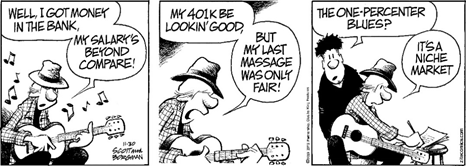
The gift of being affluent and older – definitely not in the 1% — is a niche market.  Until now, I have not had to think about the sardonic message of the cartoon below but it makes me uncomfortable.  When I was saving and young/middle aged, I would have viewed the message as political.  Now I have to ask if it is personal….

Through a Tiny Door….

https://www.whatascript.com/image-files/movie-quote-being-john-malkovich.jpg

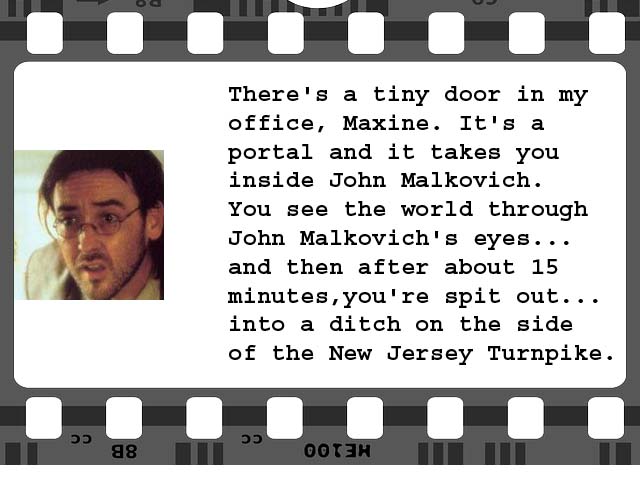
My children and I disappeared down the rabbit hole with Alice and into a parallel world through a closet in The Lion, the Witch and the Wardrobe, while in the surrealist comedy, Being John Malkovich, a door leads John Cusack’s character into the eponymous actor’s mind.  But not all portals are doors: Peggy Noonan claims that, when she read War and Peace, she “entered another world”.  According to Arundhati Roy, the Covid pandemic should be viewed as a portal to a changed reality. In all of these, a portal is metaphor for an insistent call to experience the world differently.  Most people have had at least a brief glimpse of déjà vu, where you know, absolutely, that you are in a situation that you have lived through before…a portal. 

We can hunt for portals, but they usually appear by chance. I had that experience this week as I dropped a small pen and ink drawing off at a framer’s shop.

East Heath Road–Google Maps

The drawing is of a street in Hampstead, London where my parents and sister lived in 1965-66, and where I joined them during the spring of my junior year of college.  I bought it several years later when I was again living in London and wanted to get my mother something special.  Then I didn’t  think about it until it ended up in my possession after she died.

But when the door of the fame shop clicked closed, I panicked.  No picture of the drawing?  Had I left it with a perfect stranger who would be holding it for two months? Racing to my next stop (which I distractedly drove past), I was struck:  the drawing was an unacknowledged portal to accumulated experiences that shaped my life. 

My excuse for leaving college was to research a senior thesis – on the improbable (invented) topic of the influence of the Spanish Civil War on the British Communist Party. I managed to secure access to the old British Museum Reading Room where, like all the “real scholars”, I could order my well-kept books and have them delivered to me on a daily basis. When I went to the more obscure Marx Memorial Library, guarded by a single elderly gentleman and embedded with decades of dust, I encountered for the first time the excitement of not only consuming knowledge, but also discovering it…a life-changing event, whose significance was revealed several years later when I decided to get a PhD in Sociology.

Somehow my parents agreed to let me travel by myself to Greece during that summer. Other than briefly meeting two friends in Athens, I took boats, busses and donkeys for three weeks, choosing where next to go based on the Guide Bleu (I hoped that it would improve my French).  I hitched rides with local young men on their motorbikes in Crete and shared retsina with elderly families on boats between the islands.  I left feeling adventuresome, brave, and that I could probably do whatever I wanted.  This was a new feeling for me and stirred my development into real adulthood.

I also fell in love with another undergraduate working in the British Museum Reading Room.  He introduced me to Cambridge, Indian food, and his London, ranging from Soho to Golders Green, and including most of the museums and bookstores.  At 20, to experience another country with a person who knew it inside-out, it was a revelation.  Since then, I have rarely wanted to be a tourist but instead to know another place through the eyes of people for whom it is just daily life.  That urge shaped a lot of the choices that I have made.in work, friendships, and what I like to read. 

I have relived these familiar stories many times, but until I dropped off the drawing I did not connect the dots.   Yet their linked temporal proximity clearly fashioned much of what I became:  I chose a life of discovery. International Karen (as my husband calls that side of me) became purpose rather than play.  I sought every opportunity to do research with colleagues in other countries, to discover what our cultures share and how they are  different.  I lived in other countries when I could, celebrating the small adventures of daily life more than the great sights.

Ok, I wasn’t spit out into a ditch in New Jersey like the John Cusak character.  But to take my insights from the Hampstead portal seriously, I must acknowledge that that my emergent purpose shut out other opportunities– like feeling rooted or having a home place, and exploring the fascinations of my own country.  What I need to consider now, without regret, is what I need to let go of.  A trip into a portal should be a stimulus to see the world differently and cannot be allowed to become a drag on whatever “future me” is emerging….

I am reframing the Hampstead drawing for my sister, who has always liked it.  My recent experience of it as a portal makes me even happier to give it to her: It has served its door-opening purpose for me. She will have her own version of the stories evoked by our flat in East Heath Road…or maybe she will be presented with a different portal.

Memory and Story

Photo by Jon Tyson on Unsplash

When to the sessions of sweet silent thought
I summon up remembrance of things past
(William Shakespeare)

A man needs such a narrative, a continuous inner narrative, to maintain his identity…(Oliver Sacks)

Much is made of the way in which memory erodes among the elderly – a group to which I am beginning to concede that I belong. Memory loss is considered normal, and it is true that my ability to recall information – the name of a restaurant that I loved in New York in 1970 or even the names of some of my childhood friends – is not immediate.  Now, my husband and I say that we are lucky to have two brains, which allows us to come up with a missing piece of information sooner.  Sometimes I kick myself when it is some simple, common word that has, slipped my mind.  Slipped my mind – memory is such a slippery thing indeed.

Recent research suggests that the slipperiness that I (and most of my friends) are experiencing is not the whole story.  We may have mild forgetfulness, but we are actually wiser:

“Some brain areas, including the hippocampus, shrink in size. …These changes can affect your ability to encode new information into your memory and retrieve information that’s already in storage. On the other hand… connections between distant brain areas strengthen. These changes enable the aging brain to become better at detecting relationships between diverse sources of information, capturing the big picture, and understanding the global implications of specific issues.” Harvard Health Newsletter

https://unsplash.com/plus/license

This may be comforting to some people, but memory is still important to me —  Not the name of a restaurant, but the people who were there, the conversations we had that made us laugh, and how the evening created a friendship and endured for years.  I want to be able to summon up not just the grief that I felt at my mother’s funeral and any wisdom that I may have acquired about how to anticipate and live within grief (wisdom?), but also to remember that my cousin Butch played “When the Saints Go Marching In”, what words were spoken by whom, and even what I wore.  I want both to feel it very specifically AND to connect it to other events of loss in my life.  But I can’t remember what I wore….yet. 

The older I am, the more memories I carry and the more I need to make sense of these past events, feelings and images in the context of my life today.  This is what the practice of telling our story, whether orally, by journaling, or in a memoir, is about.  Oliver Sacks argues that “Every act of perception, is to some degree an act of creation, and every act of memory is to some degree an act of imagination.” But given my capacity to invent a past out of whole cloth, I have to work hard to prevent my story from being fiction!  In addition to reconnecting with past feelings – anger, grief, lust, joy – I want to give them additional color, and come closer to something real, with specifics. 

Recently, Karen Storm and I attended a writer’s retreat, where we planned to spent a chunk of our writing time working on the Karensdescant blog.  Instead, I woke up before the workshop feeling unnerved and vaguely remembering events from decades ago. By the time I got to our idyllic hermitage, I knew that I had to write about it – but my memories were fuzzy and still unsettling.  Karen Storm came with a less clear idea of what she might want to noodle on in addition to the blog, but was struck on the first evening with two old memories of her own that called her. 

In the end, we never talked about Karensdescant.  But we both happened on something more important – something that those increasing, branching, interlinked dendrites in our brains – the privilege of being old – demanded we attend to.  We wrote like maniacs, multiple pages infused with both tender and crushing details about important events falling into our computers,  connecting past events and people and finding new links with our present lives.  We were recalling information, pulling out succulent details that were not immediately at our fingertips, and making new stories out of past circumstances. 

In my case, it was clear that my memory of a very old relationship was encapsulated in a very short story that that I repeated so often, both to myself and others, that it seemed to be as real as the door to a room or a book on a shelf:  “We met and loved in wonderful places.  But it was too complicated.  It ended.”  But there’s the rub:  when I open the door to a room in my mind, I am amazed at what lies behind it that is unexpected – or what isn’t there that I was sure that I put away a short time ago.  When I open a book to reread it, there are sections that I don’t remember, while others that I starred on the first reading no longer seem as important as they did.  Anna Karenina is like that for me – it has a different meaning in every decade of my life.

It is not that my memories about that particular relationship are especially elusive – it’s the details that I have left out because they were (deliberately?) buried, or seemed trivial, that demanded some major rewriting. The editing included dredging up more information, but also a desire to make sense of old, lost relationships in the context of the life that I have subsequently woven, together with many others who I did not know or were not yet born, in the decades since.

Photo by Daniel Schludi on Unsplash

During the retreat, I wrote a different narrative that is much longer and has changed the way that I think, not only about that relationship, but all of my relationships with people  I have loved. This was not the Shakespeare of Sonnet 30, who descends into rather weepy nostalgia, but an urge to reorder my house to see that old things that still intrigue me are put into places where they connect with others parts of my life.  I can almost feel the dendrites communicating with each other. 

Friends who have worked with hospice patients talk about how they observe people holding on for a few more days to make sense of some aspect of their life that feel unfinished.  When I ask myself (or am asked) to remember more details, I find connections that I did not make in the past.  Or, I remember something that was said that changes the way I need to tell the story. What is different for many of us as we age is feeling a need to make sense of our lives more deliberately, with more care, whether we are writers, talkers, or scrapbookers.  When it comes down to it, we are all just trying to make a little more sense of this very non-linear project that is life.

Curiouser and Curiouser….

–          Alice in Wonderland illustration by Arthur Rackham (1907) [Public Domain

Grown-ups never understand anything or themselves, and it is tiresome for children to be always and forever explaining things to them (Antoine de St. Exupery, The Little Prince)

A few weeks ago, someone quoted from Brene Brown’s Atlas of the Heart: “Choosing to be curious is choosing to be vulnerable because it requires us to surrender to uncertainty”.  Brown goes on to associate curiosity with discomfort:  “We have to admit to not knowing, risk being told that we shouldn’t be asking.” Later, Brown links curiosity with the perception of an information gap that we commit to closing.   I immediately bristled – internally, since it would have been inappropriate to react to the nodding of heads and pervasive affirmation in the group. 

When I was a young child – and even when I was old enough to read them myself – two of my most beloved books were Alice in Wonderland and The House at Pooh Corner.  I read them joyfully to my children – and later to my grandchildren.  What I cherish about both of them is their exploration of simple, uncomplicated curiosity.  Alice hesitates only briefly before biting, although she knows that “one side will make you smaller, the other will make you large”, while the doorknob says “nothing’s impossible.”  Pooh looks at every day as a fresh adventure, whether it is confronting the loss of Eeyore’s tail or stalking the mysterious Heffalump.  While Alice sometimes bemoans a choice she has made, she quickly picks herself up and asks another impertinent question.  Pooh, on each day’s adventure, only hopes that there will be honey involved.

Curiosity may involve a risk, but it is not something that holds either Alice or Pooh back – more than momentarily.  Eeyore reminds us that worrying about not knowing – at least more than briefly – can be a path to cynicism and depression.  I took this lesson to heart:  Be curious.  Move on with the adventures.  Don’t do anything potentially life-threatening, but assume that the jams that you get in to will be temporary.  Don’t think about the “information gap” but move toward the unknown.  In other words, nurture the impulse to try stuff, and a full range of emotions that encompasses trepidation, but also the delight that comes with doing or learning about something new.

It turns out that Brown is talking to people who feel “stuck” in a comfort zone.  She covers all the research that says that we will be happier and freer if we respond to “I don’t really know” with curiosity. We all get stuck sometimes….certainly, retirement for someone like me, who loved going to work, meant that I had to allow myself to drive past the exit for my office without feeling lost and uncomfortable!  And although many routines nurture us (brushing our teeth, eating lunch, going to bed at roughly the same time on most days), it is easy to slip into ways of thinking and habits that constrain.  But getting stuck seems to be something that we choose more and more often as we exit adolescence.  With Alice, Pooh, and Thich Nhat Han as guides, however, we see that embracing vulnerability (which Brown endorses) is not a conscious decision to endure discomfort, but a practice of anticipating novelty and adventure – of embracing childish wonder and a Beginner’s Mind.  

And then there is the spiritual side.  One version of Genesis situates our humanness in “original curiosity”:  “And when the woman saw that the tree was good for food and that it was pleasant to the eyes, and a tree to be desired to make one wise, she took of the fruit…”  Albert Einstein echoes this, suggesting that “curiosity has its own reason for existing.  One cannot help but be in awe when one contemplates the mysteries of eternity, of life, of the marvelous structure of reality…Never lose a holy curiosity.”  Julia Cameron also argues that curiosity is a spiritual path rather than a cognitive decision, and that it requires habits – she suggests random writing in “morning pages”, scheduled “artist dates” to explore a new esthetic, and regular walks that have no purpose other than to look deeply at whatever is in one’s path. 

Photo by petr sidorov on Unsplash

I admit that I don’t do these as consistently as I once anticipated, but I have other habits that invoke the same opportunity to approach the world with a Pooh-like sense of wonderment.  Meditation – something that for years I thought that was beyond my capacities – clears my brain of monkey-mind, and creates space for hope that goes beyond ticking off items on the incessant to-do list.  Connecting every week with someone (or several people) who are willing to engage in authentic and vulnerable conversations about “big stuff” never fails to make me curious.

Of course, I take Brene Brown’s assertions about the benefits of curiosity to heart because it is particularly important as we age.  According to Henry Emmons and David Alter’s 9 Keys To Staying Sharp, curiosity comes only a few steps behind the basics of moving, eating well, and getting enough sleep in warding off mental decline.  Nor do I want to ignore Brown’s s admonitions against getting too comfortable and avoiding vulnerability.  If I am always afraid of falling, will I ever learn how to skip again?  However, I also note that as we age we can more easily choose to embrace vulnerability and become more playful, as long as we are willing to follow Shel Silverstein and  “grow down” (along with giving away our business attire and our mother’s china):

He got his trousers torn and stained,

He ran out barefoot in the rain,

Shouting to all the folks in town,

“It’s much more fun, this growin’ down.

 — Shel Silverstein