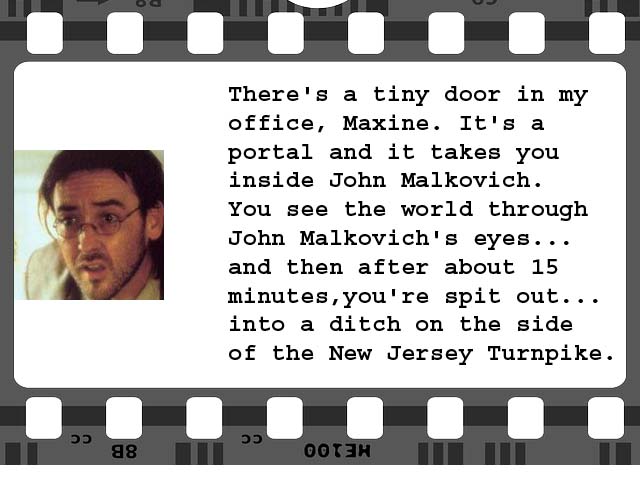
My children and I disappeared down the rabbit hole with Alice and into a parallel world through a closet in The Lion, the Witch and the Wardrobe, while in the surrealist comedy, Being John Malkovich, a door leads John Cusack’s character into the eponymous actor’s mind. But not all portals are doors: Peggy Noonan claims that, when she read War and Peace, she “entered another world”. According to Arundhati Roy, the Covid pandemic should be viewed as a portal to a changed reality. In all of these, a portal is metaphor for an insistent call to experience the world differently. Most people have had at least a brief glimpse of déjà vu, where you know, absolutely, that you are in a situation that you have lived through before…a portal.
We can hunt for portals, but they usually appear by chance. I had that experience this week as I dropped a small pen and ink drawing off at a framer’s shop.

— East Heath Road–Google Maps
The drawing is of a street in Hampstead, London where my parents and sister lived in 1965-66, and where I joined them during the spring of my junior year of college. I bought it several years later when I was again living in London and wanted to get my mother something special. Then I didn’t think about it until it ended up in my possession after she died.
But when the door of the fame shop clicked closed, I panicked. No picture of the drawing? Had I left it with a perfect stranger who would be holding it for two months? Racing to my next stop (which I distractedly drove past), I was struck: the drawing was an unacknowledged portal to accumulated experiences that shaped my life.
My excuse for leaving college was to research a senior thesis – on the improbable (invented) topic of the influence of the Spanish Civil War on the British Communist Party. I managed to secure access to the old British Museum Reading Room where, like all the “real scholars”, I could order my well-kept books and have them delivered to me on a daily basis. When I went to the more obscure Marx Memorial Library, guarded by a single elderly gentleman and embedded with decades of dust, I encountered for the first time the excitement of not only consuming knowledge, but also discovering it…a life-changing event, whose significance was revealed several years later when I decided to get a PhD in Sociology.
Somehow my parents agreed to let me travel by myself to Greece during that summer. Other than briefly meeting two friends in Athens, I took boats, busses and donkeys for three weeks, choosing where next to go based on the Guide Bleu (I hoped that it would improve my French). I hitched rides with local young men on their motorbikes in Crete and shared retsina with elderly families on boats between the islands. I left feeling adventuresome, brave, and that I could probably do whatever I wanted. This was a new feeling for me and stirred my development into real adulthood.

I also fell in love with another undergraduate working in the British Museum Reading Room. He introduced me to Cambridge, Indian food, and his London, ranging from Soho to Golders Green, and including most of the museums and bookstores. At 20, to experience another country with a person who knew it inside-out, it was a revelation. Since then, I have rarely wanted to be a tourist but instead to know another place through the eyes of people for whom it is just daily life. That urge shaped a lot of the choices that I have made.in work, friendships, and what I like to read.
I have relived these familiar stories many times, but until I dropped off the drawing I did not connect the dots. Yet their linked temporal proximity clearly fashioned much of what I became: I chose a life of discovery. International Karen (as my husband calls that side of me) became purpose rather than play. I sought every opportunity to do research with colleagues in other countries, to discover what our cultures share and how they are different. I lived in other countries when I could, celebrating the small adventures of daily life more than the great sights.
Ok, I wasn’t spit out into a ditch in New Jersey like the John Cusak character. But to take my insights from the Hampstead portal seriously, I must acknowledge that that my emergent purpose shut out other opportunities– like feeling rooted or having a home place, and exploring the fascinations of my own country. What I need to consider now, without regret, is what I need to let go of. A trip into a portal should be a stimulus to see the world differently and cannot be allowed to become a drag on whatever “future me” is emerging….

I am reframing the Hampstead drawing for my sister, who has always liked it. My recent experience of it as a portal makes me even happier to give it to her: It has served its door-opening purpose for me. She will have her own version of the stories evoked by our flat in East Heath Road…or maybe she will be presented with a different portal.


 Karens' Descant