Is There Something Wild and Precious in All of Us?

Mary Oliver’s line, Tell me, what is it you plan to do with your one wild and precious life? seems to be quoted everywhere of late. It speaks of living a life of one’s own design, a design that unleashes the wild and precious rather than the banality of slugging through our days intent on keeping a roof over our heads and food in our bellies. It speaks of something wondrous that’s out there if we only let go of our need to conform and live from our true center, our spirit. 

Not too far into retirement I found myself often wondering what was wild and precious but dormant in me. My life was not exciting.  I moved between my own home, the library, the health club, my children’s homes, and the homes of friends, with an occasional trip out of town.  Not the stuff of wild and precious, of that I was certain. And here I was, free to find the wild and precious and live it.  

But how do I find that which lies dormant in me, that which yearns for expression in my life? Or perhaps I already have it, perhaps in the routine I’ve pressed upon my days. I suspect, however, that routine, while affording stability, suppresses experimentation about what might be dormant. . . and yet “a girl can dream.”

The dream went something like this. . .
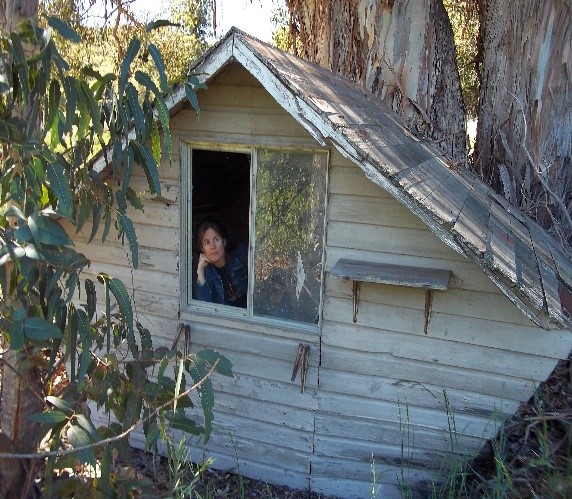
She spent the entire summer dreaming of Wales. It made no sense, this yearning to leave her settled life, her children, her easy routine. Yet in her fantasies, it made all the sense in the world. She could start over, no, not start over but be born anew, without memory in a lush, beautiful place, where people speak in a language that she would have to learn—as a baby learns language from birth.

In August she booked her ticket.  She bought an enormous suitcase and packed it with her clothes. She told her children she was taking a long trip—how could she tell them her truth, that she sought a new land, a new beginning? How long will you stay, they asked, but she avoided the question. I’ll be back when I’m ready. . . 

The plane landed in Heathrow, not Wales. Wandering a bit felt right. Like Odysseus seeking his home, she sought a new home and an adventure on the way. Why had she brought such a big suitcase, she thought as she pulled it outside to find a taxi to the train station. What had she been thinking? But wasn’t that the point? To not think but to wander and live on the way?

The taxi driver left her suitcase on the curb, and she dragged it inside. The train timetable clicked with suggestions. Where in Wales should she go?  She settled on Llangollen—how many words have four “l’s”—“l” for living. She pulled the suitcase to the platform. She would need to drag it through two train changes, if she was reading the itinerary correctly. Maybe she should just leave the suitcase here. It was still baggage from her old life.  She could buy new clothes in Wales—Welsh clothes. But still, money was money, and she wasn’t sure how far hers would go in her new life.

The train ride was exhausting. For each of the two changes, she bounced the suitcase down to the platform and dragged it up and onto the next train. She slept when she could and stopped counting stations, staying awake just enough so as not to miss her stop. 

And the dream of a wild and precious life stops somewhere about here. . . 

Is this what it would be like? Is it real or an escape? What I wonder is whether and how we lose the will to live that which is wild and precious in service to work, family, security, and whatever else haunts us. Then, suddenly—and it seems sudden—we are retired, free but with baggage that we are reluctant to leave on the train platform, baggage that must be hauled up and down with every new step we take. And how do we reconcile baggage with possibility?

Image result for old woman with big suitcase

Close a Door and Begin Again?

………………………..

The (Wo)man who moves mountains starts by moving stones

-Chinese proverb

This cartoon spoofs a saying that annoys me almost as much as “Everything happens for a reason”.  My past was more happy than disappointing and I do not expect a future full of failures and distress.  BUT it is often the very idea of CLOSED DOORS between the past, the present, and the future that bothers me.  And that has not changed with age….

Doors opening – great!  The thought of a door closing has always felt wrong.  I like to move forward with the belief that the paths that I have already walked are places that I can return to as long as I do so regularly.  When I think about the often-quoted Chinese proverb, I am reminded that if I am moving mountains by moving stones, I have to keep going back for the next stone.  That means revisiting an ever smaller mountain.  Sometimes for a long time.  Eventually the mountain is so changed, that even when I go back it is not the same….and I may choose not to go back.

But I also think about the doors that haven’t closed because I go back to something different but still alive and engaging.  I can reach out to friends I haven’t seen in years – and we mix conversations as if we had not changed even as we are talking about what has happened in the intervening years.  I can reread Anna Karenina for the 5th time (I believe in reading it once every decade) and, although it is the same book with the same characters, I experience it as new and different. 

In other words, I feel as if my backpack is full of things that I carry with me and I can therefore go back with reverence but without wallowing in dusty memories (as Karen Martha warns against in Nostalgia 101).  Going back and re-opening doors is a deliberate practice, rather like walking the public footpaths that traverse private property in England in order to keep them open.  As Sam Knight remarks, “Retrieving a lost path requires a certain cussedness” and (in my experience) -the willingness to climb over stiles and between someone else’s laundry.   I have cussedness to spare, and enough friends (as well as a patient husband) that I get to tell the same story, with different acquired embellishments about the path, more than once.

Of course, that is also nonsense.  One of the mixed blessings of the internet is that it allows me to visualize closed doors in a very literal sense. The antique house that I still love (probably more than any I will ever have) was sold in 1986.  Sometimes when I have nothing else to do I Google “31 Hancock Street”, and recognize all of the things that made me love it (including the back door into the kitchen).  But it is not mine:  someone else owns it.   Even if I knocked on their door and they welcomed me in for a look, I would not be revisiting my house but one that has permanently changed and where I would not feel at home (which is why I don’t look at the pictures of the inside, which also leads me to unnecessary judgments about the last owner’s taste in colors, furniture and kitchen design…..) 

The message of “door closes-door opens” is annoying because it is often true even though I don’t want it to be.  Although difficult, the move from Lexington, MA to Minneapolis, MN opened many doors professionally and personally, and I am not going back. My daughters are in their 40s, and no matter how often I look at pictures of them when they were young, I love seeing them as parents and emerging wise women rather than as my babies. And I want to leave an institution and work that has given a lot of meaning to my life.   

I moved a lot of stones before deciding to retire, but they are now piled in the hallway between work and what comes next.  That no new door has opened yet is a fact.  I have no plan, although most people tell me that it is a mistake to retire without one.  The image of moving stones rather than mountains comforts me, because, although I have only poorly formed ideas about the path I am walking, what parts of the mountain I am trying to disassemble, or whether moving those stones will lead me to a door that is now hidden I am still moving something.  New energy.  New hope.

I started messing around in my friend Jacqueline’s studio and I have pieces that I painted in my living room.  I would continue moving artful stones with Jaqueline as my guide, but she inconveniently lives in the Netherlands.  Should I keep putting stones in that pile right now or defer it?  I have taken several years of classes to become a life coach, although I still don’t know exactly what I want to do with the new skills and ideas that I embrace.  In both cases, a “set in stone” identity as an expert has shifted to a new identity of being an even more curious novice.  Buddhists call it beginners mind – and I have discovered that it makes me more playful and less worried about the future.  As a novice, I walk through an open “being” door and leave behind a “doing” door (that is, at least temporarily, still open).  Does that count? 

Nostalgia 101

Image result for nostalgia

(https://tvtropes.org/pmwiki/pmwiki.php/Main/NostalgiaFilter)

Sometimes I think I could teach a course in nostalgia, that longing for a past perceived as perfect. I seem to nostalgize (who knew it’s also a verb) often.  A couple of weeks ago nostalgia for school hit me full force as I watched the neighborhood children, on the first day of school, weighed down by enormous back packs filled with new pencils, notebooks, glue, rulers, etc., waiting for the school bus. I was immediately back in school smelling that gummy stuff they used, in my day, to sweep the floors; remembering how the smell of cinnamon rolls baking used to fill the school where I taught; and recalling those Bunsen burners in junior high that we loved to mess with when the teacher wasn’t looking.

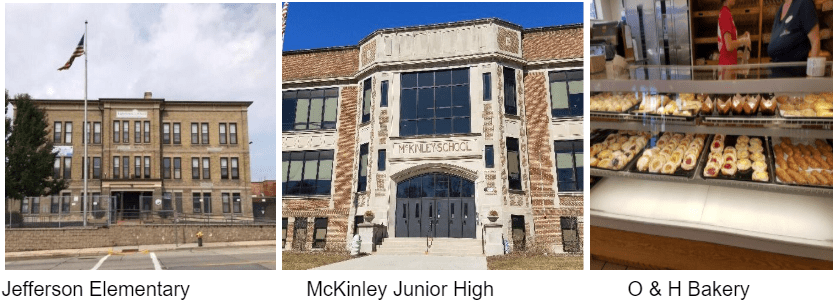
 We all have our own memories of favorite places.  Having spent most of my life in schools, as a student, a parent with children, a teacher, a college professor, and now a tutor, mine are about schools—my geomagnetic field is probably over the nearest school. In fact, just to indulge my nostalgia, here are some pictures of favorite school-related places—my elementary school, junior high, and the Danish bakery we’d frequent on our way home from school (I grew up in Racine, Wisconsin).

Although I suspect nostalgia has been part of being human forever, it was first coined to be a condition in 1688 by a Swiss doctor, Johannes Hoffer, who called it a “neurological disease of essentially demonic cause.” In the 19th and 20th centuries it was still considered to be a pathological condition, but when Dr. Sedikides, Tim Wildschut and other psychologists in Southampton, England began studying it in 1999, they found it to be just the opposite, a rewarding positive experience. They also found that it’s universal and not just an adult pastime, occurring even in children as young as seven. Both the features of nostalgia, pleasant reminiscing, and also its focus, holidays, weddings, songs, and places, are found worldwide, with most people reporting that they experience it at least once a week and almost half saying they feel it as much as three to four times a week. I guess I’m not alone.

Research has challenged the belief that nostalgia is unhealthy, finding, among other things, that feeling nostalgic helps with loneliness, boredom, and anxiety, makes people more generous to strangers, and makes couples closer and happier when they share nostalgic memories.

That said, I’m convinced that nostalgia can be a little addictive as we grow older and have memories upon memories, all the while—at least in my case—slacking off on creating new memories. Research seems to confirm this, finding that nostalgia is high in young adults, goes down in middle age, and gets high again during old age.  The reason is that nostalgia helps deal with transition. So maybe that’s why I find myself waxing nostalgic whenever I am reminded of schools; I’m in transition from a life in education.

Cover to the first edition of "You Can't Go Home Again" by Thomas Wolfe

Thomas Wolfe wrote a book called You Can’t Go Home Again, meaning that If you try to return to a place you remember from the past, it won’t be the same as you remember it. I test that claim every time I walk into Lake Harriet Upper School to tutor (I couldn’t get back in schools fast enough when I retired so I signed up as a volunteer tutor) or when I stop by Burton Hall on the U of MN campus or revisit the classrooms of my undergraduate days. On the surface, these buildings and their classrooms remain the same, and almost like an addiction, trigger some sort of feel-good chemicals in my brain. 

Recently, however, my addiction to schools was tested. I was finishing up with my tutoring group, when the principal, whom I could see through the open door standing in front of a class, walked out and asked me if I wanted to take the class for the rest of the day, the sub had not shown up. (I need to explain that this principal happens to be my son, who thinks his mom might be more at his bidding than other tutors in the building). How tempted I was to say “yes!” To get back into the fray, get those kids, who were taking advantage of having no teacher, back to work. But then something clicked in me.  I didn’t want to go into that classroom. From a lifetime of teaching, I remembered clearly what I’d be taking on, and I realized that my freedom to do what I want is awfully sweet. Mother or not, I told the principal, “No thanks.” I didn’t want to go home again.

Freedom. It is a sweet thing. Loads of time all to myself, no obligations. And my new-found freedom in retirement clearly moderates my desire to actually work again full time in schools. But the memories are also associated with the sense of being involved in something bigger than myself, something with the potential to make the world a better place. And . . . taking classes, traveling, having lunch with old friends, getting lots of exercise, and volunteering—even tutoring—don’t quite satisfy the need to have my life count, even now, in retirement.

So where am I then? I can’t go home again and I don’t want to, but my new “place,” retirement, leaves me searching. As I noted before, I am in transition, and my happy memories about schools, while addictive, will not suffice for a meaningful retirement. So I go forward, I can’t really replace my bond to education, but nevertheless I’m ready to commit to something equally meaningful, something that in what I hope is a distant future will live up to all the virtues of nostalgia. 

As usual, I was thinking about the moments of the past,
letting my memory rush over them like water
rushing over the stones on the bottom of a stream.
I was even thinking a little about the future, that place
where people are doing a dance we cannot imagine,
a dance whose name we can only guess.

From Billy Collins "Nostalgia" in Questions About Angels 1991

What Is A Death Café – And Who Would Want To Go Anyway?

A few weeks ago, Dan and I went to a Death Café – it was on a whim, because I saw it in a Barnes and Noble e-mail that I was in the process of deleting.  Also because I have been trying to live into Julia Cameron’s advice to have an artist’s date every week.  Planning anything a week ahead when I am trying to spend as much time as possible with Opal (our 20 month-old granddaughter) seems almost impossible.  She-Who-Rules has not figured out that adults are happier when the children in their lives have a regular nap schedule…in any case, why not go on the spur of the moment?

photo credit: Death Cafe

We had no idea what to expect, but showed up along with eight other people at the “Solarium” (a space with lots of windows next to the Pets section) in the back of the Boulder, Colorado B&N. Our volunteer facilitator introduced herself as someone with experience with both hospice and midwifery.  Beginnings and endings, her specialty.  We started with a brief introduction to the Death Café – who knew that this was an international movement, and that all over the globe there were other people participating in discussions about death on a regular basis.  If you don’t believe me, Google it yourself (https://deathcafe.com)– the first thing that pops up is “Welcome to Death” followed by an invitation:  “At a Death Cafe people drink tea, eat cake and discuss death. Our aim is to increase awareness of death to help people make the most of their (finite) lives.”  Today, as I write this, I could attend one in St Luis Obispo or Quezon City in the Philippines.

How odd – my first thought – how can this be so popular?  Why does the idea of meeting with strangers to talk about death have meaning from Lake Forest, New York to Goteborg, Sweden (oddly, as we entered, I passed by the popular book, The Gentle Art of Swedish Death Cleaning, by Margareta Magnusson).  So I sat feeling intrigued but somewhat detached, observing the people sitting in the circle with Dan and me with interest.  Across from me were three older women (in other words people roughly my age!) all looking very Boulder.  That means middle class with tiny efforts to be a bit offbeat – a purple streak through gray hair or an embroidered vest.  There was a couple who appeared to be about 50, and next to me a very large man of about the same age, who made it clear that he had come only because he was asked by the facilitator.  A rather sad looking woman in her sixties arrived late, and positioned herself slightly outside the circle, although we made every effort to rearrange the chairs. 

So why had they come?  We began by offering up our reasons, some of which (like mine) were curiosity, others because they had recently experienced a death.  One was still trying to make sense of a loss many years ago of a beloved brother; another because the passing of her sister made her aware that there was no one left in the world who knew her as a child. No one there was ill or recovering from a serious illness.  In fact, we all looked rather vital….

I opened, saying that I was coming from curiosity – wanting to try new things – and because the last year had been full of deaths and skirmishes with death for multiple friends.  By the time we finished with our offerings – what drew us, what our experiences were with death –it felt as if we were part of an intimate circle.  The feeling of instant membership was odd—I can’t think of another time when I have entered a group of strangers and felt so quickly as if I belonged.  Also, the often-noisy Judge in my head – the one that edits what other people are saying while they are just beginning to formulate their thoughts — was surprisingly quiet.  What people talked about silenced The Judge – it was as if the topic of death encouraged a level of intimacy that you would never find in other settings. 

The 50-year old man talked (at great length) about the paradox of watching his brother suffer over several years and the joy of seeing him become increasingly spiritual and at one with his life.  We talked about acceptance – one of my mantras – we talked about the experiences of being present with someone who was dying.  We talked about whether we wanted a death surrounded by loving relatives or whether, in our deepest heart, we wanted to be alone on the journey.  One woman – the only one with any apparent attachment to an image of afterlife – was very positive that she would be reincarnated – and that she would retain a great deal of the knowledge and experience that she already possessed.  No one else seemed to be certain of anything except that the idea that dying filled him or her with awe.  Only Cat, the 50-ish wife of the man whose brother had dies some years ago, said little.

So we were there for well over an hour.  Dan and I left feeling that it had been a remarkable experience.  Why can’t we find this level of connection without having to confront death?  What is it about a Death Café that promotes connections when other conversational opportunities do not?

Photo credit: Death Cafe

Postscript:  I drafted this early last spring when I was in Boulder, Colorado – escaping harsh Minnesota winter for a milder version. Looking back after six months, community seemed to surface from a collective experience that was simultaneously anonymous and intimate.  We were there for remembrance as well as being open about both the wounds and healing that we experienced individually.  If you want to be part of this, you can:  The website says, “People who adopt the model set out in our guide are welcome to set up their own Death Cafes. So far we’ve held Death Cafes in 65 countries.”  I think that I will take them up on the invitation….