Unknown's avatar

About Karen Martha

I am a searcher and not always sure about what I’m looking for. I’ve lived in thirty-nine houses in four states and changed my name five times. One would think I embrace change, yet I find it discombobulating. My unrest is part of what inspires this blog on retirement. It’s like a last chance to live reflectively, instead of wandering helter-skelter into whatever shows up to keep me occupied. I’m interested in the soul work that presents itself at various times in our lives and in how that changes us. In past lives I taught middle school math and science, raised two children and helped with four grandchildren, finished four degrees, worked as a professor and researcher, and married three times—whew. In my present, retired life, I’m tutoring 4th graders, learning rosemaling, and when I’m not working out—writing—writing about this wonderful, often painful, and fascinating journey.

Circling Back (Way Back….)

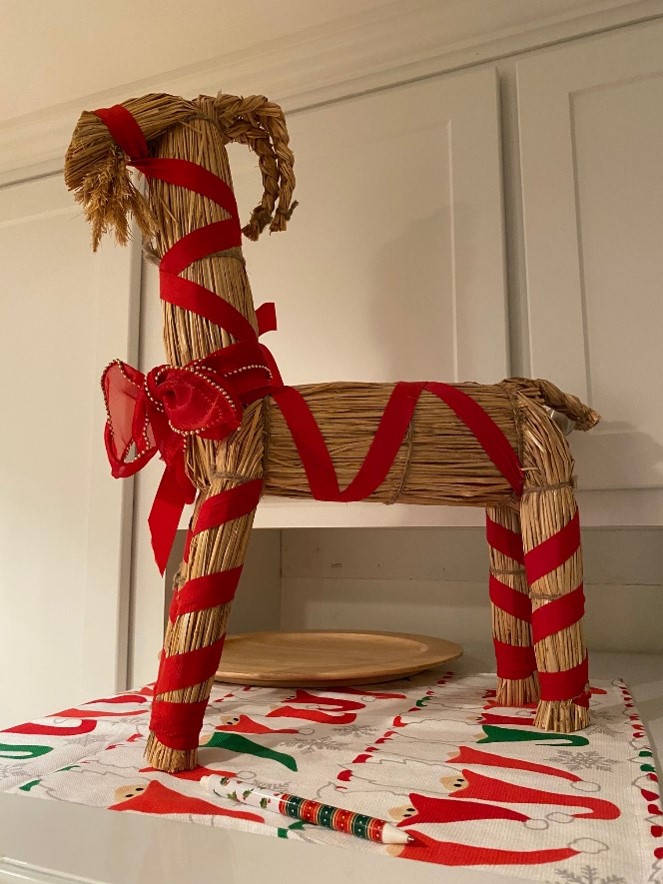
Photo courtesy of cousin Kristen Seashore (Keeper of Tradition)

It makes no sense to talk about Christmas trees or holiday dinners in the middle of January.  But we are doing it anyway because this strange December season made both of us – in different ways – visit our role as “elders” in keeping connections with the past alive, even when nothing was normal….

Holidays as Liminal Space….[Karen Rose]

From the time I was a child in the early 50s, my mother would always remind me that our Christmas Eve dinner “would keep me Swedish for the rest of the year”.  That didn’t make me face the pickled herring, bonddost, lutfisk, potatiskorv, bruna bönar, rödkål, and risgrynsgröt med lingon with delight….The bread and the cookies were ok.

Yet, after my parents died two decades ago (when we were finally free to find substitutes for the dreaded lutfisk), my sister and I maintained the food traditions.  The beans were often crunchy, good korv was hard to find, none of our kids liked pickled herring and my brother-in-law made great julekage with a sourdough starter and extra cardamom!  For all these violations, not much changed. 

But my kids are now in their 40s.  They didn’t like this food much and my grandchildren like it even less.  Nor did they (by that time, American mongrels with a mixed ethnic heritage) feel a need to “keep Swedish for the rest of the year”.

So, as I entered December 2020, it felt as if everything could change because everything had changed.  I vowed that our tiny “family pod” would have a normal American Christmas, putting up the tree before Christmas Eve and maybe baking lots of new kinds of cookies.  I was ready.  Until a week before Christmas, when I started thinking about my parents – both third generation Swedish Americans – who knew only a few words of Swedish but who felt an intense desire to honor all who had come before on this one evening. 

For my parents, it wasn’t really about food – it was about being in a brief liminal space where we could feel close to our ancestors in their small Småland farm houses, acknowledging all that they had given us.  It was like The Day of the Dead transported to Michigan-in-December.

I started feverishly making lists of what we could find (or substitute).  I baked.  I gave Dan a recipe for limpa and asked him to do his best.  Some of the old recipes, in feathery handwriting, were inaccessible.  I researched Swedish websites to duplicate things as best I could.  We produced a meal that would keep me Swedish for the rest of the year – and that prompted daughter Erica to demand that we visit as soon as we could.

Opal (age 3 and, only about 30% Swedish) ate a bit of everything except the herring. It was liminal, seeping into the future, drawing from the deep past.  That is what ancestors are supposed to do, and it is my job, even if I didn’t ask for it.

Karen Martha:

          This year we bought a tree before Thanksgiving (I have never bought a tree before my birthday in early December), thinking we would have an entire month to feel the holiday spirit during a time when spirit seemed needed—the pandemic and ongoing election concerns.

          Nevertheless, isolation loomed over the holidays, no friends or family would be coming over to share in the festivities, so “who cares,” I thought. I couldn’t bring myself to decorate the tree. Then one night, sitting in the living room listening to Radio Deluxe’s Thanksgiving weekend program, I heard Irving Berlin’s I’ve Got Plenty to Be Thankful For” and Let There Be Peace on Earth. I remembered my parents and the trees of my childhood—fighting with my sisters over who got to hang which ornament or to open the new package of tinsel. The wonders of music. I found myself singing and decorating the tree.

No one saw the tree but my husband and me. I walked past it many times a day and soon found myself pausing to say “Namaste,” I bow to you. I wasn’t bowing so much to the tree but to the memories evoked by the ornaments. Even though no one would see the tree, I felt a sense of responsibility for preserving the web of relationships represented by the simple ornaments collected over nearly fifty years of family history. Isolation was not a reason to abandon tradition.

          My ties to the larger world changed with retirement, but that change opened an opportunity to engage in other ways. We older people with our experience in the world, are both keepers of memories and of knowledge, understanding and wisdom. We share these gifts whether by creating a Swedish Christmas in Colorado or by decorating a tree in Minnesota, the little p’s—purposes—that give our lives continuity from generation to generation.

          After Christmas, whenever I greeted the tree with Namaste, I promised it one more day in the spotlight. Soon it started dropping needles, signaling it was running out of the energy it had stored when rooted in the soil. It was time to give it back to the earth and time to put my ornaments away, time to give the past a rest and circle back to that which roots us all, our talents and interests, however expressed in work or retirement, but most of all, our webs of relationships.

And now we welcome the new year, full of things that have never been”
― Rainer Maria Rilke

The Pandemic in Six Word Memoirs

The Pandemic in Six-Word Memoirs As collected by Carla Wilks, guest blogger.

Borrowing from the six word memoir form, our guest blogger, Carla Wilks, asked friends and relatives to send her six word memoirs about the pandemic. These are shown below. Karen Rose notes that anyone of these could be epitaphs on a tombstone marking the end of the pandemic.  Enjoy and then add your own!

Alone time is good, short term. (CM)

Stay home, no vacation, wash hands.  (CS)

2020 Wake-up call: COVID, racism, wildfires.  (KS)

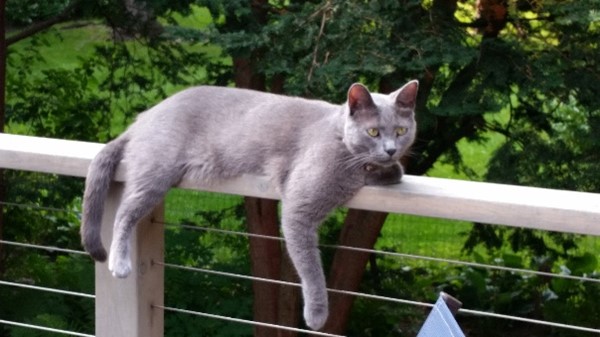
Missing friends but got a cat.  (KR)

The cat wants us to LEAVE.  (JC)

Cooking, cribbage, ponytail, gazebo visits.  (CW)

Time freedom excites, stimulates.  Zoom obligates.  (KU)

Singing to dogs.  We run again.  (JC)

So glad we have a dog.  (MW)

I’d rather not talk about it. (TM )

Missed prom, graduation, friends and Milwaukee.  (MW)

New shovel, new gardens, new plants.  (JW)

Summer of Dave, Fall, Spring, Summer!  (DW)

Coffee, walk, text, pizza, wine, repeat.  (KW)      

Should I be social or responsible?  (AW)

Next door with kiddos and coffee.  (EW)

I met some new, amazing people.  (AW)

Work and play – hours become blurred.  (JW)

Child welfare became even more difficult.  (SW)

My online clinical experience was tedious.  (MR )

Enjoying yoga pants, commute and introversion.  (BW)

New workload-overwhelmed.  New granddaughter-overjoyed.  (JW)

Add your own below

Main Course. . . Patience

My 16-year-old granddaughter, our “technical consultant,” called me last week in tears that her school, which has been hybrid, was going completely online.  There would be no more “real school” as it is delivered now, with plastic barriers in the lunch room, one-way halls for passing, tables that once afforded group work replaced by desks spaced far apart, and masks, masks, and masks! She said, “Even if we have to wear masks and don’t have as much chance as normal to socialize, it’s still better than sitting at home alone in front of a computer!” She almost never shouts or gets riled, but she was mad and making it known.

“Be patient” I advised. “Your teachers and the principals want to keep everyone safe. I’m sure they have good reasons for doing this.” She wasn’t hearing me, although a few days later when some students started an online petition to keep hybrid school, she said she wasn’t going to sign, arguing that maybe it was for the better since Minnesota is having a real Corona Virus surge.  Patience has prevailed for now, although she loves to dream about everything she will do this spring, when “we get a vaccine.” Her patience for now, is grounded in hope, that dreaming ahead we humans love to do.

We’re having a great opportunity with the Corona Virus to practice patience, and now with the election of Joe Biden, it’s twofold. First we were in limbo about who won and now we now find ourselves waiting for the handover of power. As for the virus, in Minnesota the governor has ordered a significant lockdown for the next four weeks. What can we do but wait—be patient?

That said, being patient is not always easy, especially when confined to the same house with the same people doing the same things day after day. I have four grandchildren, and all of them are experiencing disruptions to their lives that they neither anticipated nor have been taught how to handle. I can remind them that humans have survived many terrible things, world wars, other pandemics, droughts, depressions, etc., and I can express encouragement. Nevertheless, I wish I knew how to do more to help them. 

As a teacher, I learned that one of the most powerful ways to teach is to model, or, by example. Practice what you preach, walk the talk! This was brought home to me when I was teaching fifth grade while in graduate school. I would make note cards to study for a test, and whenever I had a break in my teaching day, like lunch, I’d use the notecards to study. I’d sometimes have students test me with the note cards. One day before a math test, I noticed that many of my students had made note cards about what would be on the test. When I commented on this, they told me they were studying like they saw me study. Wow!  I had not even tried to teach them this strategy, but they had learned it by watching me.

In a reverse of the generational expectations about who teaches whom, my technical consultant granddaughter is the one teaching me how to DO patience.  Her approach is about kindness, thinking about others instead of oneself. At the beginning of the pandemic when schools and everything else abruptly closed, she started calling her two grandmothers every couple of days so we wouldn’t be lonely. She has continued this throughout, and I truly look forward to it, as does her other grandmother I’m sure, who, in her late 80’s, lives alone in South Dakota. Talk about modeling!  And talk about “to teach is to learn!” She teaches me by example as she teaches herself. I am awed.

Last week my other granddaughter texted me that she missed my sloppy joes. It’s a custom in our family to get together to celebrate birthdays, and I make sloppy joes. I told the technical consultant granddaughter about this text, who immediately said, “You should make some and take them over to her.” I did, and as I set them on the doorstep, I welled up with pure joy—I was doing something to help, making the waiting just a tad easier.

When our governor nixed even outdoor gatherings for Thanksgiving, I was angry. In my family, we know how to gather around a bonfire while socially distancing, which was what we had planned. I remembered why Thanksgiving has always been my favorite holiday. It’s a holiday not about gifts or elaborate decorating or religious significance. It’s about celebrating our many blessings, the reliability of a sun that rises every morning on a spinning planet, rich with everything we need; strangers, friends, and family who mostly want to live right lives; and moments of joy and love.

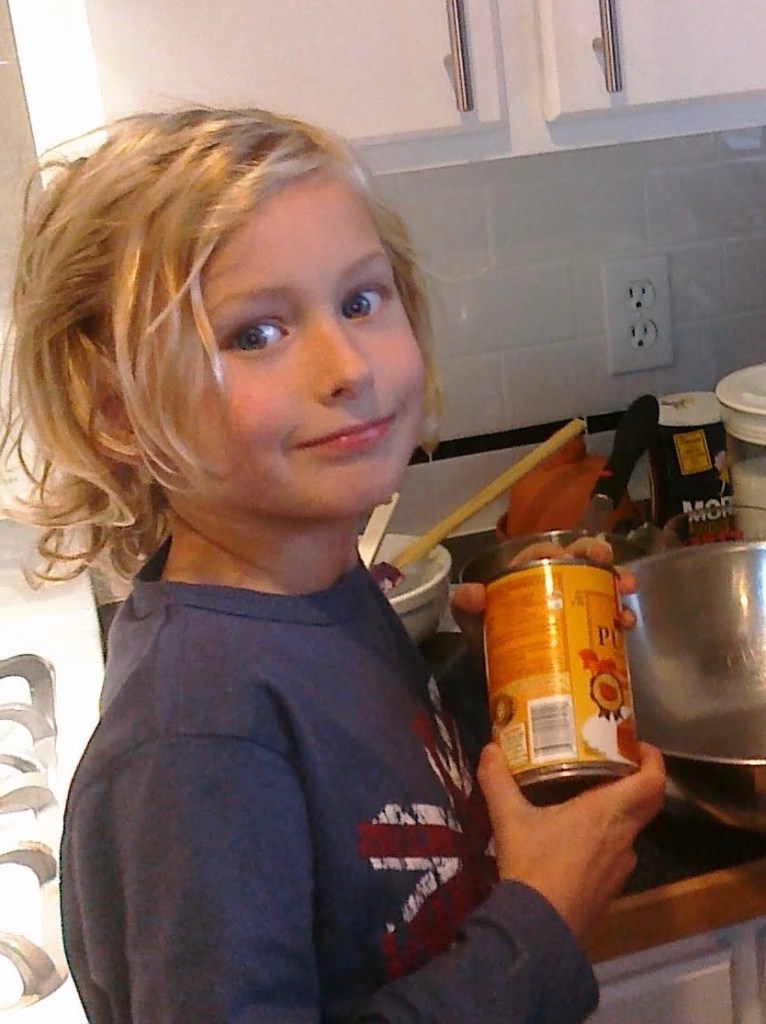
Henrik, about to mix the filling

While I fretted about how to preserve my favorite holiday, my grandchildren, via a series of texts, planned a virtual pie baking afternoon for Wednesday (We’ve always baked pies together the Wednesday afternoon before Thanksgiving). They are not letting a shutdown order stop them. Who better to forge a new way to celebrate than the young!

Next, our families sent out Zoom invitations to get together for the holiday. So, this year, on Thanksgiving day, after my husband and I have stuffed our chicken and put it in the oven, we’ll gather with our families around a laptop, the province of the young, for moments of joy and love, waiting hopefully and patiently for next year, when we can all be together once again. 

The COVID Canon

There I was, thinking I had my retirement all sewed up.  I was learning rosemaling—I who had never painted a thing in my life had found my people!  Three days a week I was tutoring fourth graders in math—I had also found some little people to nurture and who would tell me the truth about life in plain and simple language—Don’t run in the hall,” and “If you can’t say something nice, don’t say anything at all.”

And then it hit.  The Pandemic!   Exciting at first, we were going back to 1918. Who doesn’t want to make history? After all, my paternal grandparents and father took a boat from Norway to the US during the pandemic, and they did okay. What’s the big deal? And if Anne Frank could hide in an attic in Amsterdam and write a classic memoir/diary about it during WWII (which we should all reread by the way), I could certainly buy two weeks of groceries and stay home.

I was teaching at the time, so I hastily put my class online. I decided that I’d need to bake bread—like 2 million other Americans—and used the only two packets of yeast I had for the first two loaves, then waited 8 weeks for a two pound package of yeast from Amazon. By then I was happily going to the store and buying bread again. Toilet paper was still dicey.

I could go on and on about adjusting to the pandemic.  Suffice it to say it was a scary adventure at first, then it began to get tediously scary, and now it’s a way of life, equally scary. So what happened to the glorious retirement I was working on?  Well, I’m still retired and for now at least, checks still get deposited into my bank account, and I haven’t gone under financially yet. The garden bloomed, and the weeds thrived. At first I told myself, “You’ve got this. You’re an introvert.  You don’t need other people.” But I realized I could sit in front of the computer or TV or in a chair reading only so many hours a day.  I missed my people, especially my little people.

It was a good summer for exercise, though. Got out on that bicycle way more than in other summers.  But winter is coming. That will be its own challenge in Minnesota. And we dare not book a trip to Florida, a hot spot of Corona Virus.

By now, dear reader, you’re probably saying “Blah, blah, blah, Karen.”  So, I’ll cut to the chase, as they say—why do they say “chase?” Here are my new rules for retirement during COVID, the COVID -===================dfgggggggggggvgv Canon, the first rule of which should be Keep your cat off the keyboard.

The COVID Canon

1.Teach your pets to know their place. You’re not staying home all the time to spend more time with them.  They need to get over that assumption. You aren’t going to throw the ball endless times in the house just to keep the dog happy, and you definitely will not be giving them treats to shut them up (I’ve had trouble keeping that one). 

2.You have only one purpose—TO STAY ALIVE (although the cat may think it’s to feed him). All the good retirement books advise us to “find our purpose.” For the first time this is finally clear to me. I don’t want to get this nasty virus, I’m 76 and I hope to someday be 86.  Knowing my purpose is very freeing.  No more having to find meaning in my life beyond wearing a mask, social distancing, and staying home.

3.All rules about TV are off.  You can have it on during the day and no one will accuse you of becoming an old person glued to the TV. And your kids won’t know unless you tell them—assuming they are staying away. Besides, who knows, you might be watching the Minnesota Orchestra, lectures, or National Geographic—expanding your mind.  Better yet, you could be watching our two candidates for president—there’s nothing like a good horror show.

4.Falling asleep in front of the TV is also allowed.  Who’s going to see you?

5.Long stringy gray hair is now permitted.  For men, you can have that ponytail you always wanted and that your wife said was ridiculous. And two days beard. . . well, you might be able to pull that off. And women, you, too, can have that ponytail you always wanted. . . which everyone said was too young a look for you.  Who gives a rip!  As for me—self-styling has reached a new low, but no one sees me. I might even take the mirror out of the bathroom.

6.Getting dressed still counts—now this is a tricky one. I still like to clean up, pick the matching earrings, accessorize!  But my husband. Eew. Not sure I should even admit this, but I have counted how many days he’s worn the same shirt. These matters can be grounds for fighting, and I suggest if you’re a couple that you negotiate standards for changing clothes. But then, now that it’s autumn, you can always sleep with the windows open.

7.The rules about doing something useful in retirement have changed—although how, I’m not sure. As for doing something meaningful and useful—the point of retirement—well, you’re not going to travel, unless you know something I don’t know or have a death wish; so the number one dream of retirees has been taken down a notch. Although you could buy an RV and do a John Steinbeck Travels with Charlie sort of thing.

You can still take a class—online, of course.

Maybe you could write your memoir, or a BLOG—what a great idea!  A blog about retirement—in the pandemic.

But then, if all else fails—all rules about TV are off.

8.Finally, the super big rule—do whatever it takes to outlast this pandemic! As a famous poet said, If winter comes, can spring be far behind. (This is the MN state mantra).  How about To the victor belong the spoils?  Or All things come to those who wait. Whatever platitude works for you.  Finally, dear readers, I ask you. . .