Unknown's avatar

About Karen Seashore

I am a sociologist, life coach, policy wonk, and tarot reader. Other than reading a book, I always prefer to work with other people. Creating small changes -- in myself and in the world around me -- is my calling. You can find my scholarly publications under Karen Seashore Louis (or Louis, K.S.).

Stories and Legacy: A Dialogue

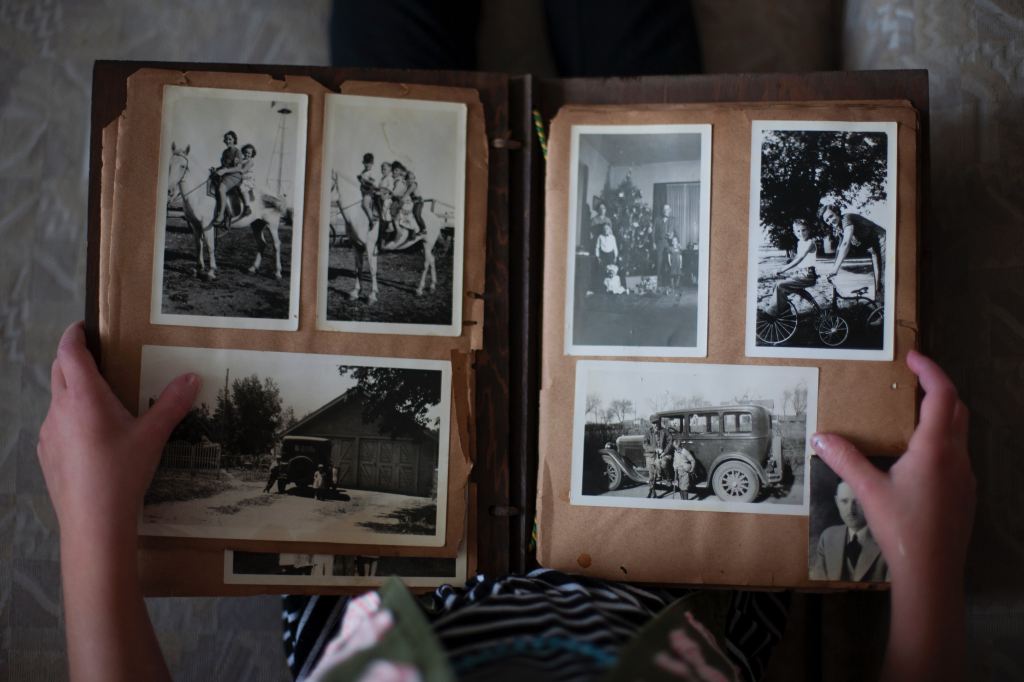
Photo by S O C I A L . C U T on Unsplash

Karen’s Descant is all about telling stories.  We resonate in our bones with Doris Lessing’s observation that stories are what make us human:

Humanity’s legacy of stories and storytelling is the most precious we have. All wisdom is in our stories and songs. A story is how we construct our experiences. At the very simplest, it can be: ‘He/she was born, lived, died.’ Probably that is the template of our stories – a beginning, middle, and end. This structure is in our minds.

Lessing’s appreciation of legacy has been reflected intermittently in our dialogues over the past few months.  What follows is a much edited summary.

Karen Martha:

Last fall one of my friends mentioned that for many of us, our children are our legacy. That has danced in my head all winter, because I have no idea what my legacy might be. I’ve never considered my children my legacy, more like my effort to enrich the human genetic pool, and they are on their own after that. I mean, what if one of them robs a bank? Would I be responsible for that?

This led me to start thinking about what a legacy is. As always, I love to pick your brain. What do you think of when you hear the word “legacy?”

Karen Rose

I think that our culture often asks us to focus on the tangible assets that we will leave behind, whether it is money, an endowed building, or objects that we have created – and that is the first dictionary definition.  And we have been wrestling with that obliquely – as in What is My Footprint.  But the other side of legacy is not what we will leave but what we have received from the past.  I am asked to see myself as a legacy, not from one or two people but also from what flows through them to me. 

Karen Martha:

I hadn’t thought of legacy as what flows through us from the past. It’s hard to get my mind around that since my mother refused to talk about the past, and I lost contact with my father when I was in third grade. My past feels like it starts with my parents.

Karen Rose:

I can be very concrete about some aspects of my past.  My “Swedish family” came to the United States, primarily to the Midwest, starting in the 1860s.  Through accident or karma, all of those who came early married other “Swedes” – mostly native born – up through my parent’s generation.  This legacy cannot be defined precisely because I know that I am truly American and not really Swedish-American. Yet, the family stories about all those distant relatives – people who I met before I had real memories or sometimes never met – which make me feel like a legacy. And I don’t even remember the specifics of most of the adult chatter that seemed endless when I was young! The most precious object that I own is a small box that accompanied my great-great grandmother on the boat to the US.

Other assets – or obstacles in some cases – are less obvious…but what do you think?

                Photo by Laura Fuhrman on Unsplash

Karen Martha: I resonate to the idea as carrying the past forward but what about someone like me who grew up in a family where there were no happy stories or family keepsakes? I’m inclined to tell myself that no legacy is, in fact, the legacy. It was impressed on me growing up that it was up to me and my sisters to do better than my family as a whole had. “You are going to college. You do not have a choice in this.” It was as though they were say that it was up to me to live out their dreams and start a legacy anew. That said, there was a darker side to this legacy. It built in me a strong desire to not only realize their dreams but also to avoid their mistakes, among them a strong thread of alcoholism. I was determined NOT to be like them.

Karen Rose:

But you have put considerable effort into retrieving legacies that you were not freely given in your nuclear family.  You looked for and found your biological father’s relatives, and you  visited them with your own children and their families.  You describe a hole that feels a bit similar to people who are adopted and want to find out more about their blood relatives, even if they are surrounded by love in their adoptive family.

Do you think that this need to feel the threads that tie us to those who have been before – even if we never knew them – is due (at least in part) to our sense of ourselves as peripatetic rather than firmly rooted?  You have moved 30 times since becoming a young adult; I can’t quite match that, but have lived in other countries and in six states, never settling anywhere long enough to feel as if I had a home place…

The underlying question is whether my sense of myself as legacy could have been tied to stories about place rather than only to people if my life had been very different…

Karen Martha:

When I think about place, I am reminded that the minute my grandfather stepped on a boat to the US from Norway, he was leaving his familial legacy behind. I believe that place does matter, probably more in some countries than the US. When I visited Norway I stood next to the fence dividing my grandfather’s farm from the farm my grandmother came from. My second cousin said, “This is where you started, your grandparents talking over this fence, falling in love, and moving to the US.” As she told that story, I felt firmly rooted, even though I’d not spent my life in that place and even though my grandfather had left to start a new life in a new country.

Karen Rose:

We are our history, which includes far more than any particular short story that we tell about ourselves…It is not just the stories that I overheard about distant family connections, but also those that I have incorporated based on events and relationships. The older I become, the more aware I am of how much of my identity is tied in with living in another country and becoming almost fully absorbed into another culture when I was old enough (11) to understand the differences but emotionally and socially very pliable. I have lost touch with everyone I knew then, but their faces and their stories loom very large in my own narrative. 

So, for both of us, a critical and unplanned encounter with place and people has shaped our story of who we are.

Photo by Markus Winkler on Unsplash

Life Connections

Photo by Alina Grubnyak on Unsplash

Retirement has put me in a stock-taking mood, less a search for meaning than simply an understanding of my past and present.  I often turn to internal story-telling….

My narratives change with new insights and reedits. These days, I have moved away from event-based stories (the college years; the productive 50s…). Julia Cameron, in her follow-up to The Artist’s Way focusing on the over-60 crowd, urges us to take our chronological age, divided it by 7, and write about the years included in each span.  As Dan and I watched the 7-Up series, which every 7 years revisits the lives of a randomly assembled set of English children, I thought of how powerful it is to break away from the constraints of decades or major events as chapter markers in our stories…

But in the past few months my internal storytelling has focused less on chronology and more on the way in which people intersect with each other and with loosely defined periods in my life.  Much of this happens when someone from my past seems to pop in to my mind for several days, causing me to rethink how and where they belong in the threads braided into my experience.

Last week a personal message on LinkedIn told me of the death of someone with whom I had lost contact.  That loose connection, between continents (my friend who died was Dutch) and across generations (the messenger is at least 20 years younger than I am), activated memories of a wider network of people who were meaningful to me over more than a decade, even though they did not constitute an identifiable social group.  What I was struck with again is the how this nebulous collection of colleagues, friends, acquaintances has provided meaning to my life, even though its members do not cohere into a usual life-story format.  They represent, collectively as well as individually, an extended period in which I felts as if I was learning about the world, other people, and professionally every day. 

Photo by Moritz Kindler on Unsplash

Thich Nhat Hanh’s idea of interbeing – the dependence of all beings and things upon one another captures this nostalgic gratitude:   

… I was looking for an English word to describe our deep interconnection with everything else. I liked the word “togetherness,” but I finally came up with the word “interbeing.” The verb “to be” can be misleading, because we cannot be by ourselves, alone … the action of interbeing reflects reality more accurately. We inter-are with one another and with all life…. Whether we’re at work or at home, we can practice to see all our ancestors and teachers present in our actions… We can experience profound connection and free ourselves from the idea that we are a separate self ( from The Art of Living)

While this way of thinking is still a bit mind boggling to a Westerner raised with Descartes’ individualistic claim that “I think therefore I am”, it leads me to pay attention to human connections beyond the people I love with all my heart.  Facebook, LinkedIn and Twitter can be a rabbit hole and a space to post the least interesting things that happen in my life (yes, I admit to occasionally bragging about Wordle), but they also allow me to contemplate the loose linkages that are part of my direct experience of interbeing.  

I smile when I read the words of adult children of friends whom I haven’t seen in years, and I am filled with awe as I look at them sending their own babies to college. At one level this seems trivial, but at another it reminds me that networks are never lost, even if they are not currently active.  And, as the miracle of Facebook informs me that a friend who meant the world to me from 7th through 12th grade had visited her childhood home, I became instantly reconnected to her parents, whose escape from Nazi Germany created the opportunity for hosting a gaggle of very ordinary American teenage girls, which in turn opened up other doors of connections, known and unknown.

Photo by Joshua Hoehne on Unsplash

I am also in awe of how my own (middle aged) “kids”, who grew up in a world of cheap phone calls, cheap flights, and the internet, keep consistent contact with beloved friends from high school as well as college.  I, however, grew up in an era when a long-distance call home to my parents from college was short because it was costly, and visits to relatives who lived a few states away were rare because they involved several days of driving.  Constant connection is a habit I never developed, and my life is littered with people—friends, relatives, mentors– with whom I lost touch with completely.  And now, increasingly, I think about those who died before I could reconnect and share the unspoken gratitude for what we meant to each other.

I regret these lapses as a byproduct of the dismal period when the art of letter writing had died but the internet was not yet born. However, I am persistently struck by the way in which inactive connections become potent with even a few exchanges.  During Covid, Google provided me with the email of someone who I knew in both college and grad school — I thought she would be amused that I had cited her 1972 dissertation in a paper.  We have been exchanging episodic emails with personal, professional and family news – almost as if there were not a 50-year gap in our shared experiences. Facebook and loose connections allowed my own adolescent gang of “cool nerds” to commit to our 50-year high school reunion and, more surprisingly, to two additional get togethers with some (including me) traveling long distances.  Our parents are gone, none of us live near where we grew up, and we are the only ones other than siblings who can tell stories about our teenage years that stir a sense of connection not only with each other but with place and time. 

I know that taking interbeing seriously requires more sustained spiritual practice.  But perhaps it is the enforced isolation from our closest friends and family during Covid that supports the deeper significance of our looser human connections, whether one-off conversations, attentive participation in group events, or the spontaneous reconnecting that seems to be happening in my life.  As I get older, the significance of loose ties that are filled with caring and compassion has never seemed more important.  I am committed to contacting at least one “loose” connection regularly, only to remind ourselves of how we fit into each other’s stories….

What About the Cows?

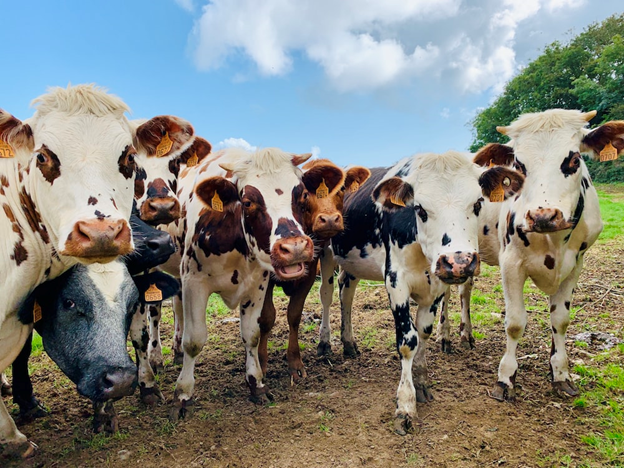
Photo by Lomig on Unsplash

Karens’ Descant has regularly touched on the topic of paring down, decluttering, releasing loved objects, and living smaller.  Still, when I came across Thich Nhat Hanh’s story about the farmer who lost his cows in No Mud, No Lotus, I was struck (again) by his gentle insistence that we must look beyond the obvious detritus with which we are surrounded.

 His parable runs something like this:  A farmer, looking anxious, passes by The Buddha and group of monks, and asks “Have you seen my cows?”  The Buddha replies that they have not, and that he should look in another direction.  After the farmer leaves, he turns to his group and says “Aren’t you very lucky.  You don’t have any cows to lose.”

Well, that’s a head scratcher.  The Buddha and his followers may be fed by the kindness of strangers (or devotees), but the farmer’s existence is dependent on his cows.  At first the parable seemed a bit like Marie Antoinette’s “Let them eat cake” response to the absence of bread – a life of contemplative ease contrasted with a life that is marginal in its well-being.  No wonder the farmer was anxious – he has a family to feed and small children who are crying for milk – and cows on the run also distract him from the many other tasks that a small farmer must accomplish (mindfully, one hopes) in order to sleep well at night.  I am all in with the farmer….

But as the story unfolds, it is clear that my automatic social critic lens is (once again) too narrow to take in the meaning of The Buddha’s response.  Thich Nhat Hanh reminds us that the story is not about real farmers and rambunctious cows, but about our attachments to ideas and habits – particularly those that we associate with our well-being and happiness: 

One of the biggest cows that we have is our narrow idea of happiness.  You may suffer just because of your idea; and you continue to suffer, until, one day, you are capable of releasing the idea and right away you feel happy — No Mud, No Lotus, p 59)

To be truly happy, we must release our cows – the attachments that hold us back.  As I Googled “releasing our cows”, I discovered that there is even a printable worksheet to help….

Ok – as I look at my life I have to consider not just the “stuff” that Dan and I have been pretty good about culling, recycling and donating, but at the other less visible baggage that I still carry.  I don’t have to get too reflective to find cows mooing in almost every corner of my inner life.  Here is just a quick list….

  • I am attached to my convenience – such as having 2 cars even though we rarely need them.  Oh, the excuses I make – they are paid for, we always combine errands to drive less, we don’t have a garage to hook up an electric charger…My friend Kyle, who has chosen not to own a car, kindly pointed out this cow today after I tut-tutted about his ecological failings in using Swiffers
  • I am attached to my slothfulness – I have never liked exercising, and can conjure up 1000 excuses even when my Apple Watch tells me that I may expire in an untimely fashion from lack of activity. I feel guilty when a few days go by and I am happily puttering, writing, cooking – and I even count gardening as exercise, but I belonged to a YWCA health facility for a year – and never went.
  • I am attached to worrying – about my children and grandchildren, whose lives and future I cannot control (or even directly influence…).  And would they be annoyed if they knew how much I worry…about whether the house will need to be painted in a few years (yes, probably – but will worrying about it make it less inevitable?); about if and when we should consider moving into a life care community.  Well, this list is endless and useless…
  • I am attached to having the dishwasher loaded a certain way – I even sneak up after Dan has loaded it to rearrange stuff…let’s not go into the other areas of secretive tidying so that things will be arranged in a way that I like…well, sometimes I tell him the right way to do things (which he sensibly ignores).
  • I am attached to my own significance — I say yes to requests even when I immediately know that it will require me to do things that will make neither the other person’s life or mine much better (and I sometimes have to back out with a limp excuse).  And I feel guilty about NOT going to a conference, which involves canceling dates/coffees/dinner, etc. with people whose lives will not be deeply affected by my absence (they all have other friends).  I even work at maintaining a public image that no longer fits, polishing my “emerita vita”, which no one is likely to read….

Honestly, even the beginning of the mooing cacophony makes me start to laugh at myself, albeit with a large dash of added discomfort.  I should add that this list does not make me feel like beating myself up:  these cows are not harming anyone else in a significant way.  They are not “character defects” but cows – all the small things that, when I chase them, reduce rather than increase the joy in my life.  I think that I will print out the worksheet and start thinking about releasing my cows.  If I can give away a beloved chair, take almost all of the books that we have finished reading to a neighbor’s Little Free Library, and pare down the boxes of family memorabilia to a size that our families might actually want to take a look at some day – well, surely I can reduce my attachment to a few cows.

Photo by Lenstravelier on Unsplash

Pause?

Photo by Ashim D’Silva on Unsplash

Several weeks ago, I attended a contemplative writing session with Reverend Karen Hering, whose skill at eliciting new thinking always amazes me.  That evening, however, I  found myself befuddled by her first question:  When have you paused? . 


It took me several minutes to think of any time when I have paused in a memorable way.  During most of my life, I embraced the ideal of being busy, being of concrete use to other people, and, above all, being productive in a way that could be counted.  Like many (most?) women, I found it hard to say no, which meant that both at work and in my personal life, I was often overloaded, constantly prioritizing which obligation would get the most attention at any given moment. 

Vincenzo Campi, Christ in the House of Mary and Martha, c.1580

I

I reveled in the research suggesting that multi-tasking is a female superpower…. 

In other words, there were few pauses.  As I scrolled through my past life, my first hit responding to Karen Hering’s question was the last month of my first pregnancy:  It was a torrid August in Massachusetts, and I was not working, largely immobile, and waited on by my husband.  However, it was less a pause than a period of intense anticipation.

A few days later,  I smacked my head and remembered that, as an academic, I had regular long sabbaticals, whose purpose is, in theory, a time for renewal and reflection, to live fully in the ideal of the Torah:  “…in the seventh year shall be a sabbath of rest unto the land, a sabbath for the LORD: thou shalt neither sow thy field, nor prune thy vineyard “ (Leviticus (25:4-5).  But in the modern university, that ideal is as far from reality as the typical observance of the Sabbath as a day of rest.  Instead, when I  filed my sabbatical plans with the university, they included writing, data collection, and a projection of the usual output of publications, research proposals, and  new course syllabi. 

It is obvious that the usual American vacation – one or two weeks, crowded with delightful activities – may provide novel adventures but hardly qualifies as a pause….

The expectation that we should be doing something useful barely shifts when we retire, as we are urged make and then to work down our “bucket list” of experiences that we have been putting off.  And don’t forget the podcasts and books urging us to find a new purpose that will keep us sufficiently busy that we don’t sink into a Laz-e-Boy with a TV remote and a glass of wine.  But there are equally pervasive expectations that we should build yoga and meditation into our schedules.  Pausing has become a big business, especially for we retirees, who are also urged to remember that aging is expected to bring sagacity and spiritual growth

Photo by Amanda Jones on Unsplash

But these mixed cultural messages beg the real question that has nagged me since my disquieting evening with Karen Hering:  Why pause?  And, in my case, how to recognize “pause opportunities” rather than additional programmed obligations?

I thought about my recent efforts to do anything that might lead to meditating.  Long ago I read a book about different forms of meditation – I can’t remember much except that it gave permission to apply the label to almost any practice that clears out incessant to-do messages.  It remains my goal rather than a scheduled event most days, and when I decide to take a break, I try something.  Most of the time I successfully reduce my creeping anxiety about the to-do list, but I am also occasionally startled by an insight or a feeling that emerges not out of thinking, but out of emptiness.  I am willing to call those insights accumulating wisdom, even if I can’t easily name them.

Then there is the unanticipated stop-in-your-tracks that occurs as I practice reading slowly,  a skill that atrophied during the years of skimming piles of student papers with red pen in hand.  When I encounter an unexpectedly beautiful sentence, or a poem that just appears when I pick up a book, I sometimes feel my heart beating faster.

And there’s the  benefit of having a young child in my life who has  not digested the ideal of productivity.  To walk around the block with a four-year-old can take an hour, because it is in her nature to pause.  New flowers (or weeds) blooming (“What is that one called?  Smell it!”),  A bug eating a leaf (“it’s so blue!”).  Yards with intriguing ornaments, whether kitschy or real art, that are always worth re-examining.  When I feel today’s time ticking away, I remember how quickly four-year-olds turn in to teenagers and adjust my adult cadence to her desire to observe intently, with no real purpose in mind. 

— Jimsonweed, Bandelier National Monument

Sometimes I think that my granddaughter is channeling Georgia O’Keefe:

Nobody sees a flower really; it is so small. We haven’t time, and to see takes time – like to have a friend takes time.

So, if pausing is a value that I am starting to savor, what knot does it unravel other than being, for a moment, less engaged with busy-ness?  Yannis Ritsos suggests that these encounters with the intangible may be fundamental to my evolving consciousness:

I hide behind simple things so you will find me….

Every word is a doorway
to a meeting, one often cancelled,
and that’s when a word is true: when it insists on the meeting.

As I read this, I am aware that it is not big planned or anticipated pauses that give me the greatest joy, but the small ones that knock on my door—and then ask me to change. Ordinary time is suspended in wonder and, as Ritsos claims, becomes an opening to the “thin places” where I am able to experience life beyond that which I can touch.  When I meet a sense of communion with a granddaughter or friend, a feeling, a nascent idea, or a burgeoning of love, perhaps I am simply experiencing a flow that cannot be programmed.  The real problem solved is the (re)cognition that much of what I value most at this stage in my life is not planned, but experienced – often as a pause.