Dear Old Age

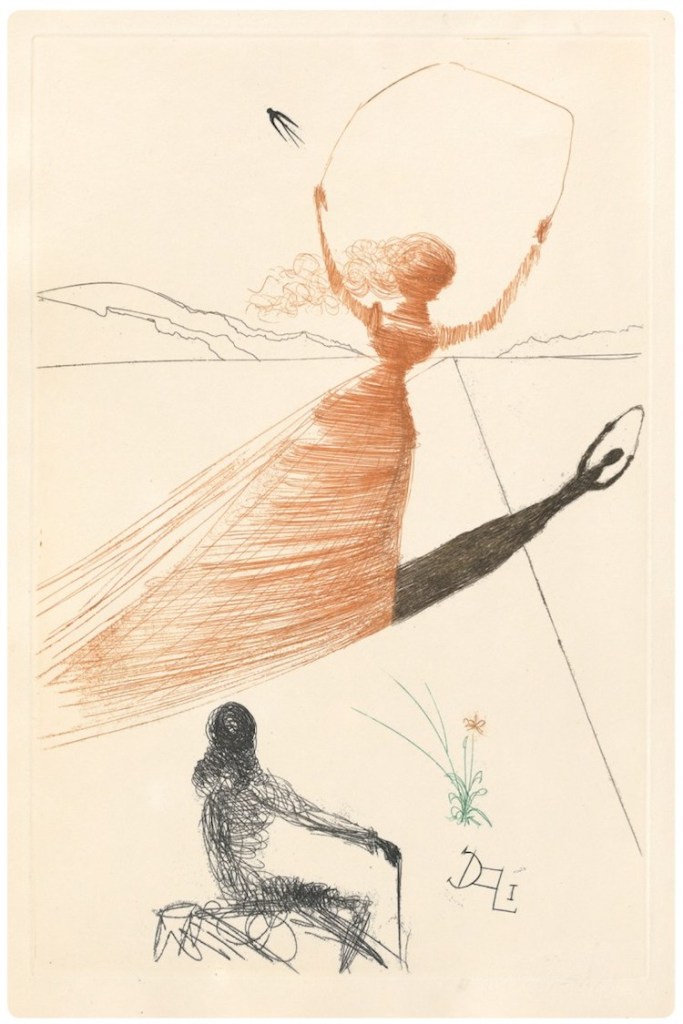
Savador Dali: Alice in Wonderland

April 20, 2025

Re: Old Age

Dear Old Age,

You snuck up on me. One day I was going to the gym three times a week, and the next I was shaky in the knees standing up in the morning. I give you credit—you attacked me in a vulnerable spot—the family weak knees. I can almost hear you gloating. “Those Evans/Jacobson women, they’re weak in knees. That’s where I’ll come for her.”

I recognize that weakness in the knees doesn’t always imply old. Plenty of younger people get knee replacements. But it’s a symptom, and if I could only fix the symptom, everything else would be fine. I wouldn’t be getting older, and worried that I won’t get to do all those things I still want to do.

I want move to Norway and live there. Go to the family farm, Vaagenes, and rent a cabin, long term. I’d even settle for that second home on Lake Michigan . Sadly, I’m not going to do that. Darn, Old Age, you stink. . . . . . . Heh, wait, I got to live in Salzburg for three months just a few years ago. I stayed in a Zimmer with a tiny kitchen, bath, puffy duvet, and a big window with no screens and tiny, biting mosquitos. I ate boiled eggs every morning, a gift from the chickens cackling below that window. I do know what it is to live somewhere completely alone and in a foreign place! I do know that I can adjust to the new and learn about different cultures. Ha Ha – fooled you Old Age!

What about that dream of bicycling the North Shore, carrying camping gear, finding a secluded spot and setting up a tent in the evening? Of course, I still want to do that. I’ve never camped. We’d (notice I’m not alone—there must be another lover in here somewhere) sleep under the stars, fish for our dinner, and make love in a sleeping bag. Okay, it’s not going to happen for so many reasons, but don’t forget the Parkway and Lake Nokomis, my happy places where I biked with abandon. Been there, and almost done that, Old Age!

I’ve always wanted to turn a manicured, pesticide polluted lawn into a habitat for pollinators. I’d thumb my nose at my neighbors letting that residue drain into the beautiful lakes and streams we have in Minnesota. Old Age, gotcha again—I turned our lawn into a field of clover, seeding it summer after summer until the plants matured and bloomed into a home for the birds and the bees. I once saw a flock of flickers land and pillage the soil for healthy worms.

Another thing, I could get married—again—have the storybook ending this time. We’d meet, fall in love quickly, never argue, and agree on the same TV shows. As we near death, we’ll hold hands, serene as we fade away. Okay, three’s supposed to be the charm, but I might need four tries at marriage. I know, it’s a silly idea, but nothing was silly about being married the first three times. I had children, grandchildren. I held hands in movies, cuddled before falling asleep, wrestled over bills and where to live and how to live. I comforted lovers, and they comforted me. So, Old Age, look at all the love I’ve had along the way.

There are so many different lives I could have had in this amazing world –become a Buddhist, live off the grid, move to DC and protest. I want to try them all, but I’m running out of time.

Okay, Old Age.  I concede. I’m probably not going to live in Norway, or bicycle and camp under the stars. I never was a gardener—I detest getting my hands dirty. As for a fourth marriage, not sure I have the energy. I’m not interested in fighting, Old Age. Truce. . .     I actually like the life that I have, even if I want all the other experiences too.  I can even accept getting old, if you help me use it to build something different, something equally new, even if it doesn’t look flashy from the outside. I’m still here. Include me, inspire me, and I’ll always show up.

Love, Karen

Memory and Story

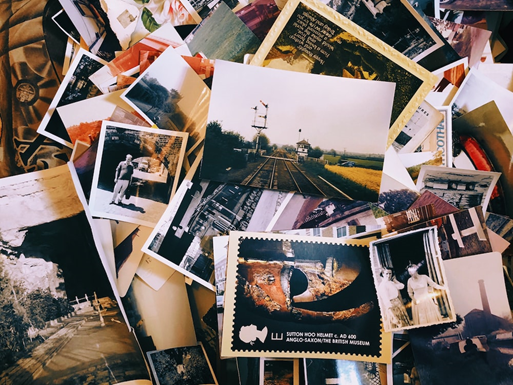
Photo by Jon Tyson on Unsplash

When to the sessions of sweet silent thought
I summon up remembrance of things past
(William Shakespeare)

A man needs such a narrative, a continuous inner narrative, to maintain his identity…(Oliver Sacks)

Much is made of the way in which memory erodes among the elderly – a group to which I am beginning to concede that I belong. Memory loss is considered normal, and it is true that my ability to recall information – the name of a restaurant that I loved in New York in 1970 or even the names of some of my childhood friends – is not immediate.  Now, my husband and I say that we are lucky to have two brains, which allows us to come up with a missing piece of information sooner.  Sometimes I kick myself when it is some simple, common word that has, slipped my mind.  Slipped my mind – memory is such a slippery thing indeed.

Recent research suggests that the slipperiness that I (and most of my friends) are experiencing is not the whole story.  We may have mild forgetfulness, but we are actually wiser:

“Some brain areas, including the hippocampus, shrink in size. …These changes can affect your ability to encode new information into your memory and retrieve information that’s already in storage. On the other hand… connections between distant brain areas strengthen. These changes enable the aging brain to become better at detecting relationships between diverse sources of information, capturing the big picture, and understanding the global implications of specific issues.” Harvard Health Newsletter

https://unsplash.com/plus/license

This may be comforting to some people, but memory is still important to me —  Not the name of a restaurant, but the people who were there, the conversations we had that made us laugh, and how the evening created a friendship and endured for years.  I want to be able to summon up not just the grief that I felt at my mother’s funeral and any wisdom that I may have acquired about how to anticipate and live within grief (wisdom?), but also to remember that my cousin Butch played “When the Saints Go Marching In”, what words were spoken by whom, and even what I wore.  I want both to feel it very specifically AND to connect it to other events of loss in my life.  But I can’t remember what I wore….yet. 

The older I am, the more memories I carry and the more I need to make sense of these past events, feelings and images in the context of my life today.  This is what the practice of telling our story, whether orally, by journaling, or in a memoir, is about.  Oliver Sacks argues that “Every act of perception, is to some degree an act of creation, and every act of memory is to some degree an act of imagination.” But given my capacity to invent a past out of whole cloth, I have to work hard to prevent my story from being fiction!  In addition to reconnecting with past feelings – anger, grief, lust, joy – I want to give them additional color, and come closer to something real, with specifics. 

Recently, Karen Storm and I attended a writer’s retreat, where we planned to spent a chunk of our writing time working on the Karensdescant blog.  Instead, I woke up before the workshop feeling unnerved and vaguely remembering events from decades ago. By the time I got to our idyllic hermitage, I knew that I had to write about it – but my memories were fuzzy and still unsettling.  Karen Storm came with a less clear idea of what she might want to noodle on in addition to the blog, but was struck on the first evening with two old memories of her own that called her. 

In the end, we never talked about Karensdescant.  But we both happened on something more important – something that those increasing, branching, interlinked dendrites in our brains – the privilege of being old – demanded we attend to.  We wrote like maniacs, multiple pages infused with both tender and crushing details about important events falling into our computers,  connecting past events and people and finding new links with our present lives.  We were recalling information, pulling out succulent details that were not immediately at our fingertips, and making new stories out of past circumstances. 

In my case, it was clear that my memory of a very old relationship was encapsulated in a very short story that that I repeated so often, both to myself and others, that it seemed to be as real as the door to a room or a book on a shelf:  “We met and loved in wonderful places.  But it was too complicated.  It ended.”  But there’s the rub:  when I open the door to a room in my mind, I am amazed at what lies behind it that is unexpected – or what isn’t there that I was sure that I put away a short time ago.  When I open a book to reread it, there are sections that I don’t remember, while others that I starred on the first reading no longer seem as important as they did.  Anna Karenina is like that for me – it has a different meaning in every decade of my life.

It is not that my memories about that particular relationship are especially elusive – it’s the details that I have left out because they were (deliberately?) buried, or seemed trivial, that demanded some major rewriting. The editing included dredging up more information, but also a desire to make sense of old, lost relationships in the context of the life that I have subsequently woven, together with many others who I did not know or were not yet born, in the decades since.

Photo by Daniel Schludi on Unsplash

During the retreat, I wrote a different narrative that is much longer and has changed the way that I think, not only about that relationship, but all of my relationships with people  I have loved. This was not the Shakespeare of Sonnet 30, who descends into rather weepy nostalgia, but an urge to reorder my house to see that old things that still intrigue me are put into places where they connect with others parts of my life.  I can almost feel the dendrites communicating with each other. 

Friends who have worked with hospice patients talk about how they observe people holding on for a few more days to make sense of some aspect of their life that feel unfinished.  When I ask myself (or am asked) to remember more details, I find connections that I did not make in the past.  Or, I remember something that was said that changes the way I need to tell the story. What is different for many of us as we age is feeling a need to make sense of our lives more deliberately, with more care, whether we are writers, talkers, or scrapbookers.  When it comes down to it, we are all just trying to make a little more sense of this very non-linear project that is life.