Big P, Little p, or What I Make of It All

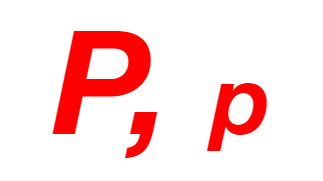
The ubiquity of retirement “experts” telling seniors they need a purpose borders on tiresome. Hammering about purpose as necessary for giving meaning to life seems quite male to me, a sort of Big P (and I don’t have to tell you what else begins with p). It’s as though the adjustment to retirement converges on this one construct—Purpose—as a solution. But what if my way of adjusting to retirement is constructed from my web of relationships, interests, opportunities, family, etc? What if it’s not only ONE big purpose that drives me and helps the world, but a series of small day-to-day purposes, little p’s. To me that would be a more female way to consider the idea of purpose.

Trying to scrub the Big P notion out of my mind and come to what gives me meaning led me to recall three women whose careers I’ve followed closely, probably because they are writers, but also because their lives took such different paths where purpose is concerned: Rachel Carson, Carolyn Heilbrun, and May Sarton. I’ve listed them in the order that they entered my life, because recalling them in that order has helped me form my idea of Big P, little p. 

I was an undergraduate at the University of Minnesota when I read Rachel Carson’s book, Silent Spring. I remember reading it during those big lectures of 300 or more students in biology, underlining it frantically; reading it whenever I had a break in my day; carrying it everywhere with me.

Carson, a woman with a Big P, believed that the rampant escalation of chemical use in our environment was harming the biosphere—she called these chemicals biocides. Carson wrote much of Silent Spring while undergoing chemotherapy and radiation for breast cancer.  She kept her illness quiet because she thought if the chemical industry knew, they would claim she had a personal vendetta in writing the book.  In fact, her entire career of nature writing culminated in this book. Sadly, Carson died of her cancer two years after the book was published.

As an idealistic freshman, Carson inspired me to want to do something big that would make the world better; I think we all hold similar aspirations at that point in our lives.  My direction turned out to be marriage, family, and teaching school, most of which kept me busy enough that I didn’t pause often to reflect on whether I was changing the world. I kept putting one foot forward—after all, aren’t raising happy, well-adjusted children and educating the young gifts to the world?

Many life events and years later, I encountered the Kate Fansler mysteries, written by Amanda Cross, a pseudonym for Carolyn Heilbrun, a professor at Columbia, and the first woman tenured in the English department. 

At the time, I was working on my Ph.D. so reading mysteries by a professor had special appeal. Later, during my MFA studies, I ran into Heilbrun again, this time in her book, Writing a Woman’s Life. Then, as I reached my late 60’s I encountered her a third time in The Last Gift of Time: Life Beyond Sixty. This was the book that held my attention. The prologue is essentially an argument for life being over at 70.  She notes, “is it not better to leave at the height of well-being rather than contemplate the inevitable decline and the burden one becomes upon others?” She also states, “I was—and am—one of those for whom work is the essence of life.” And that I think is where she sold short the possibilities life affords. Heilbrun committed suicide at age 77 by taking a sedative and putting a plastic bag over her head. She left a note that read, “The journey is over. Love to all.” 

I read about Heilbrun’s suicide mid stroke on my exercycle—She really did it. She meant what she said. It took me days to process her suicide.  I even wrote about it in my application to the MFA program at the University of Minnesota. Heilbrun had much to live for, a loving husband and family, grandchildren, good health, a successful career, respect, etc. It made no sense to me to define one’s life solely in terms of work, which I presume she did.  Once she anticipated a decline in the Big P of work, she wasn’t willing to construct a life that included both some, though less, Big P and also more of the many little p’s of everyday living. She was and still is for me a cautionary tale about nurturing both curiosity and flexibility.

Which brings me to my last admired female writer, May Sarton. I know Sarton primarily through her journals, which many critics believe to be the best of her 53 books, most of which are novels and books of poetry.

Starting with I Knew a Phoenix, published in 1959 until her last journal, At Eighty-Two, published in 1997, two years after her death, Sarton chronicled aging, isolation, solitude, friendship, building and loving a home, relationships and more. What stands out for me is that although Sarton started out with the Big P of an ambitious writer, she matured into a person who accepted, albeit with regret, that her work was not considered part of the literary canon of her time, and she went on to cultivate the many little p’s of her life. Her journals charm with details of daily life: ordering bulbs for the garden; walks with her beloved dog, Tamas; visits and long talks with lifelong friends; keeping a lively correspondence, sometimes with complete strangers; and following the antics of her various cats and neighborhood critters around her secluded house in Nelson and later on the coast of Maine. These were the small p’s of the solitude she captured in her journals into old age. I keep a Sarton journal next to my bed and read some every night before turning out the light.

I’m not writing to criticize anyone who has a Big P in their life. No way, it’s a gift. I myself will always sustain a passion for teaching and writing, the stuff of Big P. But I am arguing that a web of little p’s has the substance of a Big P and of a life well-lived. A few days ago, I woke up excited to attend my grandson’s senior speech—before the Corona Virus put a lock on outside life.  I had an exciting small p purpose for my day. Now, as I recall the day with my family, the speech, the cheers, the hugs, the brunch after, I realize that while the search for a new Big P to enliven retirement has been, for me, akin to finding a four-leafed clover in my lawn of Creeping Charly, most days I have little p’s everywhere. I walk my dog around a lake that changes with the seasons; I have lively lunches with friends; I enjoy dinners and vacations with family. My latent Big P for writing and teaching will always be part of me, and meanwhile, every day has something to savor, right until the moment when my cat walks across my face before settling at my feet for the night.  

Nostalgia 101

Image result for nostalgia

(https://tvtropes.org/pmwiki/pmwiki.php/Main/NostalgiaFilter)

Sometimes I think I could teach a course in nostalgia, that longing for a past perceived as perfect. I seem to nostalgize (who knew it’s also a verb) often.  A couple of weeks ago nostalgia for school hit me full force as I watched the neighborhood children, on the first day of school, weighed down by enormous back packs filled with new pencils, notebooks, glue, rulers, etc., waiting for the school bus. I was immediately back in school smelling that gummy stuff they used, in my day, to sweep the floors; remembering how the smell of cinnamon rolls baking used to fill the school where I taught; and recalling those Bunsen burners in junior high that we loved to mess with when the teacher wasn’t looking.

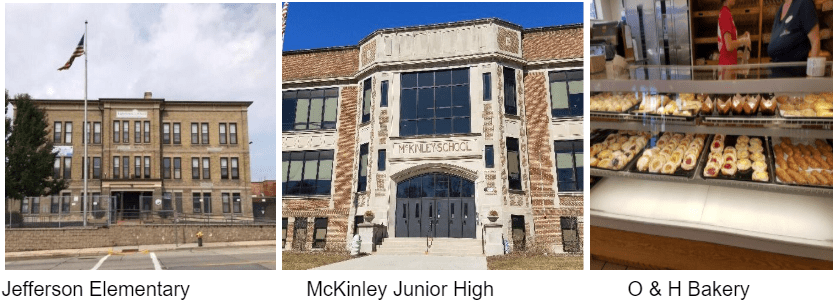
 We all have our own memories of favorite places.  Having spent most of my life in schools, as a student, a parent with children, a teacher, a college professor, and now a tutor, mine are about schools—my geomagnetic field is probably over the nearest school. In fact, just to indulge my nostalgia, here are some pictures of favorite school-related places—my elementary school, junior high, and the Danish bakery we’d frequent on our way home from school (I grew up in Racine, Wisconsin).

Although I suspect nostalgia has been part of being human forever, it was first coined to be a condition in 1688 by a Swiss doctor, Johannes Hoffer, who called it a “neurological disease of essentially demonic cause.” In the 19th and 20th centuries it was still considered to be a pathological condition, but when Dr. Sedikides, Tim Wildschut and other psychologists in Southampton, England began studying it in 1999, they found it to be just the opposite, a rewarding positive experience. They also found that it’s universal and not just an adult pastime, occurring even in children as young as seven. Both the features of nostalgia, pleasant reminiscing, and also its focus, holidays, weddings, songs, and places, are found worldwide, with most people reporting that they experience it at least once a week and almost half saying they feel it as much as three to four times a week. I guess I’m not alone.

Research has challenged the belief that nostalgia is unhealthy, finding, among other things, that feeling nostalgic helps with loneliness, boredom, and anxiety, makes people more generous to strangers, and makes couples closer and happier when they share nostalgic memories.

That said, I’m convinced that nostalgia can be a little addictive as we grow older and have memories upon memories, all the while—at least in my case—slacking off on creating new memories. Research seems to confirm this, finding that nostalgia is high in young adults, goes down in middle age, and gets high again during old age.  The reason is that nostalgia helps deal with transition. So maybe that’s why I find myself waxing nostalgic whenever I am reminded of schools; I’m in transition from a life in education.

Cover to the first edition of "You Can't Go Home Again" by Thomas Wolfe

Thomas Wolfe wrote a book called You Can’t Go Home Again, meaning that If you try to return to a place you remember from the past, it won’t be the same as you remember it. I test that claim every time I walk into Lake Harriet Upper School to tutor (I couldn’t get back in schools fast enough when I retired so I signed up as a volunteer tutor) or when I stop by Burton Hall on the U of MN campus or revisit the classrooms of my undergraduate days. On the surface, these buildings and their classrooms remain the same, and almost like an addiction, trigger some sort of feel-good chemicals in my brain. 

Recently, however, my addiction to schools was tested. I was finishing up with my tutoring group, when the principal, whom I could see through the open door standing in front of a class, walked out and asked me if I wanted to take the class for the rest of the day, the sub had not shown up. (I need to explain that this principal happens to be my son, who thinks his mom might be more at his bidding than other tutors in the building). How tempted I was to say “yes!” To get back into the fray, get those kids, who were taking advantage of having no teacher, back to work. But then something clicked in me.  I didn’t want to go into that classroom. From a lifetime of teaching, I remembered clearly what I’d be taking on, and I realized that my freedom to do what I want is awfully sweet. Mother or not, I told the principal, “No thanks.” I didn’t want to go home again.

Freedom. It is a sweet thing. Loads of time all to myself, no obligations. And my new-found freedom in retirement clearly moderates my desire to actually work again full time in schools. But the memories are also associated with the sense of being involved in something bigger than myself, something with the potential to make the world a better place. And . . . taking classes, traveling, having lunch with old friends, getting lots of exercise, and volunteering—even tutoring—don’t quite satisfy the need to have my life count, even now, in retirement.

So where am I then? I can’t go home again and I don’t want to, but my new “place,” retirement, leaves me searching. As I noted before, I am in transition, and my happy memories about schools, while addictive, will not suffice for a meaningful retirement. So I go forward, I can’t really replace my bond to education, but nevertheless I’m ready to commit to something equally meaningful, something that in what I hope is a distant future will live up to all the virtues of nostalgia. 

As usual, I was thinking about the moments of the past,
letting my memory rush over them like water
rushing over the stones on the bottom of a stream.
I was even thinking a little about the future, that place
where people are doing a dance we cannot imagine,
a dance whose name we can only guess.

From Billy Collins "Nostalgia" in Questions About Angels 1991

Stumbling onto My Calling

I always envied my second husband, Gary, and my sister, Marylyn, because they each had a clear vocational calling. In eighth grade, Gary had to write a report about a career. As he loved to tell it, “I chose city planner because it had the word ‘city’ in it, and I wanted out of Danville, Iowa so badly.” He went on to a successful and driven career in city planning and urban development. Marylyn’s first job was shelving books at the Racine Public Library.  Within a few months of starting the job, she announced that she wanted to be a librarian. She worked summers full time at Western Printing, saving her money to go to the University of Wisconsin and become a librarian.  She reluctantly retired at age 76 from her job as head librarian at the veteran’s hospital in Florida.

          When I read Karen Rose’s piece If I Don’t Know My Purpose, Am I a Retirement Failure?I began sorting for myself the difference between purpose and calling, words that are bandied about in the retirement literature along with reinvention—all of which I believe are related. Purpose has always been nebulous to me. It’s some big thing out there that others have but I don’t.  I always wonder when I try to ascertain my purpose, isn’t it enough to keep living? But a calling is quite like it sounds, a sense, an intuition, or voice—you know, that call from the great beyond—that compels us to do something, like be a city planner or librarian or take quiche to a friend (A Soul on the Move). It might compel us to be something, more compassionate, more frugal, more generous. A call might move us towards something or away; it might ask us to commit.  A calling can also evoke a feeling of being led, being drawn ahead in some way.

I must admit that I’ve never felt a vocational calling, I definitely stumbled into becoming a teacher. After changing majors every semester in college, all the while playing as much golf as possible, I realized that if I wanted to spend my summers golfing, then being a teacher was the way to go. So I became a teacher almost by default, but the minute I stepped into a classroom, I knew I was where I belonged. You might say I “stumbled” into where I belonged.

I didn’t worry too much about having a calling after that, but when I became an assistant professor, that’s when I really wanted a calling, what the associate and full professors, who’d arrived in my estimation, said was a “research agenda,” something every professor needed to be successful. I wanted to be like them and like Gary and Marylyn. But I could never fix on either a calling or research agenda that carried me more than a few months, even though I prayed, searched, journaled about finding one, and read everything I could about careers and callings. Then I remembered advice that Gary used to give me: “When you’re stuck, throw stuff out, and see what sticks.” He had a talent for “throwing stuff out and seeing what stuck.” I eventually stopped searching and went with what showed up and seemed to stick. Stumbling along but still listening for that big voice from the sky. Looking back, I landed on meaningful projects, projects that “stuck,” with passion growing along the way.

          Then, as I’ve keened and wailed about before in this blog, along came retirement and what I call its stages:

Karen Martha’s Retirement Stages

  • Panic;   What have I done?
  • Denial     As in get re-involved in work, be a consultant;
  • Flight    There’s always travel;
  • Acceptance    See it with a new lens, and . . . dare I say;
  • Transformation   Away I go!

Right now I’m in the acceptance stage, looking at the days ahead with a new lens, a different lens than that of work, a lens that focuses on what’s going on inside me. Nevertheless, even with my new lens, I’ve not experienced a “calling” for how to use this incredible gift of time, reasonable security, and health.

In response to Karen Rose’s blog about purpose, one of the respondents wrote: we can think not just of ourselves and what gives us pleasure in retirement, but of what the world demands of us.  Many of us have the luxury of time—and perhaps we can use this luxury on behalf of something larger than personal satisfaction in retirement. She’s talking about calling with a capital C—the big call to change the world. Most of our calls, however, are as Greg Levoy notes: the daily calls to pay attention to our intuitions, to be authentic, to live by our own codes of honor (p.5). I believe Levoy is right, at least in my case, most callings are in the everyday of my life. I tutor math at the local middle school. No one asked me, I sought it out because it seemed I might be helpful—it came from within. I am learning rosemaling—I’ve always liked to make things. Now I have time, and I’m writing, this blog and other pieces. Not the big C, but it all feels right.

In a way it goes to purpose, because I’ve come to see purpose, at least for me, about living as authentically as I can and doing the soul work that supports an authentic life. Purpose notwithstanding, I’ll never stop hoping for a big C calling. Meanwhile, I’m stumbling—no, that’s not fair—lightly tripping along in the acceptance stage, seeing my days and life with a new lens, open to “what shows up.”

I don’t ask for the full ringing of the bell. I don’t ask for a clap of thunder. A scrawny cry will do. —Wallace Stevens

Sticking with What Works or Starting Anew?

Catching a Big Fish at Post Lake, Wisconsin, about 1955 (looked big to me)

I remember as a child waking up in the morning to a day fresh and new, filled with possibility. Something exciting was waiting to be discovered, maybe just around the corner. All I had to do was get dressed, scarf down a bowl of cereal, and walk outside. Sometimes I rode my bike around the neighborhood, looking for something interesting. Other times I’d try to find a friend to join me. I’d walk to my friend Carole’s house, and from the street, I’d call “Oh, Carole.” If she could play, she came outside and off we’d go inventing on the way. If not, her mother opened the door and said, “Carole can’t play right now.” In that case, I’d wander to the park or go home and read a book of my choosing. I was between five and ten when I experienced my life this way, the unadorned curiosity of a young girl.

          Idealized, of course, but I remember that time seemed to stretch on forever (especially when I was bored at the end of summer).  Bored or not, I didn’t look outside myself for something to do, rather, I acted from within, indulging my moods and curiosity. My notion of work was uncomplicated, something imposed by adults, “Practice your clarinet, finish your homework, do your chores.” It was before I learned that work was ubiquitous to living, any and all work, jobs, housework, yard work, volunteer work, and meaningful work, however it is defined. I had not yet assimilated the byproducts of work, productivity, success, and accomplishment, as guideposts for adult life.

          I remember telling my son, out of college and frustrated because he couldn’t find a job, “don’t worry about it. You won’t escape working. You will spend basically your whole life working.” At the time, I believed that the necessity of work had absolute power over my life, what I called the “tyranny of work,” because I saw work, too often, as something that needed to get done. I’d lost the inner direction that had, as a child, given so much impetus to my daily living. I didn’t see my work in context, as a necessary part of life but also, if completed purposefully, as an expression of my authentic self. I had not yet come face-to-face with the question of what life would be like without work—retirement, if you please.

And Then It Came. . .  Retirement

          On December 11, 2015, I retired at age 73. I woke up that first Monday, after the retirement toasts at the bar on the previous Friday, feeling that overnight the ground had become unsteady. I was prepared to shower, get dressed for work, fight the traffic, and get a good parking space, but there was nowhere to go. I knew I could sleep in, hang out in blue jeans. . . but then what? Unlike my fellow blogger, Karen Rose, I had not taken a phased retirement. I simply decided that it was time to step aside for someone younger with fresh enthusiasm. I worked on soft money, and I was tired of chasing it. As for getting “busy with something that looks a lot like work,” (Falling from Grace, posted 7/8/2019) I thought it would be easy. Finally, I would have the time to sit at my desk doing the creative writing I’d longed to do but had put off throughout my life.

My Facebook posting with the caption:  This is where it ends. . .

Writing, however, didn’t happen. Ideas suddenly went dormant. Rather, I spent three months having panic attacks until I read a book about how to overcome them. But overcoming them wasn’t the same as addressing the root cause. That little girl who once welcomed a day of possibilities had lost the ability to not only see those possibilities but also to act on them. I was caught in the conundrum of living from within or living from the cultural and societal norms that describe work—I’d fallen from grace and had no idea how to catch myself. . . .

Part 2: One Big Step for Karen-Kind                                           

I shared my angst about adapting to retirement with friends—and I mean “adapt.” I saw it more as forced obsolescence. Friends said to find a new routine.  Do the things you’ve been putting off—like cleaning closets. Find a new direction. I bought into it and muddled my way into a sort of routine, cleaned my desk in lieu of the closets, and started searching for that new direction. I grew a ponytail—I’d never had long hair. It was something I could accomplish.

          I started tutoring fourth graders in math at my local school—I wanted to be productive, feel useful, and there’s nothing as regenerating as being around ten-year-olds. I taught a couple of classes as an adjunct professor, and I joined a research project in my field as a consultant. Writing ideas resurfaced, and I found myself at my desk again. Whew, finally those panic attacks waned. I was in safe territory—work ( I cut off the ponytail).

          Then, as life will do when you’re ready for it, I was thrown a curve, albeit a pleasant one. My husband and I and Karen R. and Dan went on vacation to the Cowboy Poetry Gathering in Alpine, Texas http://texascowboypoetry.com/. For two days we were immersed in a culture different than upper midwestern city life. A culture of cowboys, in boots, bolo ties, Ariat shirts freshly pressed, creased jeans, and wide belts with polished silver buckles, standing for over an hour reciting new and classic poems. These poems were about life on the range, around the campfire, under the stars, and the meaning of life when everything slows down and you feel the immensity of our world beneath that naked night sky. Corny poems, sometimes, but poignant, nevertheless, and framed by the big questions we all grapple with—is there someone who watches over us? What is the meaning of our time on earth? Do our lives matter? Turned out, there was more to cowboy poetry than campfires.

          Thinking about the poetry gathering on the plane home and later as I went about my routine of teaching and tutoring, a glimmer of something started to break through. Experiencing the cowboy culture reminded me that there are multiple ways to live and know the world. I was living retirement like my former work life, with never-ending assignments where productivity ruled. I was judging my life through the lens of work, and that’s why I had found retirement wanting, a time for panic, and a need to find something, anything, new to do and quickly.

          I’d crossed that demarcation between work and retirement, and I’d found it painful, so I kept trying to go back to what I knew and had valued for some fifty years—working, doing something meaningful in the eyes of the world. Yet available to me was the life of that young girl who awoke every day to possibilities, unless, of course, I chose to clutter it up with the detritus of those fifty years of working. I realized that I didn’t need to “find a new direction.” I was free to have no direction. To wake up and follow my curiosity. To read a book of my choosing.  To call a friend and hang out at a museum. Even to go to Wales and live (something I’ve dreamed of doing). To sit on the deck and stare at the stars, unless of course, the mosquitos got me first. The point was, I didn’t need to have an agenda, unless that agenda was relearning how to be this person who allows the day to unfold as it wants to. Retirement wasn’t so much the end of work as it was a challenge to “start anew,” to just be and to awaken with curiosity about what the day will bring, and to rediscover the joy of that young girl, which, hopefully, is still in me.

From Anthem

So mornings now I’ll go out riding
Through pastures of my solemn plain,
And leather creaking in the quieting
Will sound with trot and trot again.
I’ll live in time with horse hoof falling;
I’ll listen well and hear the calling
The earth, my mother, bids to me,
Though I will still ride wild and free.
And I ride out on the morning
Before the bird, before the dawn,
I’ll be this poem, I’ll be this song.
My heart will beat the world a warning—
Those horsemen will ride all with me,
And we’ll be good, and we’ll be free.

Buck Ramsey