Resolution…Or A Nudge?

Photo by Devon Janse van Rensburg on Unsplash

For the past few years, the Washington Post has provided an alternative to New Year’s Resolutions.  Instead of articulating the characteristics of a “good” resolution, it suggests that we adopt a nudge

I had to think about that for a while: What is a nudge, and how is it different from an intention?  As a devotee of Monty Python’s Flying Circus, I am first struck by how it has leaked into our vernacular as a short-hand for sexual  innuendo (the “nudge, nudge, wink, wink”  episode).  Moving on, one self-help coach, opines that “”If a stick is floating down a river and gets stuck… It just needs a little nudge and then it will get back into the flow of the river.”  Nudges are small but can have big effects. Chetan Bhagat adds that a nudge can be commonplace but “because it connects with you it holds meaning for you.”  So, if nudges are both commonplace and sometimes unpredictable, why try to adopt one? 

Well, having abandoned New Year’s Resolutions in my 20s (because they never lasted for more than a month), I discovered the nudge without anticipating it. 

A few decades ago, I slowly became aware that judgments infused almost every interaction.  Conversing with a colleague, my mind would remark, “he is a wonderful person, and his shoes are really great.”  Why is that a problem?  Because more often the automatic reaction was, “She is so smart, but I wonder why she can’t seem to get a flattering haircut.”  Routinely grasping for negative observations was accompanied by my ubiquitous irritation with people who didn’t act to make my world better: the person in line at the drug store who wanted to discuss their medications at length while I needed to get out of there ASAP, the jerk in the car that pulled in ahead of me to enter the freeway without a signal.  The list was endless. 
photo by Rashid on UnSplash

That year, in the middle of a yoga class where I was, as usual, assessing the quality of everyone else’s Warrior II pose, I came to an instant insight: my unkind thoughts harmed me, but not the other person.  The antidote came as a nudge: don’t resolve to stop thinking harshly – but instead embrace compassion.  I held the nudge of compassion through yoga and other moments of calm for most of that year and it changed me.  No, I am not perfect, but the judgment that colored my life gradually lifted with my nudge word. 

There we are: insights and subsequent nudges may be unpredictable, but they are not random.  We may not feel the nudge because we are not paying attention.  Nudges come and go every day, but when I carefully read a poem, I sometimes gasp because it says something that I have not been able to articulate – almost any Mary Oliver poem can do that.  Who is not nudged by her “What is it you plan to do with your one wild and precious life?”   But I can also look for a nudge when I sense that need one – or, if New Year’s Day rolls around and I cannot resist the idea that every year brings something new.  If I am lucky, a word or image appears, and when I am paying attention, I can hold it and keep it as mine.

But as I contemplate how a spontaneous nudge can change me, I am also leery of how human beings invariably try to tame the ephemeral.  If you Google “nudge word”, you quickly come to social science, which tries to turn the expansive human experience into a solution for what ails us: “Nudge theory is a concept in behavioral economics, decision making, behavioral policy, social psychology, consumer behavior, and related behavioral sciences that proposes adaptive designs of the decision environment as ways to influence the behavior…of groups or individuals.” (Wikipedia)

Ouch — The social scientist’s nudge theory is designed to deliberately select small inputs to change people’s behavior in predictable ways.  This does not sound like Mary Oliver, who invariably directs our attention to surprise! 

In any case, my first experience of a nudge word, decades before it became “a thing”, suggests that when I am at a turning point, whether temporal, psychological, or spiritual, a word, phrase, or image can point a direction.  This year, the Washington Post’s article led me to the word Journey.  It feels like an appropriate invitation as I make deliberate choices to do less. 

Focus on what is now in my wild and precious life rather than plans, goals, or anything else that causes striving.  Chop wood, carry water.  Do the next best thing.  Take time to think about the journey and pay attention to what I can see right in front of me.  Take time to look back and ponder what I have learned.  Move, but not so fast that I don’t take time to observe…

Of course that is only a nudge….

WE ARE WAITING….

photo by Adam Tinworth

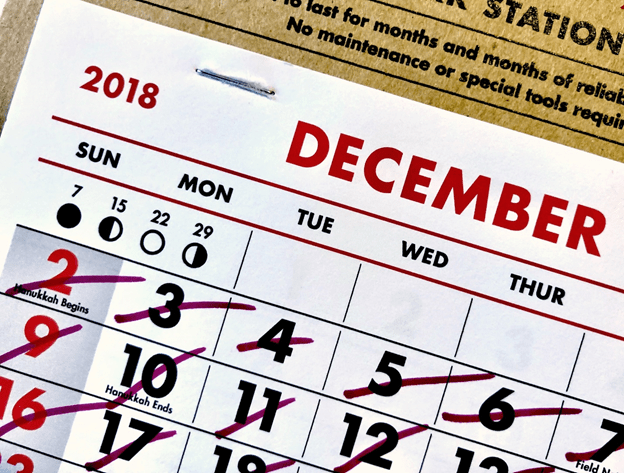
There is a December season of waiting every year – waiting for Christmas, waiting through eight days of Hanukah to commemorate the oil that lasted, waiting for the New Year.  My Viking ancestors, along with most northern European tribes, waited for Yuletide and the return of light, as I am sure that Romans anticipated Saturnalia’s (December 17-23rd) gifting and respite.  The waiting season reminds us to slow down, reflect and be grateful.

But this year is different:  We are waiting for the end of drawn-out ordeals — COVID isolation, closed schools, the U.S. election farce, and Brexit.  We are not waiting with delighted anticipation, but for a concrete end to crazy-making uncertainty.  Oh, what fools we mortals be….

Personally, I am reacting with impatience and a persistent stream of random desires…Lawrence Ferlinghetti’s poem, I am waiting, made me laugh by capturing the preposterous and trivial hopes that populate my mind during this year’s waiting period:

I am waiting for my case to come up

and I am waiting for a rebirth of wonder

and I am waiting for someone to really discover America

and wail…

and I am waiting for the Age of Anxiety

to drop dead…

and I am awaiting perpetually and forever

a renaissance of wonder.

That’s where Ferlinghetti got me – a rebirth and a renaissance of wonder!  I cannot change the world or make people discover the real America.  I can (returning to themes in earlier blogs) make an effort to calm my “monkey mind” and reflect on the underlying message of hope that infuses both the pagan and modern December days.

Waiting implies that something is coming.  In my least reflective periods, that means waiting for the bus to arrive or a planned vacation. But what are we all waiting for post-COVID?  After the current political turmoil runs its course?  Neither I nor anyone else really knows – and all of the predictions offered in the newspapers seem like misplaced flailing against a brick wall of existential uncertainty.  So what can waiting mean now, when my only conviction is that the future won’t be the same?  

Waiting without impatience, to prepare for the unknown — that’s hard.  It means slowing down.  Really slowing down.  Not taking time in the big chunks of weeks or days, but focusing on each hour’s potential. Dan Albergotti’s evocative poem about waiting points to the same lesson:  enforced waiting requires attention to life’s details and distractions, but also to moments of quiet grace and awakening, in preparation for the time that will come.

Things to Do in the Belly of the Whale

Measure the walls. Count the ribs. Notch the long days.
Look up for blue sky through the spout. Make small fires
with the broken hulls of fishing boats. Practice smoke signals.
Call old friends, and listen for echoes of distant voices.
Organize your calendar. Dream of the beach. Look each way
for the dim glow of light. Work on your reports. Review
each of your life’s ten million choices. Endure moments
of self-loathing. Find the evidence of those before you.
Destroy it. Try to be very quiet, and listen for the sound
of gears and moving water. Listen for the sound of your heart.
Be thankful that you are here, swallowed with all hope,
where you can rest and wait. Be nostalgic. Think of all
the things you did and could have done. Remember
treading water in the center of the still night sea, your toes
pointing again and again down, down into the black depths.

But I still find myself bound to an electronic datebook that defines the somewhat arbitrary landscape of my week — ignoring this, as Albergotti urges, is a tough call.  John O’Donahue, asks me to think about what it would mean if I abandoned futile hopes of domesticating everything I touch.  Both remind me that the gift of uncertainty (that we encounter in the belly of the COVID whale) is that a disorientation invites becoming more awake – if I allow it.  And, O’Donahue assures me that “Once you start to awaken, no one can ever claim you again for the old patterns.”  Not sure that I buy that as a certainty either, but it is a starting place…..

One thing that I know is that it is hard to relinquish my efforts to domesticate everything – make it manageable on my terms – without relying on others.  I am astonished at the degree to which acknowledging mutual vulnerability has become part of my routines:  Call someone who is floundering.  Reach out to grasp the certainty that I care for someone and that they care for me.  Be honest about how hard the little things are, and get my friends to laugh with me at my human imperfections.  And I am reminded, when I berate myself at night for all of the unaccomplished things on my list, that I wake up every morning feeling disoriented, but that disorientation slowly shifts to a sense of awe when I face the immovable mountain outside my door, which then eases me into morning’s hope and curiosity (along with two cups of coffee). 

I have a friend whose name is Patience, who has spent a great deal of effort over her more than 70 years to live up to her name.  She lives alone and has had the same year of cumulative perplexing loss that we are all experiencing.  However, her patience is not inert but is sustained by daily attention to well-honed practices that induce attentiveness and keep her awake to hope and joy. I learn from her practices, the most accessible of which are PAUSE. LISTEN. FREQUENTLY. Patience, along with all the poets, urge me to just pay attention during and after this season of anxious waiting.