The COVID Canon

There I was, thinking I had my retirement all sewed up.  I was learning rosemaling—I who had never painted a thing in my life had found my people!  Three days a week I was tutoring fourth graders in math—I had also found some little people to nurture and who would tell me the truth about life in plain and simple language—Don’t run in the hall,” and “If you can’t say something nice, don’t say anything at all.”

And then it hit.  The Pandemic!   Exciting at first, we were going back to 1918. Who doesn’t want to make history? After all, my paternal grandparents and father took a boat from Norway to the US during the pandemic, and they did okay. What’s the big deal? And if Anne Frank could hide in an attic in Amsterdam and write a classic memoir/diary about it during WWII (which we should all reread by the way), I could certainly buy two weeks of groceries and stay home.

I was teaching at the time, so I hastily put my class online. I decided that I’d need to bake bread—like 2 million other Americans—and used the only two packets of yeast I had for the first two loaves, then waited 8 weeks for a two pound package of yeast from Amazon. By then I was happily going to the store and buying bread again. Toilet paper was still dicey.

I could go on and on about adjusting to the pandemic.  Suffice it to say it was a scary adventure at first, then it began to get tediously scary, and now it’s a way of life, equally scary. So what happened to the glorious retirement I was working on?  Well, I’m still retired and for now at least, checks still get deposited into my bank account, and I haven’t gone under financially yet. The garden bloomed, and the weeds thrived. At first I told myself, “You’ve got this. You’re an introvert.  You don’t need other people.” But I realized I could sit in front of the computer or TV or in a chair reading only so many hours a day.  I missed my people, especially my little people.

It was a good summer for exercise, though. Got out on that bicycle way more than in other summers.  But winter is coming. That will be its own challenge in Minnesota. And we dare not book a trip to Florida, a hot spot of Corona Virus.

By now, dear reader, you’re probably saying “Blah, blah, blah, Karen.”  So, I’ll cut to the chase, as they say—why do they say “chase?” Here are my new rules for retirement during COVID, the COVID -===================dfgggggggggggvgv Canon, the first rule of which should be Keep your cat off the keyboard.

The COVID Canon

1.Teach your pets to know their place. You’re not staying home all the time to spend more time with them.  They need to get over that assumption. You aren’t going to throw the ball endless times in the house just to keep the dog happy, and you definitely will not be giving them treats to shut them up (I’ve had trouble keeping that one). 

2.You have only one purpose—TO STAY ALIVE (although the cat may think it’s to feed him). All the good retirement books advise us to “find our purpose.” For the first time this is finally clear to me. I don’t want to get this nasty virus, I’m 76 and I hope to someday be 86.  Knowing my purpose is very freeing.  No more having to find meaning in my life beyond wearing a mask, social distancing, and staying home.

3.All rules about TV are off.  You can have it on during the day and no one will accuse you of becoming an old person glued to the TV. And your kids won’t know unless you tell them—assuming they are staying away. Besides, who knows, you might be watching the Minnesota Orchestra, lectures, or National Geographic—expanding your mind.  Better yet, you could be watching our two candidates for president—there’s nothing like a good horror show.

4.Falling asleep in front of the TV is also allowed.  Who’s going to see you?

5.Long stringy gray hair is now permitted.  For men, you can have that ponytail you always wanted and that your wife said was ridiculous. And two days beard. . . well, you might be able to pull that off. And women, you, too, can have that ponytail you always wanted. . . which everyone said was too young a look for you.  Who gives a rip!  As for me—self-styling has reached a new low, but no one sees me. I might even take the mirror out of the bathroom.

6.Getting dressed still counts—now this is a tricky one. I still like to clean up, pick the matching earrings, accessorize!  But my husband. Eew. Not sure I should even admit this, but I have counted how many days he’s worn the same shirt. These matters can be grounds for fighting, and I suggest if you’re a couple that you negotiate standards for changing clothes. But then, now that it’s autumn, you can always sleep with the windows open.

7.The rules about doing something useful in retirement have changed—although how, I’m not sure. As for doing something meaningful and useful—the point of retirement—well, you’re not going to travel, unless you know something I don’t know or have a death wish; so the number one dream of retirees has been taken down a notch. Although you could buy an RV and do a John Steinbeck Travels with Charlie sort of thing.

You can still take a class—online, of course.

Maybe you could write your memoir, or a BLOG—what a great idea!  A blog about retirement—in the pandemic.

But then, if all else fails—all rules about TV are off.

8.Finally, the super big rule—do whatever it takes to outlast this pandemic! As a famous poet said, If winter comes, can spring be far behind. (This is the MN state mantra).  How about To the victor belong the spoils?  Or All things come to those who wait. Whatever platitude works for you.  Finally, dear readers, I ask you. . .

The Many Sides of Forgiveness

I’ve looked at life from both sides now
From win and lose and still somehow
It’s life’s illusions I recall
I really don’t know life at all

Joni Mitchell

I miss my friend, Ed. I miss watching Ed make sushi rolls with his large fingers. He rolls them slowly while talking lovingly about Japan where he grew up and where later he was head of an international school. I miss sitting on his deck and discussing children’s learning—the importance of activity. I miss visiting schools with him and teaching children to make Origami cranes. Most of all, I miss his friendship, which I once believed would last forever.

Something happened, but I don’t know what. After a mutual friend died, Ed stopped talking to me. I tried to connect over and over, but he barely acknowledged me. It’s been at least fifteen years now since we’ve shared a friendship. I’ve asked myself again and again: What did I do?  How can I atone? I know the reason might be within him, but unless we both value the friendship enough to talk, I cannot address my part.

Ed embraced many Japanese cultural beliefs, including the belief that folding 1000 cranes strengthens the chance that a wish will be granted.  Sadako Sasaki, a girl in Hiroshima exposed to radioactive fallout from the atom bomb when she was 2 years old and who developed leukemia at age twelve, set out to fold 1000 cranes so her wish to live might be granted. The story says that she died before she finished and that other school children finished for her. There are shrines to Sadako all over Japan and in other countries. She has come to symbolize innocent victims of nuclear war.

This June, in a pandemic malaise, when I was longing to talk to Ed to see what he makes of it all, I decided to fold 1000 cranes for him as a symbol of the value I held of our friendship. Perhaps when he opened the huge box of cranes all strung together, he would know how much it meant to me, still means to me. Maybe my wish for a dialogue would be granted. I calculated that I’d need to make six a day to be finished by the end of the year. I’ve been folding them ever since.

Not even halfway there yet!

Not too long into the folding, it occurred to me that I am folding in the hopes of repairing a friendship with someone who has shunned me. Do I really want such a friend?  And I started asking myself deeper questions. What changed between us? What was my role in it? Does he recognize a role that he might have played? If I had answers to these questions, would there be a common ground for apologies from either or both of us? And is reconciliation even possible?  These are not easy questions to answer. It might be easier to simply move on.

Which brings me to forgiveness. . . Karen and I have focused on forgiving others, but what about people in our lives that might hold pain that we’ve caused? I know that when I divorced my first husband, I hurt him deeply. He wanted the “’til death do us part” promise kept, and I could not give him that. He did not remarry and maintained that he held our marriage as sacred. He has passed on, and I wonder if he ever forgave me.

We celebrate the healing that occurs when we forgive someone, but there’s an internal healing in recognizing and facing our own transgressions.  I don’t recall telling my first husband that I knew I’d hurt him or that I was sorry for causing that hurt—I was sorry, although not for divorcing. At the time I needed to save myself. It took me a long time to come to terms with the loss that each of us experienced, but once I did, I changed my behavior from angry and resentful to compassionate—not in a patronizing way but as an equal, as a human being acknowledging that life isn’t easy, and we don’t always get what we want. Once I felt his pain, I stopped seeing him as the person who’d imperiled our marriage, a vital step in forgiveness. And then the next step, which was seeing that I, too, needed forgiveness. I have come to believe that at times something is out there that needs forgiving, and both parties created it and own it—a wound that needs healing.

          Human pain is human pain. We have all felt it. It may be pain inflicted by others, knowingly, unknowingly, or as fallout from a decision one or the other makes because she must. To effect any forgiveness, both parties must open themselves to remorse—If I could do it over, I would do it differently; regret—I’m sorry about my part in what happened between us; and reconciliation—I will work to have our relationship go forward.

          As I fold my cranes and think about Ed, I realize that in shunning me, he loses, too. We could have supported each other in grieving the death of our friend; we could have continued our work to better children’s lives; we could have shared the last fifteen years over numerous glasses of wine and sushi. Both of us lost a friendship. I continue to hope that that friendship can be restored, through forgiveness if needed. Meanwhile, I will continue to fold my cranes.

Forgiving – A Practice or a Gift?

image-2Forgiveness is not something most of us come to easily. 

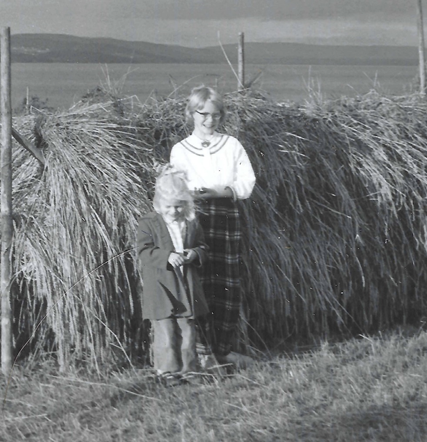
I was a pretty happy child, but even so I remember all sorts of minor offenses.  Many of these are associated with my sister, who is seven years younger than I am.  Of course that meant that she was an endearing tow-headed four-year-old just as I was entering my awkward and mildly sullen preteens — ripe for feeling annoyed at the slightest perceived difference in attention and privilege — not to mention that she appropriated clothes that I left behind when I departed for college! Ok, I adore my sister now, but we still (sort of) joke about these things, including the countless abuses that I, the older child, inflicted on her.

But thinking about how ridiculous most of my childhood slights seem from a distance of over 60 years, I began to consider what forgiving means now.  And what occurs to me is that it is not an attribute (“Ahhh, she has a forgiving nature…”) as much as a practice.

Practices, at least in my life, are routines that I protect because they make my life – and often that of those around me — better.  Some of these are what I would call preventative routines of daily living: I make sure that the kitchen is reasonably tidy before I go to bed because a sink full of dirty dishes in the morning automatically puts me in a foul mood.    

Then there are simple practices that give my life meaning and depth.  I spend time almost every morning in focused conversation with Dan – Unlike tooth brushing or dish washing, this does not prevent bad consequences but ensures that the day starts by renewing our connection.  I take time at some point every day to reflect on gratitude – especially when I am facing challenges.  I do yoga two or three times a week because my mind is clearer and my aging body thanks me afterwards.

But forgiving practices are not like that.  Forgiving starts not with the feeling of anticipatory well-being or the reward of having accomplished small tasks of daily living, but with a big challenge.  Someone, somewhere, has done something that makes me sad, hurt, anxious or even enraged.  The feeling is not temporary – I know that it is not going to go away by tomorrow.  Sometimes it is an old hurt newly revealed.  At other times, it is like water-on-stone – repeated small experiences accumulate and the conclusion “I AM WOUNDED” bursts out.  It may be a sudden encounter – a quarrel, an accident, an insult from a stranger.  All of the emotions become a giant hairball of resentment. And I know that I am not alone – all of these emotions are unsettling but normal and familiar to everyone (and, I believe, even to my dog). 

We struggle to put resentment behind us, especially if it was not a threat to our life or essential being.  It affects not only us but people around us – directly or indirectly – even when they were not the source: 

I only give you a hard time
‘Cause I can’t go on and pretend like
I tried and I tried to forget this
But I’m too damn full of resentment

(‎Beyoncé Knowles, 2006)

I have tried to create practices that will help clear the cloud of bitterness when it arises, but I haven’t found a single list that works. I do most of the things that are recommended by tiny buddha, including loving kindness meditations.  I ruminate on the imperfections of mankind in general, acknowledging that the imperfection of others allows me to forgive myself.  I muster whatever empathy I can because I know that without it, my resentments will continue.  I remind myself that forgiving does not always imply condoning or even a full understanding of the circumstances that may have led to the behavior or words that keep stirring up negative emotions.

This is an unmanageable effort however, and doesn’t always work, especially if the person is dead or distant.  Returning the formal name of Lake Calhoun to its original Bde Maka Ska felt like a victory, but didn’t change my umbrage at the legacy of John C. Calhoun, a champion of slavery and dispossession of Native Americans.  But, if I continue to work at it, eventually something happens.

Susan Ruach refers to the end of the struggle as “simply to jump off into the abyss”.  The jumping off to find forgiveness comes as a surprise after the struggle.  This happened to me very recently – still fresh in my heart. 

image-3
Dick Nystrom and Rebecca Kanner, at our wedding

Dick was Dan’s buddy – and the best man at our wedding.  They were truly a Mutt-and-Jeff friendship, both physically and socially.  Dick was everything Dan is not: short and a bit rotund — his mouth was unchained, he was ebullient on almost all occasions, he loved to dance and to dress up for dancing.  He was restless and stubborn in a way that was always charming.  He was an entrepreneur, and ran his own business (largely unsuccessfully).  People loved him.  He was also a former heroin addict…

And, at some point that Dan and I saw but couldn’t really identify, it became clear that he was changing.  He became crabby, aggrieved, and jumpy rather than restless.  Then he relapsed, and after 20+ years of clean living, was readmitted to a Methadone program.  After a difficult back-and-forth, he stopped calling and stopped returning Dan’s calls.  Dan was devastated because he would have stood by his best friend through his physical and emotional challenges – but he was not allowed to do so.  I just became mad, and I couldn’t get over it – the waste of Dick’s large life and what I saw as a betrayal of friendship.  But then, just a month ago, Dick died – not of his addiction but of one of the other myriad illnesses that he had developed during his two decades of clean living.  We found out on Facebook – a crap way to hear about the death of our best man.

Dan had one of his many encounters-while-dreaming with Dick, who appeared as he used to be, dressed up for dancing and full of his usual quips.  When he told me about his dream, in which Dick was dead but making an amend, I tumbled –and fell – and the resentment slipped away, with no effort at all.

And, I guess that is a lesson for me about learning to forgive.  Forgiveness practices – well, they are just practice.  The gift of forgiving is free and often unexpected.  In an earlier post, I described how an encounter with a shaman blew the seeds of forgiving into me. But, if I don’t practice, I may not be ready and forgiveness may pass me by….

Impatience Meets Pandemic

I was folding an Origami crane when I started to think about impatience—probably because Origami teaches precise steps taken one-at-a-time, which requires patience. I am by nature impulsive. I don’t know if that’s equivalent to impatient, but certainly related. When I am impulsive, I’m not necessarily feeling impatient. I act without thinking and a different feeling follows the action. Sometimes the feeling is regret, which I can often shake off. With impatience, however, that longing for something to happen and then trying to force that something, the regret goes deeper. It often leads to remorse, “if I could do it over, I’d do it differently.”

I’m the person new car dealers love. Take my last car. I set out with my sixteen-year-old grandson to buy a Mazda. He, however, didn’t want to drive across town (inherited impatience?) to the Mazda dealer, so suggested we start with the Volkswagen dealer in his neighborhood. I ended up with a VW. It was impatience meets impulsiveness. The car buying process that takes patience—or endurance—was sped up with an impulsive purchase. Fortunately, I love my car—having no Mazda to compare it with, since I never considered one.

Life is a first-rate teacher about impatience. One of my most enduring lessons occurred when I was about ten years old. I had a baby tooth that ached and ached, but would not fall out on its own, but instead needed to be pulled. My stepfather took me to the free dentist at the gas company in Racine. As we rode the bus downtown, I was filled with dread and fear. Up until then, my experience of losing teeth involved pliers or strings tied to the tooth, connected to the knob on a door that would then be slammed, and voila—the tooth would be out, instant but short-lasting pain. To my mind, my stepfather taking off work to take me to a dentist surely involved something worse, although I couldn’t imagine what.

I don’t remember how the dentist pulled the tooth—the dental equivalent of a pliers? I do remember sitting on the bus on the way home crying, with blood and saliva running down my chin. My embarrassed stepfather handed me his hanky and hissed at me to Stop crying!

The next day I woke up feeling great, no more toothache, and now the permanent tooth could come in. I’d learned an indelible lesson: “Get it over with. Worrying and dread are worse than moving forward. Once it’s over, all will be fine.”

When my second husband, Gary, was dying of cancer, that lesson kept rearing up. Our situation was life and death, in no way like a tooth extraction, yet my mind kept capitulating to “get it over with.” Gary’s pain was unremitting from the disease, fear about dying, and a deep sense of loss—he was 54 years old. My pain was watching his suffering and feeling like I could do nothing to help. I dreaded what was to come for both of us.

How much more could either of us take? At one point I thoughtlessly told him that I just wanted it all over with. He responded cynically—and rightfully hurt—“I’ll see if I can’t speed things up.” Fortunately, my careless remark prompted us to spill our feelings and share the pain to the extent that we could—love in the midst of dying—yet I still regret those thoughtless words.

And then he died. Regret was nothing compared to the unrelenting pain of a heart trampled by death. And the notion of “getting it over with” . . . a childish fantasy. I felt even worse than I had watching him die. Day after day of sudden crying, feeling the loss so deeply. I thought over and over about what I would give to have him back. I realized that I should have hung on every moment we had together in that last year, treasured them. A new lesson took hold “Live fully in what is tangible and present today. Cherish those you love.”

I tell this story because the pandemic, for me, calls up again that childhood lesson of wanting something over with. I want this damn pandemic DONE, FINI! I wish COVID was a tooth that could be pulled, and we’d wake up tomorrow feeling better.

But then there’s that competing lesson of enjoying what is tangible and present. I’m also reminded that I’m 76. My time could end abruptly from a heart attack or stroke. I could learn tomorrow that I have a fatal disease.

So, I forge on, wear my mask for a better tomorrow for all, while reminding myself that a beautiful summer is blowing through my windows. On my daily walks or bike rides, at my socially distant breaks with friends on our patios, or during my Zoom meetups, I remind myself to show up fully. This is the new normal, and I’m resolved to stay present, to know the magic in today’s moments. Even time during a pandemic can never be gotten back. Patience, Karen, patience.