Unknown's avatar

About Karen Martha

I am a searcher and not always sure about what I’m looking for. I’ve lived in thirty-nine houses in four states and changed my name five times. One would think I embrace change, yet I find it discombobulating. My unrest is part of what inspires this blog on retirement. It’s like a last chance to live reflectively, instead of wandering helter-skelter into whatever shows up to keep me occupied. I’m interested in the soul work that presents itself at various times in our lives and in how that changes us. In past lives I taught middle school math and science, raised two children and helped with four grandchildren, finished four degrees, worked as a professor and researcher, and married three times—whew. In my present, retired life, I’m tutoring 4th graders, learning rosemaling, and when I’m not working out—writing—writing about this wonderful, often painful, and fascinating journey.

Sticking with What Works or Starting Anew?

Catching a Big Fish at Post Lake, Wisconsin, about 1955 (looked big to me)

I remember as a child waking up in the morning to a day fresh and new, filled with possibility. Something exciting was waiting to be discovered, maybe just around the corner. All I had to do was get dressed, scarf down a bowl of cereal, and walk outside. Sometimes I rode my bike around the neighborhood, looking for something interesting. Other times I’d try to find a friend to join me. I’d walk to my friend Carole’s house, and from the street, I’d call “Oh, Carole.” If she could play, she came outside and off we’d go inventing on the way. If not, her mother opened the door and said, “Carole can’t play right now.” In that case, I’d wander to the park or go home and read a book of my choosing. I was between five and ten when I experienced my life this way, the unadorned curiosity of a young girl.

          Idealized, of course, but I remember that time seemed to stretch on forever (especially when I was bored at the end of summer).  Bored or not, I didn’t look outside myself for something to do, rather, I acted from within, indulging my moods and curiosity. My notion of work was uncomplicated, something imposed by adults, “Practice your clarinet, finish your homework, do your chores.” It was before I learned that work was ubiquitous to living, any and all work, jobs, housework, yard work, volunteer work, and meaningful work, however it is defined. I had not yet assimilated the byproducts of work, productivity, success, and accomplishment, as guideposts for adult life.

          I remember telling my son, out of college and frustrated because he couldn’t find a job, “don’t worry about it. You won’t escape working. You will spend basically your whole life working.” At the time, I believed that the necessity of work had absolute power over my life, what I called the “tyranny of work,” because I saw work, too often, as something that needed to get done. I’d lost the inner direction that had, as a child, given so much impetus to my daily living. I didn’t see my work in context, as a necessary part of life but also, if completed purposefully, as an expression of my authentic self. I had not yet come face-to-face with the question of what life would be like without work—retirement, if you please.

And Then It Came. . .  Retirement

          On December 11, 2015, I retired at age 73. I woke up that first Monday, after the retirement toasts at the bar on the previous Friday, feeling that overnight the ground had become unsteady. I was prepared to shower, get dressed for work, fight the traffic, and get a good parking space, but there was nowhere to go. I knew I could sleep in, hang out in blue jeans. . . but then what? Unlike my fellow blogger, Karen Rose, I had not taken a phased retirement. I simply decided that it was time to step aside for someone younger with fresh enthusiasm. I worked on soft money, and I was tired of chasing it. As for getting “busy with something that looks a lot like work,” (Falling from Grace, posted 7/8/2019) I thought it would be easy. Finally, I would have the time to sit at my desk doing the creative writing I’d longed to do but had put off throughout my life.

My Facebook posting with the caption:  This is where it ends. . .

Writing, however, didn’t happen. Ideas suddenly went dormant. Rather, I spent three months having panic attacks until I read a book about how to overcome them. But overcoming them wasn’t the same as addressing the root cause. That little girl who once welcomed a day of possibilities had lost the ability to not only see those possibilities but also to act on them. I was caught in the conundrum of living from within or living from the cultural and societal norms that describe work—I’d fallen from grace and had no idea how to catch myself. . . .

Part 2: One Big Step for Karen-Kind                                           

I shared my angst about adapting to retirement with friends—and I mean “adapt.” I saw it more as forced obsolescence. Friends said to find a new routine.  Do the things you’ve been putting off—like cleaning closets. Find a new direction. I bought into it and muddled my way into a sort of routine, cleaned my desk in lieu of the closets, and started searching for that new direction. I grew a ponytail—I’d never had long hair. It was something I could accomplish.
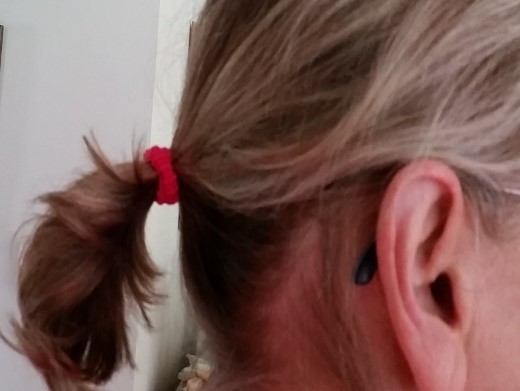
          I started tutoring fourth graders in math at my local school—I wanted to be productive, feel useful, and there’s nothing as regenerating as being around ten-year-olds. I taught a couple of classes as an adjunct professor, and I joined a research project in my field as a consultant. Writing ideas resurfaced, and I found myself at my desk again. Whew, finally those panic attacks waned. I was in safe territory—work ( I cut off the ponytail).

          Then, as life will do when you’re ready for it, I was thrown a curve, albeit a pleasant one. My husband and I and Karen R. and Dan went on vacation to the Cowboy Poetry Gathering in Alpine, Texas http://texascowboypoetry.com/. For two days we were immersed in a culture different than upper midwestern city life. A culture of cowboys, in boots, bolo ties, Ariat shirts freshly pressed, creased jeans, and wide belts with polished silver buckles, standing for over an hour reciting new and classic poems. These poems were about life on the range, around the campfire, under the stars, and the meaning of life when everything slows down and you feel the immensity of our world beneath that naked night sky. Corny poems, sometimes, but poignant, nevertheless, and framed by the big questions we all grapple with—is there someone who watches over us? What is the meaning of our time on earth? Do our lives matter? Turned out, there was more to cowboy poetry than campfires.

          Thinking about the poetry gathering on the plane home and later as I went about my routine of teaching and tutoring, a glimmer of something started to break through. Experiencing the cowboy culture reminded me that there are multiple ways to live and know the world. I was living retirement like my former work life, with never-ending assignments where productivity ruled. I was judging my life through the lens of work, and that’s why I had found retirement wanting, a time for panic, and a need to find something, anything, new to do and quickly.

          I’d crossed that demarcation between work and retirement, and I’d found it painful, so I kept trying to go back to what I knew and had valued for some fifty years—working, doing something meaningful in the eyes of the world. Yet available to me was the life of that young girl who awoke every day to possibilities, unless, of course, I chose to clutter it up with the detritus of those fifty years of working. I realized that I didn’t need to “find a new direction.” I was free to have no direction. To wake up and follow my curiosity. To read a book of my choosing.  To call a friend and hang out at a museum. Even to go to Wales and live (something I’ve dreamed of doing). To sit on the deck and stare at the stars, unless of course, the mosquitos got me first. The point was, I didn’t need to have an agenda, unless that agenda was relearning how to be this person who allows the day to unfold as it wants to. Retirement wasn’t so much the end of work as it was a challenge to “start anew,” to just be and to awaken with curiosity about what the day will bring, and to rediscover the joy of that young girl, which, hopefully, is still in me.

From Anthem

So mornings now I’ll go out riding
Through pastures of my solemn plain,
And leather creaking in the quieting
Will sound with trot and trot again.
I’ll live in time with horse hoof falling;
I’ll listen well and hear the calling
The earth, my mother, bids to me,
Though I will still ride wild and free.
And I ride out on the morning
Before the bird, before the dawn,
I’ll be this poem, I’ll be this song.
My heart will beat the world a warning—
Those horsemen will ride all with me,
And we’ll be good, and we’ll be free.

Buck Ramsey
A Soul on the Move

            . . . the ground at my own feet. . . 2019

“And the world cannot be discovered by a journey of miles, no matter how long, but only by a spiritual journey, a journey of one inch, very arduous and humbling and joyful, by which we arrive at the ground at our own feet, and learn to be at home.” 
― Wendell Berry, The Unforeseen Wilderness: Kentucky’s Red River Gorge

Given that I’ve lived at least 39 places in my 75 years, I felt compelled to write a sequel to Karen Rose’s piece, Should I Stay or Should I Go, especially since I usually pick the “go” choice. Moving seems commonplace to me, what people do.  But when I listen, I realize that not everyone is on the move. I’ve had neighbors and friends tell me they’ve lived in their houses for 20, 30, 40—since the beginning of time—years. Because I can’t speak to that experience, and, since right now I’m obsessed with doing my own soul work, I decided to think about moving in soul work terms, or, as Wendell Berry calls it, my spiritual journey.

          One of my mother’s favorite stories about me was how, even as a young child, I liked to run away. I’d go missing and she’d find me way around the block.  My recollection is that I wasn’t trying to be naughty; I truly wanted to see what was around the corner.  My son had the same proclivity.  When he was about four, though instructed to stay in front of the house, he would invariably ride his Big Wheel to the gas station around the corner, where I’d find him watching the comings and goings of a busy filling station.  My explanation for our curious natures is that it’s genetics, starting with my paternal grandfather, Nils Jacobsen, who left Norway in 1888 at age sixteen to come to the US. I like to think that he, too, wanted to see what was “around the corner.”

          Early in my life, as an undergraduate at the University of Minnesota, my moves were to find a room I could afford.  Everyone moves around at that point in life.  My tendency to move as a strategy to solve life problems started later, with my first husband, always looking for an affordable and better place, big enough for two children, and located in the same school district.  We moved ten times until we were able to afford a house. Our children, at ten and eleven, had lived somewhere new just about every year of their lives.  After our divorce when our children were grown, I started graduate school and moved again and again, always to find a better place within my means, which wasn’t much. Soul work at that point was building a new life.

          Building a new life to me meant having a fresh start in a new, clean house—no cluttered drawers, dusty shelves, moldering food in the refrigerator—not to mention, unpleasant memories. As Robert Louis Stevenson puts it, “The great affair is to move.” I’m not surprised that after retirement people consider making a move. Retirement, fundamentally, forces one to start over, to reconsider all the choices made over the years, including where to live.

          To be a professor, one has to move upon graduation. I was all in for that requirement. Upon graduation, I moved for a job and adventure, off to Utah and a new life with a new husband, Gary. We would hike in the mountains, ski, and explore the southwest. It was travel rolled into a career move. But then something changed.

          Our second year in Utah, Gary was diagnosed with terminal cancer and given a year to live, if he was lucky. About eight months into his last year, I had a tremendous urge to move “home”, back to the Twin Cities. I found a posting for a job in Minneapolis, applied, and was hired.  I persuaded him that we needed to move; he died four months later in the Twin Cities.

          Although we’d bought a house for me to have when he died, I immediately started looking for a new place to live.  And there it was, the need to keep moving had become almost a pathology. See what was around that corner.  It had to be better than sitting alone in the house where Gary had died, facing my grief.  And move I did, first to a condo that I lived in less than a year, then a house, then to Bethlehem, Pennsylvania, and Lehigh University, all in the space of four years. . . another travel adventure combined with a job change.  I sold it to my now married children as “exploring the east coast.”

          I moved to Bethlehem in June of 2001, and on September 11th, our country was attacked. Planes crashed in Pennsylvania, the Twin Towers in New York City, and the Pentagon. All felt too close. I was alone in a strange city, and I couldn’t reach my children because the cell phone lines were overwhelmed. On that afternoon and days after, I longed for “home,” someplace solid, with familiar ground under my feet. I had learned that in an emergency I would never be able to get to my children quickly. I lasted five years in Bethlehem, spending a good deal of time wanting to move back to the Twin Cities. Yes, I explored the east coast, and I made many friends, but I needed to belong somewhere, a place close to my children and grandchildren. I moved, back to the Twin Cities.

          I bought a townhome I didn’t particularly like, thinking I’d stay there a short time and move on. But then came the Great Recession. The housing market crashed, and I couldn’t get out of my townhome. Everyone else liked it and my friend, BetsAnn said, “Make it into a place you like. Don’t just sit there and complain.” I did, and I stayed there over eight years—almost a record for me—and I became attached to it.  I even looked forward to going “home” at the end of a day.

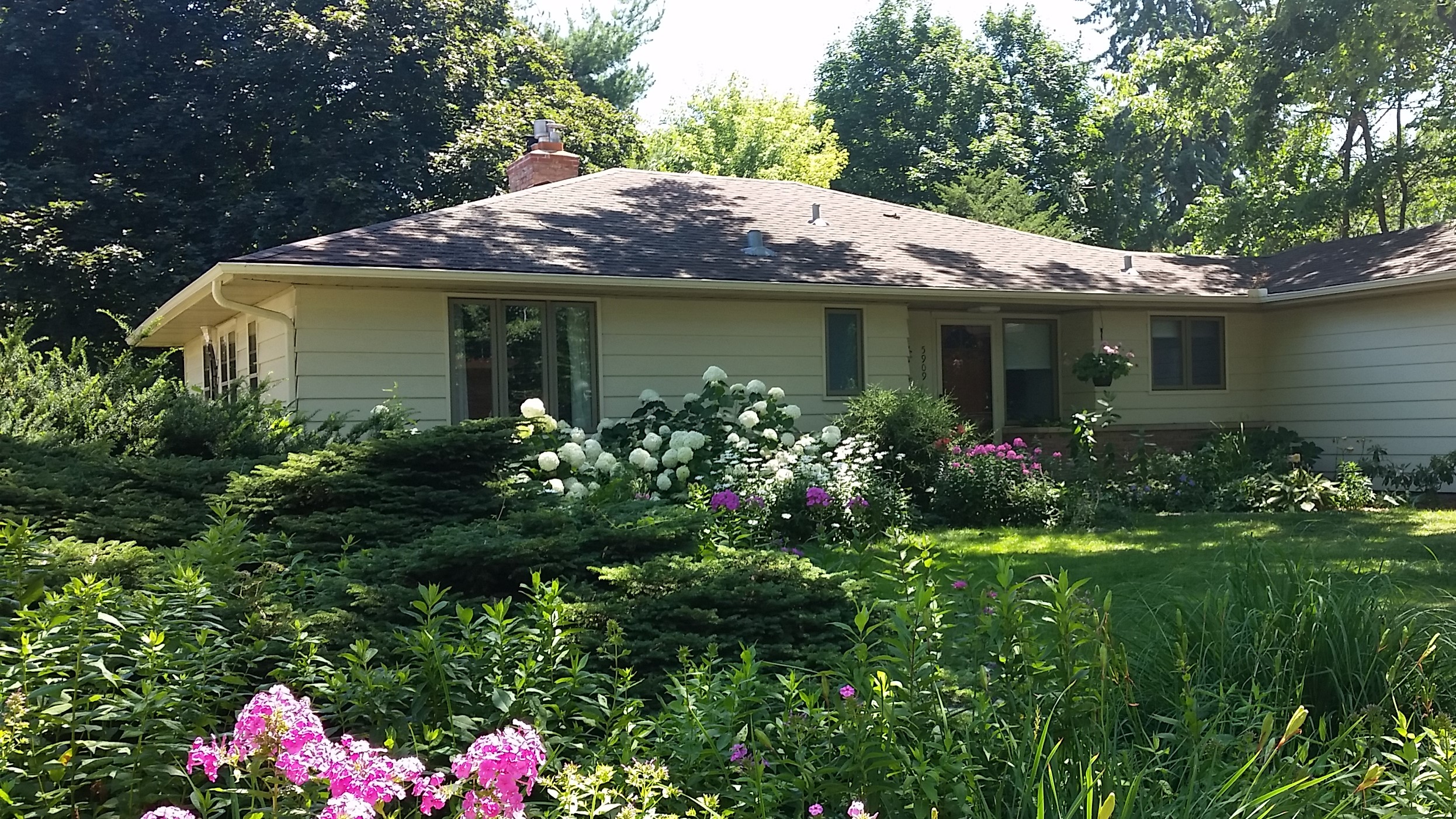
          In 2013, I remarried, and Jim and I bought a house together, which we’ve lived in for five years. This spring I had the urge to move. I insisted my husband look at townhomes with me.  We looked and concluded that our house suits us and our relationship, and we decided to stay put. Our children live in the Twin Cities, so we don’t have the pull to be near family. Our next move could very well be our last, and we’ll wait, like Karen Rose suggests, until it just feels right.

          But how will I handle my need to leave, to see if there is anything better around the corner? I’ve learned that I have a wanderlust that bubbles up whenever life gets uncomfortable. The lesson that I move to run away has not been easy to learn—39 domiciles attest to that. It means doing the work of my soul—confronting my seemingly logical reasons to move and seeing them for what they are—boredom and low level anxiety, the sense that something isn’t right, covered by a veneer of wanderlust.

          The other day I made my usual circle of the neighborhood, first to the co-op, then the library, from the library to Kowalski’s for a gourmet touch to dinner, a stop at the ATM, and finally home. How comfortable it felt! What I used to believe was boring—staying in the same place—has changed to belonging. That evening I biked the Minnehaha Creek Parkway. Living here long enough has allowed me to know the creek at both low and high levels, in winter under new fallen snow, in spring, raging as the ice gives way, and during summer, when it meanders under a lush canopy of green.

          As for “should I stay or should I go,” my first impulse is to say GO, move.  I am Nils’s granddaughter after all.  But staying in my last two homes has opened me to something else around the corner—the dynamic of neighborhood, the way a calm or raging creek invites me into my own movement and change. This isn’t an advice blog. The only thing I can say for certain from my experience with losing a husband and 911 is that being near family counts. The decision to move, while it may seem straightforward when the reasons are financial or job-related (and even those have nuance), is complicated, especially so with the emotional, physical, and family considerations that come with getting older. Maybe the best we can hope for when sorting things out is Karen Rose’s wish that “a place (will) just speak to me and tell me where to get off.” Meanwhile, for now, for me, I am in a place where I can finally, “learn to be at home.”

Big Stuff

Mary Wollstonecraft Shelley

There is something at work in my soul, which I do not understand.
Mary Wollstonecraft Shelley, Frankenstein

Two words in particular that Karen Rose used in her blog “Falling from Grace” caught my attention. Soul work. It was only two little words, dropped into a sentence, yet they seemed to pulse on the page, written exclusively to me. I went to bed wondering how much soul work I really do. I woke up admitting that I probably have not been doing much, at least consciously, because I’ve rationalized to myself that I did all the soul work I needed when my second, beloved husband, Gary, died. But are we ever really through?

Mark Nepo notes: Life takes time. It takes time to unfold its more lasting truths. . .” The more I sat with the idea of soul work, the more I realized I’d put it on hold. So I tried an experiment—giving the day in front of me to soul work. Ignoring my list of things to get done and becoming the young girl I once was who used to let the day unfold (borrowing from Nepo) as it inevitably would.

My first thought was something I’d thought about earlier in the week, taking a quiche to a good friend whose husband had been quite sick for the last few months, after years of surgeries to address a bad back. A private and self-sufficient person, she has been his caretaker through it all. I decided that if I followed my heart, or soul, rather than reading the papers for my class, I’d finally get around to taking that quiche to her. Mind you, it took me some time to get to this, as I kept prevaricating around items that had been on my agenda, thinking about how I’d still work them in—old habits are hard to break.

After breakfast, without showering or getting my daily exercise, I threw on some jeans and headed to Turtle Bread, a Minneapolis restaurant that has some of the best quiche I’ve ever eaten.  It was March 30th and we were having an early spring in Minnesota after a classic winter of snow and even a couple days of a polar vortex with temperatures at -34. The sky was bright blue and most of the snow was gone, although the temperature was just above freezing and a chilly breeze was blowing.

Soul work is the process of bringing the essential self – the soul – out of hiding. It’s a fundamental shift away from occupying the constructed self, and toward the art of living our soul. http://www.phyllismathis.com/what-is-soul-work

As I drove to Turtle Bread I thought about soul work and what the term actually refers to. I realized I had no solid “definition,” rather an association with faith and authenticity. Doing this, getting the quiche for our friend, felt like soul work. And suddenly, I teared up. I wanted to cry, but I had no idea what I might be crying about.  Was it the parallel with taking care of my second husband when he was dying of pancreatic cancer? The realization that it’s the two of you, husband and wife, in this dance with a human body that’s lost its homeostasis and is on a course all its own, dragging you with? Or was it simply my soul being let out to breathe, unearthed from the lists and agendas and obligations that cover it. I wasn’t sure, but there I was at the restaurant.

I ordered the quiche, and as the young man packed it up, I knew I was about to cry in earnest. Soul work is big stuff, I thought, as I rushed out to the car. Big stuff. I challenged myself to sit with it, sort it out if I could, realizing that the sorting out might take the rest of my life.

I dropped off the quiche. My friend was clearly touched, and I had that incredible feeling we get when we do something nice for someone, when we put everything aside and reach out in love and support. I hugged her and told her how much the Karens’ love her, and we laughed. Back to the car and more big stuff, soul work, in this case, being mainly crying. I’d always thought that soul work involved reading and studying spiritual texts, but now I see that it’s much bigger than that. To borrow from Mary Shelley, there is always something at work in my soul, and I often do not understand it. What I do know is that for me the work begins with opening my heart, giving and receiving kindness. In this new life of retiring, it’s turning away from whatever door is closing, be it work or some other door—as described by Parker Palmer—and being willing to open that other door into your heart and your essence, your soul. I also suspect that soul work involves looking back through that door over and over, seeing one’s life through your soul. And coming to a place, dare I say, when you live through your soul.

The Key Card:

It Takes a Worried Woman to Sing a Worried Song

“Do you want me to turn this in?” My daughter asked as I handed her my hotel key card. 

“Well sure, why not?” I answered.

“You know they can store all your information on this card, your credit card number, address. . . “

“Really? Don’t they just reprogram them, which means one less tiny piece of plastic in a landfill somewhere.” It was my turn to be the smart one.

“Aren’t you worried?” Carrie asked again.

“No, you can turn it in.” And I started to load the car with our luggage.

***

Really? Was she really all that concerned about what a hotel clerk was doing with the key cards after guests checked out? Were they in the back office downloading information they would use later to access my credit card account and buy a car maybe? But more important should I worry about this?

That was the big question for me. I’m 75. There’s not much room left in the worry portion of my brain. Just to get started, I’m worried about my friends’ health, my health, global warming, and the Trump presidency. Stuff I can do nothing about.

There’s a whole folder, rather several folders in my brain of things to worry about. Should I take Allegra for summer allergies—actually a debilitating headache that accompanies the allergies? It might give me Alzheimer’s. Speaking of Alzheimer’s, what about the fact that when I get up in the morning, my words come out like I have paste in my mouth—slowly. And I might even search for a word. This gets worse when I listen to myself and try to speak at the same time. And while we’re on the subject of health, what about gum erosion and the tense shoulders I get when I sit over the computer for a long time? I do love it when a young person complains about this. Or the good ol’ mucus, much more, it seems, as I’ve aged. Does this mean anything? A cancerous polyp in my throat, maybe? Do throats even get polyps?

Every day I open my email to advice on health. I probably clicked on these sites once, and now they target me. Usually they want to sell me something, and showing me something scary might get me to spend money on a “cure.” Why am I sluggish? What about menopause fat? Is it real or do I just eat too much? Is that fat around my middle indicative of silent diabetes? Is plaque accumulating in my arteries, threatening to break away and give me a stroke that will leave my tongue paralyzed so I can never speak with paste in my mouth again?

And my daughter’s worried about someone stealing my credit card information from my hotel key card. Daughter dear, have I got worries for you! What about that non-grass fed steak my husband keeps buying? I do so want to eat it, but that animal might have prions, which everyone knows will give you Alzheimer’s. Then there’s the question of whether the animal had a good life. I suspect not, but unless I go out and inspect the fields of happily grazing cows, I’ll never know, will I? 

The list of worries about food is probably the longest—well, on any given day health worries will probably Trump food worries—notice I capitalized “Trump” because there’s always that worry. Right now, he could be watching TV, maybe a thriller, and he looks at that button that deploys nuclear weapons and before anyone can stop him, he’s pressed it. Meanwhile Federal lands are being sold to oil producers, but then it won’t matter when whomever Trump bombs will by now have retaliated.

Image result for Worry

Back to that hotel key card. Baby, I’m just holding it together at 75. The world threatens to come back at me every day of my life. I can’t possibly worry about everything I should be worrying about, least of all my key card.  

Maybe I’ll just settle down with a nice cold drink (Yes, I know, soda is bad for me, so it can’t be soda. Maybe iced tea.) and read some escapist fiction, if I can find any, that is.  Or I’ll look out the window at the chickadees, who’ve built a nest in our birdhouse, flying back and forth from the feeder tending hopefully to the next generation. When I take a walk later, I’ll see marigolds lifting their heads to the sun. In spite of a terrible winter and rainy spring, they wisely celebrate our Minnesota summer. And maybe, for a short time, I won’t have anything to worry about.

The preponderance of evidence suggests that key-card data theft is nothing more than an urban legend, but some travelers remain unconvinced.

(And a shout out to my daughter, who claims that throwing away that key card is one less thing to worry about.)