
Unknown's avatar

About Karen Seashore

I am a sociologist, life coach, policy wonk, and tarot reader. Other than reading a book, I always prefer to work with other people. Creating small changes -- in myself and in the world around me -- is my calling. You can find my scholarly publications under Karen Seashore Louis (or Louis, K.S.).

Curating Joy in Troubling Times

photo by Bikku Amitha

Things really suck.  Mostly, we are surrounded by uncertainty and its ugly cousin, fear.  Disagreement and incivility still dominate the news, and I am challenged to see an easy path to restoring social trust.  Then, there is COVID-19.  Whether you mask or don’t, we live with more isolation and less freedom than we are used to. I desperately miss family members who I have not have seen in person for a year or more – especially grandchildren who are growing up without our hugs.  As my husband says (too cheerily), our only real job for the next six months is to stay healthy.  Now, if that’s my only job it’s boring AND scary when you actually think about it.

But I was struck by a second mandate:  “While we can’t control what’s happening around us, we can cultivate the capacity to be with what is with more ease, joy, and freedom.” (Sebene Selassie).  Salassie’s words brought to mind the much bigger job that faces me: finding a fulfilling life while we are in the cusp of shifting from middle-aged to older, from working to retired, and from planning-for-the-future to living-as best we can-today.  Karen Martha and I have written about this from different perspectives, emphasizing the importance of building a “hope muscle”, using the space and time that has been thrust upon us to find joy in a new challenge  and pondering how we redefine meaningful “work” when we are partially or fully retired.  And yet, many of us are still sitting awkwardly in the cusp…

And then Babs Plunkett sent me a pre-publication copy of her new book, Choose Joy.  No, it is not a sequel to Kay Warren’s best-selling Christian books of the same name.  Rather, it is more analogous to what Studs Terkel, our treasured oral historian, would have done if he had chosen to find out what older people thought about finding happiness in the last third of life. 

I was immediately drawn by Bab’s willingness to follow an unexpected inner voice.  She admits that living with her miserable and crabby grandmother was the source of a life-long conundrum on how to avoid the same fate. The solution was unanticipated: “I just woke one spring morning (March 1, 2018, to be exact) with a fiery passion to collect stories about people aging with joy and purpose.”  Finding joyful older people was a matter of using her personal networks, asking for nominations, and following them up with interviews, which she has distilled into engaging portraits.

Some of the people she describes prepared for retirement and entered with a blueprint – they are inspiring, but they are not me.  Most however, slid into retirement (as Karen Martha and I have done) without a concrete plan or purpose.  More importantly, “Most didn’t find just one big thing that filled their lives with purpose. Rather, they curated an engaging collection of interests that gave their lives meaning.” 

gathering #things #mabon #altar #for #aGather Gather, gatherer, or gathering  may refer to: | Mabon, Equinox, Altar

Ahh, curating….the antidote to the burdening social expectation that we develop a retirement passion that can be inscribed on our tombstone.  And an affirmation of the idea that we don’t always find a passion—opportunities and purposes appear and we are prepared to collect them. I plunged into the stories…which are arranged to reflect the typical recommendations for living a longer life (always a good place to start as far as I am concerned…), and will reflect on just a few that touched me.

Expert recommendation #1 is to keep your mind active – and many people do that by volunteering in ways that keep them engaged in learning.  I was particularly struck by Barbara’s story.  Rather than finding a particular volunteer opportunity and sticking to it, Barbara’s mantra is Tikkun Olam – healing the world – by finding many places that need short-term volunteers.  She has filled in for librarians, made recordings for the blind, and substituted in afterschool programs.  “When the volunteer role isn’t fulfilling anymore, I find something else”. Her mind is clearly activated by challenging herself with new ideas and routines, while at the same time doing good.  I found this inspiring:  I have friends who have found a volunteer passion, but I don’t have one – like Barbara, I will probably be best if I can find ways to learn by dabbling while doing good.

Molly’s story stood out for me because she is doing what she loves.  But what she loves is, on the surface, in inexplicable pastiche– birds (both the indoor and outdoor kind), pottery, and learning the harp!  It is wonderful to read about someone who feels totally fulfilled with many small passions because it is the combination of them that keeps her excited, engaged, and learning.  As I consider how to curate the small passions that I have never had enough time for, I am heartened by Molly’s obvious joy in having the time to deepen old hobbies while re-engaging with newer pleasures for which she now has time.  Molly is working with all of her senses in her curated mix, and I the joy I might have if I savor my own mix as “enough” feels within reach – even if it looks a little weird to an outsider.

I was struck by my introverted husband’s announcement that the end of the election cycle had left him feeling as if there was a void in his life.  His solution is to commit to calling at least one person every day – some old acquaintances and some newer.  I found another curating story in Choose Joy that expresses the same therapeutic power of the cell phone.  Lois, at 100, has created a wealth of connections that sustain her even though she has chosen to live independently in an assisted living facility close to one of her children.  Rather than keeping in touch only with family and what (at 100) would be a shrinking list of old friends, Lois keeps a phone list that includes people from all phases and places in her life.  She doesn’t wait for people to call her – she reaches out.  As someone with a bit of a phone phobia, she causes me to think about the importance of making new phone (or zoom) friends.  Especially in this time when our social world seems to be shrinking, Lois is a super heroine at curating relationships. 

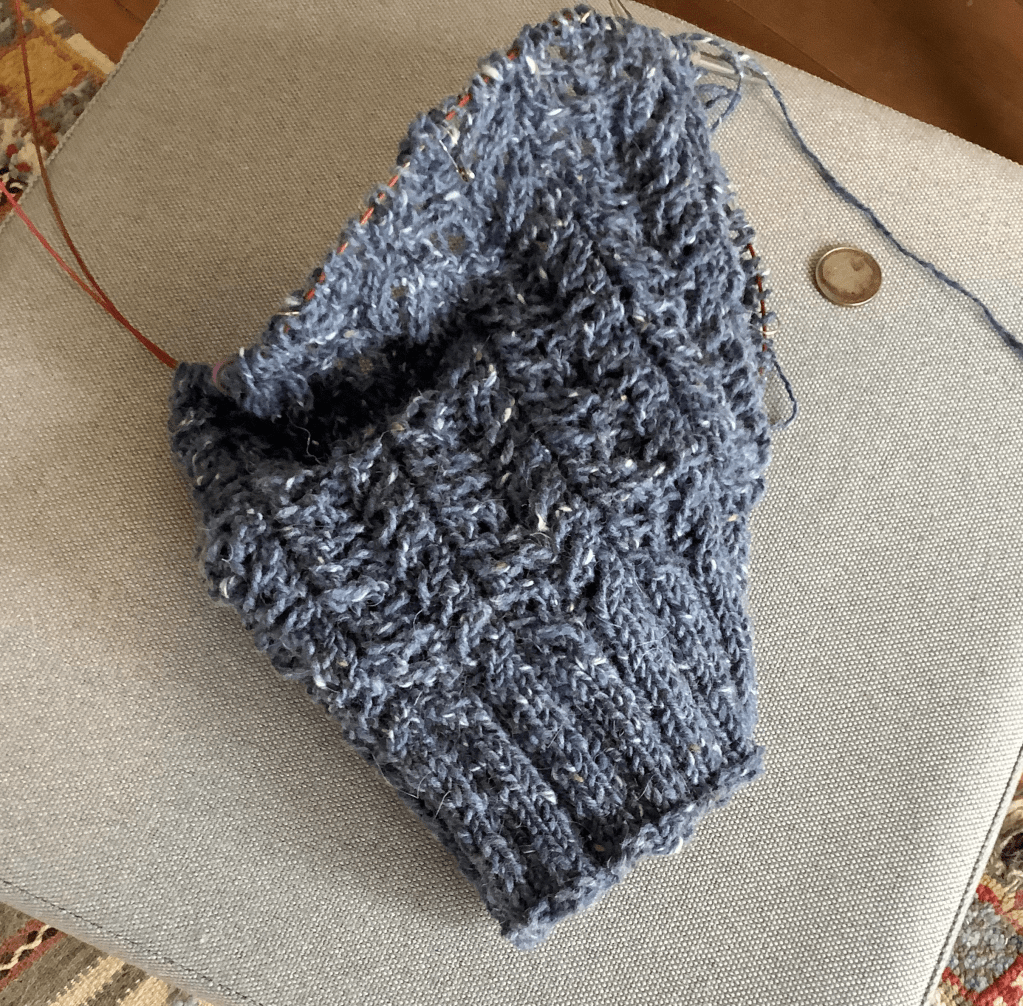
As I reflect on the other stories in this lovely book, I find many that will help me think about how I can curate to find joy in this “in between time” where physically “joining” is impossible but I can’t bear the idea of losing a year.  I am writing down all of the website, on-line groups, and opportunities to do volunteer work by zoom that I can find.  And they are a diverse bunch, ranging from supporting an array of people who find themselves in challenging circumstances to exploring the meditation chapel website to finally learning enough chess to play with my husband (who knows all of the openings in the Queen’s Gambit). Oh, and reigniting my tactile delight in knitting by finishing some of the projects that have been on my list…find me on Ravelry!
Forgiving – A Practice or a Gift?

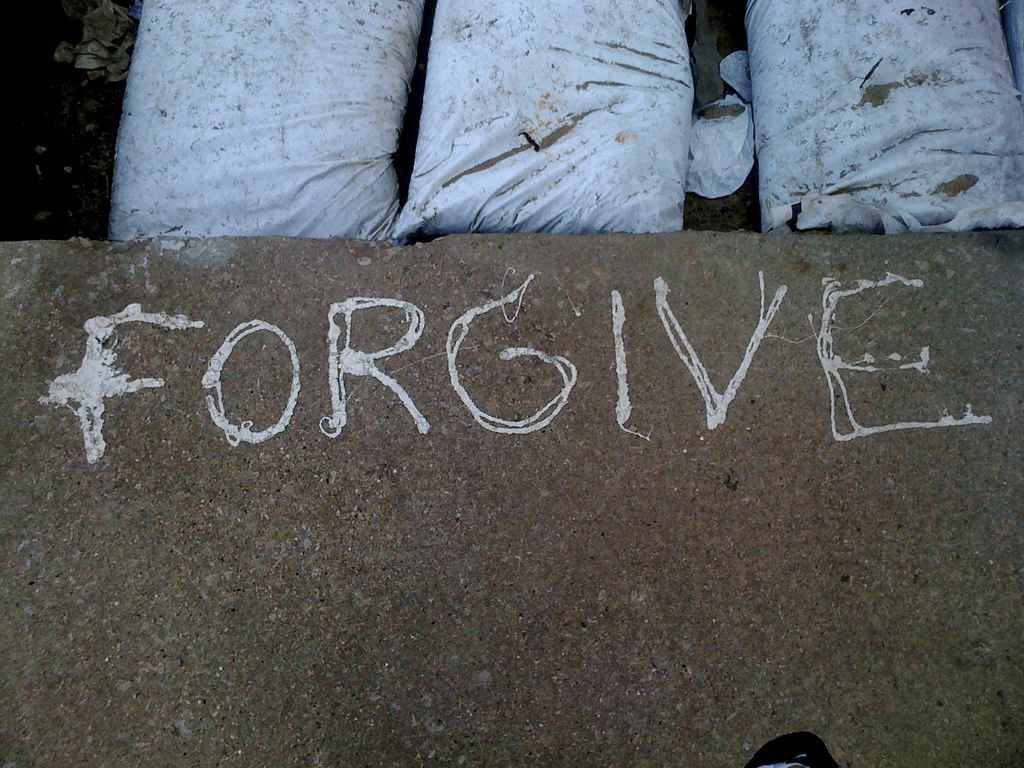
image-2Forgiveness is not something most of us come to easily. 

I was a pretty happy child, but even so I remember all sorts of minor offenses.  Many of these are associated with my sister, who is seven years younger than I am.  Of course that meant that she was an endearing tow-headed four-year-old just as I was entering my awkward and mildly sullen preteens — ripe for feeling annoyed at the slightest perceived difference in attention and privilege — not to mention that she appropriated clothes that I left behind when I departed for college! Ok, I adore my sister now, but we still (sort of) joke about these things, including the countless abuses that I, the older child, inflicted on her.

But thinking about how ridiculous most of my childhood slights seem from a distance of over 60 years, I began to consider what forgiving means now.  And what occurs to me is that it is not an attribute (“Ahhh, she has a forgiving nature…”) as much as a practice.

Practices, at least in my life, are routines that I protect because they make my life – and often that of those around me — better.  Some of these are what I would call preventative routines of daily living: I make sure that the kitchen is reasonably tidy before I go to bed because a sink full of dirty dishes in the morning automatically puts me in a foul mood.    

Then there are simple practices that give my life meaning and depth.  I spend time almost every morning in focused conversation with Dan – Unlike tooth brushing or dish washing, this does not prevent bad consequences but ensures that the day starts by renewing our connection.  I take time at some point every day to reflect on gratitude – especially when I am facing challenges.  I do yoga two or three times a week because my mind is clearer and my aging body thanks me afterwards.

But forgiving practices are not like that.  Forgiving starts not with the feeling of anticipatory well-being or the reward of having accomplished small tasks of daily living, but with a big challenge.  Someone, somewhere, has done something that makes me sad, hurt, anxious or even enraged.  The feeling is not temporary – I know that it is not going to go away by tomorrow.  Sometimes it is an old hurt newly revealed.  At other times, it is like water-on-stone – repeated small experiences accumulate and the conclusion “I AM WOUNDED” bursts out.  It may be a sudden encounter – a quarrel, an accident, an insult from a stranger.  All of the emotions become a giant hairball of resentment. And I know that I am not alone – all of these emotions are unsettling but normal and familiar to everyone (and, I believe, even to my dog). 

We struggle to put resentment behind us, especially if it was not a threat to our life or essential being.  It affects not only us but people around us – directly or indirectly – even when they were not the source: 

I only give you a hard time
‘Cause I can’t go on and pretend like
I tried and I tried to forget this
But I’m too damn full of resentment

(‎Beyoncé Knowles, 2006)

I have tried to create practices that will help clear the cloud of bitterness when it arises, but I haven’t found a single list that works. I do most of the things that are recommended by tiny buddha, including loving kindness meditations.  I ruminate on the imperfections of mankind in general, acknowledging that the imperfection of others allows me to forgive myself.  I muster whatever empathy I can because I know that without it, my resentments will continue.  I remind myself that forgiving does not always imply condoning or even a full understanding of the circumstances that may have led to the behavior or words that keep stirring up negative emotions.

This is an unmanageable effort however, and doesn’t always work, especially if the person is dead or distant.  Returning the formal name of Lake Calhoun to its original Bde Maka Ska felt like a victory, but didn’t change my umbrage at the legacy of John C. Calhoun, a champion of slavery and dispossession of Native Americans.  But, if I continue to work at it, eventually something happens.

Susan Ruach refers to the end of the struggle as “simply to jump off into the abyss”.  The jumping off to find forgiveness comes as a surprise after the struggle.  This happened to me very recently – still fresh in my heart. 

image-3
Dick Nystrom and Rebecca Kanner, at our wedding

Dick was Dan’s buddy – and the best man at our wedding.  They were truly a Mutt-and-Jeff friendship, both physically and socially.  Dick was everything Dan is not: short and a bit rotund — his mouth was unchained, he was ebullient on almost all occasions, he loved to dance and to dress up for dancing.  He was restless and stubborn in a way that was always charming.  He was an entrepreneur, and ran his own business (largely unsuccessfully).  People loved him.  He was also a former heroin addict…

And, at some point that Dan and I saw but couldn’t really identify, it became clear that he was changing.  He became crabby, aggrieved, and jumpy rather than restless.  Then he relapsed, and after 20+ years of clean living, was readmitted to a Methadone program.  After a difficult back-and-forth, he stopped calling and stopped returning Dan’s calls.  Dan was devastated because he would have stood by his best friend through his physical and emotional challenges – but he was not allowed to do so.  I just became mad, and I couldn’t get over it – the waste of Dick’s large life and what I saw as a betrayal of friendship.  But then, just a month ago, Dick died – not of his addiction but of one of the other myriad illnesses that he had developed during his two decades of clean living.  We found out on Facebook – a crap way to hear about the death of our best man.

Dan had one of his many encounters-while-dreaming with Dick, who appeared as he used to be, dressed up for dancing and full of his usual quips.  When he told me about his dream, in which Dick was dead but making an amend, I tumbled –and fell – and the resentment slipped away, with no effort at all.

And, I guess that is a lesson for me about learning to forgive.  Forgiveness practices – well, they are just practice.  The gift of forgiving is free and often unexpected.  In an earlier post, I described how an encounter with a shaman blew the seeds of forgiving into me. But, if I don’t practice, I may not be ready and forgiveness may pass me by….

Forgiveness

For the next two blogs, we two Karen’s will focus on forgiveness. It is a part of growing older to review one’s life, and giving and receiving forgiveness inevitably surfaces.  But what is forgiveness? Here’s a psychological definition—nicely precise.

An act of deliberately giving up resentment toward an offender while fostering the undeserved qualities of beneficence and compassion toward that offender. (Freedman & Enright, 1996, p. 983).

Here’s a philosophical take, richer with the nuance implicit to forgiveness.

Forgiveness is one of the really difficult things in life. The logic of receiving hurt seems to run in the direction of never forgetting either the hurt or the hurter. When you forgive, some deeper, divine generosity takes over. When you can forgive, then you are free. When you cannot forgive, you are a prisoner of the hurt done to you. If you are really disappointed in someone and you become embittered, you become incarcerated inside that feeling. Only the grace of forgiveness can break the straight logic of hurt and embitterment. It gives you a way out, because it places the conflict on a completely different level. In a strange way, it keeps the whole conflict human. You begin to see and understand the conditions, circumstances, or weakness that made the other person act as they did.

John O’Donohue, excerpt from Eternal Echoes

Part 1: Forgiving Our Mothers; Forgiving Inter-generational Sorrow….

This blog is about forgiving our mothers — and healing.  Too many women have experienced emotionally or toxic relationships with their mothers.  We are not among them. Yet, every childhood has its scars, and many women we know trace these to their mothers rather than their fathers. 

Both of us grew up largely in the 1950s, when parenting was quite different from today. Because of the norms of the time, our mothers were more present in our lives. Fathers were out making a living. Additionally, parents had fewer resources, and children expected, at least in part, to raise themselves.  Our parents were imperfect, but in very human ways.  Both of us also raised children in the 70s and 80s, and we tried to be more attentive/better mothers, but we also made mistakes, some of which caused our children pain.  Forgiveness is what we work on, sometimes successfully and sometimes less so, in every part of our lives.  These are excerpts of our own stories.  We invite anyone who wishes to make a contribution…..

Karen Rose

The Johnson family c. 1912. Sigrid Johnson Danielson and Edward Danielson are in the middle

When I was in my late 50s, I went to a shaman – I thought of it as a kicky thing to do, and a dear friend, who is always open to alternative ways of experiencing her life, made the recommendation.  The shaman introduced himself as a psychiatrist who gave up his traditional practice to study shamanic recovery – and the experience was about as odd as I anticipated.

 I lay on a table with my eyes closed, while he was apparently dancing around me with a variety of native instruments that made subtle noises.  After several minutes of this, he stopped abruptly, and came over to speak:  “You come from a long line of unhappy women.  I can blow it out of you.”  He then put a hollow tube – was it made of bone? – near my heart and blew.  It was over.  I left, profoundly shaken but much lighter, hoping that I had not passed inter-generational sadness on to my daughters.

He was right, but I had never put the pieces together.  My two grandmothers were both, in retrospect, miserable.  Laura Rose’s father owned a sawmill on the St. Croix River in Minnesota – but drank himself and his family into poverty.  I never knew her as anything other than sour. Sigrid Johnson, from a relatively affluent immigrant farm family, was trapped in rural Minnesota with a husband and his reportedly ill-tempered father.  She and Edward Danielson (my grandfather) died in “the accident” – an apparent murder-suicide.  It was during the Depression, and their three girls were separated and dispatched to live with different distant relatives.  My mother, the oldest at 14, ended up in North Dakota—well fed and educated, but never at home.  “The accident” was taboo — neither she nor my two aunts talked about it.  According to my father, she had never discussed it with him.

Wen I was quite small I somehow understood that my job was to make my mother happy, Along with my sister, we were successful for quite a while.  She was an ideal 1950s Mommy – a good cook, active in the Democratic Party, on the board of the local Girl Scouts, happy to help with my writing, and almost always there to talk when I came home from school. When I was in high school, friends wanted to gather at my house because my mother was so welcoming.  After I left home, the weight of inherited alcoholism and untreated trauma emerged, and by the end of her life it seemed as if she was someone else – unavailable, a recluse, a non-drinker who never made peace with her addiction, and a smoker until she died, even while on oxygen.  It infuriated me to see her like that, especially when her mental illness made her largely indifferent to my children.

The shaman opened a door to forgiveness.  I slowly began to see how generations of unexamined sadness seeps through the lives of the people who are closest to us, and create pools of shared but vague disequilibrium and depression.  I am learning, albeit later in life, how to express rawer emotions in ways that bring others into my life rather than pushing them away.  Beginning to forgive my mother for what she was unable to change in her past or herself gave me a glimpse of a new kind of freedom. 

Karen Martha

In 1996, as my mother lay dying of kidney and bone cancer, in her lucid moments she agonized about the many difficulties she’d had in her life and how she had handled them. She kept saying, “I needed more time. I’m not ready. I need to fix things.”

In terms of me, her middle daughter, she felt great guilt about allowing me to be put in Taylor Home, an orphanage/home for children, when I was four. It was 1948, she was divorced and left with three girls to take care of alone. She worked days as a short order cook and nights as a bar waitress, but she could not support us. The county took her children away from her, and I’m not sure if she had choices about where we would go, but my sisters went to relatives, and I went to a home.

I suddenly found myself living in a Gothic mansion sharing a dormitory with strange and older girls, unable to see my sisters or my mother. I felt ripped from my security and at the mercy of strangers. I spent hours outdoors, sitting on a swing, twisting round and round, swinging higher and higher, waiting for someone to take me home. I was there until I started kindergarten, so about two years. My mother succeeded in getting her girls back, she remarried, and we began anew as a family.

But the story doesn’t end there, because I made it my cause to punish my mother for what she had done to me. If she tried to hug me and say she loved me, I pulled away. Sometimes I simply said, “I hate you.” She gave up, and though we lived as mother and daughter, that essential bond was never completely restored.

As my mother lay dying, she asked my forgiveness for putting me in the home. I believed I had gradually forgiven her, and I regretted that we had lost our relationship as mother and daughter. To her request for forgiveness, I remember saying, “There’s nothing to forgive. You did the best you could.” But that’s not the same as saying, “Of course, I forgive you, and I love you very much.” I never quite got to that place, and if I had the chance today, I would say that to her. I hope what I did say was enough that she died in peace.

Karen Martha and her mother, at her son’s/grandson’s high school graduation

For my mother and me, forgiveness reaches back generations. In 1924, my mother’s own mother, Ruth, “abandoned” her by dying in childbirth. My mother was four when Ruth went to the hospital to have her second baby, a brother to my mother. Ruth died in childbirth of a stroke, at age 21, and never came home. All that returned was a crying baby and a devastated father. How does a four-year-old understand this except as having been abandoned? It was a pain my mother carried her entire life. Everything about my mother can be filtered through that loss. But that’s another story.

How do you forgive someone for dying, especially when you are four? Instead, my mother carried the pain. I had the chance to forgive, and I could have made mine unequivocal. For now, I hold my mother in my heart and remember her many fine qualities. Fortunately, I have a granddaughter named after her, Margaret, whose curly brown hair, sparkling brown eyes, and effervescent personality remind me often of my mother, who did the best she could.

To be continued.

What Lies Below….

I started to think about excavation — and what it means in my life — and then I came across this poem:

Excavation

Emptying cupboards from

the pre-Homeric Classroom era,

through strata thick as Schliemann’s Troy.

I am looking for bedrock and

the world before printing

when we worked with our bare minds

— Hugh McMillan, 2015

Working with our bare minds….what a thought in this digital/technology rich world.  McMillan’s words lead me to think about all of my mental clutter, and where I might find the bedrock if I looked.  It also called me to consider how I am looking below the surface, during a time that is seriously unsettling for everyone…

We jokingly refer to our decision to be in Boulder, CO as “a Minnesotan’s idea of avoiding winter”…. A theme that came up in a previous post. Mostly true.  But, instead of returning to Minneapolis for the heady experience of watching spring emerge in the frozen northland, we knew that it would be easier and safer for us to self-isolate here.  Because of COVID, we find ourselves in Colorado for the long term, and in a rental house with a yard given over to neglect.  Since we can’t go anywhere, making a small difference in our suddenly much smaller world called us.

Dan excavates volunteer trees, sawn off but energetically leafing out due to the increasing size of their root system.  We admire each herculean effort.  Opal, our granddaughter, and I tackle the mass of weeds and grass that have overgrown the terrace.  This becomes an archeological endeavor; complete with surprises….Opal is an explorer with the fresh eye and unencumbered bare mind of a 3-year old, adept at finding little things that are hidden from this task-focused adult gardener – mostly items left in the bushes by children of previous renters.  And a stone that we turned over, with an inscription that predates the previous occupants, to complete her work.

Opal’s treasures

While she is busy, I begin to marvel at the care with which someone built in stepping-stones to the upper level and an environment for creative landscaping.  It takes prodigious effort to clear the deeply rooted weeds and grass – any less resilient but more attractive plantings have long disappeared.  There is something intensely satisfying in finding “the bones” of a once loved garden.  When I see them, I know that our small excavation is one of the things that we must be doing now, although it is much more than a summer’s project….

the old garden hardscape emerges

At the same time, I think about excavation in my other Colorado experiment – Avita Yoga.  It’s not “real yoga” (classic) or “power yoga” (sweaty exercise), but a practice focused on removing obstacles:  “The sequences help resolve limiting patterns that no longer serve us so we can remember a healthier way of being in body, mind and spirit”.  Each pose, held as long as five minutes, reveals all of the impediments that lie under my skin and muscles, and asks me to explore them, to understand rather than fight them, and to heal.  I am a healthy person and have practiced classic yoga, but it was a revelation to uncover the restrictions rather than work around them.  This is not miracle work: it requires steady practice, and I need to go deeply into unexplored places — mentally and emotionally, I am excavating my ligaments and joints.  In the process, my busy and distracting “monkey mind” becomes calm, and I feel a deep love for my physical being, including its impediments.  A bare mind becomes (briefly) almost a reality.

When I use my bare mind (ignoring the cacophony of Facebook and newspapers) the demands for justice and an end to systemic racism exploding in Minneapolis and elsewhere demand a different kind of going deeper.  It is like my first unexpected encounter with a real archeological dig in the Peloponnese, many years ago.  Most of archeologist’s work seemed to involve tediously looking for bits and pieces that, by themselves, appeared inconsequential – but eventually would restore a prehistoric dwelling (or tomb – I don’t remember). 

The call at a national level to consider how our historical injustice has bled into the everyday lives of Black people takes me into what I know of the lives of friends and their families.  Like an archeologist, I am compelled to revisit all of the (usually brief) conversations about “the talk”, “Driving While Black”, and micro and macro-aggressions, along with expressions of outrage when yet another Black person is almost casually killed. I dig up a very old conversation with a Black colleague, who said, “I told my son that if he is going to the mall he can only go with one other person and he has to wear a button down shirt.”  We didn’t need to ask why.  Nor did I need to say that my daughters, also teens, were trooping through the mall in groups of four or five.  Or another Black colleague, with a very slight build, who stated matter-of-factly that White women would often cross to the other side of the street when they saw him walking in their direction.  Closer to the surface was a conversation just a few years ago, when a White acquaintance mentioned that when they bought their South Minneapolis home in the early1960s, it included a clause that prevented them from selling to anyone who was not White.  Even more recently, a Black friend asked, with a smile, if I liked the vibrant North Minneapolis restaurant where we were lunching—she knew, without asking, that I was very aware that I was one of two White customers.  As I haul these and many other bits and pieces out of my memory and reassemble them, my bare mind acknowledges how easy it is to ignore how the pieces fit together– and how keeping the them separate has allowed me to stay mostly comfortable in my privileged life.  Like any dig, when more pieces are connected, the whole begins to emerge.

This image shows the remains of a Mycenaean palace at the archaeological site of Agios Vasileios in the valley of Sparta, Peloponnese. Image credit: Angelos Delivorias / Stavros Vlizos / Greek Ministry of Culture.
Image credit: Angelos Delivorias / Stavros Vlizos / Greek Ministry of Culture.

To some extent, personal excavation is a privilege of age. With our minds bared, we have to decide how to use them. Karen Martha and I have written about calling, purpose, and passion – sometimes sardonically, sometimes with heart.  As I look more deeply, I also have to ask:  What is the simple “next right thing” that I need to do?  If I don’t go deeper now, what will my inattention cover up? As the archeologist of my own life, what bedrock do I need to reach to become an authentic anti-racist?