What’s It All About

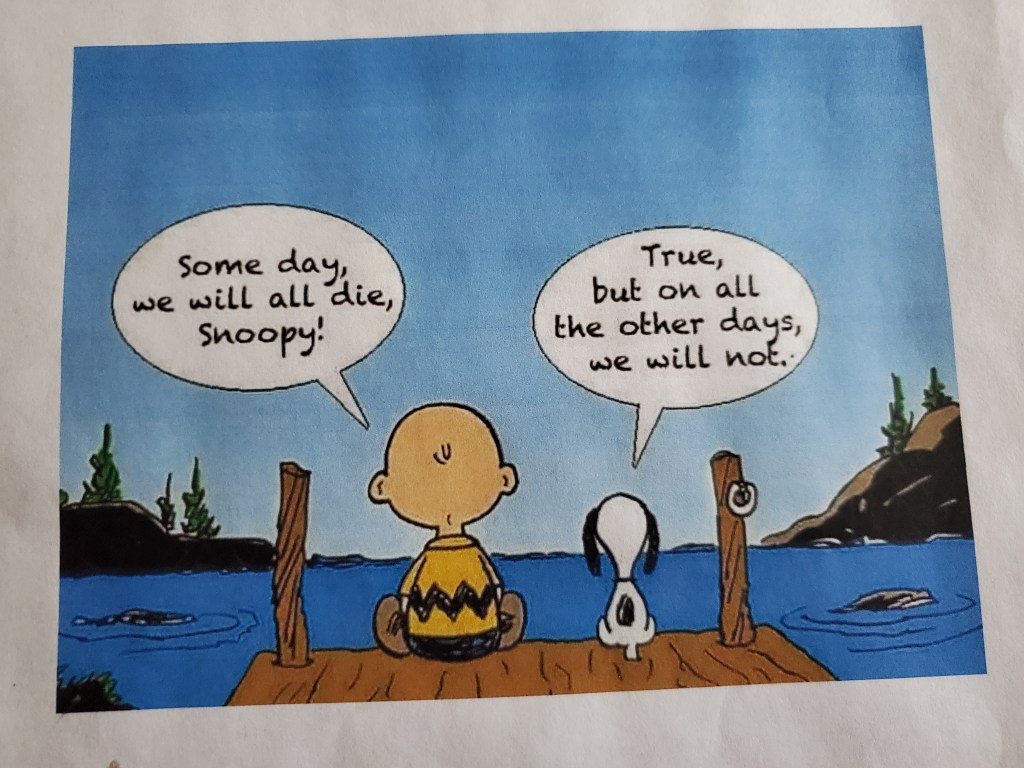
As I reflected on turning 80, I remembered some milestones along the journey, which started when I was a pre-teen, realizing that I would die someday. I    saw a table in the Racine Journal Times that predicted how long you would live based on your age.

“I’m going to live to be 69,” I told my stepfather, Don, waving the paper in front of him. 69 sounded like forever.

          “That’s based on probability,” Don said. “And the war probably affected the calculations. I wouldn’t put too much stock in it. No one knows how long they’ll live.

          I shelved my predicted use-by-date and proceeded to live my life, although I never forgot that number. I wanted to pass it, to live to 100, at least. I once told my grandson that someone has to be the first person to live forever, and why shouldn’t that someone be me. Then, in my 69th year, as I approached my 70th birthday, about to move past my milestone, almost to taunt me, I came down with the flu, and I was SICK. I felt that if I could somehow get to my birthday, I’d get well, be okay. Whew! 70. I made it, and I felt better almost immediately. I’d dodged my first longevity bullet.

          My next bullet was 74, the age at which my mother died. I didn’t think about it—well, maybe a little. I did notice that after seventy, I developed a consciousness about age. Time seemed to speed up, too. I was no longer in those long years of childhood, sitting on the front porch in August thinking school would never start.

Friends started to die, much too young. Seventy-four came and went. But then, suddenly, I was 79, soon to be eighty…and here I am, an 80-year-old. I suspect that after 80, I should take these age goals in smaller bites—I think I’ll try for 82, the age that my husband, Jim, died.

It strikes me that there’s something competitive in setting age goals and then celebrating when I pass them. I tell myself, “Karen, it’s not a race.” And yet it feels like an accomplishment that says to the world, “She ate her broccoli; She didn’t smoke; She got 8 hours of sleep at night”. . . and so on. We are fed a daily diet of strategies to lengthen our lives.

I think about my husband, watching him struggle up the stairs, stop and catch his breath, walk to the car, where he’d hang over the door to catch his breath once again before sitting down, and then drive to LA Fitness where he walked the treadmill. Watching someone work so hard at staying alive while dying, suggests that my time could be better spent doing the things I love rather than things that might help me live longer. Maybe I’ll throw the race and have a leisurely run instead.

Not only does turning 80 make me think about what growing older means for me, it also really scares me. I can’t remember a time in my life when the future felt so ominous. My fears are larger than my own death, which is quite enough to contemplate. I worry about the world that my grandchildren will navigate: climate change and unrest throughout the world. I push these worries from my mind because my time to solve the problems of the world has passed.

In my 20’s, 30’s, 40’s, 50’s, 60’s and even 70’s, I was always planning the next steps in my life. But at 80, my world grows smaller, I feel myself move inward and worry about my own death. I won’t get to choose whether I die from disease or old age.  I’d like to be “one who wraps the drapery of his couch about him, and lies down to pleasant dreams”,  but I have watched death up close and it can be hard.

I recently saw a condo that I thought would be a good place for me to live more simply and freely – where I could stay for a long time. I couldn’t sleep because I was so excited thinking how I would update it, where I’d put my furniture, and how I’d afford owning two domiciles while my house—where I have lived with Jim for over a decade—was sold. It was classic Karen—when life gets stressful—leave it behind—MOVE on. . . and out. Then I realized that that has never really worked.  There is no moving away from what scares me this time.

And so here I am, 80, healthy, riding my bike around the beautiful Minneapolis lakes, renovating my lower-level living space, planning trips, curious about the future — but reluctant to plan too much. What does that leave me? Something plenty big. Life, life itself, the basics.

Winter is here in Minnesota, the wind cuts, the roads and sidewalks are slippery, we retreat indoors. Walking with my daughter outside today we started on the “I hate winter” mantra. “Stop!” I said. “I promised myself to stop saying that all winter long. It doesn’t make winter any easier, and it keeps me from seeing the beauty in winter.”

And I want to see the beauty in all that is around me, in a way I have never wanted to before. I want to revel in the humdrum of daily life, a good book, my annoying cats who hound me when I’m at the computer, a broken valve on the boiler, Apple TV when I’m tired, and a hot water bottle on my feet at night—all of which happened this first week of being 80, all of which I’m grateful for having lived.
When Will I Be Ready to Shift into Shrink?

My husband was in one of his “move everything around” moods, so I had to clear some shelving in the master bedroom. He was moving it into his man-cave. I can’t believe at 79 I’m married to a man-cave sort of man. I thought that was a younger generation affliction.

I also couldn’t believe all the things I’d stashed away in that shelving unit. Besides two shelves of cookbooks, there were assorted threads with needles, several sanding sponges, knitting needles and yarn, workout descriptions ripped from magazines (which I’ve never done), two cameras, charging cords for whatever—I won’t bore you with the rest of the list. Take my word for it, I’ve used that shelving as an “out of sight, out of mind” receptacle.

Having no where to go with the junk, I moved it into my office, thinking I could transfer it to the shelving there—which, when I apprised it, was already full. This wasn’t going to be an easy relocation chore. And I haven’t read—nor do I want to—Marie Kondo’s The Life-changing Magic of Tidying Up. Unlike Karen Rose, who has downsized and confronted clutter twice in the last decade, my moves did not require ditching anything more significant than a dining room table that was too large for our current house.

Just as I was looking for another place to stash my junk—rather than dealing with it—what showed up on Facebook but an article by Ann Patchett called “How to Practice,” which is about clearing out her stuff in response to contemplating death. Was the universe trying to tell me something? I sat down to write this blog—anything to avoid dealing with the mess on my office floor.

*****

After taking a break, I came back to the mess. What could I possibly get rid of to make room for the things I want to keep? And what are the things I actually want to keep, surely not all those sanding sponges? Then I remembered my Aunt Selma (she was a reluctant step-grandmother who preferred to be an aunt). Selma and her husband, Uncle Earl, had a tiny duplex in my hometown of Racine. They lived on the main floor in a fortress of mahogany furniture trimmed in brass. Two pictures I loved adorned the living room walls, peacocks made from feathers in different poses. Their son, Don, my stepfather brought them from Japan after WWII.

As I grew up and as an adult, I watched Earl and Selma age. First they moved to a smaller apartment—gone was the mahogany dining room set. Earl died from Parkinson’s, and Selma moved to another small apartment. She gave my husband and me the mahogany bedroom set. She eventually landed in a Lutheran Home (for the elderly) with only those two pictures, a bed, and a couch. When she died at 99, she had a bed in a nursing home with one of the peacock pictures hanging over the head of the bed. Selma’s life kept shrinking. She knew it, she’d rationalize it, telling me that she no longer liked caring for a house.

So here I was, wondering what to get rid of and whether my life was also shrinking. When do we shift to reverse and instead of accumulating, start donating? When is it time to start shrinking our lives?  I pondered the stuff on my office floor; I noted how crowded my office is, and the books I no longer read (mostly about Piaget or other child development theories – along with and the various – previous and sometimes forgotten — crises in education).

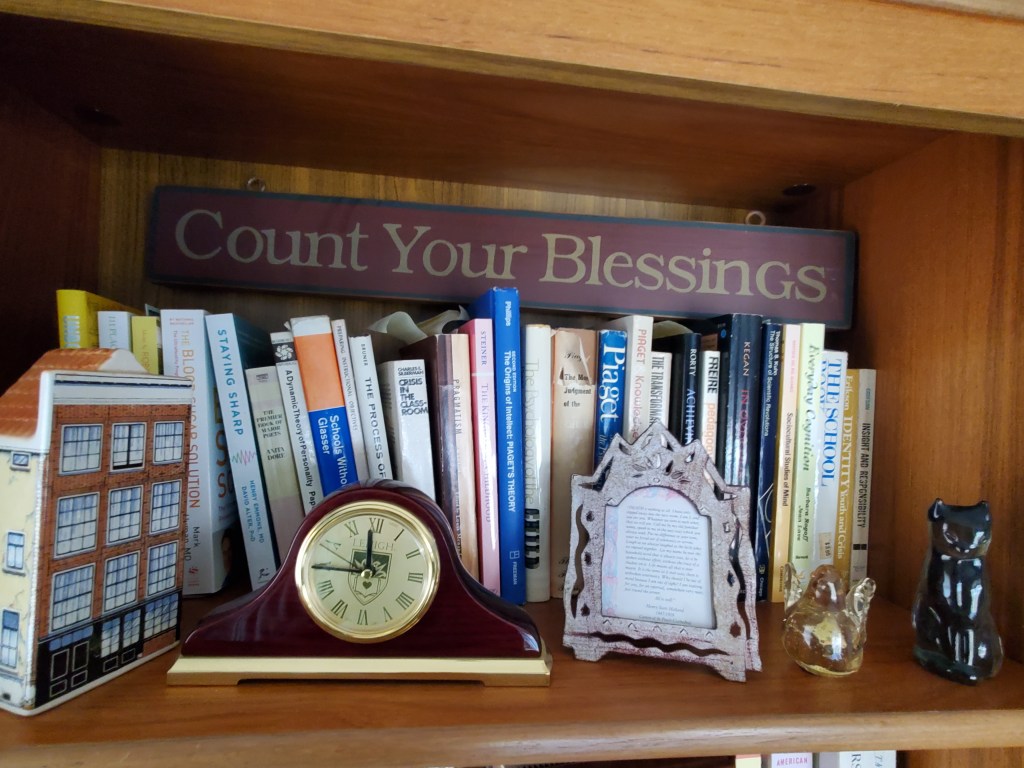
Then I perused the stuff on my shelves. Among them, a replica of the Anne Frank house, which I bought on my first trip to Europe; the clock my colleagues at Lehigh University gave me when I moved back to the Twin Cities; a crystal bird I won for scoring a birdie in the golf league I belonged to as a stay-at-home-mom; a framed card about death that I found in the last book my husband Gary read before he died (It was about J. Edgar Hoover. I kept telling him to read something more uplifting.); and a cut crystal cat that belonged to my mother, my children and I picked it out together for her. These items weren’t just stuff!  They were symbols, memories of life stages, places, and relationships—these were the stuff of love

How could I possibly let any of these items go? Karen’s life in stuff! I thought about our last blog—which apparently didn’t inspire our readers all that much—about legacy. These were part of my story, my legacy, and I wasn’t ready to let go.  Well, maybe I could ditch some of the books and a couple of the sanding sponges.

Taking stock of all I’ve accumulated reminded me of the many conversations my husband and I have about moving some place smaller—I’d have to deal with these things. That brought me back to Aunt Selma and the shrinking life. My life would and will shrink. These thoughts led inevitably to death, knowing that I, too, will die, and it’s coming sooner than I expected when I was in my 40’s and 50’s. I used to tell my grandchildren that someone has to be the first person to live forever, why not me? But I’ve stopped saying that.

For a brief minute I pictured my children sitting around cleaning out my office after I die.

 “Why do you suppose she saved this?” they would wonder, holding the Lehigh clock that no longer works or the cheap crystal birdie. I don’t know what they’d say about the sanding sponges. Maybe I should put a little label under each item describing its importance—might help me, too, if I go senile.

I thought of something Karen Rose’s husband says, “if it is smaller than a brick and has sentimental value, keep it. Otherwise, seriously consider giving it away.” Whew, I was off the hook. Most of my mementoes are smaller than a brick, although the embodied meanings are more than sentimental. I’m not ready to let go. For the time being, I won’t do anything until I get tired of walking around the mess on my office floor. I’m not dying yet, which leaves me wondering how long will it take until I reckon with death and move one more iota towards acceptance? For now, I’ll continue to treasure my artifacts of memories. I’m just not ready to shift into shrink.

Used by permission of the white board it was posted on.

Into Each Life. . .

It started innocently enough. I visited my granddaughter at college in early September—she’s the one that called me every day during the pandemic and the third of my four grandchildren off to college. The Friday after arriving home, I developed a horrific headache. I thought it would resolve quickly—sleep it off. But it lasted through September. Then came October. It would go away over night and come on quickly in the morning. Needless to say, I imagined the worst—tumor (even though the pain was mostly in my back and neck), long COVID (that didn’t occur to me until well into October), brain inflammation, Parkinson’s—a different catastrophe every day.

I saw an ENT doctor. Sinus? Allergy? I was clean as a whistle. As October wore on, I became incredibly anxious. One Sunday, Jim, my husband, had to talk me down as I learned to be anxious about being anxious—not a good thing.

My doctor did his best—a neurological test was perfect as was my blood test. He prescribed a pep talk—he believed in me; referral to a mental health professional; and an antidepressant that I was too anxious to take after reading about the side effects on the information sheet that came with the prescription.

In some deep place, I knew this was “all in my head” but anxiety overrode rational thought. Meanwhile, I was on a two-month waiting list for my doctor’s referral to a therapist, and everywhere else I called, all I heard was “We’re not accepting new patients.”

So I did what any good academic would do, bought and read books and scanned websites. There are some great resources out there, people committed to helping the suffering. One is Dr. Howard Schubiner, in Michigan, an authority on mind-body syndrome. By now I’d diagnosed myself. I bought the book and did his eight-week program. It helped. I also did PT, which also helped, but some days my neck and back felt on fire, which fed the anxiety.

About Thanksgiving I started feeling better, so I went ahead with cataract surgery. Maybe that would help. It didn’t, although the doctor called the results “amazing.” I was thrown into a new panic during my recovery and had difficulties getting new glasses. I postponed the second eye. 

Muddling through Christmas, I faked it, while inside feeling woozy. I started carrying hiking poles because I was afraid I’d fall—then, another perfect neurological test. “Your balance is amazing.” I wanted Ativan, but all I got was a lecture about how bad it is for someone my age—really? I should live in a constant cold shower (one of the recommendations for lowering anxiety) because there’s a correlation between Ativan and cognitive decline? Fortunately, my gynecologist wasn’t so opinionated, although I didn’t take it often—it made me enormously tired.

          In January, my turn with the psychologist finally came up—and she cancelled! A week later, I did my first virtual appointment and liked her immediately—the luck of the draw worked in my favor. She’s been supportive, available, responsive, and skilled.

          Like any good consumer, I turned to Facebook advertisements—once you look at something, they never stop coming in your feed. I now own a sunlight, a device you hold in your hand to help you sleep, a neck massager with heat, a bra to keep my shoulders back, my own tens device, a device for stretching your neck, a Theracane, and lessons in loosening your fascia from Daily Om. American Express loves me.

I’ve learned a lot about pain—that it really is in the head mostly, that childhood trauma and other traumas settle in the body and the brain finds pain pathways. But the brain can relearn, too. People do get over chronic pain even when there’s a basis in the body. Two people can have the same problem, and one will have pain, while the other will not. I learned about an app called CurableHealth.com. It’s a program started by young entrepreneurs who had struggled with chronic pain and tinnitus. It saved me on many days—podcasts with experts, information, meditations, writing exercises, and brain training—all for $69 a year. Another is the DARE app for anxiety.

Whew! It’s been a journey with good days and bad days – and I am not alone. The National Council on Aging says that between 3% and 14% of older adults suffer from anxiety and that estimate is based on reported cases only. Older adults have more problems with medications, since they are often taking other medications. My doctor prescribed three different antidepressants, while also saying “There is no pill for this.”

That said, I’ve learned that there are supportive friends, spouses, and family; there’s an abundance of YouTube videos about reducing anxiety and meditations; there are apps for meditation and helpful books.  These offer “solutions,” which, mainly advise “accept it and get on with the business of living and what matters to you”. Easier said than remembered when you awaken at 4am in a sweat, and you don’t know why.

My heart goes out to all chronic pain and PTSD sufferers, as well as those with Generalized Anxiety Disorder, the most common in older adults. Doctors can prescribe band-aids but getting to the root of the problem takes hard work and support. I see many articles in newspapers about the lack of mental health services for every age and the importance of having insurance coverage so people can access these services. I’ve experienced it firsthand and as one of the lucky, with insurance and now a qualified counselor.

In my bookcase directly in my sightline from my desk is a book entitled This Time Next Year We’ll Be Laughing. That’s my dream. It keeps me going as does an affirmation to get on with the business of life.

LET OLD THINGS PASS AWAY (2 Corinthians, 5:17)

Or

DO NOT GO GENTLY INTO THIS GOOD NIGHT (Dylan Thomas)

Or

NEVER WASTE A GOOD CRISIS (Milton Friedman)

Photo by Peter Hermann on Unsplash

Perhaps an inevitable part of aging is looking backward, searching for meaning in the distinctive chapters of our lives. After moving past obvious markers (leaving home for college, getting married, etc.), I keep stumbling across the fact that there are periods that are less clearly marked by an anticipated beginning or a clear end.  Some of these are unpleasant: Queen Elizabeth had her annus horribililis,  Karen Storm writes about her past experience with prolonged grief, Katherine Malanga reflects on being in the middle of  figuring out the job of loving and caring for someone who is declining. 

For me, 1998 and 1999 were such a chapter.  Nothing exceptional happened that distinguishes me from other fallible human beings who experience suffering –  except that everything occurred in quick succession.

Photo by Damiano Baschiera on Unsplash

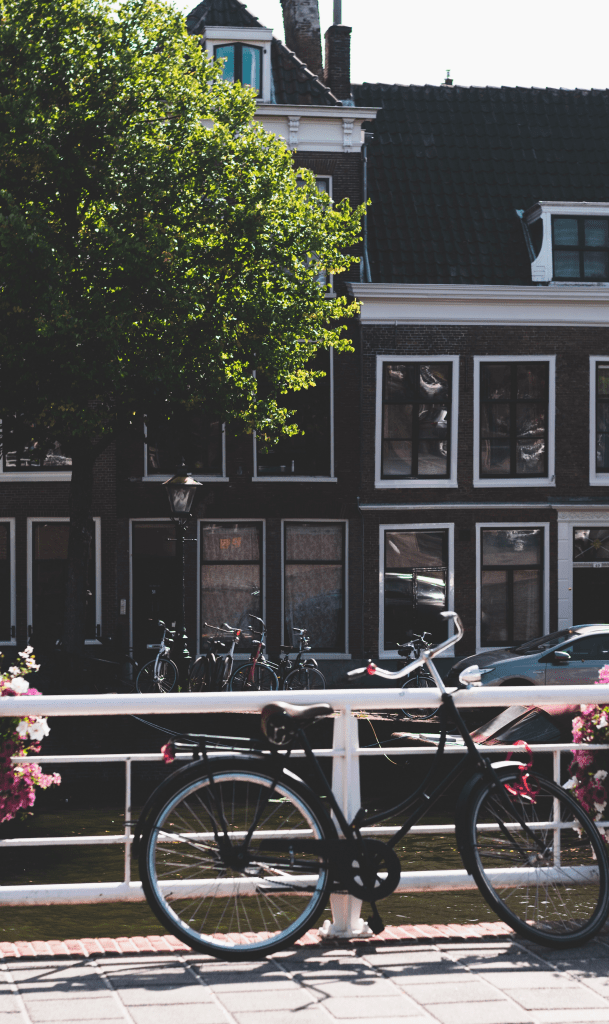
Well, to be perfectly honest, the symptoms started earlier, beginning with rocky transitions to college for my children.  The resultant stress and disagreements about how to handle myriad other issues tore at an already fragile marital relationship. By 1997, we were living together in 17th century house on a beautiful canal in the Netherlands (because we were on sabbatical) without our children (who were still causing us anxiety). 

With a lot of travel, living largely separate lives, we struggled through.  I responded by spending weekends with friends in another city and drinking Jenever (Dutch Gin, which smells a bit like rotten cabbages), straight from the freezer.

Back in the U.S.  The semi-separation became a real separation.  The children were gone.  Frisk, a beloved dog, was very old and barely able to move. My parents died, a little over a year apart.  My sister felt like my only support, but our grieving took different forms – she turned inward and to her family, and I wanted to turn outward because my family was….well, disintegrating.  I was able to briefly distract myself as International Karen — a 1999 Fulbright trip to examine the condition of higher education in post-Soviet Belarus, Kyrgyzstan and Czechoslovakia and an invitation to cheer in the new century with friends in London, accompanied by bagpipes in the Royal Park in Greenwich.  I am, however, here to let you know that, in spite of the popularity of Eat, Pray, Love, treating distress by relocation is overrated.

I thought that I needed a project, and foolishly took my half of the sale of the jointly owned elegant town home and bought a “fixer-upper” in Uptown, a densely populated, just-on-the-edge-of-becoming-trendy part of Minneapolis.  The house was owned by a blind woman, who lived with two alcoholic sons and a husband who had recently entered an assisted living facility.  Her sons assured her that they were maintaining the property and redoing the kitchen.  Hah…the ring of cigarette burns on the floor outlining their beds was evidence that only dumb luck kept them from burning the place down.  I am not a very handy person – I have no idea what inspired me to take on a neglected home despite its “good bones” and untouched quarter-sawn oak woodwork in all the rooms. My friends were worried.  But I barely saw them because I spent most of my time isolating when not at work. I was a contemporary version of the Prodigal Son, who after failing to maintain my social and financial assets, wanted to go home.  Except, although I had a house, I had no real home to turn to.


Photo by Stormseeker on Unsplash

One day, when walking the dog, I fainted and hit my head.  No concussion, but my doctor insisted on a sleep-deprived EKG.  Now, I am a person who could never stay up all night even when I was in college…I had no idea what to do other than to rent a machine that would pinch me regularly.  At a rare social gathering, I humorously asked where I could get one.  A bit later, Dan, who I barely recognized, approached me and said that he had worked nights, was easily able to stay up, and would be happy to help.  He suggested the local all-night Home Depot, followed by a very early breakfast in the café of a 24-hour grocery store.  Putting aside every caution – I, after all, had inhaled Judith Rossner’s Looking for Mr. Goodbar that left woman my age thinking that behind every eligible middle-aged man lurked a serial killer – I agreed.  And I thought about Carol, who was as close to an intimate friend as I had. I knew that I could cut the evening short because she got up ridiculously early and could get me to the test before 7.


When I least expected it, two people came into my life to accompany me on what turned out to be a quotidian medical adventure. A few years later, I married Dan, who never made the slightest pass or sign of flirtation during our 5 hours examining hoses, shovels, and industrial cleaning implements at the all-night Home Depot or the coffee shop.  Carol and I grew into closer friends over the years, even when our conversations were rare due to moves.  This modest, almost non-event was, in retrospect, a crack that widened and allowed me to see that things could be different.  I can only conclude that one mystery of life is that when I am experiencing the greatest turmoil, it is often a small voice that reminds me that relationships can change and heal. 

The prodigal son returned to his father’s home, but as a humbled and open person, ready to leave what he had become in order to be changed. There was no instant moment when I saw a way out, but Dan’s kindness and Carol’s support at a juncture where I felt my human frailty so intensely allowed me to see that I was not alone.  I was ready to be changed, but I needed to see that I had companions who could walk with me.

Unlike Dylan Thomas’ cry for an intense battle to grasp what joy is available, I was listening to gentler voices that recognized that chaos – what in 12 step groups is referred to as psychologically “hitting bottom” –  is often required to provide the courage to return to oneself.  I learned that it is precisely when I am in existential turmoil that I must depend on others to support me.  Milton Friedman’s assertion that  “Only a crisis – actual or perceived – produces real change”  is also time to remember John Donne:  “No (wo)man is an island.” This minimal insight has altered my life and the way I respond to those first inklings that “things are not going well….”  Instead of isolating, or throwing myself on the most immediate comfort or escape, I try to look closely for the small voices, usually of others, that remind me that I am worth saving.