Vulnerable: What’s in a Word?

“I came to explore the wreck.
The words are purposes.
The words are maps.
I came to see the damage that was done
and the treasures that prevail.”

–Adrianne Rich

Vulnerable: Susceptible to physical harm or damage, susceptible to emotional injury, or susceptible to attack.  “Vulnerable populations” are unable to care for themselves; elderly people are “frail and vulnerable”.

Most of us spend our life avoiding vulnerability. We exercise endlessly to stave off weakness; we guard what we say in meetings to avoid attacks and disagreements that could weaken our influence; when things get tough, we decide to leave our lovers before they can leave us.  We do what we can to protect ourselves – physically and emotionally. 

Of course we can’t be invulnerable in every context – we share things with our best friends or partners that we wouldn’t want to shout out to the world.  In early life we learn to admit when we are wrong, even if we do so sparingly.  We go camping, hiking or skiing without deep concerns about being attacked by a bear or breaking our leg, even when those are possibilities.  We are willing to be vulnerable because the rewards can be great – it is worth it to be connected, to be trustworthy, and to have fun.

 I suspect that each of us hones a personal, intuitive calculus that allows us to make quick decisions about when to leave our safe, self-protected space to realize something more important.  But then fear of failure and loss pushes back, demanding to reduce vulnerability to as small a part of life as possible. 

In my 30s, I believed that I needed a continuous career because I ached at other women’s vulnerability when spouses left and they couldn’t support themselves.  I wanted to stay home with my babies, but didn’t dare and chose safety over the complex pleasures and challenges of full-time mothering.  The pattern of looking for every chance to reduce vulnerability was well ensconced, although most of my choices were right for me at the time.

But then, more secure in my career (and becoming older, possibly wiser) I became more tuned in to the antonyms of vulnerability – what happens when reducing vulnerability becomes a practice and a priority.  Some are worth pondering:

Guarded: cautious, circumspect, reticent, non-committal

Protected: insulated, sheltered, screened off

Resistant: averse to, immune, unaffected by

Insensitive: inconsiderate, thoughtless, hard-hearted, callous

Indomitable: unassailable, unshakeable, intransigent

Thick-skinned: unfeeling, insensitive, hardened

I admit that I have often wanted to be all of these (well, not thick-skinned).  I hoped to control how other people would see me and how situations would affect me, and to find a relatively unshakeable balance, equanimity.  When challenged, and on those many days when I lacked self-confidence, trying to be non-committal and immune seemed pretty good.  When I was overwhelmed because I said yes to more requests than I could easily manage, being a bit more insensitive to other people’s needs felt like the wisest path.  As a young woman in a predominantly male world, being regarded as indomitable was a strategy to reduce uncertainty at work — and seemed to engender respect (acting more like a man?). 

Yet, as I look at the antonyms, I see that self-protection was cumulative.  I adopted predictable behaviors in meetings, and even with close colleagues, which shielded me – but did I gain respect at the expense of trust? I was intransigent in arguing for policies that served my students well – but did that get in the way of developing relationships that might have supported both me and my students?  Could I have accomplished the same goals with more vulnerability and less protection?

Then, sometime in my early 50’s, I found myself in a group where members developed a deep trust and shared painful details of their past and current lives.  There were two rules: you could not interrupt, and you could not offer advice.  I had to learn to listen rather than react. I read Thich Nhat Han, and absorbed the lesson that “the most precious gift we can give others is our presence.”  I had to acknowledge that I didn’t always know the solution to someone’s question or problem, but I could, if invited, join in a search.  I took in other mantras, accepting the inevitability of “failure” because I could not eliminate uncertainty.  I read Sun Tzu’s  Art of War, and took to heart “To know your Enemy, you must become your Enemy.”   I realized that to be an effective warrior for my students I needed to see the nuances of other people’s thoughts and allow them an honorable way of leaving or amending a conversation. 

I deliberately took baby steps to became more vulnerable.

At work, people noticed.  In my marriage it was too late, but when I remarried, I saw that prioritizing intimacy and understanding was as important as love – and much more important than being right.

Being vulnerable doesn’t mean being a pushover.  It doesn’t mean being weak or unable to take care of oneself.  It means that I need to measure my days against the antonyms – were there places where I leaned on them?  If so, what did I gain and was it worth it?  Did that leave me with vague hints that a change (or even an apology) is needed? 

The only way we get deeper knowledge of another person is if we both are willing to be seen, honestly, without defenses. And, I often feel that when I make myself vulnerable, I allow others to try it out as well.  

I don’t overestimate how well I am doing: I am still vain, self-absorbed and protective.  But more vulnerability has made me happier and more connected, not frailer.  It feels like my later-in-life superpower…

Photo by Damir Korotaj on Unsplash
Dear Old Age

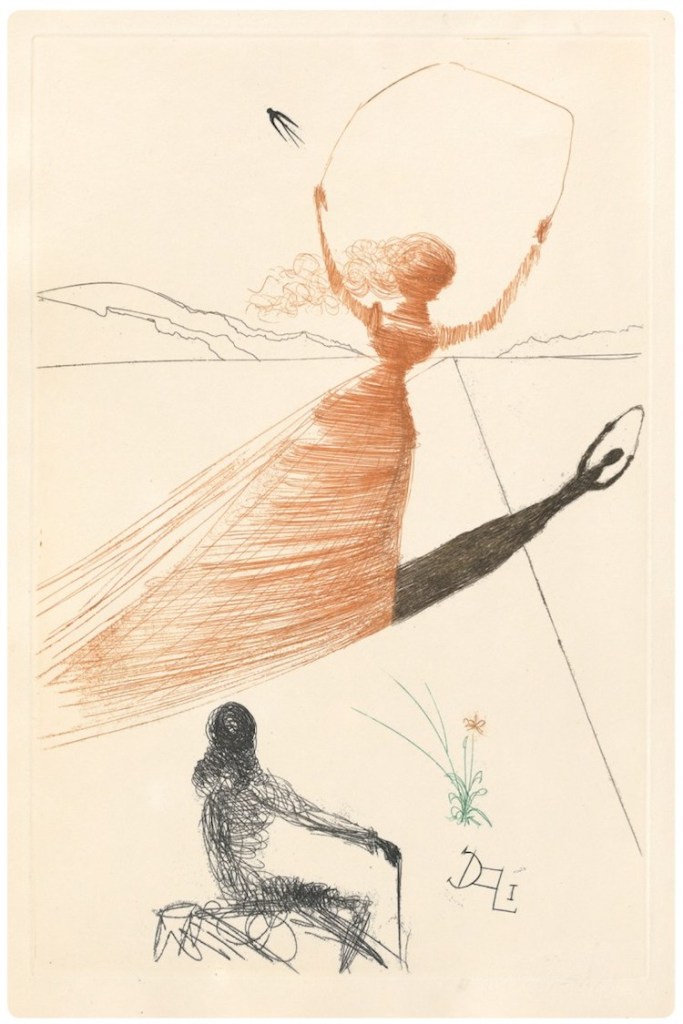
Savador Dali: Alice in Wonderland

April 20, 2025

Re: Old Age

Dear Old Age,

You snuck up on me. One day I was going to the gym three times a week, and the next I was shaky in the knees standing up in the morning. I give you credit—you attacked me in a vulnerable spot—the family weak knees. I can almost hear you gloating. “Those Evans/Jacobson women, they’re weak in knees. That’s where I’ll come for her.”

I recognize that weakness in the knees doesn’t always imply old. Plenty of younger people get knee replacements. But it’s a symptom, and if I could only fix the symptom, everything else would be fine. I wouldn’t be getting older, and worried that I won’t get to do all those things I still want to do.

I want move to Norway and live there. Go to the family farm, Vaagenes, and rent a cabin, long term. I’d even settle for that second home on Lake Michigan . Sadly, I’m not going to do that. Darn, Old Age, you stink. . . . . . . Heh, wait, I got to live in Salzburg for three months just a few years ago. I stayed in a Zimmer with a tiny kitchen, bath, puffy duvet, and a big window with no screens and tiny, biting mosquitos. I ate boiled eggs every morning, a gift from the chickens cackling below that window. I do know what it is to live somewhere completely alone and in a foreign place! I do know that I can adjust to the new and learn about different cultures. Ha Ha – fooled you Old Age!

What about that dream of bicycling the North Shore, carrying camping gear, finding a secluded spot and setting up a tent in the evening? Of course, I still want to do that. I’ve never camped. We’d (notice I’m not alone—there must be another lover in here somewhere) sleep under the stars, fish for our dinner, and make love in a sleeping bag. Okay, it’s not going to happen for so many reasons, but don’t forget the Parkway and Lake Nokomis, my happy places where I biked with abandon. Been there, and almost done that, Old Age!

I’ve always wanted to turn a manicured, pesticide polluted lawn into a habitat for pollinators. I’d thumb my nose at my neighbors letting that residue drain into the beautiful lakes and streams we have in Minnesota. Old Age, gotcha again—I turned our lawn into a field of clover, seeding it summer after summer until the plants matured and bloomed into a home for the birds and the bees. I once saw a flock of flickers land and pillage the soil for healthy worms.

Another thing, I could get married—again—have the storybook ending this time. We’d meet, fall in love quickly, never argue, and agree on the same TV shows. As we near death, we’ll hold hands, serene as we fade away. Okay, three’s supposed to be the charm, but I might need four tries at marriage. I know, it’s a silly idea, but nothing was silly about being married the first three times. I had children, grandchildren. I held hands in movies, cuddled before falling asleep, wrestled over bills and where to live and how to live. I comforted lovers, and they comforted me. So, Old Age, look at all the love I’ve had along the way.

There are so many different lives I could have had in this amazing world –become a Buddhist, live off the grid, move to DC and protest. I want to try them all, but I’m running out of time.

Okay, Old Age.  I concede. I’m probably not going to live in Norway, or bicycle and camp under the stars. I never was a gardener—I detest getting my hands dirty. As for a fourth marriage, not sure I have the energy. I’m not interested in fighting, Old Age. Truce. . .     I actually like the life that I have, even if I want all the other experiences too.  I can even accept getting old, if you help me use it to build something different, something equally new, even if it doesn’t look flashy from the outside. I’m still here. Include me, inspire me, and I’ll always show up.

Love, Karen

Loneliness

Loneliness. . . that feeling of isolation you don’t know how to change. Advice abounds: join a group, call a friend for coffee, get a hobby, and of course, find a purpose. . . but you can’t seem to make yourself do those things. It’s your own fault you feel lonely. You need to shut off the TV, get off the couch, and stare down loneliness. You stay stuck in feelings, not the solution. Solutions are for math class. You long for the ideas of others, their insights about the world. You wish someone would call, but they don’t. You’re so tired of hearing nothing but your own mental chatter.

The surgeon general says we have an epidemic of loneliness, defined as an objective state “of having no one around or of being by oneself for protracted periods of time.” That’s you. In the UK, 49.63% of adults and in the US, one out of two adults report feeling lonely. You’re not alone after all. Half of the world is with you. You tell yourself, “Humans are inherently alone. Everyone knows that.”

 “Maybe I’ll go to the grocery store,” you think—there’s no one to say this aloud to. You don’t need groceries. You don’t really care about cooking and eating except as appeasements to hunger. Regardless of what the Mayo Clinic says about not watching TV when you eat, you do like to sit in front of it and have dinner. Antiques Roadshow, people like you, many are antiques themselves, rooting around in attics hoping for a windfall.

And they talk. “Maybe you should go to the grocery store and get yourself something special for dinner,” that blabbermouth in your head does tend to repeat herself.

You’re a tad ashamed of your self-absorbed loneliness. Look at Helen Mirren. She’s alone and she’s not lonely. She takes responsibility for herself—like you should. She reframes being alone as solitude, and it’s her choice. “Does having a choice make a difference?” you wonder. Mirren notes:

One of the great gifts of growing older is to discover the exquisite art of being alone. What used to be an uncomfortable silence, is now a luxury. The house is peaceful, and I can dance in the kitchen without being judged or just doing nothing. My best company is myself, with a coffee, a good movie and the freedom to be, because solitude is not absence, it is fullness and peace of mind.

You resolve to reframe your loneliness as solitude.

Maybe you could write a journal, like Amy Tan’s The Backyard Bird Chronicles. People would flock to your door. “That probably won’t happen,” your inner voice tells you. “You no longer have a bird feeder.” Sometimes that voice does say something worth listening to.

A few days later it rains. Streaks of water coat the windows, making everything outside blurry. It’s one of those 48° chilling rains. No grocery store visit today. You’re still on a Helen Mirren kick, so you make some tea (which you don’t really like but it works for the Brits), and you decide to reread May Sarton’s Journal of a Solitude. Maybe it has some hints for reframing.

Sarton describes solitude as a retreat from the demands of others, a way to find the “rocky depths” of her personality, a chance to do inward work to understand herself.  She argues that we have to make myths of our lives. . . to yield further insight into what it is to be alive, to be a human being. “Maybe I’ll be Emily Dickenson,” you think. Sarton explains:

My experience of great solitude is that its character is unstable—at times exalts and fortifies then soon beats down, and throws one into a starving and thirsty state. (Does that mean you should go to the grocery store?)

You’re more drawn to Sarton’s solitude than Mirren’s, who makes it sound like tea and a biscuit. Sarton sees personal growth in solitude and she doesn’t sugar coat it. Knowing ourselves can be painful, but you’ve always been willing.

That said, you’ve read all of May Sarton’s journals, and you know the truth about her. She maintained a huge correspondence with admirers and entertained a stream of visitors—friends, hired help, and readers—such that she lamented about how tired they made her. Is that really solitude?

The days roll on. You fill out questionnaires in self-help books, hoping to find your purpose. You grocery shop, watching people. You eat dinner and guess the answers for Jeopardy, although you’re not as quick as you used to be—but what 80-year-old knows the names of rap artists anyhow? Finally, it’s bedtime. Two cats vie for a spot on the bed—see, you do have company. You read a self-help book with another one of those questionnaires and then settle in with something entertaining. A whiff of Pranarōm’s Sleep Aid and you’re off to dreamland, full of people and adventures, wild car rides, trips with significant others, not being able to run when you need to, flying (that’s my favorite—wouldn’t you love to fly?). Dreamland. It’s a place where you are never lonely.

Dear Readers.

I am not lonely. I have a passionate engagement with a rosemaling group, volunteer work I love, two writers’ groups, church, friends, and an attentive family. I have, however, had lonely times in my life, so I know what it is like. I worry that our society blames the lonely person, puts it on them to find a way out. So, if you know someone that you suspect is lonely, offer a hand up from that swamp. Call them up. Share your thoughts about something of interest. Connect.

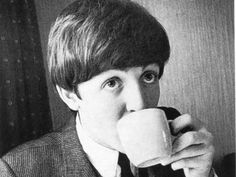
All the lonely people, where do they all come from…

 (Paul McCartney)

Strange But True

Guest blog by Carol Boyer Peterson

--Photo by David Matos on Unsplash

Have you ever heard a story that seemed so unlikely that you thought to yourself, “that couldn’t happen”? Yet, reluctantly, most of us learn that awkward and even bizarre experiences can yield unanticipated life changes.

My recent story is about how loneliness, isolation, and physical challenges led to an opportunity to reengage with life that I could not have anticipated. Who could imagine that spending two months in a memory care facility would become a journey into vulnerability and community? But it happened.

A little over two years ago, I tripped over an errant lawn-watering spigot and broke bones in both of my hands and fractured my wrist. Surgery was required on my left hand; a cast, on my right hand/arm. At the time, I was also part of a 15-month clinical research trial for chronic leukemia, and my orthopedic surgeon could not predict how long it would take for my bones to heal.

Keep in mind that, as a participant in a clinical research trial, I learned compliance—not easy for someone who prides herself on being in control! So, I should have readily accepted the hospital’s recommended placement in a traditional rehab facility, but my instinct told me otherwise.

While I was confident that my bones would heal, I knew that what I wanted was a quiet place where I could get the care that I needed and spend time in solitude, prayer, and reflection. I chose a nearby senior living community that had skilled nursing, a faith-based organization where I had volunteered and was familiar with some of the staff. However, there were no rooms available in the rehab section. Given the urgency of finding a room and my deep conviction that I needed to be at this particular location, I agreed to a room in their memory care facility, where I joined 12 elderly people—many close to my age—who were no longer able to live independently.

My health care professionals were horrified, but I prevailed.

My sparsely furnished room was on the second floor; my view, the monastery and an adjoining college campus. When I arrived, I spent much of each day alone…and looking out the window. But the shock of being physically unable to care for myself—even eating and brushing my teeth required assistance—and living in a locked ward with 12 other souls with advanced dementia became much more than a story of an awkward and inappropriate healing environment.

Rather than stay in my room, I chose to become an active member—albeit differently dis-abled—of this community. I participated in group activities, interacted daily with other residents, ate with them, volunteered to lead a chair exercise group (I am a certified exercise coach), and more. I learned to love being with my new friends, who quickly became comfortable with my active presence in their daily routines.

I often tell people that my perspective on everything was forever changed by the experience of being my late husband Jerry’s primary caregiver for nearly a decade. As his Lewy Body Dementia progressed, I learned to slow down, be more patient, and live with a good heart because I loved him so dearly. But, it was also a time of increasing detachment from the rest of the world.

And yet, two years after Jerry passed away in the same memory care facility that was now my temporary residence, something implausible happened: I felt part of a community. In a place that clearly was not intended for someone like me, I gained a different and deeper respect for the many challenges faced by those with advanced dementia. I also became reacquainted with critical life lessons, including how essential it is to protect individual dignity, call people by their first names, and listen closely to their life stories, which often appear in fragments rather than a well-designed narrative.

So, looking back, I can now see that my story—which others might have seen as ripe for a comic review titled “Life in the Alzheimer’s Unit while needing help with the Activities of Daily Living”—turned out to have been a gift.

Spending time in a memory care facility brought me face-to-face with my own vulnerabilities in a way that I had never even considered before. And, perhaps most important of all, it got me “unstuck” from loneliness and isolation, giving me instead a renewed sense of hope, healing, and connection. At a time when things could easily have gotten much worse, they started getting better—all because of a choice that I made against the advice of pretty much everyone…a choice based on instinct, not rational thought.

Fast forward to today. My cancer is in remission, my bones are healed, and I’m beginning to find a new way forward with greater humility, courage, and a heart that is more open to others. Caring, which has long been a defining characteristic in my life, will be guided by my faith and what I started to learn in those two months. Writing and sharing stories about my life-affirming or life-changing experiences will become part of my calling to bring peace and light into the lives of others. And, even though this is not what I planned for myself when I retired early and married Jerry, I will take the curious, compassionate, spiritual, and loving version of myself—which is slowly emerging—with me on this next phase of my life journey.  

“We do not think ourselves
into new ways of living;
we live ourselves
into new ways of thinking.”
                       —Richard Rohr

Carol Boyer Peterson

I am a widow, stepmom, grandmother of 9, social scientist and retired university administrator. I love many forms of exercise from Pilates to hiking. Despite the long winters, I also love living in Northern Minnesota with a view of Lake Superior. I am blessed to have dear friends and family who are with me on my life journey.