Eighty Years, Eighty Letters

Photo by Joanna Kosinska on Unsplash

I have been obsessed with the minutia of aging, examining every new line, every wiry hair on my chin (prompting immediate removal), every unfamiliar ache in the morning. But when asked to write a tribute for a friend’s milestone birthday, I go whole-hog in the other direction– not just offering congratulations, but taking the opportunity to outline, sometimes in exhaustive detail, why their life has been well-lived.  I ignore tired jokes about wrinkles, slumping shoulders, or forgetfulness.

Almost as if I were writing their advance obituary.

But when it comes to my own Big Birthdays, I’ve mostly ignored them. When I turned 70, Dan planned a sweet mini reunion with friends and family, complete with a cruise on beautiful Lake Minnetonka. It was the first time since I turned 40 that I stopped to consider what another decade meant.

Looking back now at 40 – that was a downer. I was convinced life as I knew it was ending. I imagined myself turning into a wrinkled crone by the end of the week. I spent several hundred dollars on face creams that promised to forestall the ravages of age. Some of them made my eyes burn. I ended up tossing most of the unused jars when I realized I wasn’t actually disintegrating. I didn’t look that bad. I could continue to be vain!

Photo by Zoshua Colah on Unsplash

But this summer I turned 80, and although I didn’t anticipate it, I could feel agitation building as the date drew closer. I set boundaries:

No, no reunions, no celebrations. 

No, I don’t want anything special! 
No gifts – we have nowhere to put anything! 

Do I really have to go to the Sages Lunch this year, when I helped organize it last year?

At one point I even considered writing my own obituary, not out of despair, but practicality. After all, at 80, every year feels a bit more like a crapshoot. But then I remembered – I’m not very afraid of death, although like most people, I hope it will be quick and relatively painless. So if I wasn’t especially fearful, why the restlessness? Why the resistance?

A week before my birthday, I was meditating outdoors with a small group in the clear early morning light in Boulder. Someone read a John O’Donohue poem on longing before we began, and one line stuck with me like a mantra: May a secret Providence guide your thought…”

Fifteen minutes into the silence, Providence – The Great Whatever – answered “You are supposed to write letters to 80 people to tell them how they have changed you.”

It was loud.  It could not be ignored.  It was also rather weird –so clear, it startled me. The universe doesn’t usually shout at me.

And so I began. At first I wondered if I even knew 80 people well enough to write to. But it turns out that at 80, you’ve lived a long time and met a lot of people. As I started making a list, I quickly passed 80. I began to recall how each one was memorable, and why.  Some names were easy. The memories were warm, the lessons clear. Others required more work, were uncomfortable. I had to ask: how did this person change me, even if the change came through friction rather than closeness? Some were no longer living. Some I had lost touch with. In a few cases, I already had letters written – messages I’d sent to the families of friends who’d died, telling them what that person had meant to me. I had saved copies. I added them to the list.

And then I realized something else: not all letters would go to individuals. Sometimes it was groups of people who had shaped me — a writing class, a church committee, a circle of friends. And sometimes the letter could be to a thing — a dining room table from my childhood, or a familiar object that held memory like a sponge. Always, behind the inanimate, were people. Always, it came back to connection.

Oh my.  What seemed, when Providence’s voice boomed, at first like an impossible assignment –  80 letters for 80 years – suddenly feels doable. More than that, it feels necessary. Because in uncovering the people and memories that shaped me, I am also writing something else: a quiet testimony to what I’ve always known, deep down. 

I did not arrive at 80 on my own.

I got here on the shoulders of so many who walked beside me, talked me down, saved my bacon, gave me new direction, nudged me forward when I was stuck, or simply witnessed my becoming. Big influences, small gestures, words that stayed with me — it doesn’t really matter. What matters is the accumulation of moments, and the gratitude I feel for having been changed, again and again, by the presence of others.

In this photo, I am the white-haired 80-year-old, with some of my best friends from Tappan Junior High School, Ann Arbor Michigan.  We met this summer to remember how important we have been in each other’s lives.  This “letter” is for them…and the several who were there in body or spirit but not in this picture. My friend Elsa, second from the right, describes us as a hive…that’s the way that it feels, except there is no queen bee.

“Best friends” from the past and now…

And maybe, just maybe, Providence will answer if I become sufficiently agitated and self-centered and, therefore, speak again when I need a new assignment.

Oh — maybe most important: 80 is not a boundary, just another irrelevant human marker, an indicator our of our futile attempts to corral time.

 

What Makes Me Me and You You

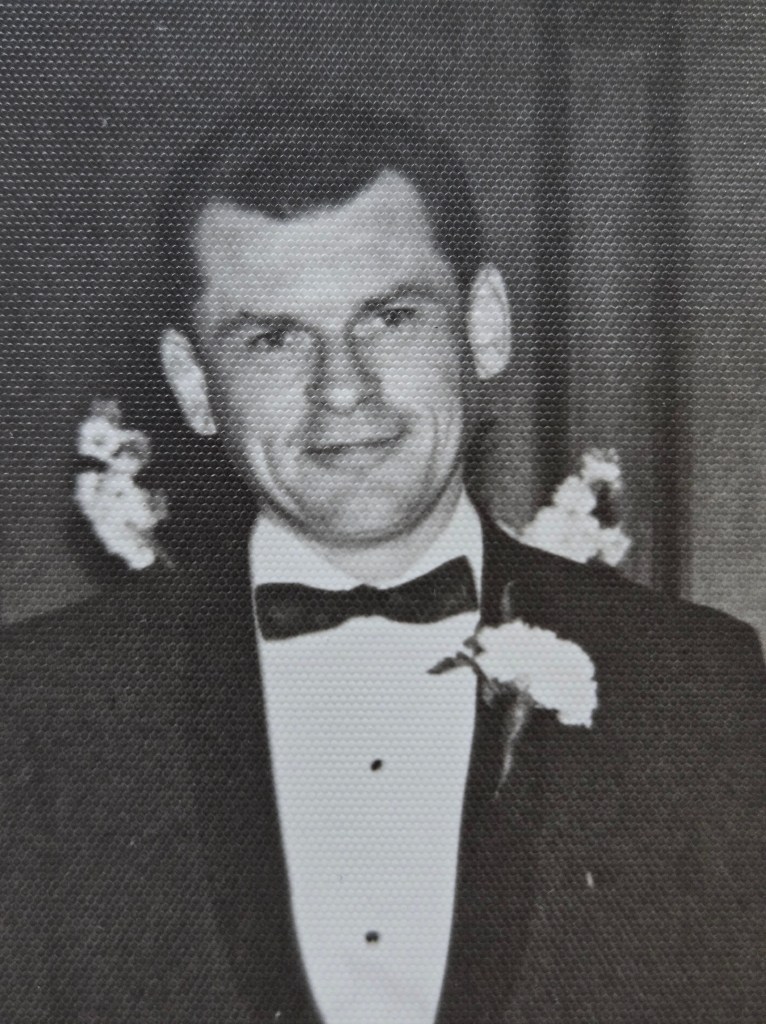
Donald Earl Evans 1926 – 2012

My stepfather, Don, loved three things in this life: my mother, fishing, and tinkering, especially under a car. Don adopted my two sisters and me when I was ten. He was boyish, enthusiastic, deeply in love with our mother, home from WWII (He’d joined the army at 17.), and excited to start his life. He always had a project going. Take the worm farm he built outside our front door. What ten-year-old isn’t fascinated with a worm farm? It was my job to carry out the scraps from dinner and to turn over the dirt. When it came time to go fishing, I got to fill a can with squirmy night crawlers.

Don always planted a vegetable garden. He’d give me a packet of radish seeds to sow because radishes come up fast. I witnessed the marvel of seeds. He put me in charge of weeding. After pulling weeds a few times in the hot sun, I suspected he had tricked me into doing the hard part of gardening. But I didn’t mind. I felt important.

He built new stairs for our house. I watched him saw pieces of plywood in a stair shape and then lay planks across the cuts. He leaned them against the garage where we could climb up and down. Next he added a picket fence to our yard, drilling the post holes, another curiosity for me to see. It seemed as if he could do anything.

Don bought a Webcor turntable, and Bozo the clown records that I listened to over and over.  

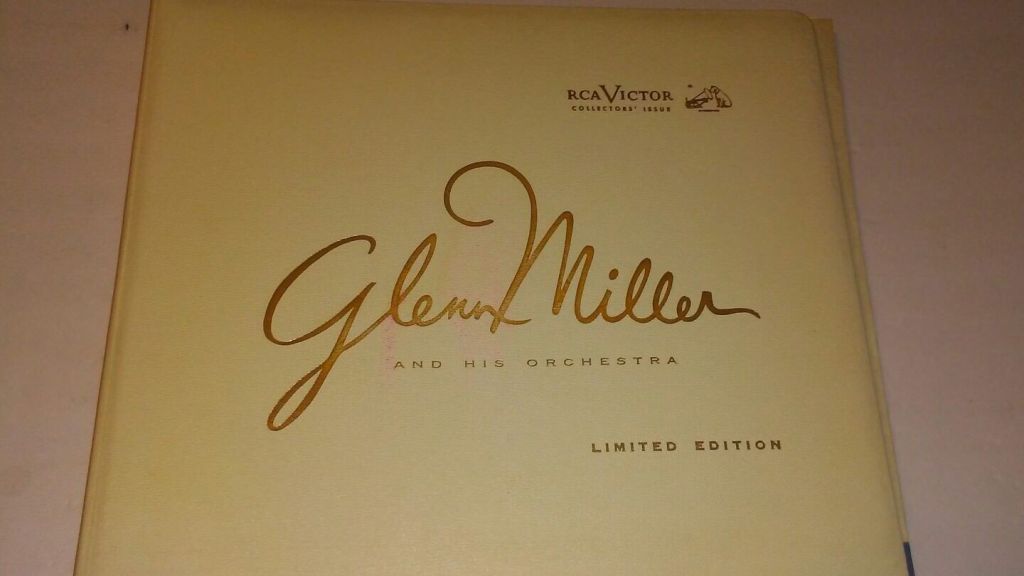
He loved Glen Miller, and gave our mother a gold embossed, white leather album of Miller’s greatest hits. Music filled our house in the evening. Don also loved cars. I once got to go with him to Cicero Avenue in Chicago to buy a Packard, his favorite automobile after the Olds.

I was the one Don took fishing. He taught me, by example, to sit in a boat or on the Lake Michigan pier, not talk, and fish all day. He once took me muskie fishing. We didn’t catch a thing, but a muskie followed the lure to our boat. These experiences were magic.

North Pier, Racine, Wisconsin

But over the course of my teen years, Don changed. He stopped making things, fixing his car, and fishing. Instead, he went to night school and worked his way from a tool and die maker to an engineer. He and my mother bought a bigger house; my mother took a fulltime job to finance their American dream. The new life was stressful, and instead of tinkering with something to offset that stress, he relied on a cocktail (and maybe two or three) at night. He developed an edge, and we three sisters avoided him. More than once, I heard our mother say,” I wish we could go back to where we started. He was happiest lying under a car fixing it. We don’t need all this.”

I can’t reliably pinpoint why, but Don lost his essential self, the things that made him Don, his unique creativity. My mother died, and Don lived to be 86. He spent his last few years at the VA hospital, where gradually I watched the curious side of Don return. For him, it was too late for fishing and tinkering, but for me, it was not too late to see the cost of pursuits that deny one’s essential self.

To me, Don is everyman, especially of his generation and veterans of WWII. He’s also a cautionary tale about losing yourself and straying from the things you love. I had the lesson of seeing the changes in Don, from creative young man, to striving type A, and back to a resigned acceptance of what is. Seeing these changes taught me to seek what is authentic in myself. I remember the first time I went to a counselor in my 60’s, and she asked me what my goal was. I told her I wanted to live an authentic life (I wasn’t sure I was, and I wanted to change before it was too late.).

In retirement, I’ve aspired to live authentically. Two books that have supported me are The Creative Age: Awakening Human Potential in the Second Half of Life by Gene D. Cohen, and The Not So Big Life: Making Room for What Really Mattersby Susan Susanka. They both argue that it’s never too late to find what you love and do it. Cohen says that creativity is built into us, not reserved for the young. Karen’s recent blog about the talents and contributions of older women highlights the ways we “elders” can manifest our creativity.

Susanka is more aligned with my personal focus, finding your essential self. I had the cautionary tale of Don in mind in early retirement, when I identified that as a child and a young married adult, I had loved to make things. At the time I was exploring my Norwegian roots, so I thought, why not rosemaling? A door opened to a latent artistic flare and to new friends.

The poet Maggie Smith has a writer’s perspective on creativity and authenticity. She advises staying “elastic” and open to surprise. When I sold our house and moved, I set Smith’s book, You Could Make This Place Beautiful front and center in my new apartment. I didn’t want to dwell on what I’d lost but rather on making my place beautiful and affirming what makes me me.

I believe Smith’s advice can be extended to our lives in retirement or at any time of life. We can make our lives beautiful in our own way. Accessing our essential selves, the things we love to do, our lifelong interests and talents outside of work, can be the foundation for surprising ourselves in retirement. What makes you you? I invite you to explore and enjoy.

Vulnerable: What’s in a Word?

“I came to explore the wreck.
The words are purposes.
The words are maps.
I came to see the damage that was done
and the treasures that prevail.”

–Adrianne Rich

Vulnerable: Susceptible to physical harm or damage, susceptible to emotional injury, or susceptible to attack.  “Vulnerable populations” are unable to care for themselves; elderly people are “frail and vulnerable”.

Most of us spend our life avoiding vulnerability. We exercise endlessly to stave off weakness; we guard what we say in meetings to avoid attacks and disagreements that could weaken our influence; when things get tough, we decide to leave our lovers before they can leave us.  We do what we can to protect ourselves – physically and emotionally. 

Of course we can’t be invulnerable in every context – we share things with our best friends or partners that we wouldn’t want to shout out to the world.  In early life we learn to admit when we are wrong, even if we do so sparingly.  We go camping, hiking or skiing without deep concerns about being attacked by a bear or breaking our leg, even when those are possibilities.  We are willing to be vulnerable because the rewards can be great – it is worth it to be connected, to be trustworthy, and to have fun.

 I suspect that each of us hones a personal, intuitive calculus that allows us to make quick decisions about when to leave our safe, self-protected space to realize something more important.  But then fear of failure and loss pushes back, demanding to reduce vulnerability to as small a part of life as possible. 

In my 30s, I believed that I needed a continuous career because I ached at other women’s vulnerability when spouses left and they couldn’t support themselves.  I wanted to stay home with my babies, but didn’t dare and chose safety over the complex pleasures and challenges of full-time mothering.  The pattern of looking for every chance to reduce vulnerability was well ensconced, although most of my choices were right for me at the time.

But then, more secure in my career (and becoming older, possibly wiser) I became more tuned in to the antonyms of vulnerability – what happens when reducing vulnerability becomes a practice and a priority.  Some are worth pondering:

Guarded: cautious, circumspect, reticent, non-committal

Protected: insulated, sheltered, screened off

Resistant: averse to, immune, unaffected by

Insensitive: inconsiderate, thoughtless, hard-hearted, callous

Indomitable: unassailable, unshakeable, intransigent

Thick-skinned: unfeeling, insensitive, hardened

I admit that I have often wanted to be all of these (well, not thick-skinned).  I hoped to control how other people would see me and how situations would affect me, and to find a relatively unshakeable balance, equanimity.  When challenged, and on those many days when I lacked self-confidence, trying to be non-committal and immune seemed pretty good.  When I was overwhelmed because I said yes to more requests than I could easily manage, being a bit more insensitive to other people’s needs felt like the wisest path.  As a young woman in a predominantly male world, being regarded as indomitable was a strategy to reduce uncertainty at work — and seemed to engender respect (acting more like a man?). 

Yet, as I look at the antonyms, I see that self-protection was cumulative.  I adopted predictable behaviors in meetings, and even with close colleagues, which shielded me – but did I gain respect at the expense of trust? I was intransigent in arguing for policies that served my students well – but did that get in the way of developing relationships that might have supported both me and my students?  Could I have accomplished the same goals with more vulnerability and less protection?

Then, sometime in my early 50’s, I found myself in a group where members developed a deep trust and shared painful details of their past and current lives.  There were two rules: you could not interrupt, and you could not offer advice.  I had to learn to listen rather than react. I read Thich Nhat Han, and absorbed the lesson that “the most precious gift we can give others is our presence.”  I had to acknowledge that I didn’t always know the solution to someone’s question or problem, but I could, if invited, join in a search.  I took in other mantras, accepting the inevitability of “failure” because I could not eliminate uncertainty.  I read Sun Tzu’s  Art of War, and took to heart “To know your Enemy, you must become your Enemy.”   I realized that to be an effective warrior for my students I needed to see the nuances of other people’s thoughts and allow them an honorable way of leaving or amending a conversation. 

I deliberately took baby steps to became more vulnerable.

At work, people noticed.  In my marriage it was too late, but when I remarried, I saw that prioritizing intimacy and understanding was as important as love – and much more important than being right.

Being vulnerable doesn’t mean being a pushover.  It doesn’t mean being weak or unable to take care of oneself.  It means that I need to measure my days against the antonyms – were there places where I leaned on them?  If so, what did I gain and was it worth it?  Did that leave me with vague hints that a change (or even an apology) is needed? 

The only way we get deeper knowledge of another person is if we both are willing to be seen, honestly, without defenses. And, I often feel that when I make myself vulnerable, I allow others to try it out as well.  

I don’t overestimate how well I am doing: I am still vain, self-absorbed and protective.  But more vulnerability has made me happier and more connected, not frailer.  It feels like my later-in-life superpower…

Photo by Damir Korotaj on Unsplash

Circle of Friends

Getty Images, courtesy of Unsplash

A few weeks ago, I read an email from my friend Gary, part of regular, long-ish musings that he sends to a select few.  He was stimulated by the observation that people typically have no more than 150 friends and, true to his reflective nature, he dove in and found Robin Dunbar’s observations on friendship.  I mentioned this “fact” to my husband, who quickly noted that it was close to Harari’s observation in Sapiens that human societies change when their membership increases above 150, becoming more complex and often hierarchical.  Enter the blacksmith and the mayor….

Well, Gary is an extrovert who has lived in the same part of Minneapolis for almost his whole life.  He also worked for over 30 years in a position that thrust him into conversational spaces with faculty members from a more diverse group of departments than any other person at the University of Minnesota.  In other words, Gary is a social anomaly in our modern, mobile world. Many of the thousands of faculty and professional staff at the knew Gary, directly or indirectly and, coupled with his rootedness in the community,  I am sure he would recognize well over 150 people as pleasant acquaintances with whom he has shared conversations and food. As a thoughtful and interesting person, he could converse equally well with those immersed in Veterinary Medicine, Classics, or the Registrar’s office. His Christmas card list is long.  Distilled out of his hundreds of acquaintances is a core of 11 close friends who he has treasured for over 30 years.

As I reflected on his email, I felt small and a bit lonely!  I counted up my close friends (people I see or am in regular zoom contact and have known for 30+ years), and I could come up with only 3, or at a stretch, 4. I have no obvious social anxiety or deficiencies, so I had to starting thinking about why….

Unlike Gary, I have lived in four countries, 5 states and 16 distinct places. I graduated from high school and college at a time when a long-distance call cost real money.  My friends from those days are all highly mobile – none live where I grew up, and after college we all scattered across the globe.  And I more recently moved across several states.

When I think of a circle of friends, I go all the way back to junior high school and a a group that I had a 60th reunion with last year – that is me in the green sweater.  We live in different places, see each other every decade or so,  but we can start up a conversation as if no time had passed.  This means a lot: I feel joyful when I think of our shared adolescence and the interesting and fun people they continue to be.  I have not had a “circle of friends” like that since.

My friendships don’t fit neatly into a set of concentric circles that reflect differential “closeness” with me at the center.  As a member of overlapping national and international associations, I have a long-standing web of personal-professional relationships – people with whom I have regularly broken bread or shared coffee that that may be as large as Gary’s.  Whew – even though I am not a true extrovert, I seem to have a natural preference for connecting,  and when I think of the joy of finding someone who I really like in the lobby of a soulless hotel in a major city or another country, I smile. 

But I am retired, as are many of them. I am unlikely to travel to Florida just to see Joe or to Sweden to visit Olof and Helene, and we no longer have conferences that ensure meeting several times a year.  Still, looking back on the jokes, the work chatter interspersed with family life, the occasional sharing of hard stuff, music preferences, and furry companions, I know that they are much more than “acquaintances”.  It lightens my heart to know that I worked, over many years, in the company of people who mean much more to me than what they do or produce. 

A web is not a circle.  When I think of my “close friends” whom I have known for decades (and will get on an airplane to see) the list of expands a bit.  In this, I am in a community that ebbs and flows, a web where everyone is connected to others, directly or through me, and where we share the same feelings of care and concerns for each other.  I am not at the center and not at the edge, but our lives are intertwined even as they are separate. 

I am drawn to ask what we mean by friendship, beyond the obvious indicators of caring, trust, a sense of mutual intimacy and a shared sense of humor.  I have been  a mentor to many students, I have kept in regular touch with around 7, many of whom I have known for decades. Is that friendship, or something else?  Or the colleagues with whom I have shared years where we collaborated on projects that engaged us deeply?  They are so much more than acquaintances, yet not people who I would invite to a barbecue. I am grateful for each of them.  Karen Hering says that I  can claim them as companions on life’s journey.

Image courtesy of Nina Cvijo, on Unsplash

And what do I say about people with whom I have shared intense relationships – old loves, sponsors, mentors, co-conspirators of one kind or another – who are in my life for a shorter period, but who think of me as often as I think of them and who are forever sewn into my heart.  I can I can touch base with any of them when it feels right.  Claim them again….

In the end, I have decided that I can’t place people I have known within circles.  I want to remember them in the web of relationships that have meaning for me and for them – and that can be activated after many years with an email or a phone call to evoke a mutual burst of warmth and gratitude.