Why Knit?

Photo provided by fellow knitter, Kathy Jensen

When people comment on a sweater that I knit for myself, it is usually followed by “My grandmother taught me to knit, but I haven’t done it since I was a kid” or “I tried it once…”.  This response astonishes me because I know, deep in my bones, that my life is enriched by knitting in so many ways.  It is rarely about the sweater, the pair of socks, or the baby blanket.  It is about a raft of other emotional and embodied experiences that I associate with knitting. 

I learned to knit when I was 11 and living with my parents in Norway for a year. Yes, knitting was part of the curriculum for all students in public schools at that time  – unfortunately, it was eliminated at some point in the 90s.  My 11-year-old school project was a ski hat with a Norwegian stranded design in the cuff…no scarves for me!   And, I still knit the Norwegian Way (which can be learned on YouTube, if you care to, from the adorable aging Norwegian knitting couple, Arne and Carlos).

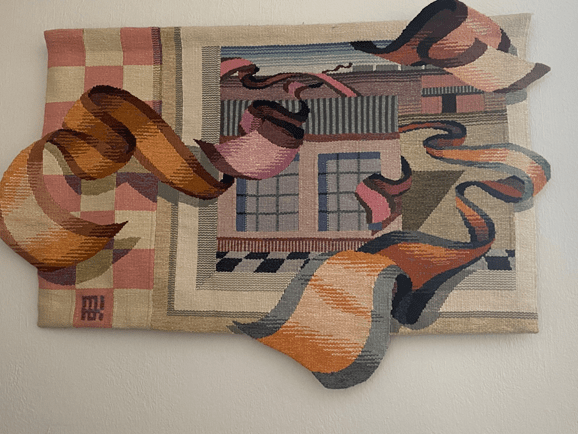
I have always loved anything made of fabric…tapestries, hand-woven clothing, batik, quilts…there is something that sings to my soul when I look at the way in which women, throughout time, have used whatever they have on hand to create something beautiful – and sometimes useful.  One of my prized possessions is this untitled tapestry by Ann Baddeley, which I call Freedom to Fly.  I first saw a much larger version, requiring a house of a different size and a bank account to go with it (many tapestries are priced by the square inch).  The gallery called me six months later and said that they had found a similar but smaller and slightly more affordable one.
With the advent of a demanding career and children, I stopped knitting for many years, with a few exceptions — a poorly thought-out Icelandic pullover for my husband and an adorable Norwegian cardigan worn by both my daughters (and now several grandchildren).  But my first grandchild (now 19) inspired me, and I haven’t stopped since….I am a regular member of Ravelry.com, an on-line space for knitters, where there are always over 3000 people with me when I log in.  There I can upload pictures of my own projects (147 since I joined in 2008) and look at what other people have done with the same yarn.  We “friend” and chat – there are groups to enjoy specific yarns or designers, and KALs (knit-a-longs) where people enjoy talking about how they are re-imagining a specific project, whether it is yarn substitutions, colors, sizing, or other “mods”.

But there is much more than being part of both a very old and also very current tradition which, with a few exceptions, is female dominated from the raising of the sheep to the designs. When people ask me why I knit, I rarely refer to the objects I have made but to the process of making them.  Just as some people love the preparation of the materials for an elaborate dish – chopping this-and-that, determining the garnish, collecting the individual spices – I linger in on-line and physical yarn stores, murmuring over colors, textures, and dreaming of what COULD be done with them, even if I know that I will not go any further than the murmurs.   Like a cook loves their knives, I like all of my 50 pairs of needles, the small scissors that I use to clip loose ends, and the various colored markers that we knitters use to keep track of complicated projects.  In other words, the STUFF of knitting is appealing to me.  When we lived in Minneapolis, Dan took me to Steven B’s, lorded over by the self-designated Glitter Knitter – for a special a yearly birthday treat and a prize skein. 

But more than that, we knitters share an understanding of knitting as therapy.  I try never to knit anything that has an absolute deadline (your gift WILL be late!) because I have enough deadlines and appointments in the rest of my life.  There is something about the feel of a delicious yarn passing through the fingers that excites the senses.  Then, there is the rhythm of it – when the stitches just seem to flow and you lose track of time.  I think of it as akin to walking meditation.  There is curiosity and challenge when you want them – always new techniques, different ways of making the wool do what you hope. 

More important is that knitting is one space in my life where I rarely judge myself.  If I make a mistake – well, it always happens and, after the first unprintable exclamation, I contentedly Tink (knit backwards) until I can fix it.  Because the process, the excitement, and the tactile elements are most important, if the final product is a bit disappointing – well, someone who visits Goodwill will probably find it warm and cozy – and maybe even like it!  Or, you can always rip it all out and use that beautiful yarn for something else…

I don’t recommend knitting unless someone is really interested…but I hope that you find something equivalent in your life, something easily available that will give you the sense of being centered that I find when it is just me, a ball of yarn, and an idea of something to make with it.

From woolyknitter.blogspot. (Credit : pinterest.com)
What is Aging When I’m Still the Same Kid?

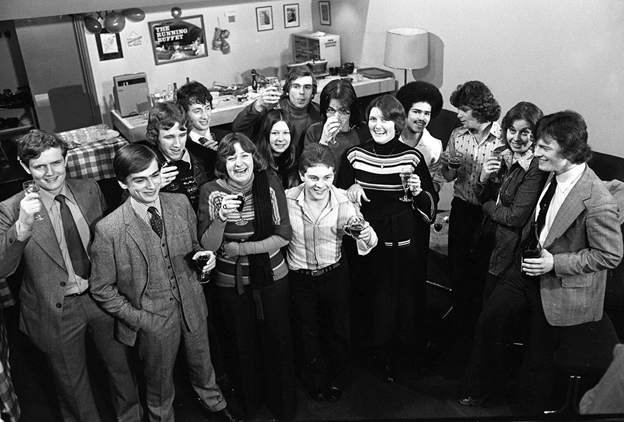
Nick Hitchon is the handsome young 21 year old on the far right.  That picture was taken four decades ago, after the release of the third film in the “Up” series, which has followed the lives of those in the picture from age 7.  “63 Up”, opened to thoughtful reviews, with many critics quoting Nick’s observation: “I’m still the same little kid, really.  I think all of us are”, probably because it captures a universal dilemma.  What we retain—the “essence of me” as we barrel into the future— is at the heart of defining identity as we age. 

The jokesters say, “I didn’t expect to turn into my mother” while the cynics say, “you can’t get rid of the past”.  In my case, the joker and cynic regularly change places.  In my 60s, whenever I met my kid I was surprised.  Now she is following me everywhere, mimicking my mother (and my father as well) and occasionally still rebelling at them.  Some of my kid-acquired habits are modestly noble (giving as much money as I can to those who have less) and some are laughable (squirming, as I did this year, at the Ghost of Christmas Past visiting me again with the groaning mantra of “a little lutefisk at Christmas keeps you Swedish for the rest of the year”). 

But the good side of revisiting my kid is that it causes me to think about the power of childhood experiences that have shaped me forever.  How being asked to write the music for my 4th grade school play left me with the belief that I could do most things that I had no idea how to do if I had some help along the way and didn’t expect the outcome to be perfect.  How traveling to Norway for a year in 1955 (we had to go on a boat!) gave me both a life-long commitment to visiting new places and a belief that kids are really alike, even if they travel to school on sleds rather than buses, eat whale, and don’t speak English.  I learned  to  “Knit the Norwegian Way” even before Arne and Carlos became famous…These experiences, which were challenging and joyful, are a deep part of who I became.  I think about them now not as stories of fun times, but as stories about the kid who is still within.

The “positive aging” gurus call revisiting these stories legacy wisdom (or a similar term):  We want to make sense of what we have experienced or done so that we can explain it, with modest coherence, both to ourselves and our grandchildren (Lord only know that our children don’t really want to listen to it….).  Just as important is remembering how my “inner child” is reflected in what I choose to do today and how I choose to do it.  Now this can get even more fraught than legacy wisdom, since “inner child work” is identified with healing early traumas that hold us back.  I have nothing against that, but I honestly don’t feel that any difficulties that I experienced before I hit late adolescence were anything but bumps in the road – certainly not axel-smashing potholes.

Instead, I remind myself that I am still what I was then.  As a child, my mother took me to the library every week and I would read the 5-7 books under the covers with a flashlight in order to be ready for the next visit.  I loved the words as well as the stories. I liked playing with other children, but I also liked being alone – my father made me a perch in a small poplar where I could sit and read as the leaves quaked silvery green. 

This image has an empty alt attribute; its file name is 1955-karen-copy.jpeg

I was curious, and looked forward to exploring our encyclopedia (it was bound in a pseudo-green leather and I can almost see the print in my mind). I was always too ready to speak up in class, which some teachers loved and some hated. I was not a daredevil, but I wasn’t worried about doing new or unexpected things when they came up, and I was never concerned about being perfect.  Although I rode my bike everywhere (like all children then), I was happier when I was sitting. I was not a jokester, but loved to groan at my father’s shaggy dog stories. (I also have to admit that I was regularly mean to my little sister).

I am all those things today — curious, wordy-nerdy, happy with others but equally happy alone, experimental and modestly allergic to formal exercise.  These inner child characteristics are, perhaps, even more apparent than I was when I was jousting with the world of work and frantically trying to maintain a reasonable role as a mom while maintaining a svelte shape – in other words, wearing my adult overachiever persona like a shield. But meeting and enjoying my personal kid does more than solidify my identity – as a “person of a certain age”, when I bring my child with me, I am less afraid of the very real uncertainties of tomorrow.   Listening to my kid means paying more attention to the activities and interactions that reward her rather than “professional Karen”, whose persona is also still part of me.  It is my kid who experiences joy that goes beyond satisfaction with accomplishment.

I review the list of opportunities that I described in Curating Joy – and think more about how they will make my kid feel.   What is the right balance between Zooming with others and being alone?  What will nurture my curiosity?  How can I plan my days to make sure that I have time to knit and read?  So, as I write this I am playing with my wordy-nerdy kid rather than cleaning my house, which is crying for attention.  I was never a perfectionist….

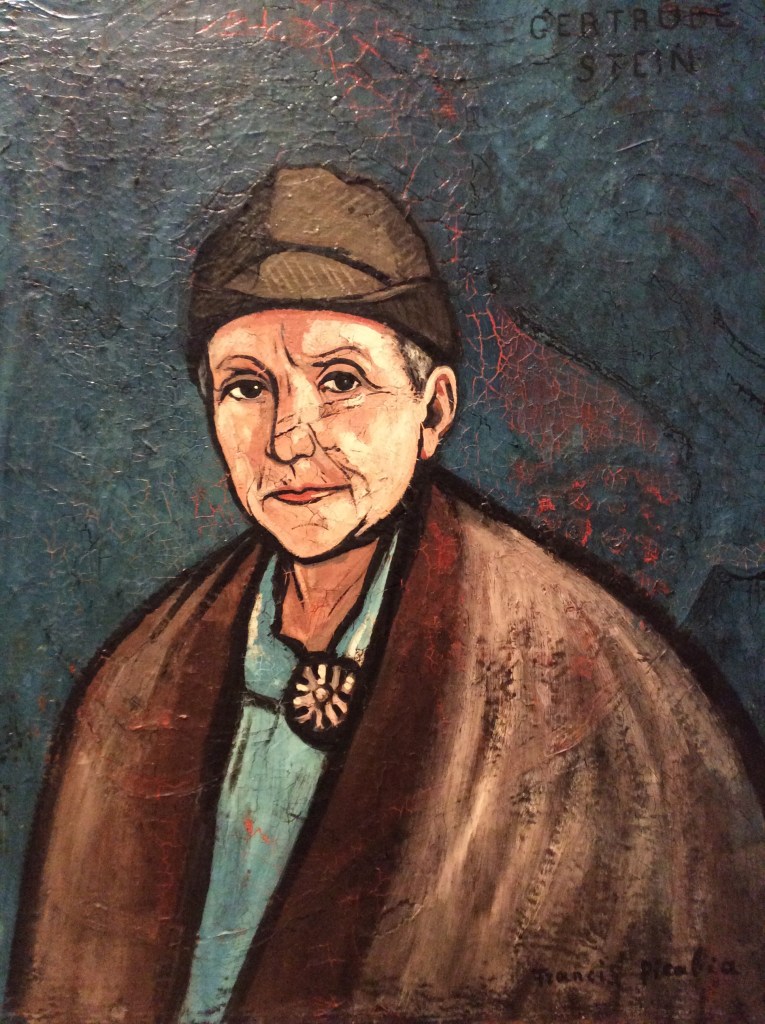
Let me end with the surprising similarity between Nick Hitchon (a physicist) and Gertrude Stein (an iconoclast):  Stein said, “We are always the same age inside” before Nick came to the same conclusion.  Or, perhaps, we all come to that realization on our own, which is why if you google “I’m the same kid” you will find over 1 billion hits. 

At least I am not mean to my sister any more.