I Never Thought. . . Or How Aging Has Brought Me to My Knees

Getty from Unsplash

One late Sunday evening, after being in the house alone all weekend, I started down that melancholy path of “getting old is hard.” I realized that I had not learned much about aging from my parents or other relatives. I’d mostly responded when they needed help, and they didn’t share their aging experience with me (or maybe I didn’t listen). I started saying to myself, “I never thought that. . . “ and my list began.

I never thought that aches and pains could be a topic of conversation. Now, when I sit with my contemporaries, we invariably start with the litany. Who knew the bonding that can occur around bunions, trigger fingers, sore shoulders, hips. . .

I never thought. . . I’d have to eat kale to stay young. Growing up in the 50’s, the main green was iceberg lettuce, cold and crisp.

First everyone said, “try romaine.” I thought it tasted overly strong. Next were field greens. I adjusted to both,
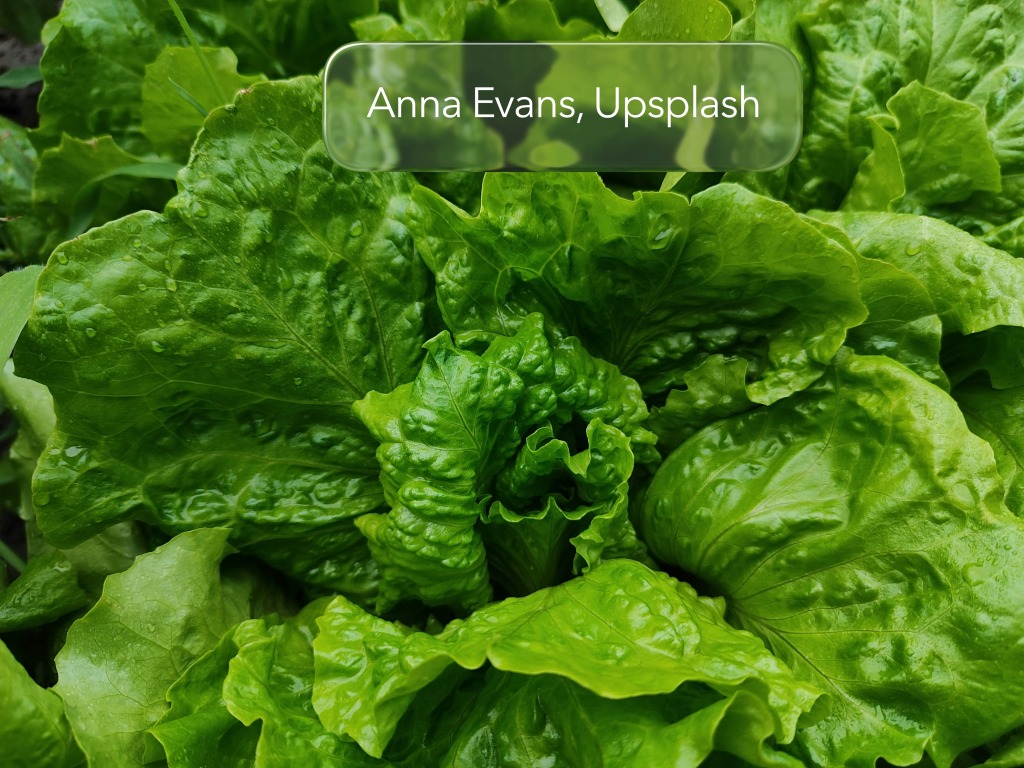
but then came kale. I sometimes wish I’d never heard of it. It’s a dark time for greens and diet.

And I will never forget Elaine’s big salad:

https://www.youtube.com/shorts/Fet3c0U4vWs

What about grains? I thought spaghetti was a perfectly lovely grain, especially with a greasy meatball on top. Now it’s all about farro and quinoa—rice, you know, has arsenic in it.

I never thought that drinking coffee after 2pm could be a problem when I went to bed. I was one of those schoolteachers with a cup in one hand and chalk in the other. My own kids complained about teachers’ coffee breath, but I was sure I didn’t have it. How I long for the days of endless cups, every time I needed a break from something tedious!  And coffee started keeping me awake just when ordinary coffee became delicious—we could buy whole beans and grind them ourselves. No more church basement coffee, which, incidentally, still tastes good to me.

I never thought I’d walk into a room and wonder why I was there. Or loose the title of a favorite book on the tip of my tongue. Forget the name of Ozzie and Harriet’s other son—Ricky and ?? (I refuse to ask Google. I’m waiting for the memory to surface.) I’m still quick with music titles—they must live in another part of the brain.

I never thought I’d need a strategy for unscrewing jars—some of my rosemaling friends carry pliers to open paint tubes. My late husband Jim and I used to have contests over who would get the jar opened first. When he wasn’t looking, I’d use a rubber thingamajig to help me win. (I’m sure he knew and humored me).

And I never thought I’d think twice or three times or four, about taking a big trip. I’d check my passport and go.

And then there’s being married three times. I never imagined such a thing when I promised “till death do us part.” Three fine men—enough said.

Interestingly, as I listed all the changes aging has wrought, I found myself considering the whole of my life and a different list started to emerge. It wasn’t a dirge but celebratory.

I never thought family and friends would bring such joy. When I can’t do something, I call my children or grandchildren. Can’t change a bulb? Call someone, and while they climb the ladder and screw in a bulb, we get to talk. Can’t assemble something from IKEA? Call grandson Henrik—he loves to put things together while I make us a salmon dinner. Need help around the house? Granddaughters love telling me what to do, and I like taking their bossy directions. Need advice? Call a friend. I’m free to take their advice or not, and we get to talk.

Can’t run the stairs—so use the railing. . . and be careful.

Big trip—thank goodness I have more judgment than my younger self did.

And those aches and pains? They’re a good excuse to spend the afternoon reading a book, of which I probably won’t remember the title, but I can look it up on Google.

The marvel of living through the changes in the world is another landing. Yes, I could get bogged down on the frustrations with screen time and AI and processed food and TSA requirements and phone chains and ya da ya da ya da. But wow, what a journey! World War II to 2025.

My mother had bad knees. In her 60’s she had one of them replaced. Although the replacement ended her pain, she barely walked after the surgery. When told she needed to exercise it, she said, “Not me. I don’t exercise. I don’t even like people who exercise.”  It was a joke, but there was truth in it. She did not see the point of exercise. The artificial knee bulged under her skin, not like the natural looking replacements of today. Seeing that scared me, I resolved that I would be different; I would exercise and stay fit—I would head off the bad knees and old age, too. From about my thirties, I ran, walked, lifted weights, saw a trainer, swam lengths, did aerobics, the treadmill, rowing machine and elliptical. . . at least until COVID.

Well, guess what? My knees never got the message. They hurt and are bone on bone as doctors like to describe it.  I’ve been literally brought to my knees. I never thought that could happen. But maybe it’s a good thing. I never thought I’d understand humility either, but I do, along with other values that aging is teaching me. And, at the end of the day, I can still get on my knees and say thank you for everything I never thought would happen.

Photo from Bing

A Way Back

Marylyn, Laurel, and Karen (me)

My younger sister, Laurie, or Laurel as she preferred to be called, died in January, seven months ago, age 76. I think about her almost every day. I think mostly about loss, because our loss started when we were about high school age when we started to grow apart. As a close friend put it to me, “You two were like oil and vinegar.” I have a mix of memories from our childhood; many are happy. My mind has a way of shelving the not so happy memories in the back so I can pull out the happy ones in the front.

          Over the last 30 years, I barely saw Laurel. But I never labeled us as “estranged” until her death, when I started reflecting on our non-relationship. The dictionary defines estrangement as having lost former closeness and affection: in a state of alienation from a previous close or familial relationship. That about sums it up, although it doesn’t capture the mix of sadness and shame I felt after Laurie’s death, when I realized it was too late to heal our rift.

          Joshua Coleman, in the Atlantic, noted that families used to center around mutual obligation and interdependence to assure everyone’s survival, and those values shaped our identities. But we no longer rely on each other for survival, so forming an identity has taken a more individualistic turn. Whereas identity used to be grounded in religion, class, and community, “personal growth and happiness” are now more important for figuring out who we are. We have the autonomy to carve out identities separate from our families.

My two sisters and I, the Evans sisters, growing up in the late 40’s and early 50’s, started out relying on each other. We needed to have each other’s back. Our father was an alcoholic given to angry bursts, and after our mother divorced him, she married another alcoholic with a similar meanness. He became the stepfather who raised us. We had to look after each other.

          That all changed in high school, about the time when adolescents seek their own identity. Marylyn, our oldest sister, four years older than I and 6 years older than Laurie went off to college at the U of Wisconsin in Madison—she escaped the family dysfunction. Laurie and I were left in high school, but we ran with different crowds. Meanwhile, our mother and stepfather struggled with financial and marital problems, so we fended for ourselves. Laurie hung with outsiders, characterized as “wild.” I took the school-centered path. That’s when our estrangement started.

          Finding one’s way out of an alcoholic family is fraught with problems, as evidenced by the fact that AA has spun off AlAnon with12 step groups focused on supporting family members. From the first, Laurie was the target of our stepfather’s erratic discipline. The research on estrangement says that one sibling often believes they were treated worse than others. Those who are targeted often become “grievance collectors,” and as I look back, I see how our stepfather’s unrelenting criticism of Laurie made it hard for her to find her own path in life. Marylyn became a librarian, and I became an educator. Laurie was an experimenter and a searcher.

          A searcher! Something I never saw when Laurie and I were busy being oil and water. Again, turning to studies about estrangement, one of the things that fosters it is mobility. We move around in this society. Since we don’t rely on one another, we’re free to move on. It’s like a Catch 22—moving around gets us out of dysfunction but it also robs us of opportunities to confront and grow from our differences. Marylyn moved to Florida, and Laurie moved to Detroit and then to Texas. I stayed in the Twin Cities and raised my children. Had I been able to connect with Laurie, I might have learned that Laurie and I weren’t so different after all—I consider myself a searcher in many aspects of life. My searching was and is less experimental than Laurie’s but it’s there.

          Eventually Laurie found a passion, rescuing homeless animals. She raised two fine children on her own until she met and married a guy from Detroit who made them his family. I couldn’t ask for more for Laurie given her difficult start. Unfortunately, I saw all this from a distance, busy with my own life.

Laurel with her beloved pets

I always told myself—and believed it—that Laurie and I would someday sit down, hash it all out, the little slights and differences that we both nursed. We’d laugh about it and go forward. But the truth is we didn’t. I’m writing this because in reading about estrangement, I know how prevalent it is. Some 25% of families have some level of estrangement—that’s not trivial. I’m also writing this to urge anyone who feels even the slightest estrangement with a family member or friend—Find a way back!

          This spring, after Laurel’s death, a dear friend died, a friend with whom I’d had a period of estrangement for which I could find no cause. He stopped talking to me, no matter how many times tried to open a dialogue. When the pandemic hit, I missed him more than ever. I folded 1000 origami cranes, stringing them together (which is the difficult part), put them in a box, and deposited them in his driveway. The crane is a powerful peace symbol, one that my friend had introduced me to. Upon finding my gift, he called me, and we healed our friendship.

          With Laurie, I could find no way back, but I didn’t look hard either. I didn’t travel to Texas for a sustained visit. Instead, I mailed cards for her birthday and Christmas and other important occasions. I didn’t sit down nightly folding six cranes for nearly a year. I waited for something to happen so we’d get together. And it did, only it was a death and funeral. Realistically, it would have taken both of us to heal the estrangement, but one person needed to open the door. Now that Laurel—she’ll always be Laurie to me—is gone, I’ve lost that possibility. But the memories I have of growing up together remind me that love can persist, even when we feel separated. Reconnection lives in that love.