My Skin Doesn’t Fit Anymore…

A few weeks ago, Dan and I were with some friends who are almost as goofy as we are. As we finally started to leave (The Dog! The Dog awaits us…), we somehow fell into a joke about choosing our summer clothes to cover up parts of our bodies that we never thought about when we were younger.  That morphed into the observation that no one was rushing to do an AI image of any of us undressed…I laughed, and said, “well, my skin doesn’t fit like it used to.”  To which Dana responded, “We never had a full length mirror in our house.  I remember, about 20 years ago, coming out of the bathroom in a friend’s house and seeing myself naked for the first time in years…I rushed in to Bob crying “I am sooo sorry!  I didn’t know…”  Bob, who is pretty darn trim for someone “our age”, cracked up at the recollection.

Let me make it clear – I do not, in any way, want to be 20 or 30 again.  Or even Taylor Swift, who looks amazing at the advanced age of 35.

But when I turned 40, I must have spent the equivalent of a thousand dollars in today’s money on face creams, cleansers, exfoliating masques….not to mention eye serums that promised to eliminate the now-visible dark circles that are an inevitable part of my Scandinavian heritage….Marilyn, a very attractive older woman (probably 60?) in my church urged me to wear a bikini as long as I could, because someday I would not be caught dead in one.

Fast forward 20 years, and my oldest granddaughter, then around 9, literally gasped at the idea of a bikini for me: 

“Grandmas in bikinis – IT’S JUST NOT RIGHT!” Out of the mouths of babes…

Of course, the underlying story is how we get used to our aging bodies. In my mind, I still look like I did when I was forty or even fifty.  Or even 60.  After all, I I am lucky to fit into many of the same clothes….But, when I look at pictures ranging from 40-ish to almost 79, I don’t. 

I am recognizably the same person – but the differences are not very subtle.  I look like a grandma.  I do not wear a bikini any more.  And, when in a bathing suit, I make sure that I have a flowy coverup that goes down to my knees.  Or longer.

I recall the 50 mile bike race (in a hilly part of Wisconsin) that I managed to finish (first in my age category!) 25 years ago, as if it was yesterday. I no longer ride my bicycle.  In fact, I decided to give it away after we moved to Boulder and I confronted narrow bike lanes on the side of busy roads and mountain-bike ready dirt trails going up steep slopes that had replaced my treasured, leafy, flat bike paths around Minneapolis’ chain of lakes.  The cyclists in Boulder wear a lot of Lycra….Well, I have an old friend in England (even older than I am) who sold his car a few years ago and bikes everywhere on a collapsible/portable vehicle.  But he had long practice on hilly streets in Greece to fortify his balance and still lives much of the year in an urban center where everything he needs is close. 

Part of my decision about the bicycle is not the limitations of my body – it is me, always happiest when in a chair, looking at a mountain—not climbing it. Part of it is also caution: Breaking a major bone at my age is a lot tougher than when I was younger, and I was warned after my hip replacement that I should avoid, at all costs, falling backward in a certain way that I am not sure I fully understand but deeply fear….

But losing the freshness of early middle-age and the elasticity of older but still bike-ready Karen is coupled with an intensely held conviction that I am still a CUTE and FEISTY old lady: The changes are just part of being an ever-emergent human being. I have not been transformed like busy caterpillar, dissolving into nothing in order to break out as a butterfly with a very short shelf life. No, this is all part of the gradual shifts that, rather than transforming me, enable glimpses of how I am still becoming different. Like my pictures, I am evolving toward something that is still me, but changed in some ways. My sense of humor has improved – a lot.  I have a relationship with patience, meditation, and quiet that often makes me feel light somewhere in my heart region.  I have learned to listen to other people rather than immediately focusing on what I should be saying next.  I am not sure that I love more, but I know that I love more deeply.  Joy comes quite easily, in small delicious spurts.  It is all worth the deeper wrinkles, a slightly gimpy gait, and a firm preference for 7-year-old games that involve sitting in a chair rather than on the floor…

Am I raging against the dying of the light- heck no!  Dylan Thomas was not even 40 when he wrote those lines, and hadn’t a clue.  And if my skin—or yours – doesn’t fit as well as it used to…well, we still have a lot of fun.  And we appreciate what hiking poles were meant for. But I’m pretty sure about the bikini…

P.S. — the bikini grandma isn’t me. It was generated using AI with the terms grandma, bikini and fun!

LET OLD THINGS PASS AWAY (2 Corinthians, 5:17)

Or

DO NOT GO GENTLY INTO THIS GOOD NIGHT (Dylan Thomas)

Or

NEVER WASTE A GOOD CRISIS (Milton Friedman)

Photo by Peter Hermann on Unsplash

Perhaps an inevitable part of aging is looking backward, searching for meaning in the distinctive chapters of our lives. After moving past obvious markers (leaving home for college, getting married, etc.), I keep stumbling across the fact that there are periods that are less clearly marked by an anticipated beginning or a clear end.  Some of these are unpleasant: Queen Elizabeth had her annus horribililis,  Karen Storm writes about her past experience with prolonged grief, Katherine Malanga reflects on being in the middle of  figuring out the job of loving and caring for someone who is declining. 

For me, 1998 and 1999 were such a chapter.  Nothing exceptional happened that distinguishes me from other fallible human beings who experience suffering –  except that everything occurred in quick succession.

Photo by Damiano Baschiera on Unsplash

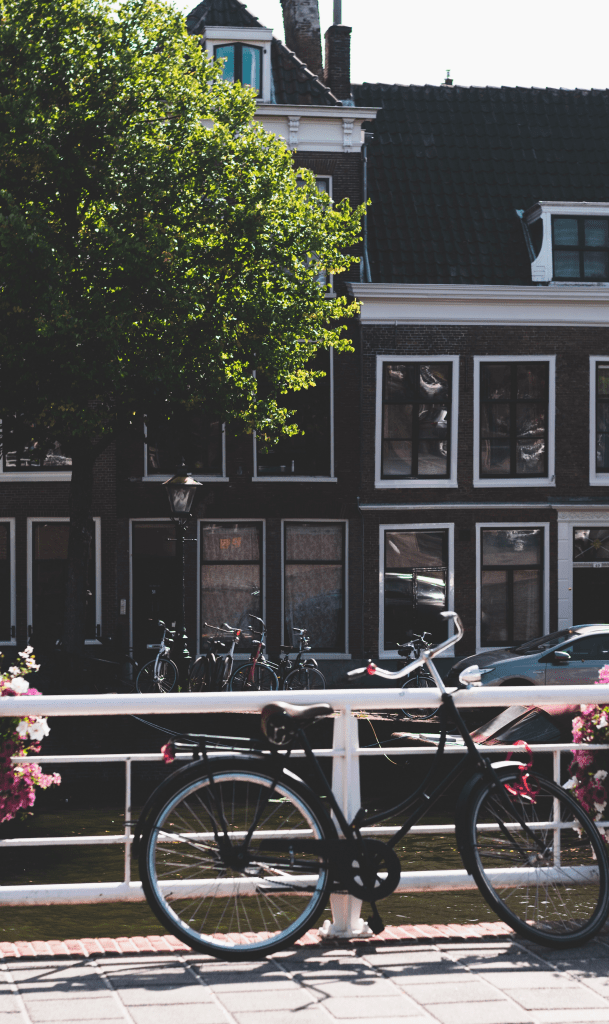
Well, to be perfectly honest, the symptoms started earlier, beginning with rocky transitions to college for my children.  The resultant stress and disagreements about how to handle myriad other issues tore at an already fragile marital relationship. By 1997, we were living together in 17th century house on a beautiful canal in the Netherlands (because we were on sabbatical) without our children (who were still causing us anxiety). 

With a lot of travel, living largely separate lives, we struggled through.  I responded by spending weekends with friends in another city and drinking Jenever (Dutch Gin, which smells a bit like rotten cabbages), straight from the freezer.

Back in the U.S.  The semi-separation became a real separation.  The children were gone.  Frisk, a beloved dog, was very old and barely able to move. My parents died, a little over a year apart.  My sister felt like my only support, but our grieving took different forms – she turned inward and to her family, and I wanted to turn outward because my family was….well, disintegrating.  I was able to briefly distract myself as International Karen — a 1999 Fulbright trip to examine the condition of higher education in post-Soviet Belarus, Kyrgyzstan and Czechoslovakia and an invitation to cheer in the new century with friends in London, accompanied by bagpipes in the Royal Park in Greenwich.  I am, however, here to let you know that, in spite of the popularity of Eat, Pray, Love, treating distress by relocation is overrated.

I thought that I needed a project, and foolishly took my half of the sale of the jointly owned elegant town home and bought a “fixer-upper” in Uptown, a densely populated, just-on-the-edge-of-becoming-trendy part of Minneapolis.  The house was owned by a blind woman, who lived with two alcoholic sons and a husband who had recently entered an assisted living facility.  Her sons assured her that they were maintaining the property and redoing the kitchen.  Hah…the ring of cigarette burns on the floor outlining their beds was evidence that only dumb luck kept them from burning the place down.  I am not a very handy person – I have no idea what inspired me to take on a neglected home despite its “good bones” and untouched quarter-sawn oak woodwork in all the rooms. My friends were worried.  But I barely saw them because I spent most of my time isolating when not at work. I was a contemporary version of the Prodigal Son, who after failing to maintain my social and financial assets, wanted to go home.  Except, although I had a house, I had no real home to turn to.


Photo by Stormseeker on Unsplash

One day, when walking the dog, I fainted and hit my head.  No concussion, but my doctor insisted on a sleep-deprived EKG.  Now, I am a person who could never stay up all night even when I was in college…I had no idea what to do other than to rent a machine that would pinch me regularly.  At a rare social gathering, I humorously asked where I could get one.  A bit later, Dan, who I barely recognized, approached me and said that he had worked nights, was easily able to stay up, and would be happy to help.  He suggested the local all-night Home Depot, followed by a very early breakfast in the café of a 24-hour grocery store.  Putting aside every caution – I, after all, had inhaled Judith Rossner’s Looking for Mr. Goodbar that left woman my age thinking that behind every eligible middle-aged man lurked a serial killer – I agreed.  And I thought about Carol, who was as close to an intimate friend as I had. I knew that I could cut the evening short because she got up ridiculously early and could get me to the test before 7.


When I least expected it, two people came into my life to accompany me on what turned out to be a quotidian medical adventure. A few years later, I married Dan, who never made the slightest pass or sign of flirtation during our 5 hours examining hoses, shovels, and industrial cleaning implements at the all-night Home Depot or the coffee shop.  Carol and I grew into closer friends over the years, even when our conversations were rare due to moves.  This modest, almost non-event was, in retrospect, a crack that widened and allowed me to see that things could be different.  I can only conclude that one mystery of life is that when I am experiencing the greatest turmoil, it is often a small voice that reminds me that relationships can change and heal. 

The prodigal son returned to his father’s home, but as a humbled and open person, ready to leave what he had become in order to be changed. There was no instant moment when I saw a way out, but Dan’s kindness and Carol’s support at a juncture where I felt my human frailty so intensely allowed me to see that I was not alone.  I was ready to be changed, but I needed to see that I had companions who could walk with me.

Unlike Dylan Thomas’ cry for an intense battle to grasp what joy is available, I was listening to gentler voices that recognized that chaos – what in 12 step groups is referred to as psychologically “hitting bottom” –  is often required to provide the courage to return to oneself.  I learned that it is precisely when I am in existential turmoil that I must depend on others to support me.  Milton Friedman’s assertion that  “Only a crisis – actual or perceived – produces real change”  is also time to remember John Donne:  “No (wo)man is an island.” This minimal insight has altered my life and the way I respond to those first inklings that “things are not going well….”  Instead of isolating, or throwing myself on the most immediate comfort or escape, I try to look closely for the small voices, usually of others, that remind me that I am worth saving.