What Makes Me Me and You You

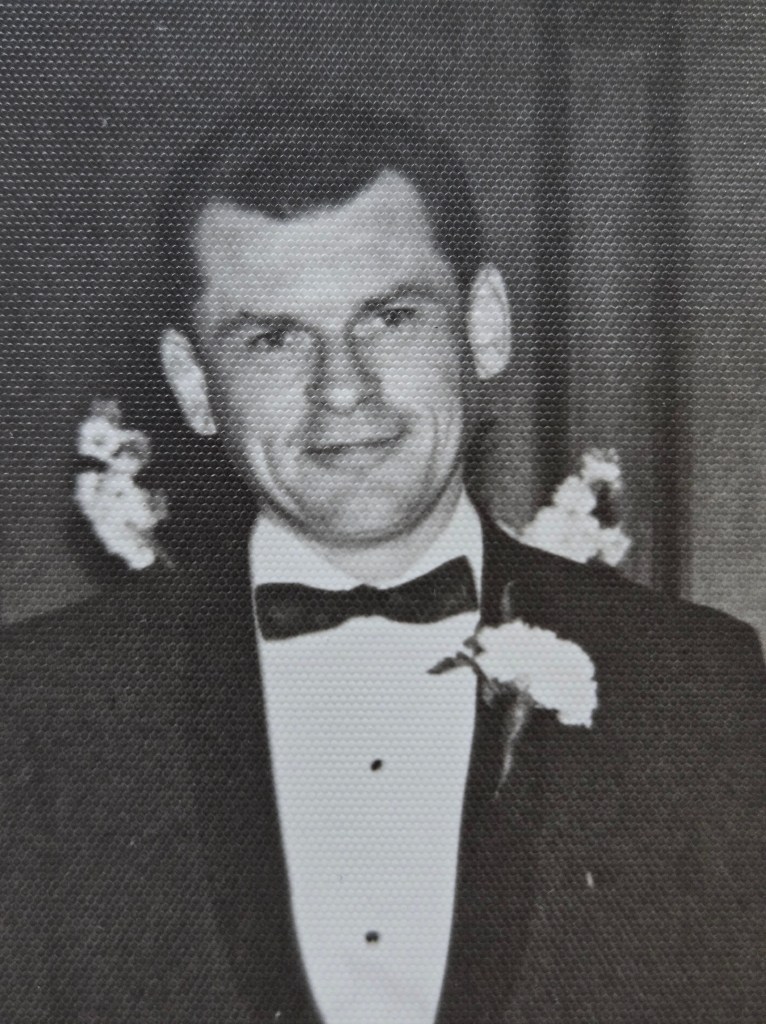
Donald Earl Evans 1926 – 2012

My stepfather, Don, loved three things in this life: my mother, fishing, and tinkering, especially under a car. Don adopted my two sisters and me when I was ten. He was boyish, enthusiastic, deeply in love with our mother, home from WWII (He’d joined the army at 17.), and excited to start his life. He always had a project going. Take the worm farm he built outside our front door. What ten-year-old isn’t fascinated with a worm farm? It was my job to carry out the scraps from dinner and to turn over the dirt. When it came time to go fishing, I got to fill a can with squirmy night crawlers.

Don always planted a vegetable garden. He’d give me a packet of radish seeds to sow because radishes come up fast. I witnessed the marvel of seeds. He put me in charge of weeding. After pulling weeds a few times in the hot sun, I suspected he had tricked me into doing the hard part of gardening. But I didn’t mind. I felt important.

He built new stairs for our house. I watched him saw pieces of plywood in a stair shape and then lay planks across the cuts. He leaned them against the garage where we could climb up and down. Next he added a picket fence to our yard, drilling the post holes, another curiosity for me to see. It seemed as if he could do anything.

Don bought a Webcor turntable, and Bozo the clown records that I listened to over and over.  

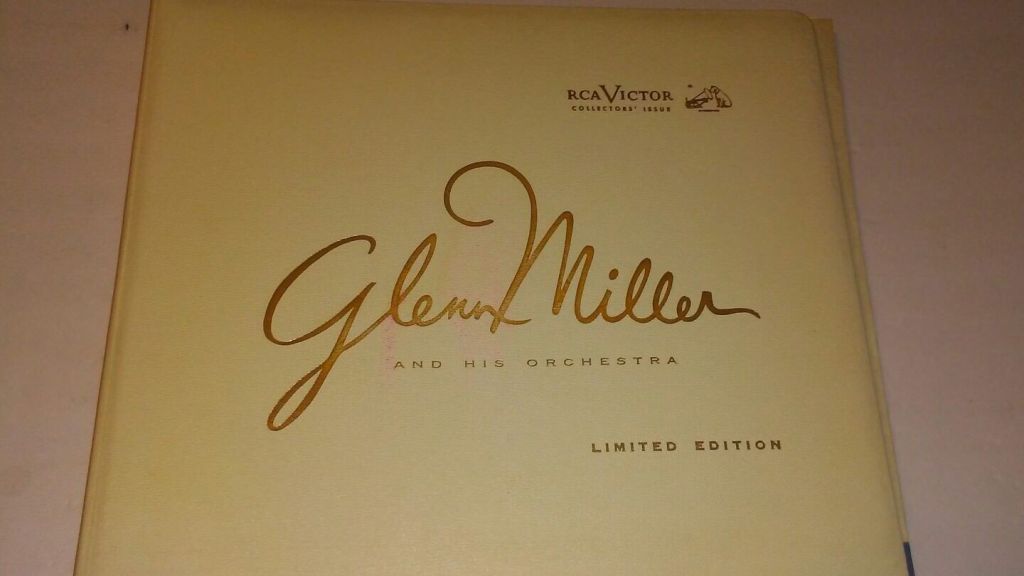
He loved Glen Miller, and gave our mother a gold embossed, white leather album of Miller’s greatest hits. Music filled our house in the evening. Don also loved cars. I once got to go with him to Cicero Avenue in Chicago to buy a Packard, his favorite automobile after the Olds.
I was the one Don took fishing. He taught me, by example, to sit in a boat or on the Lake Michigan pier, not talk, and fish all day. He once took me muskie fishing. We didn’t catch a thing, but a muskie followed the lure to our boat. These experiences were magic.

North Pier, Racine, Wisconsin

But over the course of my teen years, Don changed. He stopped making things, fixing his car, and fishing. Instead, he went to night school and worked his way from a tool and die maker to an engineer. He and my mother bought a bigger house; my mother took a fulltime job to finance their American dream. The new life was stressful, and instead of tinkering with something to offset that stress, he relied on a cocktail (and maybe two or three) at night. He developed an edge, and we three sisters avoided him. More than once, I heard our mother say,” I wish we could go back to where we started. He was happiest lying under a car fixing it. We don’t need all this.”

I can’t reliably pinpoint why, but Don lost his essential self, the things that made him Don, his unique creativity. My mother died, and Don lived to be 86. He spent his last few years at the VA hospital, where gradually I watched the curious side of Don return. For him, it was too late for fishing and tinkering, but for me, it was not too late to see the cost of pursuits that deny one’s essential self.

To me, Don is everyman, especially of his generation and veterans of WWII. He’s also a cautionary tale about losing yourself and straying from the things you love. I had the lesson of seeing the changes in Don, from creative young man, to striving type A, and back to a resigned acceptance of what is. Seeing these changes taught me to seek what is authentic in myself. I remember the first time I went to a counselor in my 60’s, and she asked me what my goal was. I told her I wanted to live an authentic life (I wasn’t sure I was, and I wanted to change before it was too late.).

In retirement, I’ve aspired to live authentically. Two books that have supported me are The Creative Age: Awakening Human Potential in the Second Half of Life by Gene D. Cohen, and The Not So Big Life: Making Room for What Really Mattersby Susan Susanka. They both argue that it’s never too late to find what you love and do it. Cohen says that creativity is built into us, not reserved for the young. Karen’s recent blog about the talents and contributions of older women highlights the ways we “elders” can manifest our creativity.

Susanka is more aligned with my personal focus, finding your essential self. I had the cautionary tale of Don in mind in early retirement, when I identified that as a child and a young married adult, I had loved to make things. At the time I was exploring my Norwegian roots, so I thought, why not rosemaling? A door opened to a latent artistic flare and to new friends.

The poet Maggie Smith has a writer’s perspective on creativity and authenticity. She advises staying “elastic” and open to surprise. When I sold our house and moved, I set Smith’s book, You Could Make This Place Beautiful front and center in my new apartment. I didn’t want to dwell on what I’d lost but rather on making my place beautiful and affirming what makes me me.

I believe Smith’s advice can be extended to our lives in retirement or at any time of life. We can make our lives beautiful in our own way. Accessing our essential selves, the things we love to do, our lifelong interests and talents outside of work, can be the foundation for surprising ourselves in retirement. What makes you you? I invite you to explore and enjoy.

Hope – Yet Again

Photo by Ian Taylor on Unsplash

The older I get, the more I rely on hope.  I last wrote about hope at the beginning of the COVID pandemic, when uncertainty and dread predominated around the world and in me.  I wrote to remind myself that hope is not a gift, but a practice and a ritual, like brushing teeth or lighting candles to signal an occasion. 

But here we are, only five years later, and the world again feels chaotic.  I nurture my shrinking store of hope with a new practice: limiting my morning news consumption to headlines and then moving into meditation.  I rewrite stories of a bleak future by thinking about the promise of a younger person in my life, where younger can mean 50 or 5. I consider, like other friends, leaving my social websites.  Think of the time I will have to read more books! …and call people on the phone.  Every conversation is an opportunity to connect with hope.

However, I can’t avoid everything. I logged in to LinkedIn and confronted a despairing post about the Target corporation’s decision to eliminate its diversity, equity and inclusion office.  Then I remind myself that change is non-linear. A famous quote, “the arc of the moral universe is long, but it bends toward justice,” is often interpreted as a call to patience and perseverance, ignoring MLK’s deep experience with progress and predictable backlash.  If there is progress, it is like a spiral. 

Efforts to label DEI, initiated to redress historical exclusion, as discrimination are jaw-dropping: Should I rail in anguish? Now I can anticipate boycotts of Target as well, all in the name of resisting the threat of oligarchy and a retreat from what seemed like progress in confronting our individual and national shadow selves

Getty Images on Unsplash

But does overt resistance bring us hope?  Or, should I be reminded of Arundhati Roy’s profound observation: “the rupture exists….And in the midst of this terrible despair …it is a gateway between one world and the next.”  I need to remain open to alternative stories.

I reconsider a small investigation that I conducted with a group of students years ago, which rewrote our story of failure.  I moved to the University of Minnesota because of a new president who sought to re-energize the role of a state-funded research university, paring away historical artifacts to embrace a more limber capacity to respond to emerging social needs.  The initiative was optimistically titled Commitment to Focus.   Unfortunately, a list of recommendations from a faculty committee included sharing the Veterinary and Dental Schools with an adjoining state.  Between outraged farmers driving their tractors onto an urban campus, and the implacable opposition of the state’s professional associations, Ken Keller was blamed for insensitivity to “real Minnesota” and his position became nonviable in a state where populist legislators wanted to continue every program along with the tradition of accepting most students who could breathe (even though the result was a high rate of failure). 

When my students and I interviewed administrators and faculty a year later to understand the harm done by Keller’s abrupt departure, it became clear that the interim president had adopted his agenda with minor tweaks and a different name.  The subsequent president changed the name again but went forward with the plan (minus visible changes in Dental and Veterinary programs).

Based on this experience, how might we respond when highly publicized diversity, equity and inclusion offices are officially disbanded?  I propose hope, not because corporations (or universities) do the right thing, but because the arc of justice is not embedded in a name, but in actions.

Photo by Austin Kirk at Unsplash

Diversity initiatives have a positive effect on corporate bottom lines — even the ultra-conservative Forbes agrees — and these pre-existed DEI offices. This, has, of course, been the argument in higher ed for decades:  diversity in the opinions, experiences and backgrounds that students and faculty bring with them are the “juice” that stimulates learning and improvement. In other words, universities and corporations have self-interest as well as social commitments to keeping the spiral moving in the direction of diversity.

So, is abandoning a label and office always corrupt or a cop out?  Or is it a story of how resistance can also be a portal, allowing us to see it afresh?  We know that when lofty ideas (like DEI offices) spread rapidly, easy initiatives are adopted more often than challenging efforts.  Low-quality diversity training, on which billions are spent, has limited effects on  the individuals and groups that it is supposed to benefit.  A few universities and corporations have already taken the longer route toward changing the organizational culture to be more welcoming and supportive of difference (which is associated with better decision making and positive organizational outcomes).

If circumstances force people or groups to give up one treasured item or habit, some will quit or sulk.  But many go on and search for replacements, which may involve novel approaches, new ways of thinking.  Will that be the case with Target?  With universities in states where mandates have decimated DEI offices?

It may happen.  It may not.  But it pleases me to think about resistance as subversive innovation…. turning the spiral toward justice.  And I think about my grandchildren, just bursting with ideas and ideals, with confidence – beyond optimism – that their generation will imagine new ways of organizing, working, and changing that will allow them to carry on the family tradition of working at hope. 

Photo by Miguel Bruna on Unsplash

I recently signed up for a woman’s retreat whose aim is “to free us from disillusionment, negativity, lack of imagination, anger, busyness, and more.”  Sounds like just what I need…and I will continue to find those whose opinions I value, to bring curiosity back in – along with hope.

How to Retire During a Pandemic. . . or Any Other Time

A group of people on a stage

Description automatically generated
Rolling Stones, 2018

Karen Rose and I promised not to give advice, so don’t think of this as advice, rather encouragement.

First of all, why not retire? There’s nothing that says you shouldn’t. It’s completely your own decision. Retirement right now could make you part of the Great Resignation—and who doesn’t want to be a trend-setter? So, in the spirit of all the self-help gurus who have gone before me, here’s my list of how-to’s.

  1. Tell your friends, family, and colleagues how you want to celebrate.  You could have a bonfire or even a Zoom meeting (I’m kidding). Restaurants and bars are starting to open. It’s not impossible anymore. I like cake, so that’d be my go-to, a Danish layer cake from a bakery in Racine, my hometown, or if not available, a big white cake with white frosting from Whole Foods with vanilla flavor—you might be trying a lot of new foods when you retire, that’s one way to pass time—eat. 

If you retire in summer, you can always have an outdoor party. In fact I went to a couple last summer, and the retirees didn’t seem intimidated by the pandemic at all. And there was lots to eat—even cake.

There’s always the person that wants to go quietly. The one who rather slides into retirement; some even take it year by year, never really announcing it until they’ve completely left the playing field (E.g., KRS?) It’s not a bad way during a pandemic, or during any hard times, as everyone is busy watching CNN, the CDC, NBC, OSHA, SCOTUS, ETC.

  1. Let those feelings come forward. Maybe you’ll be relieved—you’ve had enough of working for a lifetime. You might be discombobulated—I certainly was. That first Monday morning after my drinks at the bar party—no, I didn’t get cake—left me unmoored. Should I wear jeans?  Jeans are for weekends. What time should I have breakfast? Lunch? What am I going to work on? Does my spouse have to be near me all the time? I can hear him rattling around the house. Is he always like this? When do I get to “quit” for the day—oh, I never started.  

You will have feelings. I promise!  Let them all hang out!

  1. If you live with someone, warn them. They may have had the house all to themselves, but that’s changing. Someone new will be sitting on the couch reading the morning paper, playing the stereo during the day, making lunch right when they like to make lunch. Maybe you’ll start to clean closets, throwing things out. Someone else might not be ready for this.  And are you ready?  Your close relationships will change, hopefully for the better.
  1. Don’t sweat having a purpose. This is a biggie!  I know, you’ve read all those books about the importance of having a purpose when you retire, Something to Live For, Retirement Reinvention, Purposeful Retirement, and Encore Adulthoodamong the many—but I’m here to tell you retirement is all about the unknown, and that’s what makes it both interesting and challenging. In the world of work, you needed goals. The idea was to get ahead, to strive (more about this from Karen Rose), to seek, to find. . .  to make a name for yourself, do better than meeting quotas, etc. You are done with all that. New paradigm coming your way! And you get to create it.

The Purpose experts argue that having a purpose is linked with better outcomes for aging, living longer, etc. But you’re not an outcome, a statistic. You are you, and if you don’t have a purpose, that’s just fine.  I’ve written about Big P and Little p, arguing that Big Purpose is a male oriented way to live and that there are lots of Little purposes in our daily lives—relationships, family, great books, helping out in the community, that can evolve daily. By letting go of the need to find some big, all encompassing Purpose, you can let the day’s own offerings be sufficient—and you’ll be more inclined to show up for them, because you won’t be busy searching for that big Purpose. 

If you have a big Purpose for your retirement, by all means, go for it. My take is because so many of us love our lives but probably can’t identify some big Purpose in how we live them. But then living a moral and kind life is rather a big Purpose.

Instead of worrying about purpose, resolve to be CURIOUS–like the Torstein Hagen advertising for Viking Cruise Ships. When the pandemic first hit, and we were all scared, staying home, isolating, I started daily walks—like everyone else—around the little lake by our house. After several of these walks, I noticed stumps, which had been cut off in the prime of life, had branches growing out of them; they were putting out shoots of hopefulness. I photographed these stumps and shoots and followed them throughout the spring. I saw them turn green and produce leaves. Later a friend told me about something called coppicing, a process used to manage forests by taking advantage of these persistent trees. What astonished me about this discovery was how I’d walked by it most of my life! (https://karensdescant.com/2020/04/20/condition-provisional/0)

So be easy on yourself about purpose. Maybe you’ll find one, maybe you won’t, but retirement allows you time to be with the unknown, to pay attention to the details, or, as a friend once advised me—to smell the roses.

  1. Let go of expectations! I absolutely believe that we would all live happier lives if we could let go of expectations. In the dictionary, 1) expectation is defined as the state of looking forward to or waiting for something. 2) A belief that someone will or should achieve something. Until the pandemic, retirements were full of expectations—“I’m going to travel.” “I plan on spending more time volunteering.” “Maybe I’ll take some classes.” All worthwhile endeavors, but this pandemic has certainly put us on pause.

So what recourse do we have? We could approach our new retirement lives without those expectations, instead curious and willing to engage with what shows up. You now have time to explore who you are inside and act from within rather than without, based on expectations set by others, the society, and eventually by ourselves. 

If you’re planning on retiring, go ahead. You will have a chance to approach life with curiosity, seeing what unfolds, and maybe, with that curiosity, learn more about yourself and the world around you. I wouldn’t normally turn to the Rolling Stones to talk about retirement, but their song, No Expectations perfectly sums up my idea for approaching retirement:

Take me to the station
And put me on a train
I’ve got no expectations
To pass through here again.

A retired Keith Richards