Eighty Years, Eighty Letters

Photo by Joanna Kosinska on Unsplash

I have been obsessed with the minutia of aging, examining every new line, every wiry hair on my chin (prompting immediate removal), every unfamiliar ache in the morning. But when asked to write a tribute for a friend’s milestone birthday, I go whole-hog in the other direction– not just offering congratulations, but taking the opportunity to outline, sometimes in exhaustive detail, why their life has been well-lived.  I ignore tired jokes about wrinkles, slumping shoulders, or forgetfulness.

Almost as if I were writing their advance obituary.

But when it comes to my own Big Birthdays, I’ve mostly ignored them. When I turned 70, Dan planned a sweet mini reunion with friends and family, complete with a cruise on beautiful Lake Minnetonka. It was the first time since I turned 40 that I stopped to consider what another decade meant.

Looking back now at 40 – that was a downer. I was convinced life as I knew it was ending. I imagined myself turning into a wrinkled crone by the end of the week. I spent several hundred dollars on face creams that promised to forestall the ravages of age. Some of them made my eyes burn. I ended up tossing most of the unused jars when I realized I wasn’t actually disintegrating. I didn’t look that bad. I could continue to be vain!

Photo by Zoshua Colah on Unsplash

But this summer I turned 80, and although I didn’t anticipate it, I could feel agitation building as the date drew closer. I set boundaries:

No, no reunions, no celebrations. 

No, I don’t want anything special! 
No gifts – we have nowhere to put anything! 

Do I really have to go to the Sages Lunch this year, when I helped organize it last year?

At one point I even considered writing my own obituary, not out of despair, but practicality. After all, at 80, every year feels a bit more like a crapshoot. But then I remembered – I’m not very afraid of death, although like most people, I hope it will be quick and relatively painless. So if I wasn’t especially fearful, why the restlessness? Why the resistance?

A week before my birthday, I was meditating outdoors with a small group in the clear early morning light in Boulder. Someone read a John O’Donohue poem on longing before we began, and one line stuck with me like a mantra: May a secret Providence guide your thought…”

Fifteen minutes into the silence, Providence – The Great Whatever – answered “You are supposed to write letters to 80 people to tell them how they have changed you.”

It was loud.  It could not be ignored.  It was also rather weird –so clear, it startled me. The universe doesn’t usually shout at me.

And so I began. At first I wondered if I even knew 80 people well enough to write to. But it turns out that at 80, you’ve lived a long time and met a lot of people. As I started making a list, I quickly passed 80. I began to recall how each one was memorable, and why.  Some names were easy. The memories were warm, the lessons clear. Others required more work, were uncomfortable. I had to ask: how did this person change me, even if the change came through friction rather than closeness? Some were no longer living. Some I had lost touch with. In a few cases, I already had letters written – messages I’d sent to the families of friends who’d died, telling them what that person had meant to me. I had saved copies. I added them to the list.

And then I realized something else: not all letters would go to individuals. Sometimes it was groups of people who had shaped me — a writing class, a church committee, a circle of friends. And sometimes the letter could be to a thing — a dining room table from my childhood, or a familiar object that held memory like a sponge. Always, behind the inanimate, were people. Always, it came back to connection.

Oh my.  What seemed, when Providence’s voice boomed, at first like an impossible assignment –  80 letters for 80 years – suddenly feels doable. More than that, it feels necessary. Because in uncovering the people and memories that shaped me, I am also writing something else: a quiet testimony to what I’ve always known, deep down. 

I did not arrive at 80 on my own.

I got here on the shoulders of so many who walked beside me, talked me down, saved my bacon, gave me new direction, nudged me forward when I was stuck, or simply witnessed my becoming. Big influences, small gestures, words that stayed with me — it doesn’t really matter. What matters is the accumulation of moments, and the gratitude I feel for having been changed, again and again, by the presence of others.

In this photo, I am the white-haired 80-year-old, with some of my best friends from Tappan Junior High School, Ann Arbor Michigan.  We met this summer to remember how important we have been in each other’s lives.  This “letter” is for them…and the several who were there in body or spirit but not in this picture. My friend Elsa, second from the right, describes us as a hive…that’s the way that it feels, except there is no queen bee.

“Best friends” from the past and now…

And maybe, just maybe, Providence will answer if I become sufficiently agitated and self-centered and, therefore, speak again when I need a new assignment.

Oh — maybe most important: 80 is not a boundary, just another irrelevant human marker, an indicator our of our futile attempts to corral time.


In Praise of Postmenopausal Women

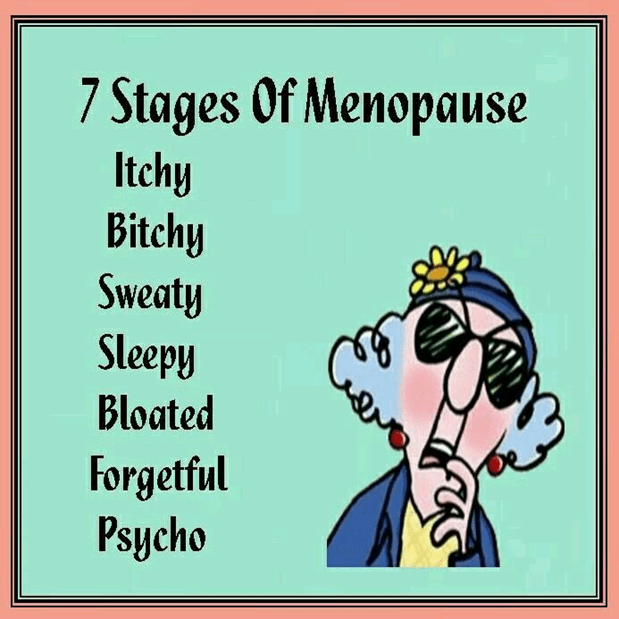
There are lots of jokes about menopause. 

There are no jokes about post menopause. 

Is that because we have internalized scientific reports summarizing the negative consequences of losing estrogen?  Weight gain, bone loss, heart disease, depression, and desiccated vaginas…How can you make that funny?  Recent debates about “childless cat ladies” suggest that the social consequences of not being able to procreate may be even more severe:  isolation and invisibility coupled with a lack of usefulness. 

Men, on the other hand, are still producing sperm when they die.  

Social science tells a different story, emphasizing the role of older women in supporting the next generation, as well as caring for family and community members.  Older women are willing to translate emotional caring into action on a daily basis, an image that even the most traditional sexist male can support.  But let me take this in a different direction: Society NEEDS us, and not just for the most traditional roles. 

Start with my friend Jan Hively, whose Ph.D., finished when she was almost 70, investigated the productivity of older people who lived in rural areas.  Asking what they did in their communities allowed her to estimate what it would cost to replace them with workers.  The answer was: A LOT.  Meaning that most rural communities would wither if it were not for the unpaid (or underpaid) work of older people, from volunteering in the library, driving school busses, and taking care of even older relatives. And older women are more likely to work and donate unpaid work than men. 

Jan’s mantra was “meaningful work, paid or unpaid, through the last breath,” and she lived up to it. She was an activist and social entrepreneur. In the early 2000s, as we boomers started to retire, she urged us to think of our last decades as an opportunity to make a difference and not a time to drink martinis, watch TV and play golf.  In her 70s and 80s, after finding her tribe of co-conspirators, she went on to incubate or co-organize many non-profit organizations to increase the opportunities for older people to improve their own and their neighbor’s lives.  New and existing organizations drew on her never-ending flow of ideas about positive aging; two that she co-founded have grown into national and international initiatives: The Vital Aging Network, and the Pass It On Network

And her second admonition was to have fun working with others! She knew that her strongest skills were imagination and starting things so she collaborated with people who love making the engines of a new enterprise run fast and smoothly.  Another wisdom of age:  we often are more aware of who we are – and are happy to turn over control for the work that suits us less well.

At 90, Jan wrote long notes to the people who were important in her life and work, including me – I was humbled because I always thought of her as my mentor – I was a youngster in my mid-50s when I served on Jan’s doctoral committee!  Like many who knew her, when I find myself “sitting on the dock of the bay, wasting time” I hear Jan’s voice urging me to make those reflective moments pay off, either for my own development or someone else’s. 

But Jan, although personally inspiring, is not the only one with creative suggestions.  I am taken with the idea of the “granny cloud,” which emerged from Sugata Mitra’s efforts to educate children in places where there are no teachers (or not enough of them).  The role of the grannies (real ones and people trained to think like them) was to admire and encourage children in learning – which turns out to be critical.  The powerful effect of being a granny is to reinforce curiosity and motivation.  The international granny cloud volunteer network was derailed by the global pandemic – but grannies will be there in force as we continue to re-imagine social networks in the post-Covid future.  I think that men can learn to be grannies, but they usually need some immersion training….

How about the League of Women Voters, founded in the exuberance that accompanied the passage of Amendment 18 in the US?  Relying almost exclusively on volunteers, the League continues to see its primary purpose as protecting democracy through policy advocacy and direct efforts to increase voter registration and participation.  Its membership, which declined with the increase in working women, is soaring again as the gray tsunami looks for ways to work – paid or unpaid – as long as possible. If you attend a League meeting, you will see that post-menopausal women are at the forefront of promoting non-partisan policy debates – including sponsoring events like Bad Ass Grandmas for Democracy.

Contributed / BadAss Grandmas for Democracy

But the role of post-menopausal females in sustaining community and providing intergenerational continuity is not just for humans.  Recent research claims that “Post Menopausal Killer Whales are Family Leaders,” who support the pod’s health by finding food sources.  And who can help but watch, with fascination, the video of the 60-year old Orca, Sophia, taking down a Great White Shark, top predator of the ocean, who was probably threatening a member of her community.  No jokes needed – just attention to the evidence that the world needs postmenopausal women warriors.  Who cares about a few weak, old sperm – lots of those to go around – in contrast to keeping us all safe, fed, cared for, protected, on the right bus, and registered to vote?

Photo by Valeria Nikitina on Unsplash

Vulnerability 2: THIS IS IT

Less than three weeks ago, I was hit making a right turn from a freeway exit. I never saw the car until it slammed into the side of my car on the driver’s side and the airbag inflated—almost simultaneously. Wham! The airbag smacked the side of my head, stunning me. I was not sure if I was alive and if more was coming. I had to escape, get out of the car, see if I could stand, walk around. Make sure I was okay. In a Volkswagen, if the side airbag inflates, the others do too, so it took a frantic few seconds for me to figure out how to exit the car.

I’m okay; the car was totaled. In the warp speed of modern life, I already have a new vehicle, and I’m driving around with renewed caution. As I told one of my grandchildren, “Confident Karen has been compromised.” Yet again.

Maybe I’m telling this story because I need to keep telling it and telling it to take the power out of the memory. I’m also telling it here because it’s the perfect example of how physically vulnerable we are as human beings. Did you ever, as a child, step on an ant hill and crush both the ants and their home? I did. I felt powerful when I did it, but I also saw how fragile life is. I believe that experiences like this teach us, from childhood on, that we, too, are living things, and thus as physically vulnerable as the smallest ant.

Life can change in what seems like seconds. Sometimes there are clues but often we sidestep their importance. Take life threatening illnesses. Gary Stout complained of indigestion for a couple of months before finally seeing a doctor. In four days (which included the weekend), we had a terminal pancreatic cancer diagnosis. Jim Storm looked a bit yellow on our trip to Florida in spring of the year that he almost died from sepsis. I thought he was tanning too much; he thought he had the flu. He had a perforated ulcer that led to life-threatening sepsis.

Fortunately, such tragedies are not the norm, but admit it, modern life can be a jungle lurking with human versions of predators—unexpected bills, diseases in ourselves and loved ones, deaths, loss of jobs, threats of poverty or alcoholism, pandemic. What makes us different than animals, however, is our consciousness. We believe we can ward off predators with anticipatory actions, yet life deals surprises, aptly expressed by the word “accident.”

 In fact, as Erich Fromm writes: The price that man pays for consciousness is insecurity. He can stand his insecurity by being aware and accepting the human condition. . . He has no certainty; the only certain prediction he can make is: “I shall die.”

Here’s where emotional vulnerability comes in. Fromm proposes that humans develop a frame of orientation. We organize the world cognitively and emotionally, and we adapt. To me, that orientation is the human equivalent to the instincts that drive animals. Our vulnerability is not only physical, but there’s an emotional component, threats to our orientation, the meaning we are constantly making.

Here’s an example from my 6th grade. I was older than my classmates, and I was mortified when my unexpected breasts emerged before theirs. I thought everyone was staring at them. I hunched my shoulders forward and put a tee shirt under my clothes to hide them. It didn’t help that my mother took me to Zahn’s Department store to be fitted for a bra. I still recall the humiliation of the poking and pinching as she and the clerk said how perfect my breasts were. Really? Couldn’t they see my reddening face? Every day in school, I felt vulnerable, different, and fearful that I wouldn’t be accepted by my classmates, the other girls.

In her blog Vulnerability: What’s in a Word, Karen Rose described what I believe is one recourse for vulnerable beings on an unpredictable planet—the ability to share our vulnerability, so we are not alone with it. But it isn’t as easy as it sounds.

From protecting my budding breasts to protecting my adult insecurities, I’ve been a slow learner about emotional vulnerability. Jim Storm was a good role model, as he loved a good discussion. If I said, “We have to talk,” he was in. “Let’s” he’d answer smiling, sitting down in his favorite chair, folding his hands, and adopting his social worker mien. He listened and honored my inner truth, demonstrating that not only do we need our own courage to be vulnerable, but we can also open the door for others to do the same.

I’m reminded of the Robert Frost poem, A Servant to Servants, and the famous line, “The best way out is always through.” I have slowly wandered my way through this life being more and more willing to be vulnerable to people, emotionally.

Getting older is helpful. I realize, THIS IS IT. I may not get another chance to tell others that I love them, that they are full of baloney and I still love them, or that they are driving me nuts and I still love them. I’m not suggesting crossing boundaries, but simply owning my vulnerability, both physical and emotional. I’ve gradually learned that by plowing ahead, taking the risk of being vulnerable, I’ve both revealed new dimensions in relationships and also given others permission to be vulnerable to me. I can be there for others and myself.

To live is to be vulnerable, yet most of us want life to last as long as possible. Our physical vulnerability is offset by good surprises, babies, weddings, graduations, birthdays, our dream job. Even better are relationships filled with love, and this planet is ever glorious. So why not be vulnerable to others—you already are—and go through it together.

Vulnerable: What’s in a Word?

“I came to explore the wreck.
The words are purposes.
The words are maps.
I came to see the damage that was done
and the treasures that prevail.”

–Adrianne Rich

Vulnerable: Susceptible to physical harm or damage, susceptible to emotional injury, or susceptible to attack.  “Vulnerable populations” are unable to care for themselves; elderly people are “frail and vulnerable”.

Most of us spend our life avoiding vulnerability. We exercise endlessly to stave off weakness; we guard what we say in meetings to avoid attacks and disagreements that could weaken our influence; when things get tough, we decide to leave our lovers before they can leave us.  We do what we can to protect ourselves – physically and emotionally. 

Of course we can’t be invulnerable in every context – we share things with our best friends or partners that we wouldn’t want to shout out to the world.  In early life we learn to admit when we are wrong, even if we do so sparingly.  We go camping, hiking or skiing without deep concerns about being attacked by a bear or breaking our leg, even when those are possibilities.  We are willing to be vulnerable because the rewards can be great – it is worth it to be connected, to be trustworthy, and to have fun.

 I suspect that each of us hones a personal, intuitive calculus that allows us to make quick decisions about when to leave our safe, self-protected space to realize something more important.  But then fear of failure and loss pushes back, demanding to reduce vulnerability to as small a part of life as possible. 

In my 30s, I believed that I needed a continuous career because I ached at other women’s vulnerability when spouses left and they couldn’t support themselves.  I wanted to stay home with my babies, but didn’t dare and chose safety over the complex pleasures and challenges of full-time mothering.  The pattern of looking for every chance to reduce vulnerability was well ensconced, although most of my choices were right for me at the time.

But then, more secure in my career (and becoming older, possibly wiser) I became more tuned in to the antonyms of vulnerability – what happens when reducing vulnerability becomes a practice and a priority.  Some are worth pondering:

Guarded: cautious, circumspect, reticent, non-committal

Protected: insulated, sheltered, screened off

Resistant: averse to, immune, unaffected by

Insensitive: inconsiderate, thoughtless, hard-hearted, callous

Indomitable: unassailable, unshakeable, intransigent

Thick-skinned: unfeeling, insensitive, hardened

I admit that I have often wanted to be all of these (well, not thick-skinned).  I hoped to control how other people would see me and how situations would affect me, and to find a relatively unshakeable balance, equanimity.  When challenged, and on those many days when I lacked self-confidence, trying to be non-committal and immune seemed pretty good.  When I was overwhelmed because I said yes to more requests than I could easily manage, being a bit more insensitive to other people’s needs felt like the wisest path.  As a young woman in a predominantly male world, being regarded as indomitable was a strategy to reduce uncertainty at work — and seemed to engender respect (acting more like a man?). 

Yet, as I look at the antonyms, I see that self-protection was cumulative.  I adopted predictable behaviors in meetings, and even with close colleagues, which shielded me – but did I gain respect at the expense of trust? I was intransigent in arguing for policies that served my students well – but did that get in the way of developing relationships that might have supported both me and my students?  Could I have accomplished the same goals with more vulnerability and less protection?

Then, sometime in my early 50’s, I found myself in a group where members developed a deep trust and shared painful details of their past and current lives.  There were two rules: you could not interrupt, and you could not offer advice.  I had to learn to listen rather than react. I read Thich Nhat Han, and absorbed the lesson that “the most precious gift we can give others is our presence.”  I had to acknowledge that I didn’t always know the solution to someone’s question or problem, but I could, if invited, join in a search.  I took in other mantras, accepting the inevitability of “failure” because I could not eliminate uncertainty.  I read Sun Tzu’s  Art of War, and took to heart “To know your Enemy, you must become your Enemy.”   I realized that to be an effective warrior for my students I needed to see the nuances of other people’s thoughts and allow them an honorable way of leaving or amending a conversation. 

I deliberately took baby steps to became more vulnerable.

At work, people noticed.  In my marriage it was too late, but when I remarried, I saw that prioritizing intimacy and understanding was as important as love – and much more important than being right.

Being vulnerable doesn’t mean being a pushover.  It doesn’t mean being weak or unable to take care of oneself.  It means that I need to measure my days against the antonyms – were there places where I leaned on them?  If so, what did I gain and was it worth it?  Did that leave me with vague hints that a change (or even an apology) is needed? 

The only way we get deeper knowledge of another person is if we both are willing to be seen, honestly, without defenses. And, I often feel that when I make myself vulnerable, I allow others to try it out as well.  

I don’t overestimate how well I am doing: I am still vain, self-absorbed and protective.  But more vulnerability has made me happier and more connected, not frailer.  It feels like my later-in-life superpower…

Photo by Damir Korotaj on Unsplash