Resolution…Or A Nudge?

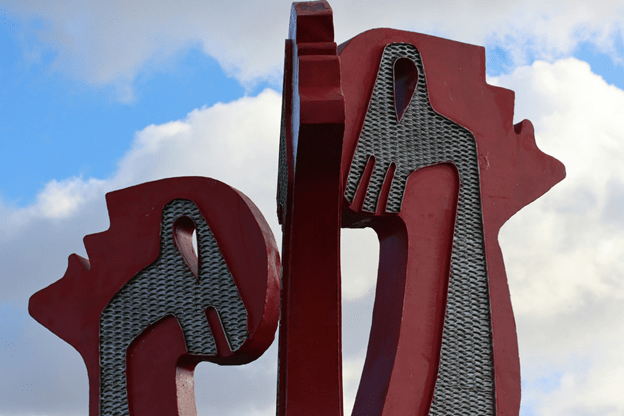
Photo by Devon Janse van Rensburg on Unsplash

For the past few years, the Washington Post has provided an alternative to New Year’s Resolutions.  Instead of articulating the characteristics of a “good” resolution, it suggests that we adopt a nudge

I had to think about that for a while: What is a nudge, and how is it different from an intention?  As a devotee of Monty Python’s Flying Circus, I am first struck by how it has leaked into our vernacular as a short-hand for sexual  innuendo (the “nudge, nudge, wink, wink”  episode).  Moving on, one self-help coach, opines that “”If a stick is floating down a river and gets stuck… It just needs a little nudge and then it will get back into the flow of the river.”  Nudges are small but can have big effects. Chetan Bhagat adds that a nudge can be commonplace but “because it connects with you it holds meaning for you.”  So, if nudges are both commonplace and sometimes unpredictable, why try to adopt one? 

Well, having abandoned New Year’s Resolutions in my 20s (because they never lasted for more than a month), I discovered the nudge without anticipating it. 

A few decades ago, I slowly became aware that judgments infused almost every interaction.  Conversing with a colleague, my mind would remark, “he is a wonderful person, and his shoes are really great.”  Why is that a problem?  Because more often the automatic reaction was, “She is so smart, but I wonder why she can’t seem to get a flattering haircut.”  Routinely grasping for negative observations was accompanied by my ubiquitous irritation with people who didn’t act to make my world better: the person in line at the drug store who wanted to discuss their medications at length while I needed to get out of there ASAP, the jerk in the car that pulled in ahead of me to enter the freeway without a signal.  The list was endless. 

photo by Rashid on UnSplash

That year, in the middle of a yoga class where I was, as usual, assessing the quality of everyone else’s Warrior II pose, I came to an instant insight: my unkind thoughts harmed me, but not the other person.  The antidote came as a nudge: don’t resolve to stop thinking harshly – but instead embrace compassion.  I held the nudge of compassion through yoga and other moments of calm for most of that year and it changed me.  No, I am not perfect, but the judgment that colored my life gradually lifted with my nudge word. 

There we are: insights and subsequent nudges may be unpredictable, but they are not random.  We may not feel the nudge because we are not paying attention.  Nudges come and go every day, but when I carefully read a poem, I sometimes gasp because it says something that I have not been able to articulate – almost any Mary Oliver poem can do that.  Who is not nudged by her “What is it you plan to do with your one wild and precious life?”   But I can also look for a nudge when I sense that need one – or, if New Year’s Day rolls around and I cannot resist the idea that every year brings something new.  If I am lucky, a word or image appears, and when I am paying attention, I can hold it and keep it as mine.

But as I contemplate how a spontaneous nudge can change me, I am also leery of how human beings invariably try to tame the ephemeral.  If you Google “nudge word”, you quickly come to social science, which tries to turn the expansive human experience into a solution for what ails us: “Nudge theory is a concept in behavioral economics, decision making, behavioral policy, social psychology, consumer behavior, and related behavioral sciences that proposes adaptive designs of the decision environment as ways to influence the behavior…of groups or individuals.” (Wikipedia)

Ouch — The social scientist’s nudge theory is designed to deliberately select small inputs to change people’s behavior in predictable ways.  This does not sound like Mary Oliver, who invariably directs our attention to surprise! 

In any case, my first experience of a nudge word, decades before it became “a thing”, suggests that when I am at a turning point, whether temporal, psychological, or spiritual, a word, phrase, or image can point a direction.  This year, the Washington Post’s article led me to the word Journey.  It feels like an appropriate invitation as I make deliberate choices to do less. 

Focus on what is now in my wild and precious life rather than plans, goals, or anything else that causes striving.  Chop wood, carry water.  Do the next best thing.  Take time to think about the journey and pay attention to what I can see right in front of me.  Take time to look back and ponder what I have learned.  Move, but not so fast that I don’t take time to observe…

Of course that is only a nudge….

What’s It All About: Just in Time for 2025

I walk down the hall of my new apartment building. Every doorway looks the same, gray, an apartment number, and a light to the side. Gray stretches indefinitely, soulless. I wonder if someday I’ll get lost in the sameness. I am a small, insignificant, older woman, putting one foot in front of the other in my daily trek to get my mail and newspaper, small things tethering me to the outside world.

          Here it is 2025, and I’m still asking myself what it’s all about. When I was seven or eight, I’d scare myself by worrying that I was an actor in someone else’s dream. I didn’t exist. How could I be sure I existed, that I was real? And if I was real, why did I exist? I had no answer other than to immediately divert my mind and think about the next day when I’d call a friend to play with me.

Then college. I registered for a humanities course, with no idea of what humanities was except a requirement to graduate. In a crowded room in Ford Hall, I learned I wasn’t alone in doubting my existence. A French guy named Descartes asked himself the same question about his dreams and concluded “I think, therefore I am.” Had it been that simple all along, and I was just too young to see it?

Once I established my existence—after all a famous philosopher had confirmed it—I started to focus on why I existed—what was human existence all about?

Next was the 1966 movie, Alfie. I was 23 and about to marry. If you saw the movie, you know that Alfie, played by Michael Caine, is a handsome womanizer, oblivious to the pain he causes the women he “loves” and leaves. One lover has a son, and Alfie becomes a father. Alfie begins to attach emotionally, but then the mother takes the boy away. Alfie denies his loss by finding another woman, who’s married, and he gets her pregnant. She has an illegal abortion with Alfie present. There’s an incredible scene when he views the aborted fetus, and for the first time, Alfie faces his life.

The movie and the finality of the abortion has stuck in my head since 1966. It wasn’t the procedure itself that impressed upon my mind; I understood the woman’s reasons, Rather, it was the contrast between the hedonism that looked so attractive when Alfie lived it, and the woman’s dilemma, a life growing in her, but having that baby meant the possible loss of a husband and family, which, for all its problems was a life of meaning. The theme song still lives in my head, “What’s it all about, Alfie? Is it just for the moment we live? . . .” And here I am, 81 years old. I haven’t lived a life of hedonism, that’s probably why I made it to 81. But still I wonder what it is all about, especially as I look back, and realize my moment went by so quickly.

I’m guessing we all wonder what life is about. Having a purpose is touted as one route to an answer—of sorts. I recently heard about a program to inspire disengaged youth by helping them find a purpose. At the other end of the age continuum, we retirees are told that we’ll live longer and be happier if we find a purpose. Maybe we can all hide in our purpose and avoid the deeper question.

Then there’s the path of hedonism. I vividly remember my 50th high school reunion when we went around the room telling each other what we were doing with our lives fifty years after graduation. I was shocked by how many people bragged about their good lives of boating, dining, cocktails, and relaxing in Florida in the winter and Door County during summer (I grew up in Wisconsin). When it was my turn, there I stood, thinking life was about more than that. I stuttered that I was still working (my way of escaping the larger question).

Turning eighty pushed me to answer what it’s all about. It’s scary to me—I want to feel okay with my life because I don’t know what’s coming. I will always hear my mother, dying at 74, saying, “I’m not ready. There are things I need to do.”

A few Christmases ago my children gave me an Aura frame. It’s a tablet that flashes pictures at 15-second intervals. You load the pictures from your phone and other devices onto the tablet. At the time I was disappointed. “What am I going to do with this?” I thought.

Nevertheless, I placed the frame in a central spot, plugged it in, and synched with the Internet. There was my family. They had already loaded their favorite pictures of a growing, changing family of the past 25 years and even pictures from my and their childhoods. Gradually, I added some of my own and Jim’s family added pictures, too. I came to love my Aura. Jim and I would eat dinner at the dining room table and watch the screen, telling stories about the memories triggered by the pictures

Some days life reads like a fine novel. It’s all there: a great plot—my life; characters—family and friends I’ve loved; a climax—the 50’s and 60’s when family and work came to fruition; and now the denouement—old age and me asking once again, What is it all about, after all? It feels pressing, the need to know.

I walk into my apartment from my soulless hall, and there’s the Aura streaming my story line. I pause and watch: Jim, my sisters as children, our dog Eddie, Lake Michigan, my bicycles, our grandchildren, friend and fellow blogger, Karen, vacations, a big snapping turtle, a pileated woodpecker—you get the picture, family, friends, pets, this amazing planet, eighty remarkable years and memories, most everything I’ve loved and love. Aha, this is what it’s all about, I think.

The answer has been there all along, and I can give it to you in one word— love. It’s about love.

. . . for one human being to love another… is perhaps the most difficult of all our tasks, the ultimate, the last test and proof, the work for which all other work is but preparation. Rilke

Strange But True

Guest blog by Carol Boyer Peterson

--Photo by David Matos on Unsplash

Have you ever heard a story that seemed so unlikely that you thought to yourself, “that couldn’t happen”? Yet, reluctantly, most of us learn that awkward and even bizarre experiences can yield unanticipated life changes.

My recent story is about how loneliness, isolation, and physical challenges led to an opportunity to reengage with life that I could not have anticipated. Who could imagine that spending two months in a memory care facility would become a journey into vulnerability and community? But it happened.

A little over two years ago, I tripped over an errant lawn-watering spigot and broke bones in both of my hands and fractured my wrist. Surgery was required on my left hand; a cast, on my right hand/arm. At the time, I was also part of a 15-month clinical research trial for chronic leukemia, and my orthopedic surgeon could not predict how long it would take for my bones to heal.

Keep in mind that, as a participant in a clinical research trial, I learned compliance—not easy for someone who prides herself on being in control! So, I should have readily accepted the hospital’s recommended placement in a traditional rehab facility, but my instinct told me otherwise.

While I was confident that my bones would heal, I knew that what I wanted was a quiet place where I could get the care that I needed and spend time in solitude, prayer, and reflection. I chose a nearby senior living community that had skilled nursing, a faith-based organization where I had volunteered and was familiar with some of the staff. However, there were no rooms available in the rehab section. Given the urgency of finding a room and my deep conviction that I needed to be at this particular location, I agreed to a room in their memory care facility, where I joined 12 elderly people—many close to my age—who were no longer able to live independently.

My health care professionals were horrified, but I prevailed.

My sparsely furnished room was on the second floor; my view, the monastery and an adjoining college campus. When I arrived, I spent much of each day alone…and looking out the window. But the shock of being physically unable to care for myself—even eating and brushing my teeth required assistance—and living in a locked ward with 12 other souls with advanced dementia became much more than a story of an awkward and inappropriate healing environment.

Rather than stay in my room, I chose to become an active member—albeit differently dis-abled—of this community. I participated in group activities, interacted daily with other residents, ate with them, volunteered to lead a chair exercise group (I am a certified exercise coach), and more. I learned to love being with my new friends, who quickly became comfortable with my active presence in their daily routines.

I often tell people that my perspective on everything was forever changed by the experience of being my late husband Jerry’s primary caregiver for nearly a decade. As his Lewy Body Dementia progressed, I learned to slow down, be more patient, and live with a good heart because I loved him so dearly. But, it was also a time of increasing detachment from the rest of the world.

And yet, two years after Jerry passed away in the same memory care facility that was now my temporary residence, something implausible happened: I felt part of a community. In a place that clearly was not intended for someone like me, I gained a different and deeper respect for the many challenges faced by those with advanced dementia. I also became reacquainted with critical life lessons, including how essential it is to protect individual dignity, call people by their first names, and listen closely to their life stories, which often appear in fragments rather than a well-designed narrative.

So, looking back, I can now see that my story—which others might have seen as ripe for a comic review titled “Life in the Alzheimer’s Unit while needing help with the Activities of Daily Living”—turned out to have been a gift.

Spending time in a memory care facility brought me face-to-face with my own vulnerabilities in a way that I had never even considered before. And, perhaps most important of all, it got me “unstuck” from loneliness and isolation, giving me instead a renewed sense of hope, healing, and connection. At a time when things could easily have gotten much worse, they started getting better—all because of a choice that I made against the advice of pretty much everyone…a choice based on instinct, not rational thought.

Fast forward to today. My cancer is in remission, my bones are healed, and I’m beginning to find a new way forward with greater humility, courage, and a heart that is more open to others. Caring, which has long been a defining characteristic in my life, will be guided by my faith and what I started to learn in those two months. Writing and sharing stories about my life-affirming or life-changing experiences will become part of my calling to bring peace and light into the lives of others. And, even though this is not what I planned for myself when I retired early and married Jerry, I will take the curious, compassionate, spiritual, and loving version of myself—which is slowly emerging—with me on this next phase of my life journey.  

“We do not think ourselves
into new ways of living;
we live ourselves
into new ways of thinking.”
                       —Richard Rohr

Carol Boyer Peterson

I am a widow, stepmom, grandmother of 9, social scientist and retired university administrator. I love many forms of exercise from Pilates to hiking. Despite the long winters, I also love living in Northern Minnesota with a view of Lake Superior. I am blessed to have dear friends and family who are with me on my life journey.

What Our Mothers Never Told Us

Photo by Natali Bredikhina on Unsplash

How much do we really know about our parents – and how much do we want to know?

We in the boomer generation grew up knowing that fathers never talked about their experiences in the 2nd World War.  They were raised in a time when we kids were supposed to view them as super-beings, who cared for us but didn’t have much emotion themselves (except the random yelling when frustrations boiled over). 

But our mothers often told us even less. My mother grew up in the Midwest during the Great Depression, and knew or observed significant hardship, although she and her sisters were housed and fed. I inherited some of what she learned: Saving string and rubber bands.  Washing and reusing tinfoil and plastic bags.  Now that we are in a new age of conservation to save the planet, the habits that were passed on in our childhood look remarkably prescient.  But her stories were slivers of a lived reality in an age where people rarely shared their deepest and more difficult experiences, and generally believed that therapy was for those who were weak and broken, as not for people like themselves. People who knew how to put one foot in front of the other and march on.  They were tough – and in the case of my mother, also tender in her care for my sister and me.

But my parents also told stories that gave me insight into the uncertainty that surrounded their lives as children and older adolescents – and also the lucky circumstances that allowed them to prosper when others did not. My mother told me about learning to clean the kerosene lamps, the only evening light in her home, when she was quite young.  Uncle Richard, a brilliant man, had no choice but to take any job he could during the depression to help support his family including a sister with significant disabilities.  He was a charming, well-read, funny – and a short-distance truck driver for his whole life. He never complained.

What our parents didn’t talk about was what it was like to be orphaned during the Great Depression.  In my father’s case, having a father die removed any certainty about the future, but he was lucky to have an uncle who was a professor (one of the few positions that was largely “safe” from unemployment during the depression) who gave him a place to live and attend college. Nothing was  said about moving from the family home, the separation from siblings and his mother, or the displacement and hunger that must have preceded his break.

I knew even less about my mother, and the slivers of hidden but still palpable trauma were always unconnected.  As a child, she told me that she was orphaned at 14 in “the accident” that killed her parents.  Decades later, I learned that she and her sisters were not allowed to go to the funeral in the tiny town of Scandia, Minnesota.  No relative could take all three girls, so they were quickly dispatched to live with people they barely knew in towns that were, at a time of poor roads and slow cars, impossibly distant from one another. As the oldest, my mother went to live with Uncle Sherman Johnson, in North Dakota, who was (for the time) economically privileged.  She very rarely mentioned her life there, but the tiny bits inserted into other stories made clear that she struggled to fit in.  There were younger children; she took on the role of older sister, but once said that she felt like hired help.  Although the Johnson family tried to stay in touch (their fondness for her was apparent in cards that I read) she rarely saw them after she left for college, also paid for by Uncle Sherman.  I never visited them as a child;  She never told any details about “the accident” to anyone, nor did I ever hear her talking about it with her sisters on the rare occasions when they visited.  When I was an adult, I was able to discern from tiny fragments that her father shot her mother while cleaning his gun and then shot himself. 

She survived by putting it behind her, to create a life that, on the outside, looked happy and vibrant.  It worked for a while. 

My mother and me, in 1956.

As I talk to other friends, the holes in our mother’s stories occupy vast spaces. A period of poverty that required them to give up their children for a time — but the decisions and events that caused that to occur and the struggle to reunite with them were hidden.  A grandmother who died in childbirth, leaving their mother to be raised without a sustained loving presence during a time when responsible relatives would have been consumed with making sure than there was food. A mother who never talked about being thrown out of her parent’s home when she was 14.

We now think of these events as trauma, and have developed strategies, therapeutic and educational, to support children’s resilience in the face of loss and deep uncertainty.  We read the newspaper and feel intense compassion for the children growing up in war zones or places of extreme poverty in our own country, who face even greater challenges. But, as a child of parents who lived through it, I had no access to their deepest places of pain, or the moments of joy that obviously sustained them since they managed to be caring and—on the surface, sometimes carefree—parents.

I have my own traumas, although not as deep as those of my parents.  I have shielded my children, who are now middle aged, from them.  Is this the way it is supposed to be, protecting my loved ones from knowledge of the places in my heart and life that have shattered, and stories about how I put the pieces back together?  Would knowing more make us compassionate or increase our desire for distance? Should we burn our journals and other evidence before we die in order to preserve our own fiction of wholeness?  Or, as I wish my mother had done, spill the beans and come clean….

I saw it first as suggestion

….We both drew in our breath and looked away

….And it magnifies in the eyes of those no longer young

Katherine Solniat, excerpted from Secrets About Nothing