Eighty Years, Eighty Letters

Photo by Joanna Kosinska on Unsplash

I have been obsessed with the minutia of aging, examining every new line, every wiry hair on my chin (prompting immediate removal), every unfamiliar ache in the morning. But when asked to write a tribute for a friend’s milestone birthday, I go whole-hog in the other direction– not just offering congratulations, but taking the opportunity to outline, sometimes in exhaustive detail, why their life has been well-lived.  I ignore tired jokes about wrinkles, slumping shoulders, or forgetfulness.

Almost as if I were writing their advance obituary.

But when it comes to my own Big Birthdays, I’ve mostly ignored them. When I turned 70, Dan planned a sweet mini reunion with friends and family, complete with a cruise on beautiful Lake Minnetonka. It was the first time since I turned 40 that I stopped to consider what another decade meant.

Looking back now at 40 – that was a downer. I was convinced life as I knew it was ending. I imagined myself turning into a wrinkled crone by the end of the week. I spent several hundred dollars on face creams that promised to forestall the ravages of age. Some of them made my eyes burn. I ended up tossing most of the unused jars when I realized I wasn’t actually disintegrating. I didn’t look that bad. I could continue to be vain!

Photo by Zoshua Colah on Unsplash

But this summer I turned 80, and although I didn’t anticipate it, I could feel agitation building as the date drew closer. I set boundaries:

No, no reunions, no celebrations. 

No, I don’t want anything special! 
No gifts – we have nowhere to put anything! 

Do I really have to go to the Sages Lunch this year, when I helped organize it last year?

At one point I even considered writing my own obituary, not out of despair, but practicality. After all, at 80, every year feels a bit more like a crapshoot. But then I remembered – I’m not very afraid of death, although like most people, I hope it will be quick and relatively painless. So if I wasn’t especially fearful, why the restlessness? Why the resistance?

A week before my birthday, I was meditating outdoors with a small group in the clear early morning light in Boulder. Someone read a John O’Donohue poem on longing before we began, and one line stuck with me like a mantra: May a secret Providence guide your thought…”

Fifteen minutes into the silence, Providence – The Great Whatever – answered “You are supposed to write letters to 80 people to tell them how they have changed you.”

It was loud.  It could not be ignored.  It was also rather weird –so clear, it startled me. The universe doesn’t usually shout at me.

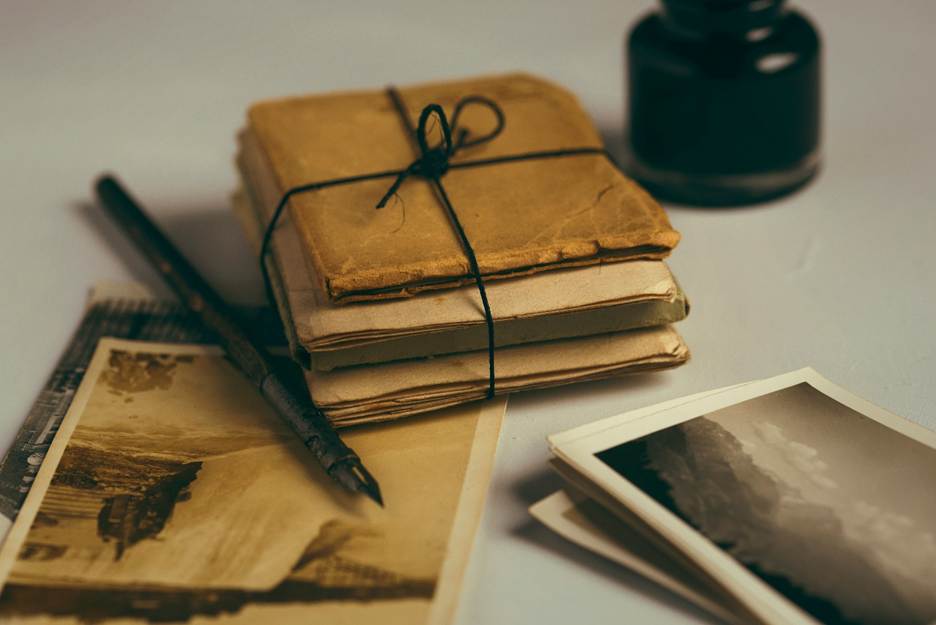
And so I began. At first I wondered if I even knew 80 people well enough to write to. But it turns out that at 80, you’ve lived a long time and met a lot of people. As I started making a list, I quickly passed 80. I began to recall how each one was memorable, and why.  Some names were easy. The memories were warm, the lessons clear. Others required more work, were uncomfortable. I had to ask: how did this person change me, even if the change came through friction rather than closeness? Some were no longer living. Some I had lost touch with. In a few cases, I already had letters written – messages I’d sent to the families of friends who’d died, telling them what that person had meant to me. I had saved copies. I added them to the list.

And then I realized something else: not all letters would go to individuals. Sometimes it was groups of people who had shaped me — a writing class, a church committee, a circle of friends. And sometimes the letter could be to a thing — a dining room table from my childhood, or a familiar object that held memory like a sponge. Always, behind the inanimate, were people. Always, it came back to connection.

Oh my.  What seemed, when Providence’s voice boomed, at first like an impossible assignment –  80 letters for 80 years – suddenly feels doable. More than that, it feels necessary. Because in uncovering the people and memories that shaped me, I am also writing something else: a quiet testimony to what I’ve always known, deep down. 

I did not arrive at 80 on my own.

I got here on the shoulders of so many who walked beside me, talked me down, saved my bacon, gave me new direction, nudged me forward when I was stuck, or simply witnessed my becoming. Big influences, small gestures, words that stayed with me — it doesn’t really matter. What matters is the accumulation of moments, and the gratitude I feel for having been changed, again and again, by the presence of others.

In this photo, I am the white-haired 80-year-old, with some of my best friends from Tappan Junior High School, Ann Arbor Michigan.  We met this summer to remember how important we have been in each other’s lives.  This “letter” is for them…and the several who were there in body or spirit but not in this picture. My friend Elsa, second from the right, describes us as a hive…that’s the way that it feels, except there is no queen bee.

“Best friends” from the past and now…

And maybe, just maybe, Providence will answer if I become sufficiently agitated and self-centered and, therefore, speak again when I need a new assignment.

Oh — maybe most important: 80 is not a boundary, just another irrelevant human marker, an indicator our of our futile attempts to corral time.


I Never Thought. . . Or How Aging Has Brought Me to My Knees

Getty from Unsplash

One late Sunday evening, after being in the house alone all weekend, I started down that melancholy path of “getting old is hard.” I realized that I had not learned much about aging from my parents or other relatives. I’d mostly responded when they needed help, and they didn’t share their aging experience with me (or maybe I didn’t listen). I started saying to myself, “I never thought that. . . “ and my list began.

I never thought that aches and pains could be a topic of conversation. Now, when I sit with my contemporaries, we invariably start with the litany. Who knew the bonding that can occur around bunions, trigger fingers, sore shoulders, hips. . .

I never thought. . . I’d have to eat kale to stay young. Growing up in the 50’s, the main green was iceberg lettuce, cold and crisp.

First everyone said, “try romaine.” I thought it tasted overly strong. Next were field greens. I adjusted to both,

but then came kale. I sometimes wish I’d never heard of it. It’s a dark time for greens and diet.

And I will never forget Elaine’s big salad:

https://www.youtube.com/shorts/Fet3c0U4vWs

What about grains? I thought spaghetti was a perfectly lovely grain, especially with a greasy meatball on top. Now it’s all about farro and quinoa—rice, you know, has arsenic in it.

I never thought that drinking coffee after 2pm could be a problem when I went to bed. I was one of those schoolteachers with a cup in one hand and chalk in the other. My own kids complained about teachers’ coffee breath, but I was sure I didn’t have it. How I long for the days of endless cups, every time I needed a break from something tedious!  And coffee started keeping me awake just when ordinary coffee became delicious—we could buy whole beans and grind them ourselves. No more church basement coffee, which, incidentally, still tastes good to me.

I never thought I’d walk into a room and wonder why I was there. Or loose the title of a favorite book on the tip of my tongue. Forget the name of Ozzie and Harriet’s other son—Ricky and ?? (I refuse to ask Google. I’m waiting for the memory to surface.) I’m still quick with music titles—they must live in another part of the brain.

I never thought I’d need a strategy for unscrewing jars—some of my rosemaling friends carry pliers to open paint tubes. My late husband Jim and I used to have contests over who would get the jar opened first. When he wasn’t looking, I’d use a rubber thingamajig to help me win. (I’m sure he knew and humored me).

And I never thought I’d think twice or three times or four, about taking a big trip. I’d check my passport and go.

And then there’s being married three times. I never imagined such a thing when I promised “till death do us part.” Three fine men—enough said.

Interestingly, as I listed all the changes aging has wrought, I found myself considering the whole of my life and a different list started to emerge. It wasn’t a dirge but celebratory.

I never thought family and friends would bring such joy. When I can’t do something, I call my children or grandchildren. Can’t change a bulb? Call someone, and while they climb the ladder and screw in a bulb, we get to talk. Can’t assemble something from IKEA? Call grandson Henrik—he loves to put things together while I make us a salmon dinner. Need help around the house? Granddaughters love telling me what to do, and I like taking their bossy directions. Need advice? Call a friend. I’m free to take their advice or not, and we get to talk.

Can’t run the stairs—so use the railing. . . and be careful.

Big trip—thank goodness I have more judgment than my younger self did.

And those aches and pains? They’re a good excuse to spend the afternoon reading a book, of which I probably won’t remember the title, but I can look it up on Google.

The marvel of living through the changes in the world is another landing. Yes, I could get bogged down on the frustrations with screen time and AI and processed food and TSA requirements and phone chains and ya da ya da ya da. But wow, what a journey! World War II to 2025.

My mother had bad knees. In her 60’s she had one of them replaced. Although the replacement ended her pain, she barely walked after the surgery. When told she needed to exercise it, she said, “Not me. I don’t exercise. I don’t even like people who exercise.”  It was a joke, but there was truth in it. She did not see the point of exercise. The artificial knee bulged under her skin, not like the natural looking replacements of today. Seeing that scared me, I resolved that I would be different; I would exercise and stay fit—I would head off the bad knees and old age, too. From about my thirties, I ran, walked, lifted weights, saw a trainer, swam lengths, did aerobics, the treadmill, rowing machine and elliptical. . . at least until COVID.

Well, guess what? My knees never got the message. They hurt and are bone on bone as doctors like to describe it.  I’ve been literally brought to my knees. I never thought that could happen. But maybe it’s a good thing. I never thought I’d understand humility either, but I do, along with other values that aging is teaching me. And, at the end of the day, I can still get on my knees and say thank you for everything I never thought would happen.

Photo from Bing

What Makes Me Me and You You

Donald Earl Evans 1926 – 2012

My stepfather, Don, loved three things in this life: my mother, fishing, and tinkering, especially under a car. Don adopted my two sisters and me when I was ten. He was boyish, enthusiastic, deeply in love with our mother, home from WWII (He’d joined the army at 17.), and excited to start his life. He always had a project going. Take the worm farm he built outside our front door. What ten-year-old isn’t fascinated with a worm farm? It was my job to carry out the scraps from dinner and to turn over the dirt. When it came time to go fishing, I got to fill a can with squirmy night crawlers.

Don always planted a vegetable garden. He’d give me a packet of radish seeds to sow because radishes come up fast. I witnessed the marvel of seeds. He put me in charge of weeding. After pulling weeds a few times in the hot sun, I suspected he had tricked me into doing the hard part of gardening. But I didn’t mind. I felt important.

He built new stairs for our house. I watched him saw pieces of plywood in a stair shape and then lay planks across the cuts. He leaned them against the garage where we could climb up and down. Next he added a picket fence to our yard, drilling the post holes, another curiosity for me to see. It seemed as if he could do anything.

Don bought a Webcor turntable, and Bozo the clown records that I listened to over and over.  

He loved Glen Miller, and gave our mother a gold embossed, white leather album of Miller’s greatest hits. Music filled our house in the evening. Don also loved cars. I once got to go with him to Cicero Avenue in Chicago to buy a Packard, his favorite automobile after the Olds.

I was the one Don took fishing. He taught me, by example, to sit in a boat or on the Lake Michigan pier, not talk, and fish all day. He once took me muskie fishing. We didn’t catch a thing, but a muskie followed the lure to our boat. These experiences were magic.

North Pier, Racine, Wisconsin

But over the course of my teen years, Don changed. He stopped making things, fixing his car, and fishing. Instead, he went to night school and worked his way from a tool and die maker to an engineer. He and my mother bought a bigger house; my mother took a fulltime job to finance their American dream. The new life was stressful, and instead of tinkering with something to offset that stress, he relied on a cocktail (and maybe two or three) at night. He developed an edge, and we three sisters avoided him. More than once, I heard our mother say,” I wish we could go back to where we started. He was happiest lying under a car fixing it. We don’t need all this.”

I can’t reliably pinpoint why, but Don lost his essential self, the things that made him Don, his unique creativity. My mother died, and Don lived to be 86. He spent his last few years at the VA hospital, where gradually I watched the curious side of Don return. For him, it was too late for fishing and tinkering, but for me, it was not too late to see the cost of pursuits that deny one’s essential self.

To me, Don is everyman, especially of his generation and veterans of WWII. He’s also a cautionary tale about losing yourself and straying from the things you love. I had the lesson of seeing the changes in Don, from creative young man, to striving type A, and back to a resigned acceptance of what is. Seeing these changes taught me to seek what is authentic in myself. I remember the first time I went to a counselor in my 60’s, and she asked me what my goal was. I told her I wanted to live an authentic life (I wasn’t sure I was, and I wanted to change before it was too late.).

In retirement, I’ve aspired to live authentically. Two books that have supported me are The Creative Age: Awakening Human Potential in the Second Half of Life by Gene D. Cohen, and The Not So Big Life: Making Room for What Really Mattersby Susan Susanka. They both argue that it’s never too late to find what you love and do it. Cohen says that creativity is built into us, not reserved for the young. Karen’s recent blog about the talents and contributions of older women highlights the ways we “elders” can manifest our creativity.

Susanka is more aligned with my personal focus, finding your essential self. I had the cautionary tale of Don in mind in early retirement, when I identified that as a child and a young married adult, I had loved to make things. At the time I was exploring my Norwegian roots, so I thought, why not rosemaling? A door opened to a latent artistic flare and to new friends.

The poet Maggie Smith has a writer’s perspective on creativity and authenticity. She advises staying “elastic” and open to surprise. When I sold our house and moved, I set Smith’s book, You Could Make This Place Beautiful front and center in my new apartment. I didn’t want to dwell on what I’d lost but rather on making my place beautiful and affirming what makes me me.

I believe Smith’s advice can be extended to our lives in retirement or at any time of life. We can make our lives beautiful in our own way. Accessing our essential selves, the things we love to do, our lifelong interests and talents outside of work, can be the foundation for surprising ourselves in retirement. What makes you you? I invite you to explore and enjoy.

In Praise of Postmenopausal Women

There are lots of jokes about menopause. 

There are no jokes about post menopause. 

Is that because we have internalized scientific reports summarizing the negative consequences of losing estrogen?  Weight gain, bone loss, heart disease, depression, and desiccated vaginas…How can you make that funny?  Recent debates about “childless cat ladies” suggest that the social consequences of not being able to procreate may be even more severe:  isolation and invisibility coupled with a lack of usefulness. 

Men, on the other hand, are still producing sperm when they die.  

Social science tells a different story, emphasizing the role of older women in supporting the next generation, as well as caring for family and community members.  Older women are willing to translate emotional caring into action on a daily basis, an image that even the most traditional sexist male can support.  But let me take this in a different direction: Society NEEDS us, and not just for the most traditional roles. 

Start with my friend Jan Hively, whose Ph.D., finished when she was almost 70, investigated the productivity of older people who lived in rural areas.  Asking what they did in their communities allowed her to estimate what it would cost to replace them with workers.  The answer was: A LOT.  Meaning that most rural communities would wither if it were not for the unpaid (or underpaid) work of older people, from volunteering in the library, driving school busses, and taking care of even older relatives. And older women are more likely to work and donate unpaid work than men. 

Jan’s mantra was “meaningful work, paid or unpaid, through the last breath,” and she lived up to it. She was an activist and social entrepreneur. In the early 2000s, as we boomers started to retire, she urged us to think of our last decades as an opportunity to make a difference and not a time to drink martinis, watch TV and play golf.  In her 70s and 80s, after finding her tribe of co-conspirators, she went on to incubate or co-organize many non-profit organizations to increase the opportunities for older people to improve their own and their neighbor’s lives.  New and existing organizations drew on her never-ending flow of ideas about positive aging; two that she co-founded have grown into national and international initiatives: The Vital Aging Network, and the Pass It On Network

And her second admonition was to have fun working with others! She knew that her strongest skills were imagination and starting things so she collaborated with people who love making the engines of a new enterprise run fast and smoothly.  Another wisdom of age:  we often are more aware of who we are – and are happy to turn over control for the work that suits us less well.

At 90, Jan wrote long notes to the people who were important in her life and work, including me – I was humbled because I always thought of her as my mentor – I was a youngster in my mid-50s when I served on Jan’s doctoral committee!  Like many who knew her, when I find myself “sitting on the dock of the bay, wasting time” I hear Jan’s voice urging me to make those reflective moments pay off, either for my own development or someone else’s. 

But Jan, although personally inspiring, is not the only one with creative suggestions.  I am taken with the idea of the “granny cloud,” which emerged from Sugata Mitra’s efforts to educate children in places where there are no teachers (or not enough of them).  The role of the grannies (real ones and people trained to think like them) was to admire and encourage children in learning – which turns out to be critical.  The powerful effect of being a granny is to reinforce curiosity and motivation.  The international granny cloud volunteer network was derailed by the global pandemic – but grannies will be there in force as we continue to re-imagine social networks in the post-Covid future.  I think that men can learn to be grannies, but they usually need some immersion training….

How about the League of Women Voters, founded in the exuberance that accompanied the passage of Amendment 18 in the US?  Relying almost exclusively on volunteers, the League continues to see its primary purpose as protecting democracy through policy advocacy and direct efforts to increase voter registration and participation.  Its membership, which declined with the increase in working women, is soaring again as the gray tsunami looks for ways to work – paid or unpaid – as long as possible. If you attend a League meeting, you will see that post-menopausal women are at the forefront of promoting non-partisan policy debates – including sponsoring events like Bad Ass Grandmas for Democracy.

Contributed / BadAss Grandmas for Democracy

But the role of post-menopausal females in sustaining community and providing intergenerational continuity is not just for humans.  Recent research claims that “Post Menopausal Killer Whales are Family Leaders,” who support the pod’s health by finding food sources.  And who can help but watch, with fascination, the video of the 60-year old Orca, Sophia, taking down a Great White Shark, top predator of the ocean, who was probably threatening a member of her community.  No jokes needed – just attention to the evidence that the world needs postmenopausal women warriors.  Who cares about a few weak, old sperm – lots of those to go around – in contrast to keeping us all safe, fed, cared for, protected, on the right bus, and registered to vote?

Photo by Valeria Nikitina on Unsplash