I often wonder why I’m the only one still living? In 1975, my Father gifted me with his very special kidney. Dad saved my life. My kidney is now 93 years old, but it makes me feel young.
During my six months in the hospital, I nurtured friendships that withstood the test of time. I connected with 21 amazing patients of all ethnicities and ages. All of them have died, some because of their transplant, others from accidents or other chronic diseases. They were lifelong friends and a sounding board for me. I miss them all.
My Dad once asked me why I thought I did so well with my kidney? I immediately responded that I never labeled myself a “transplant patient.” Instead, I was a grateful daughter who was blessed by my Dad’s gift.
The gratitude theme tended to show up in everything I did. Professionally, I focused on public health, and as a full-time consultant starting in my 40’s; I tended to attract jobs where I can “pay it forward.” For example, my late sister had diabetes. What could I do for her? I found myself coordinating a statewide diabetes strategic plan and managed other projects that helped people like my sister.
Through the years, I had some ups and downs related to the transplant but found I had a core of resilience that I kept revisiting. It served me well—until five years ago.
To keep my kidney, I take drugs that prevent rejection but suppress my immune system. There was only one drug available when I had my transplant, and I’ve taken it for 44 years. At age 60, I started to get a slew of squamous cell skin cancers. My kidney drug played a role in causing them, and I had 26 skin cancer surgeries in the past 4.5 years.
Recently, I became aware of a newer transplant drug that could decrease skin cancer incidence by 30 percent. I immediately researched this drug and did the due diligence to see if it was worth a shot. At my doctor’s appointment, I was told the drug I’d been on for 44 years was a “poison.” When I read the drug studies, I was shocked! The drug is mutagenic, causing damage to DNA and increasing cancer risk.
Because it was the sole drug I could take to keep my kidney and me alive, I deliberately never researched the drug side effects. Because I tend to want data on everything, this took some willpower. Remember my roots are in public health! I didn’t just promote primary and secondary prevention; I applied it to my life. Loving myself to take care of myself was another aspect of my resilience. I imagine the doctors would call that “compliance.”
I find I am now in a whole new grateful universe. As I let go of the old drug, I thanked it for keeping me alive. Then something amazing began to happen. Colors now seemed brighter. I’m filled with startling wonder and awe. I’ve become a better listener. And I tell more people I love them.
As I was struggling with the decision about the new drug, I decided to call an old friend I hadn’t seen in years. Ed had his first transplant two years before me, and he’d visit every week when I was in the hospital in 1975. I was eager to ask him if he was on the new drug and chat about his experience. On July 15, I searched Google to get Ed’s phone number– and then my whole body froze. His obituary came up. Ed died on July 8–I was now the last one left.
What does it all mean? Life is unpredictable, and it’s important to look at what I can control. Being negative or judgmental is wasted time. If I’m grateful, I’m positive. When I look for the best in people and life, I release drama and get my energy from peace. As I move through my retirement, I feel more alive than ever.
No, I don’t know why I’m the only one still living. What I can do is focus on what makes me happy. And continue to wake up every day awash with gratitude.
Catching
a Big Fish at Post Lake, Wisconsin, about 1955 (looked big to me)
I remember as a
child waking up in the morning to a day fresh and new, filled with possibility.
Something exciting was waiting to be discovered, maybe just around the corner.
All I had to do was get dressed, scarf down a bowl of cereal, and walk outside.
Sometimes I rode my bike around the neighborhood, looking for something
interesting. Other times I’d try to find a friend to join me. I’d walk to my
friend Carole’s house, and from the street, I’d call “Oh, Carole.” If she could
play, she came outside and off we’d go inventing on the way. If not, her mother
opened the door and said, “Carole can’t play right now.” In that case, I’d
wander to the park or go home and read a book of my choosing. I was between
five and ten when I experienced my life this way, the unadorned curiosity of a
young girl.
Idealized,
of course, but I remember that time seemed to stretch on forever (especially
when I was bored at the end of summer). Bored
or not, I didn’t look outside myself for something to do, rather, I acted from
within, indulging my moods and curiosity. My notion of work was uncomplicated,
something imposed by adults, “Practice your clarinet, finish your homework, do
your chores.” It was before I learned that work was ubiquitous to living, any
and all work, jobs, housework, yard work, volunteer work, and meaningful work,
however it is defined. I had not yet assimilated the byproducts of work, productivity,
success, and accomplishment, as guideposts for adult life.
I
remember telling my son, out of college and frustrated because he couldn’t find
a job, “don’t worry about it. You won’t escape working. You will spend
basically your whole life working.” At the time, I believed that the necessity
of work had absolute power over my life, what I called the “tyranny of work,”
because I saw work, too often, as something that needed to get done. I’d lost
the inner direction that had, as a child, given so much impetus to my daily
living. I didn’t see my work in context, as a necessary part of life but also,
if completed purposefully, as an expression of my authentic self. I had not yet
come face-to-face with the question of what life would be like without
work—retirement, if you please.
And Then It Came. . . Retirement
On
December 11, 2015, I retired at age 73. I woke up that first Monday, after the
retirement toasts at the bar on the previous Friday, feeling that overnight the
ground had become unsteady. I was prepared to shower, get dressed for work,
fight the traffic, and get a good parking space, but there was nowhere to go. I
knew I could sleep in, hang out in blue jeans. . . but then what? Unlike my
fellow blogger, Karen Rose, I had not taken a phased retirement. I simply decided
that it was time to step aside for someone younger with fresh enthusiasm. I
worked on soft money, and I was tired of chasing it. As for getting “busy with
something that looks a lot like work,” (Falling from Grace, posted
7/8/2019) I thought it would be easy. Finally, I would have the time to sit at
my desk doing the creative writing I’d longed to do but had put off throughout
my life.
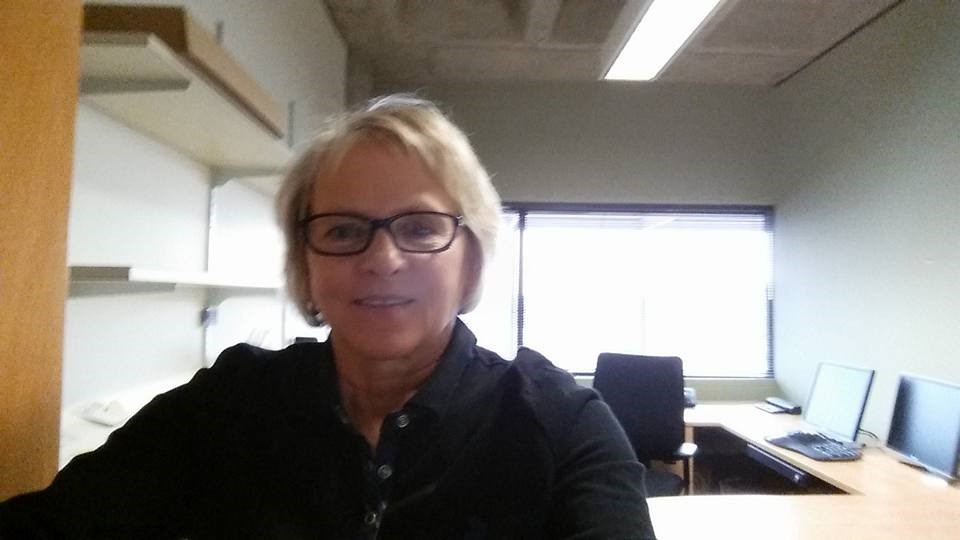
My Facebook posting with the
caption: This is where it ends. . .
Writing, however,
didn’t happen. Ideas suddenly went dormant. Rather, I spent three months having
panic attacks until I read a book about how to overcome them. But overcoming
them wasn’t the same as addressing the root cause. That little girl who once
welcomed a day of possibilities had lost the ability to not only see those
possibilities but also to act on them. I was caught in the conundrum of living
from within or living from the cultural and societal norms that describe
work—I’d fallen from grace and had no idea how to catch myself. . . .
Part 2: One Big Step for Karen-Kind
I shared my angst
about adapting to retirement with friends—and I mean “adapt.” I saw it more as
forced obsolescence. Friends said to find a new routine. Do the things you’ve been putting off—like
cleaning closets. Find a new direction. I bought into it and muddled my way
into a sort of routine, cleaned my desk in lieu of the closets, and started
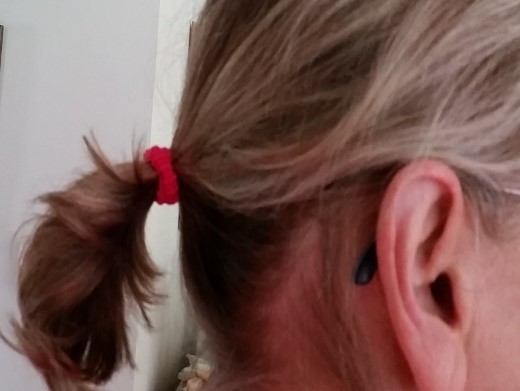
searching for that new direction. I grew a ponytail—I’d never had long hair. It
was something I could accomplish.
I
started tutoring fourth graders in math at my local school—I wanted to be
productive, feel useful, and there’s nothing as regenerating as being around
ten-year-olds. I taught a couple of classes as an adjunct professor, and I
joined a research project in my field as a consultant. Writing ideas
resurfaced, and I found myself at my desk again. Whew, finally those panic
attacks waned. I was in safe territory—work ( I cut off the ponytail).
Then,
as life will do when you’re ready for it, I was thrown a curve, albeit a
pleasant one. My husband and I and Karen R. and Dan went on vacation to the
Cowboy Poetry Gathering in Alpine, Texas http://texascowboypoetry.com/.
For two days we were immersed in a culture different than upper midwestern city
life. A culture of cowboys, in boots, bolo ties, Ariat shirts freshly pressed,
creased jeans, and wide belts with polished silver buckles, standing for over
an hour reciting new and classic poems. These poems were about life on the
range, around the campfire, under the stars, and the meaning of life when
everything slows down and you feel the immensity of our world beneath that
naked night sky. Corny poems, sometimes, but poignant, nevertheless, and framed
by the big questions we all grapple with—is there someone who watches over us?
What is the meaning of our time on earth? Do our lives matter? Turned out,
there was more
to cowboy poetry than campfires.
Thinking
about the poetry gathering on the plane home and later as I went about my
routine of teaching and tutoring, a glimmer of something started to break
through. Experiencing the cowboy culture reminded me that there are multiple
ways to live and know the world. I was living retirement like my former work
life, with never-ending assignments where productivity ruled. I was judging my
life through the lens of work, and that’s why I had found retirement wanting, a
time for panic, and a need to find something, anything, new to do and quickly.
I’d
crossed that demarcation between work and retirement, and I’d found it painful,
so I kept trying to go back to what I knew and had valued for some fifty
years—working, doing something meaningful in the eyes of the world. Yet
available to me was the life of that young girl who awoke every day to possibilities,
unless, of course, I chose to clutter it up with the detritus of those fifty
years of working. I realized that I didn’t need to “find a new direction.” I
was free to have no direction. To wake up and follow my curiosity. To read a
book of my choosing. To call a friend
and hang out at a museum. Even to go to Wales and live (something I’ve dreamed
of doing). To sit on the deck and stare at the stars, unless of course, the
mosquitos got me first. The point was, I didn’t need to have an agenda, unless that
agenda was relearning how to be this person who allows the day to unfold as it
wants to. Retirement wasn’t so much the end of work as it was a challenge to
“start anew,” to just be and to awaken with curiosity about what the day will
bring, and to rediscover the joy of that young girl, which, hopefully, is still
in me.
From Anthem
So mornings
now I’ll go out riding
Through pastures of my solemn plain,
And leather creaking in the quieting
Will sound with trot and trot again.
I’ll live in time with horse hoof falling;
I’ll listen well and hear the calling
The earth, my mother, bids to me,
Though I will still ride wild and free.
And I ride out on the morning
Before the bird, before the dawn,
I’ll be this poem, I’ll be this song.
My heart will beat the world a warning—
Those horsemen will ride all with me,
And we’ll be good, and we’ll be free.
When I was in my 50s, I gave my mother (who was 30 years older) a copy of Rick Warren’s The Purpose Driven Life. She was in a funk, battling a tendency toward untreated depression, and I thought it might help her. Of course, I hadn’t considered some underlying reasons why that was a poor idea (she was an avowed atheist and often frustrated by her generation’s limited expectations for what women would do outside the home). My inappropriate choice was based on the title, which implied that everyone already has a purpose and our job is to accept and live into it. My mother didn’t read it, so I feel only a smidgen of regret at the gift. But I think that I was dead wrong….
Here I am, almost as old, inundated with a drumbeat of blogs,
and aphorisms that urge me to FIND—REIGNITE–CREATE a purpose-driven life,
which is typically described with an almost sexual PASSION at the center. A sampling from the web includes:
“Be fearless in the pursuit of what sets your soul on fire”
“Life – seize it and make it amazing. Discover your passion. Take chances. Follow your dreams. Today is the day. Don’t pass it by”
“There is no passion to be found playing small—in settling for a life that is less than the one you are capable of living.”
“The things you are passionate about are not random.They are your calling.”
Books extolling this certainty for later-in-lifers proliferate –now is the time to find that passion! Directly or subtly, effort is at the core: How to find your passion after you retire. As one website, 60 & Me suggests, now is the time for people to become more purpose-driven and more passionate – and probably do something that looks like work (paid or unpaid):
“The overlap between what you are good at and what you are paid for is your profession. On the other hand, what you are paid for and what the world needs is your vocation or calling. The point where what you love overlaps with what the world needs constitutes your mission. Then lastly, the combination of what you are good at and what you love is your passion.”
THIS
QUOTE EXHAUSTS ME, in part because I had to read it three or four times to
understand it. MOREOVER, IT MAKES ME FEEL BAD ABOUT MYSELF. Not
only do I have to have purpose and passion – I need a mission and a vocation in
my retirement!I have no idea where to start with this….
There is a dark underbelly to the mandate of finding purpose at all life stages. I have a colleague, quite brilliant, a wonderful administrator who effortlessly makes things happen within a large bureaucracy, is exceptionally kind, and who suffers from a sense that her life is not meaningful because there is no focused PURPOSE at the center, nothing that DRIVES her daily work. She feels that she is not enough. Her work life lacks passion. Or focus. Or certainty. Or something.
I don’t blame Rick Warren, although producing a book that has sold 30 million copies provides impetus for others to adopt his words (but not his meaning). Warren’s work focused on finding purpose by living fully into beliefs and a community shaped by a particular set of virtues and principles. It has less to say to the self-motivated individual who tries to self-actualize through individual striving. His title was highjacked.
So, back to age, retirement, and a redefined “purpose”. I find comfort in some ideas that I have come across, most of which involve making purpose more “right sized” in our lives rather than the driver of happiness and fulfillment. Dmitri Pavluk talks about self-actualization, which includes insight (think of the Buddha!), awareness and clarity (look around; be observant!), and connectedness (Yay! Other people) – and, yes, something called purpose. In other words, purpose can only be understood in the context of a whole life that has both inner and outer expressions. The elements that he defines as self-actualization are related, fluid, and inseparable. We change. We grow. Life does not always happen on the schedule that we had in mind.
Mark Manson, whose blog often addresses questions of personal meaning, says it more simply:
So when people say, “What should I do with my life?” or “What is
my life purpose?” what they’re actually asking is: “What can I do with my time
that is important?”
I couldn’t make my mother happy, but I know that she adored her family and made my high school friends want to come over to our house because they felt so welcomed. She exposed me to eggplant in the late 1950s, when no one else in Ann Arbor knew what an eggplant was, much less how to cook it. She enjoyed living in several foreign countries during her adult life. She taught me not to stand on the sidelines when an important political question is on the agenda. I am not an atheist, but her questioning of EVERYTHING has been an invaluable model for me. I remember her (when not severely depressed) as “right sized” and adventuresome.
When I look at Ian Schneider’s photo above, what I see is visual irony: How often do passion-purpose lead us to a place where all we can (metaphorically) see is our tired feet in a featureless landscape? That sense led one of my internationally recognized colleagues to retire earlier than he had planned. However, a year later, as we checked in at a casual breakfast, he described his choices about how to spend his time—to read and think, explore awareness and joy of nature, create new connections with his wife –with a sense of gleeful gratitude
In the end, isn’t caring for a precious asset – time – at the core of purpose? I can do the most important and meaningful things that are available today. And tomorrow. And stop worrying about BIG PURPOSE AND PASSION. …To be continued….
“And the world cannot be discovered by a journey of miles, no matter how long, but only by a spiritual journey, a journey of one inch, very arduous and humbling and joyful, by which we arrive at the ground at our own feet, and learn to be at home.” ― Wendell Berry, The Unforeseen Wilderness: Kentucky’s Red River Gorge
Given that I’ve
lived at least 39 places in my 75 years, I felt compelled to write a sequel to
Karen Rose’s piece, Should
I Stay or Should I Go, especially since I usually pick the “go”
choice. Moving seems commonplace to me, what people do. But when I listen, I realize that not
everyone is on the move. I’ve had neighbors and friends tell me they’ve lived
in their houses for 20, 30, 40—since the beginning of time—years. Because I
can’t speak to that experience, and, since right now I’m obsessed with doing my
own soul work, I decided to think about moving in soul work terms, or, as
Wendell Berry calls it, my spiritual journey.
One
of my mother’s favorite stories about me was how, even as a young child, I
liked to run away. I’d go missing and she’d find me way around the block. My recollection is that I wasn’t trying to be
naughty; I truly wanted to see what was around the corner. My son had the same proclivity. When he was about four, though instructed to
stay in front of the house, he would invariably ride his Big Wheel to the gas
station around the corner, where I’d find him watching the comings and goings
of a busy filling station. My
explanation for our curious natures is that it’s genetics, starting with my
paternal grandfather, Nils Jacobsen, who left Norway in 1888 at age sixteen to
come to the US. I like to think that he, too, wanted to see what was “around
the corner.”
Early
in my life, as an undergraduate at the University of Minnesota, my moves were to
find a room I could afford. Everyone
moves around at that point in life. My
tendency to move as a strategy to solve life problems started later, with my first
husband, always looking for an affordable and better place, big enough for two
children, and located in the same school district. We moved ten times until we were able to
afford a house. Our children, at ten and eleven, had lived somewhere new just
about every year of their lives. After our
divorce when our children were grown, I started graduate school and moved again
and again, always to find a better place within my means, which wasn’t much. Soul
work at that point was building a new life.
Building
a new life to me meant having a fresh start in a new, clean house—no cluttered
drawers, dusty shelves, moldering food in the refrigerator—not to mention,
unpleasant memories. As Robert Louis Stevenson puts it, “The
great affair is to move.” I’m not surprised that after retirement people
consider making a move. Retirement, fundamentally, forces one to start over, to
reconsider all the choices made over the years, including where to live.
To
be a professor, one has to move upon graduation. I was all in for that
requirement. Upon graduation, I moved for a job and adventure, off to
Utah and a new life with a new husband, Gary. We would hike in the mountains,
ski, and explore the southwest. It was travel rolled into a career move. But
then something changed.
Our
second year in Utah, Gary was diagnosed with terminal cancer and given a year
to live, if he was lucky. About eight months into his last year, I had a
tremendous urge to move “home”, back to the Twin Cities. I found a posting for
a job in Minneapolis, applied, and was hired.
I persuaded him that we needed to move; he died four months later in the
Twin Cities.
Although
we’d bought a house for me to have when he died, I immediately started looking
for a new place to live. And there it
was, the need to keep moving had become almost a pathology. See what was around
that corner. It had to be better than
sitting alone in the house where Gary had died, facing my grief. And move I did, first to a condo that I lived
in less than a year, then a house, then to Bethlehem, Pennsylvania, and Lehigh
University, all in the space of four years. . . another travel adventure
combined with a job change. I sold it to
my now married children as “exploring the east coast.”
I
moved to Bethlehem in June of 2001, and on September 11th, our
country was attacked. Planes crashed in Pennsylvania, the Twin Towers in New
York City, and the Pentagon. All felt too close. I was alone in a strange city,
and I couldn’t reach my children because the cell phone lines were overwhelmed.
On that afternoon and days after, I longed for “home,” someplace solid, with
familiar ground under my feet. I had learned that in an emergency I would never
be able to get to my children quickly. I lasted five years in Bethlehem,
spending a good deal of time wanting to move back to the Twin Cities. Yes, I
explored the east coast, and I made many friends, but I needed to belong
somewhere, a place close to my children and grandchildren. I moved, back to the
Twin Cities.
I
bought a townhome I didn’t particularly like, thinking I’d stay there a short
time and move on. But then came the Great Recession. The housing market crashed,
and I couldn’t get out of my townhome. Everyone else liked it and my friend,
BetsAnn said, “Make it into a place you like. Don’t just sit there and
complain.” I did, and I stayed there over eight years—almost a record for me—and
I became attached to it. I even looked
forward to going “home” at the end of a day.
In
2013, I remarried, and Jim and I bought a house together, which we’ve lived in
for five years. This spring I had the urge to move. I insisted my husband look at
townhomes with me. We looked and
concluded that our house suits us and our relationship, and we decided to stay
put. Our children live in the Twin Cities, so we don’t have the pull to be near
family. Our next move could very well be our last, and we’ll wait, like Karen Rose
suggests, until it just feels right.
But
how will I handle my need to leave, to see if there is anything better around
the corner? I’ve learned that I have a wanderlust that bubbles up whenever life
gets uncomfortable. The lesson that I move to run away has not been easy to
learn—39 domiciles attest to that. It means doing the work of my
soul—confronting my seemingly logical reasons to move and seeing them for what
they are—boredom and low level anxiety, the sense that something isn’t right,
covered by a veneer of wanderlust.
The
other day I made my usual circle of the neighborhood, first to the co-op, then
the library, from the library to Kowalski’s for a gourmet touch to dinner, a stop
at the ATM, and finally home. How comfortable it felt! What I used to believe
was boring—staying in the same place—has changed to belonging. That evening I biked
the Minnehaha Creek Parkway. Living here long enough has allowed me to know the
creek at both low and high levels, in winter under new fallen snow, in spring,
raging as the ice gives way, and during summer, when it meanders under a lush
canopy of green.
As
for “should I stay or should I go,” my first impulse is to say GO, move. I am Nils’s granddaughter after all. But staying in my last two homes has opened
me to something else around the corner—the dynamic of neighborhood, the way a
calm or raging creek invites me into my own movement and change. This isn’t an
advice blog. The only thing I can say for certain from my experience with
losing a husband and 911 is that being near family counts. The decision to
move, while it may seem straightforward when the reasons are financial or
job-related (and even those have nuance), is complicated, especially so with
the emotional, physical, and family considerations that come with getting older.
Maybe the best we can hope for when sorting things out is Karen Rose’s wish
that “a place (will) just speak to me and tell me where to get off.” Meanwhile,
for now, for me, I am in a place where I can finally, “learn to be at home.”