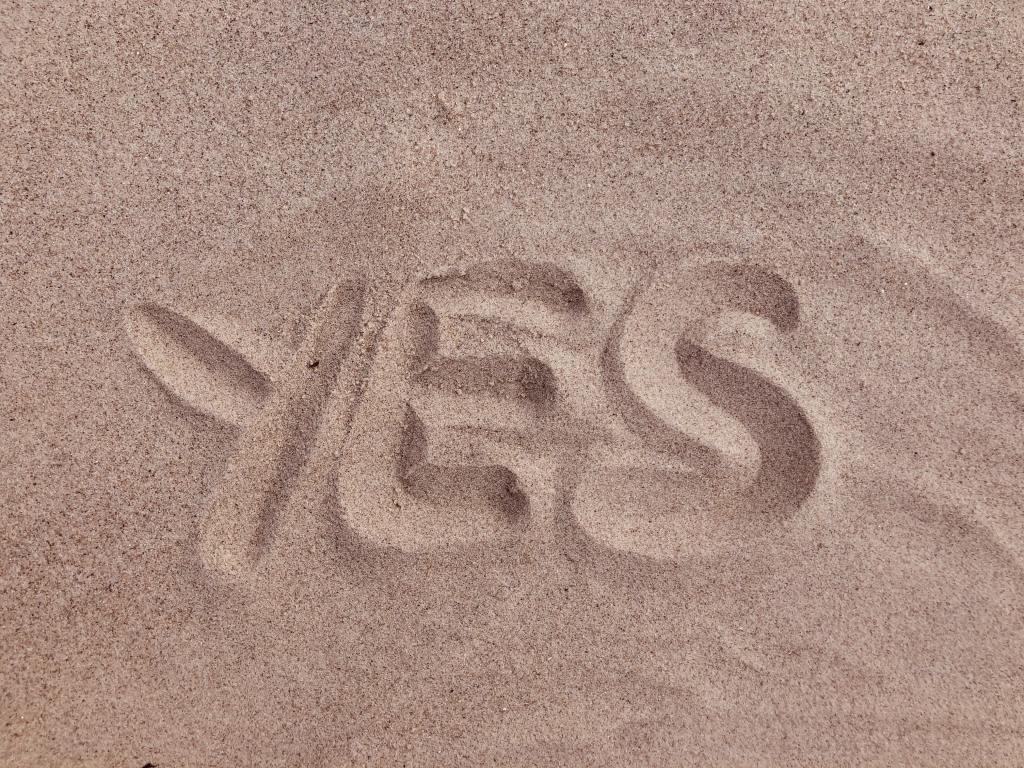

YES!

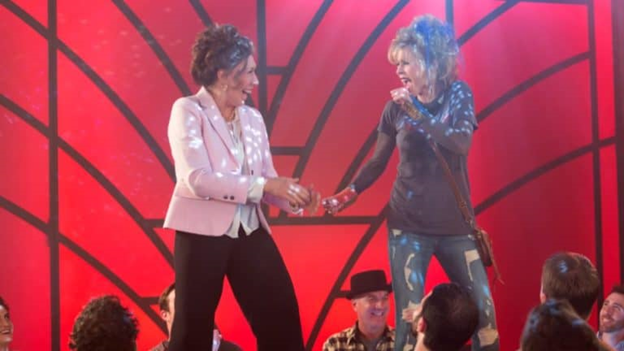
Dan and I recently decided to dip back in to Grace and Frankie, the comedic overview of aging, divorce, sexuality, friendship and family. Season 1 is, at its heart, about relationships, which go from testy to close when Grace (the retired uptight businesswoman) agrees to participate in a “Say Yes” evening with Frankie (the aging hippie) (Episode 12). Their compact was an obligation to agree to anything the other person proposed. The scene where Lily Tomlin and Jane Fonda, two 70-ish women, bond on a sidewalk curb after being  thrown out of a nightspot where they dared each other to dance on the bar (to the applause of the 30-something crowd) revealed the power of YES. It happened because they trusted each other to push the boundaries of their routines.

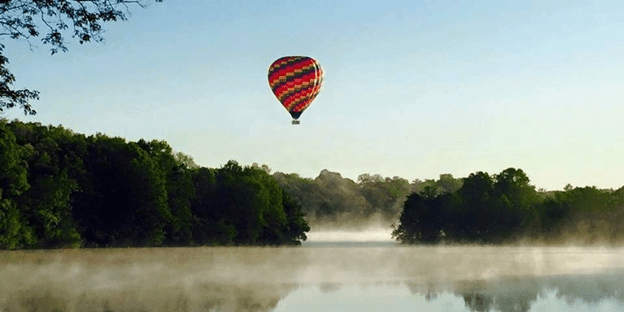
Pondering the power of YES, I was drawn back to one of my own memories. My father, recently widowed, began having a series of small stokes, each of which had equally small but incremental effects on his mobility (certainly not his brain or his wit). He would get sad and anxious for about a week, and then would pick himself up and say, “well, I can’t walk a mile with a cane, but I can….” Well, fill in the blank, because there was always something that he could do. When one of the later events left him unable to walk far without being in a wheelchair, his life changed again…but not his YES. On his 83rd birthday, a friend gave him a new chance — a 1 hour balloon ride over the St. Croix Valley in Minnesota, where we lived. It was quite an ordeal getting a wheelchair and my dad onto the field and into a little basket, along with his friend and the balloon operator, but he was game. He said YES to adventure, wherever possible.

Photo courtesy of Stillwater Hot Air Balloon

What does saying Yes involve? And what does it require of us? And why should we think about it anyway? For me, Grace, Frankie, and my father suggest that it is the importance of being open to something that is unfamiliar – and even a little scary. Something that is challenging, that requires more than you normally expect of yourself. It means going outside of your comfort zone – or at least pushing hard against the boundaries of your comfort zone.

It has been hard to say YES over the past five years. Covid accustomed us all to doing less, being out less, and interacting with strangers less.  This is not a mindset that promotes YES, which implies novel experiences that we can incorporate into the evolving story that we tell about ourselves. In the past, I have not had to think about this – opportunities have presented themselves and I decided to say YES – often with little rumination or thought — just as my father delighted in going up in a balloon in a wheelchair.

But the last years have meant that random adventures have become fewer and I  sometimes feel that I have gone from being brave to cautious. I am not happy about this. But simply hoping that the old opportunities will present themselves unannounced is about as reasonable as expecting anything else to “go back to the way it was.”  I realized, after seeing Grace and Frankie saying YES,  that I have to be responsible for creating prospects for YES rather than waiting for them to appear.

I need to be prepared, and like Grace and Frankie, it helps to have others along. Dan and I have started to plan a road trip to Washington, where we can try to reconnect with friends who have, for one reason or another, drifted from our day-to-day lives.

Every road trip provides many opportunities to Say YES by veering off the highway and into a small town with a place to stay, a museum and an adequate meal, so on our last trip to New Mexico we decided to stay in a converted cowboy bunkhouse on a 23,000 acre ranch rather than a hotel – and I know that we will be back (this time with food) to experience the solitude and stars. (No museums, but some strange flying bugs).

Fite Ranch, New Mexico, May 2022

Karen Martha and I committed to a week in in Rome – a city that I have not been in for over 40 years, where we will be unleashed from a hotel-and-planned itinerary mentality to allow us to choose our own adventures. That’s how I used to travel when I was in my 20s—and I can do it again.

I have already argued for breaking the rules that dictate appropriate behavior in older people! But it’s also my job to imagine opportunities to challenge my own easy routines in collusion with others who are willing to challenge theirs. To paraphrase Frankie, “You can’t say No until it’s over.” 

So bought a new pair of hiking boots in order to be ready — for something.

Possibilities

A person standing on a balcony

Description automatically generated with medium confidence

I Dwell in Possibility

Emily Dickinson 

Joachim Trier’s movie, Worst Person in the World, is about a young woman exploring the possibilities in her life looking for that one true passion. It’s a universal story line—the quest–yet as my friend and I walked to our cars after the movie, all I could think about was the line “I no longer have a future” (spoken by one of the other characters). “It’s exactly how I sometimes feel about getting old.” I told my friend. “Like I no longer have a future.” She agreed that that line had stood out to her, too.  We walked around the corner to our car, parked on a street of lovely old mansions near Lake Michigan in Milwaukee. The early spring sun brightened the landscaped lawns and melting snow. 

“Take these gorgeous homes,” I said. “I’m never going to own or live in one. Twenty years ago, I would have walked by them and daydreamed about living in one. But that’s never going to happen.”

My friend noted that one of the harder realities about getting older is the realization that the range of possibilities is shrinking, if only because we’re running out of time—not to mention that most of us have more money going out than coming in. 

A few weeks later, I visited a college with my daughter and granddaughter. I heard my daughter say, “Gosh, I wish I could go back and do college all over at a place like this.” Her wishful thinking reminded me that there’s a universality to dreaming about what might have been or what might yet happen. The fact is, however, we get only one life. She is through college, and I’m never going to own a mansion in Milwaukee. But does that mean that I have no future?

I could still move somewhere new. . . or maybe travel. Is this why we older people like to travel? We have time and we’re looking for novelty? For my husband, the fun is in the planning. He gets to run through all the possibilities. For days before we go somewhere he changes the itinerary. When I saw Frances McDormand in Nomadland, it struck me that though she didn’t have any money, she traveled and was open to possibilities, too. 

This morning I asked myself what I like best about being retired. The first answer that popped up was having the time to contemplate and work on myself (a blog will soon follow on this). Richard Rohr in Falling Upward: A Spirituality for the Two Halves of Life, argues that in the first half of our life, we build and identify with a persona—I’m an educator, I’m a mother. Others are policemen, teachers, professors, plumbers, community activists—however we see ourselves. We work hard to create and maintain this persona, but underneath is an authentic person. In the second half of life, however, we have time and inclination to turn inward and explore that person, who we are at our core. That’s a powerful and challenging possibility.

In a recent podcast of No Stupid Questions on NPR with Stephen Dubnar (Freakonomics) and Angela Duckworth (professor at U Penn, well known for her work on grit) take on the question of What’s so Great About Retirement? There are many good reasons to listen to this podcast (or read the transcript), but the one that stood out to me was Duckworth’s emphasis on goals or purpose:

She describes her father, a retired chemist, who upon retirement announced that he didn’t want to do anything, and he proceeded to get up in the morning, have his coffee and his breakfast, shuffle over to the love seat, sit down, take the remote control, and turn on the Weather Channel. She believes that his choice to spend his retirement this way made him profoundly unhappy (Both Karen R. and I believe she should have looked closer instead of judging him). Duckworth notes:

I have a theory of happiness, which is very simple. I think people pursue goals spontaneously at every age. Whether you’re 4 or 84, you have goals. You have things that you want to accomplish. I think, actually, the greatest unhappiness there is, is not to have goals at all. 

As soon as I heard this, I knew I was back at my favorite rabbit hole—purpose. Maybe having purpose is the way we counter the perception that we have no future other than aging. Maybe I need to stop raging about it and look more closely. Purpose, in the second half of life, may be drawn from an inner imperative. That requires the very inner work that Rohr writes about, and it doesn’t have to result in a big world changing purpose/imperative. Instead, it can be a commitment to the little p’s in front of us daily

Two of my little p’s, as you’ve heard me say before, are tutoring and rosemaling. On the surface they seem like time fillers, but I made these choices after self-examination, not because I needed a job, or wanted to pursue a career, or whatever. Tutoring reflects my joy in teaching children, of being in schools, and in observing that fascinating process called learning. Rosemaling reflects a search for my identity as part Norwegian and my love of making things. While perhaps not soul work, these two choices came from an exploration of who I am and what I love doing. And finding them screams “You do have a future right in front of you, Karen!” Maybe it’s not a mansion on Lake Michigan, but the fruits of inner work from where I stand today, are every bit as rewarding as building a career was when I was younger. It’s true, I won’t get another life, but meanwhile, having found some little p’s, I wake up most days engaged in the one I have.

A person drawing on a piece of paper

Description automatically generated with medium confidence

LET OLD THINGS PASS AWAY (2 Corinthians, 5:17)

Or

DO NOT GO GENTLY INTO THIS GOOD NIGHT (Dylan Thomas)

Or

NEVER WASTE A GOOD CRISIS (Milton Friedman)

Photo by Peter Hermann on Unsplash

Perhaps an inevitable part of aging is looking backward, searching for meaning in the distinctive chapters of our lives. After moving past obvious markers (leaving home for college, getting married, etc.), I keep stumbling across the fact that there are periods that are less clearly marked by an anticipated beginning or a clear end.  Some of these are unpleasant: Queen Elizabeth had her annus horribililis,  Karen Storm writes about her past experience with prolonged grief, Katherine Malanga reflects on being in the middle of  figuring out the job of loving and caring for someone who is declining. 

For me, 1998 and 1999 were such a chapter.  Nothing exceptional happened that distinguishes me from other fallible human beings who experience suffering –  except that everything occurred in quick succession.

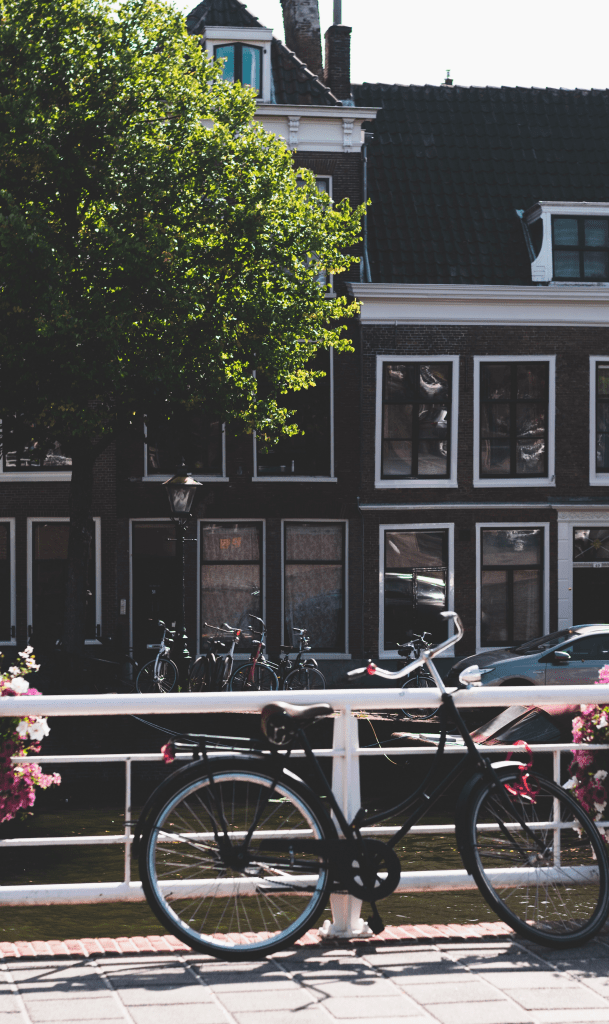
Photo by Damiano Baschiera on Unsplash

Well, to be perfectly honest, the symptoms started earlier, beginning with rocky transitions to college for my children.  The resultant stress and disagreements about how to handle myriad other issues tore at an already fragile marital relationship. By 1997, we were living together in 17th century house on a beautiful canal in the Netherlands (because we were on sabbatical) without our children (who were still causing us anxiety). 

With a lot of travel, living largely separate lives, we struggled through.  I responded by spending weekends with friends in another city and drinking Jenever (Dutch Gin, which smells a bit like rotten cabbages), straight from the freezer.

Back in the U.S.  The semi-separation became a real separation.  The children were gone.  Frisk, a beloved dog, was very old and barely able to move. My parents died, a little over a year apart.  My sister felt like my only support, but our grieving took different forms – she turned inward and to her family, and I wanted to turn outward because my family was….well, disintegrating.  I was able to briefly distract myself as International Karen — a 1999 Fulbright trip to examine the condition of higher education in post-Soviet Belarus, Kyrgyzstan and Czechoslovakia and an invitation to cheer in the new century with friends in London, accompanied by bagpipes in the Royal Park in Greenwich.  I am, however, here to let you know that, in spite of the popularity of Eat, Pray, Love, treating distress by relocation is overrated.

I thought that I needed a project, and foolishly took my half of the sale of the jointly owned elegant town home and bought a “fixer-upper” in Uptown, a densely populated, just-on-the-edge-of-becoming-trendy part of Minneapolis.  The house was owned by a blind woman, who lived with two alcoholic sons and a husband who had recently entered an assisted living facility.  Her sons assured her that they were maintaining the property and redoing the kitchen.  Hah…the ring of cigarette burns on the floor outlining their beds was evidence that only dumb luck kept them from burning the place down.  I am not a very handy person – I have no idea what inspired me to take on a neglected home despite its “good bones” and untouched quarter-sawn oak woodwork in all the rooms. My friends were worried.  But I barely saw them because I spent most of my time isolating when not at work. I was a contemporary version of the Prodigal Son, who after failing to maintain my social and financial assets, wanted to go home.  Except, although I had a house, I had no real home to turn to.


Photo by Stormseeker on Unsplash

One day, when walking the dog, I fainted and hit my head.  No concussion, but my doctor insisted on a sleep-deprived EKG.  Now, I am a person who could never stay up all night even when I was in college…I had no idea what to do other than to rent a machine that would pinch me regularly.  At a rare social gathering, I humorously asked where I could get one.  A bit later, Dan, who I barely recognized, approached me and said that he had worked nights, was easily able to stay up, and would be happy to help.  He suggested the local all-night Home Depot, followed by a very early breakfast in the café of a 24-hour grocery store.  Putting aside every caution – I, after all, had inhaled Judith Rossner’s Looking for Mr. Goodbar that left woman my age thinking that behind every eligible middle-aged man lurked a serial killer – I agreed.  And I thought about Carol, who was as close to an intimate friend as I had. I knew that I could cut the evening short because she got up ridiculously early and could get me to the test before 7.


When I least expected it, two people came into my life to accompany me on what turned out to be a quotidian medical adventure. A few years later, I married Dan, who never made the slightest pass or sign of flirtation during our 5 hours examining hoses, shovels, and industrial cleaning implements at the all-night Home Depot or the coffee shop.  Carol and I grew into closer friends over the years, even when our conversations were rare due to moves.  This modest, almost non-event was, in retrospect, a crack that widened and allowed me to see that things could be different.  I can only conclude that one mystery of life is that when I am experiencing the greatest turmoil, it is often a small voice that reminds me that relationships can change and heal. 

The prodigal son returned to his father’s home, but as a humbled and open person, ready to leave what he had become in order to be changed. There was no instant moment when I saw a way out, but Dan’s kindness and Carol’s support at a juncture where I felt my human frailty so intensely allowed me to see that I was not alone.  I was ready to be changed, but I needed to see that I had companions who could walk with me.

Unlike Dylan Thomas’ cry for an intense battle to grasp what joy is available, I was listening to gentler voices that recognized that chaos – what in 12 step groups is referred to as psychologically “hitting bottom” –  is often required to provide the courage to return to oneself.  I learned that it is precisely when I am in existential turmoil that I must depend on others to support me.  Milton Friedman’s assertion that  “Only a crisis – actual or perceived – produces real change”  is also time to remember John Donne:  “No (wo)man is an island.” This minimal insight has altered my life and the way I respond to those first inklings that “things are not going well….”  Instead of isolating, or throwing myself on the most immediate comfort or escape, I try to look closely for the small voices, usually of others, that remind me that I am worth saving.

How to Retire During a Pandemic. . . or Any Other Time

A group of people on a stage

Description automatically generated
Rolling Stones, 2018

Karen Rose and I promised not to give advice, so don’t think of this as advice, rather encouragement.

First of all, why not retire? There’s nothing that says you shouldn’t. It’s completely your own decision. Retirement right now could make you part of the Great Resignation—and who doesn’t want to be a trend-setter? So, in the spirit of all the self-help gurus who have gone before me, here’s my list of how-to’s.

  1. Tell your friends, family, and colleagues how you want to celebrate.  You could have a bonfire or even a Zoom meeting (I’m kidding). Restaurants and bars are starting to open. It’s not impossible anymore. I like cake, so that’d be my go-to, a Danish layer cake from a bakery in Racine, my hometown, or if not available, a big white cake with white frosting from Whole Foods with vanilla flavor—you might be trying a lot of new foods when you retire, that’s one way to pass time—eat. 

If you retire in summer, you can always have an outdoor party. In fact I went to a couple last summer, and the retirees didn’t seem intimidated by the pandemic at all. And there was lots to eat—even cake.

There’s always the person that wants to go quietly. The one who rather slides into retirement; some even take it year by year, never really announcing it until they’ve completely left the playing field (E.g., KRS?) It’s not a bad way during a pandemic, or during any hard times, as everyone is busy watching CNN, the CDC, NBC, OSHA, SCOTUS, ETC.

  1. Let those feelings come forward. Maybe you’ll be relieved—you’ve had enough of working for a lifetime. You might be discombobulated—I certainly was. That first Monday morning after my drinks at the bar party—no, I didn’t get cake—left me unmoored. Should I wear jeans?  Jeans are for weekends. What time should I have breakfast? Lunch? What am I going to work on? Does my spouse have to be near me all the time? I can hear him rattling around the house. Is he always like this? When do I get to “quit” for the day—oh, I never started.  

You will have feelings. I promise!  Let them all hang out!

  1. If you live with someone, warn them. They may have had the house all to themselves, but that’s changing. Someone new will be sitting on the couch reading the morning paper, playing the stereo during the day, making lunch right when they like to make lunch. Maybe you’ll start to clean closets, throwing things out. Someone else might not be ready for this.  And are you ready?  Your close relationships will change, hopefully for the better.
  1. Don’t sweat having a purpose. This is a biggie!  I know, you’ve read all those books about the importance of having a purpose when you retire, Something to Live For, Retirement Reinvention, Purposeful Retirement, and Encore Adulthoodamong the many—but I’m here to tell you retirement is all about the unknown, and that’s what makes it both interesting and challenging. In the world of work, you needed goals. The idea was to get ahead, to strive (more about this from Karen Rose), to seek, to find. . .  to make a name for yourself, do better than meeting quotas, etc. You are done with all that. New paradigm coming your way! And you get to create it.

The Purpose experts argue that having a purpose is linked with better outcomes for aging, living longer, etc. But you’re not an outcome, a statistic. You are you, and if you don’t have a purpose, that’s just fine.  I’ve written about Big P and Little p, arguing that Big Purpose is a male oriented way to live and that there are lots of Little purposes in our daily lives—relationships, family, great books, helping out in the community, that can evolve daily. By letting go of the need to find some big, all encompassing Purpose, you can let the day’s own offerings be sufficient—and you’ll be more inclined to show up for them, because you won’t be busy searching for that big Purpose. 

If you have a big Purpose for your retirement, by all means, go for it. My take is because so many of us love our lives but probably can’t identify some big Purpose in how we live them. But then living a moral and kind life is rather a big Purpose.

Instead of worrying about purpose, resolve to be CURIOUS–like the Torstein Hagen advertising for Viking Cruise Ships. When the pandemic first hit, and we were all scared, staying home, isolating, I started daily walks—like everyone else—around the little lake by our house. After several of these walks, I noticed stumps, which had been cut off in the prime of life, had branches growing out of them; they were putting out shoots of hopefulness. I photographed these stumps and shoots and followed them throughout the spring. I saw them turn green and produce leaves. Later a friend told me about something called coppicing, a process used to manage forests by taking advantage of these persistent trees. What astonished me about this discovery was how I’d walked by it most of my life! (https://karensdescant.com/2020/04/20/condition-provisional/0)

So be easy on yourself about purpose. Maybe you’ll find one, maybe you won’t, but retirement allows you time to be with the unknown, to pay attention to the details, or, as a friend once advised me—to smell the roses.

  1. Let go of expectations! I absolutely believe that we would all live happier lives if we could let go of expectations. In the dictionary, 1) expectation is defined as the state of looking forward to or waiting for something. 2) A belief that someone will or should achieve something. Until the pandemic, retirements were full of expectations—“I’m going to travel.” “I plan on spending more time volunteering.” “Maybe I’ll take some classes.” All worthwhile endeavors, but this pandemic has certainly put us on pause.

So what recourse do we have? We could approach our new retirement lives without those expectations, instead curious and willing to engage with what shows up. You now have time to explore who you are inside and act from within rather than without, based on expectations set by others, the society, and eventually by ourselves. 

If you’re planning on retiring, go ahead. You will have a chance to approach life with curiosity, seeing what unfolds, and maybe, with that curiosity, learn more about yourself and the world around you. I wouldn’t normally turn to the Rolling Stones to talk about retirement, but their song, No Expectations perfectly sums up my idea for approaching retirement:

Take me to the station
And put me on a train
I’ve got no expectations
To pass through here again.

A retired Keith Richards