Unknown's avatar

About Karen Martha

I am a searcher and not always sure about what I’m looking for. I’ve lived in thirty-nine houses in four states and changed my name five times. One would think I embrace change, yet I find it discombobulating. My unrest is part of what inspires this blog on retirement. It’s like a last chance to live reflectively, instead of wandering helter-skelter into whatever shows up to keep me occupied. I’m interested in the soul work that presents itself at various times in our lives and in how that changes us. In past lives I taught middle school math and science, raised two children and helped with four grandchildren, finished four degrees, worked as a professor and researcher, and married three times—whew. In my present, retired life, I’m tutoring 4th graders, learning rosemaling, and when I’m not working out—writing—writing about this wonderful, often painful, and fascinating journey.

What Makes Me Me and You You

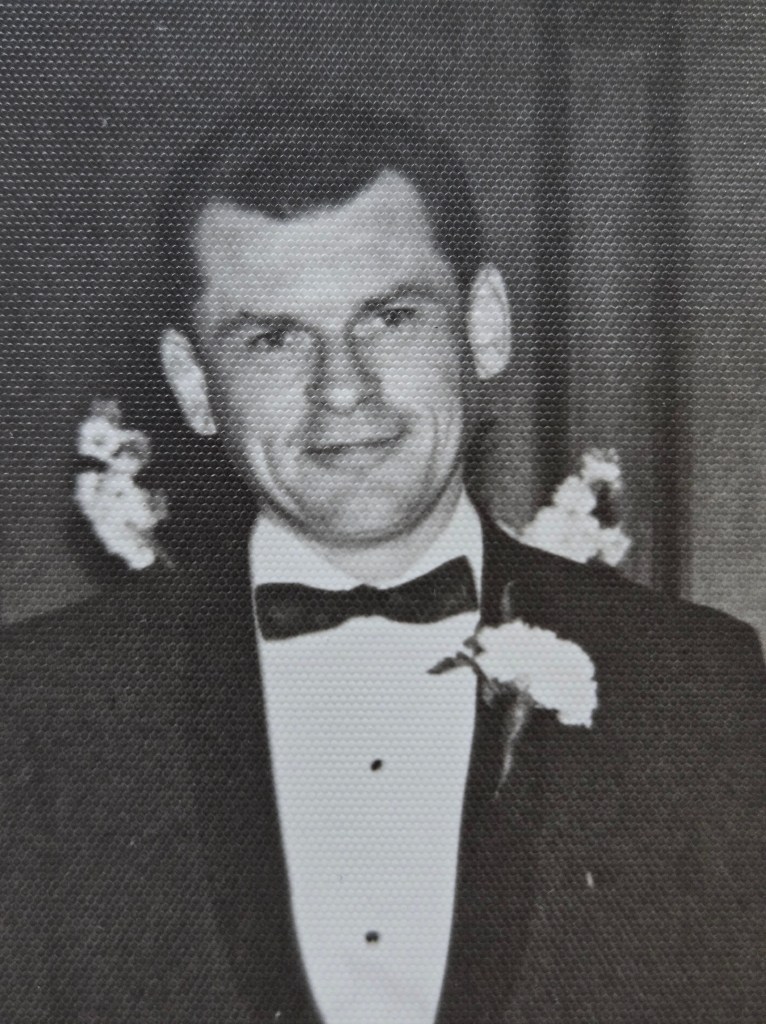
Donald Earl Evans 1926 – 2012

My stepfather, Don, loved three things in this life: my mother, fishing, and tinkering, especially under a car. Don adopted my two sisters and me when I was ten. He was boyish, enthusiastic, deeply in love with our mother, home from WWII (He’d joined the army at 17.), and excited to start his life. He always had a project going. Take the worm farm he built outside our front door. What ten-year-old isn’t fascinated with a worm farm? It was my job to carry out the scraps from dinner and to turn over the dirt. When it came time to go fishing, I got to fill a can with squirmy night crawlers.

Don always planted a vegetable garden. He’d give me a packet of radish seeds to sow because radishes come up fast. I witnessed the marvel of seeds. He put me in charge of weeding. After pulling weeds a few times in the hot sun, I suspected he had tricked me into doing the hard part of gardening. But I didn’t mind. I felt important.

He built new stairs for our house. I watched him saw pieces of plywood in a stair shape and then lay planks across the cuts. He leaned them against the garage where we could climb up and down. Next he added a picket fence to our yard, drilling the post holes, another curiosity for me to see. It seemed as if he could do anything.

Don bought a Webcor turntable, and Bozo the clown records that I listened to over and over.  

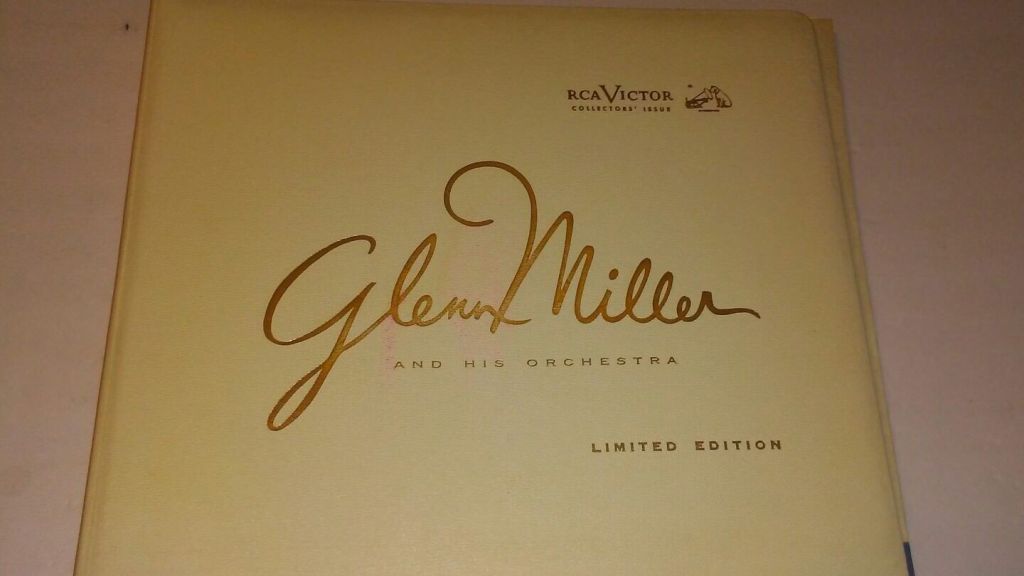
He loved Glen Miller, and gave our mother a gold embossed, white leather album of Miller’s greatest hits. Music filled our house in the evening. Don also loved cars. I once got to go with him to Cicero Avenue in Chicago to buy a Packard, his favorite automobile after the Olds.

I was the one Don took fishing. He taught me, by example, to sit in a boat or on the Lake Michigan pier, not talk, and fish all day. He once took me muskie fishing. We didn’t catch a thing, but a muskie followed the lure to our boat. These experiences were magic.

North Pier, Racine, Wisconsin

But over the course of my teen years, Don changed. He stopped making things, fixing his car, and fishing. Instead, he went to night school and worked his way from a tool and die maker to an engineer. He and my mother bought a bigger house; my mother took a fulltime job to finance their American dream. The new life was stressful, and instead of tinkering with something to offset that stress, he relied on a cocktail (and maybe two or three) at night. He developed an edge, and we three sisters avoided him. More than once, I heard our mother say,” I wish we could go back to where we started. He was happiest lying under a car fixing it. We don’t need all this.”

I can’t reliably pinpoint why, but Don lost his essential self, the things that made him Don, his unique creativity. My mother died, and Don lived to be 86. He spent his last few years at the VA hospital, where gradually I watched the curious side of Don return. For him, it was too late for fishing and tinkering, but for me, it was not too late to see the cost of pursuits that deny one’s essential self.

To me, Don is everyman, especially of his generation and veterans of WWII. He’s also a cautionary tale about losing yourself and straying from the things you love. I had the lesson of seeing the changes in Don, from creative young man, to striving type A, and back to a resigned acceptance of what is. Seeing these changes taught me to seek what is authentic in myself. I remember the first time I went to a counselor in my 60’s, and she asked me what my goal was. I told her I wanted to live an authentic life (I wasn’t sure I was, and I wanted to change before it was too late.).

In retirement, I’ve aspired to live authentically. Two books that have supported me are The Creative Age: Awakening Human Potential in the Second Half of Life by Gene D. Cohen, and The Not So Big Life: Making Room for What Really Mattersby Susan Susanka. They both argue that it’s never too late to find what you love and do it. Cohen says that creativity is built into us, not reserved for the young. Karen’s recent blog about the talents and contributions of older women highlights the ways we “elders” can manifest our creativity.

Susanka is more aligned with my personal focus, finding your essential self. I had the cautionary tale of Don in mind in early retirement, when I identified that as a child and a young married adult, I had loved to make things. At the time I was exploring my Norwegian roots, so I thought, why not rosemaling? A door opened to a latent artistic flare and to new friends.

The poet Maggie Smith has a writer’s perspective on creativity and authenticity. She advises staying “elastic” and open to surprise. When I sold our house and moved, I set Smith’s book, You Could Make This Place Beautiful front and center in my new apartment. I didn’t want to dwell on what I’d lost but rather on making my place beautiful and affirming what makes me me.

I believe Smith’s advice can be extended to our lives in retirement or at any time of life. We can make our lives beautiful in our own way. Accessing our essential selves, the things we love to do, our lifelong interests and talents outside of work, can be the foundation for surprising ourselves in retirement. What makes you you? I invite you to explore and enjoy.

Vulnerability 2: THIS IS IT

Less than three weeks ago, I was hit making a right turn from a freeway exit. I never saw the car until it slammed into the side of my car on the driver’s side and the airbag inflated—almost simultaneously. Wham! The airbag smacked the side of my head, stunning me. I was not sure if I was alive and if more was coming. I had to escape, get out of the car, see if I could stand, walk around. Make sure I was okay. In a Volkswagen, if the side airbag inflates, the others do too, so it took a frantic few seconds for me to figure out how to exit the car.

I’m okay; the car was totaled. In the warp speed of modern life, I already have a new vehicle, and I’m driving around with renewed caution. As I told one of my grandchildren, “Confident Karen has been compromised.” Yet again.

Maybe I’m telling this story because I need to keep telling it and telling it to take the power out of the memory. I’m also telling it here because it’s the perfect example of how physically vulnerable we are as human beings. Did you ever, as a child, step on an ant hill and crush both the ants and their home? I did. I felt powerful when I did it, but I also saw how fragile life is. I believe that experiences like this teach us, from childhood on, that we, too, are living things, and thus as physically vulnerable as the smallest ant.

Life can change in what seems like seconds. Sometimes there are clues but often we sidestep their importance. Take life threatening illnesses. Gary Stout complained of indigestion for a couple of months before finally seeing a doctor. In four days (which included the weekend), we had a terminal pancreatic cancer diagnosis. Jim Storm looked a bit yellow on our trip to Florida in spring of the year that he almost died from sepsis. I thought he was tanning too much; he thought he had the flu. He had a perforated ulcer that led to life-threatening sepsis.

Fortunately, such tragedies are not the norm, but admit it, modern life can be a jungle lurking with human versions of predators—unexpected bills, diseases in ourselves and loved ones, deaths, loss of jobs, threats of poverty or alcoholism, pandemic. What makes us different than animals, however, is our consciousness. We believe we can ward off predators with anticipatory actions, yet life deals surprises, aptly expressed by the word “accident.”

 In fact, as Erich Fromm writes: The price that man pays for consciousness is insecurity. He can stand his insecurity by being aware and accepting the human condition. . . He has no certainty; the only certain prediction he can make is: “I shall die.”

Here’s where emotional vulnerability comes in. Fromm proposes that humans develop a frame of orientation. We organize the world cognitively and emotionally, and we adapt. To me, that orientation is the human equivalent to the instincts that drive animals. Our vulnerability is not only physical, but there’s an emotional component, threats to our orientation, the meaning we are constantly making.

Here’s an example from my 6th grade. I was older than my classmates, and I was mortified when my unexpected breasts emerged before theirs. I thought everyone was staring at them. I hunched my shoulders forward and put a tee shirt under my clothes to hide them. It didn’t help that my mother took me to Zahn’s Department store to be fitted for a bra. I still recall the humiliation of the poking and pinching as she and the clerk said how perfect my breasts were. Really? Couldn’t they see my reddening face? Every day in school, I felt vulnerable, different, and fearful that I wouldn’t be accepted by my classmates, the other girls.

In her blog Vulnerability: What’s in a Word, Karen Rose described what I believe is one recourse for vulnerable beings on an unpredictable planet—the ability to share our vulnerability, so we are not alone with it. But it isn’t as easy as it sounds.

From protecting my budding breasts to protecting my adult insecurities, I’ve been a slow learner about emotional vulnerability. Jim Storm was a good role model, as he loved a good discussion. If I said, “We have to talk,” he was in. “Let’s” he’d answer smiling, sitting down in his favorite chair, folding his hands, and adopting his social worker mien. He listened and honored my inner truth, demonstrating that not only do we need our own courage to be vulnerable, but we can also open the door for others to do the same.

I’m reminded of the Robert Frost poem, A Servant to Servants, and the famous line, “The best way out is always through.” I have slowly wandered my way through this life being more and more willing to be vulnerable to people, emotionally.

Getting older is helpful. I realize, THIS IS IT. I may not get another chance to tell others that I love them, that they are full of baloney and I still love them, or that they are driving me nuts and I still love them. I’m not suggesting crossing boundaries, but simply owning my vulnerability, both physical and emotional. I’ve gradually learned that by plowing ahead, taking the risk of being vulnerable, I’ve both revealed new dimensions in relationships and also given others permission to be vulnerable to me. I can be there for others and myself.

To live is to be vulnerable, yet most of us want life to last as long as possible. Our physical vulnerability is offset by good surprises, babies, weddings, graduations, birthdays, our dream job. Even better are relationships filled with love, and this planet is ever glorious. So why not be vulnerable to others—you already are—and go through it together.

Dear Old Age

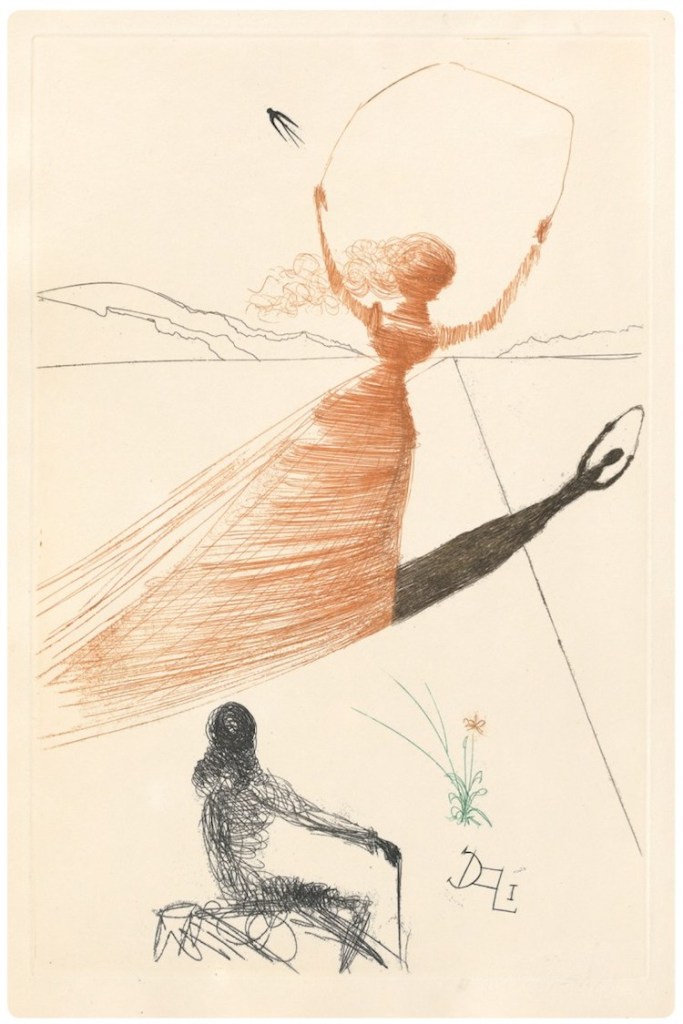
Savador Dali: Alice in Wonderland

April 20, 2025

Re: Old Age

Dear Old Age,

You snuck up on me. One day I was going to the gym three times a week, and the next I was shaky in the knees standing up in the morning. I give you credit—you attacked me in a vulnerable spot—the family weak knees. I can almost hear you gloating. “Those Evans/Jacobson women, they’re weak in knees. That’s where I’ll come for her.”

I recognize that weakness in the knees doesn’t always imply old. Plenty of younger people get knee replacements. But it’s a symptom, and if I could only fix the symptom, everything else would be fine. I wouldn’t be getting older, and worried that I won’t get to do all those things I still want to do.

I want move to Norway and live there. Go to the family farm, Vaagenes, and rent a cabin, long term. I’d even settle for that second home on Lake Michigan . Sadly, I’m not going to do that. Darn, Old Age, you stink. . . . . . . Heh, wait, I got to live in Salzburg for three months just a few years ago. I stayed in a Zimmer with a tiny kitchen, bath, puffy duvet, and a big window with no screens and tiny, biting mosquitos. I ate boiled eggs every morning, a gift from the chickens cackling below that window. I do know what it is to live somewhere completely alone and in a foreign place! I do know that I can adjust to the new and learn about different cultures. Ha Ha – fooled you Old Age!

What about that dream of bicycling the North Shore, carrying camping gear, finding a secluded spot and setting up a tent in the evening? Of course, I still want to do that. I’ve never camped. We’d (notice I’m not alone—there must be another lover in here somewhere) sleep under the stars, fish for our dinner, and make love in a sleeping bag. Okay, it’s not going to happen for so many reasons, but don’t forget the Parkway and Lake Nokomis, my happy places where I biked with abandon. Been there, and almost done that, Old Age!

I’ve always wanted to turn a manicured, pesticide polluted lawn into a habitat for pollinators. I’d thumb my nose at my neighbors letting that residue drain into the beautiful lakes and streams we have in Minnesota. Old Age, gotcha again—I turned our lawn into a field of clover, seeding it summer after summer until the plants matured and bloomed into a home for the birds and the bees. I once saw a flock of flickers land and pillage the soil for healthy worms.

Another thing, I could get married—again—have the storybook ending this time. We’d meet, fall in love quickly, never argue, and agree on the same TV shows. As we near death, we’ll hold hands, serene as we fade away. Okay, three’s supposed to be the charm, but I might need four tries at marriage. I know, it’s a silly idea, but nothing was silly about being married the first three times. I had children, grandchildren. I held hands in movies, cuddled before falling asleep, wrestled over bills and where to live and how to live. I comforted lovers, and they comforted me. So, Old Age, look at all the love I’ve had along the way.

There are so many different lives I could have had in this amazing world –become a Buddhist, live off the grid, move to DC and protest. I want to try them all, but I’m running out of time.

Okay, Old Age.  I concede. I’m probably not going to live in Norway, or bicycle and camp under the stars. I never was a gardener—I detest getting my hands dirty. As for a fourth marriage, not sure I have the energy. I’m not interested in fighting, Old Age. Truce. . .     I actually like the life that I have, even if I want all the other experiences too.  I can even accept getting old, if you help me use it to build something different, something equally new, even if it doesn’t look flashy from the outside. I’m still here. Include me, inspire me, and I’ll always show up.

Love, Karen

Loneliness

Loneliness. . . that feeling of isolation you don’t know how to change. Advice abounds: join a group, call a friend for coffee, get a hobby, and of course, find a purpose. . . but you can’t seem to make yourself do those things. It’s your own fault you feel lonely. You need to shut off the TV, get off the couch, and stare down loneliness. You stay stuck in feelings, not the solution. Solutions are for math class. You long for the ideas of others, their insights about the world. You wish someone would call, but they don’t. You’re so tired of hearing nothing but your own mental chatter.

The surgeon general says we have an epidemic of loneliness, defined as an objective state “of having no one around or of being by oneself for protracted periods of time.” That’s you. In the UK, 49.63% of adults and in the US, one out of two adults report feeling lonely. You’re not alone after all. Half of the world is with you. You tell yourself, “Humans are inherently alone. Everyone knows that.”

 “Maybe I’ll go to the grocery store,” you think—there’s no one to say this aloud to. You don’t need groceries. You don’t really care about cooking and eating except as appeasements to hunger. Regardless of what the Mayo Clinic says about not watching TV when you eat, you do like to sit in front of it and have dinner. Antiques Roadshow, people like you, many are antiques themselves, rooting around in attics hoping for a windfall.

And they talk. “Maybe you should go to the grocery store and get yourself something special for dinner,” that blabbermouth in your head does tend to repeat herself.

You’re a tad ashamed of your self-absorbed loneliness. Look at Helen Mirren. She’s alone and she’s not lonely. She takes responsibility for herself—like you should. She reframes being alone as solitude, and it’s her choice. “Does having a choice make a difference?” you wonder. Mirren notes:

One of the great gifts of growing older is to discover the exquisite art of being alone. What used to be an uncomfortable silence, is now a luxury. The house is peaceful, and I can dance in the kitchen without being judged or just doing nothing. My best company is myself, with a coffee, a good movie and the freedom to be, because solitude is not absence, it is fullness and peace of mind.

You resolve to reframe your loneliness as solitude.

Maybe you could write a journal, like Amy Tan’s The Backyard Bird Chronicles. People would flock to your door. “That probably won’t happen,” your inner voice tells you. “You no longer have a bird feeder.” Sometimes that voice does say something worth listening to.

A few days later it rains. Streaks of water coat the windows, making everything outside blurry. It’s one of those 48° chilling rains. No grocery store visit today. You’re still on a Helen Mirren kick, so you make some tea (which you don’t really like but it works for the Brits), and you decide to reread May Sarton’s Journal of a Solitude. Maybe it has some hints for reframing.

Sarton describes solitude as a retreat from the demands of others, a way to find the “rocky depths” of her personality, a chance to do inward work to understand herself.  She argues that we have to make myths of our lives. . . to yield further insight into what it is to be alive, to be a human being. “Maybe I’ll be Emily Dickenson,” you think. Sarton explains:

My experience of great solitude is that its character is unstable—at times exalts and fortifies then soon beats down, and throws one into a starving and thirsty state. (Does that mean you should go to the grocery store?)

You’re more drawn to Sarton’s solitude than Mirren’s, who makes it sound like tea and a biscuit. Sarton sees personal growth in solitude and she doesn’t sugar coat it. Knowing ourselves can be painful, but you’ve always been willing.

That said, you’ve read all of May Sarton’s journals, and you know the truth about her. She maintained a huge correspondence with admirers and entertained a stream of visitors—friends, hired help, and readers—such that she lamented about how tired they made her. Is that really solitude?

The days roll on. You fill out questionnaires in self-help books, hoping to find your purpose. You grocery shop, watching people. You eat dinner and guess the answers for Jeopardy, although you’re not as quick as you used to be—but what 80-year-old knows the names of rap artists anyhow? Finally, it’s bedtime. Two cats vie for a spot on the bed—see, you do have company. You read a self-help book with another one of those questionnaires and then settle in with something entertaining. A whiff of Pranarōm’s Sleep Aid and you’re off to dreamland, full of people and adventures, wild car rides, trips with significant others, not being able to run when you need to, flying (that’s my favorite—wouldn’t you love to fly?). Dreamland. It’s a place where you are never lonely.

Dear Readers.

I am not lonely. I have a passionate engagement with a rosemaling group, volunteer work I love, two writers’ groups, church, friends, and an attentive family. I have, however, had lonely times in my life, so I know what it is like. I worry that our society blames the lonely person, puts it on them to find a way out. So, if you know someone that you suspect is lonely, offer a hand up from that swamp. Call them up. Share your thoughts about something of interest. Connect.

All the lonely people, where do they all come from…

 (Paul McCartney)