
Loneliness. . . that feeling of isolation you don’t know how to change. Advice abounds: join a group, call a friend for coffee, get a hobby, and of course, find a purpose. . . but you can’t seem to make yourself do those things. It’s your own fault you feel lonely. You need to shut off the TV, get off the couch, and stare down loneliness. You stay stuck in feelings, not the solution. Solutions are for math class. You long for the ideas of others, their insights about the world. You wish someone would call, but they don’t. You’re so tired of hearing nothing but your own mental chatter.
The surgeon general says we have an epidemic of loneliness, defined as an objective state “of having no one around or of being by oneself for protracted periods of time.” That’s you. In the UK, 49.63% of adults and in the US, one out of two adults report feeling lonely. You’re not alone after all. Half of the world is with you. You tell yourself, “Humans are inherently alone. Everyone knows that.”
“Maybe I’ll go to the grocery store,” you think—there’s no one to say this aloud to. You don’t need groceries. You don’t really care about cooking and eating except as appeasements to hunger. Regardless of what the Mayo Clinic says about not watching TV when you eat, you do like to sit in front of it and have dinner. Antiques Roadshow, people like you, many are antiques themselves, rooting around in attics hoping for a windfall.
And they talk. “Maybe you should go to the grocery store and get yourself something special for dinner,” that blabbermouth in your head does tend to repeat herself.
You’re a tad ashamed of your self-absorbed loneliness. Look at Helen Mirren. She’s alone and she’s not lonely. She takes responsibility for herself—like you should. She reframes being alone as solitude, and it’s her choice. “Does having a choice make a difference?” you wonder. Mirren notes:
One of the great gifts of growing older is to discover the exquisite art of being alone. What used to be an uncomfortable silence, is now a luxury. The house is peaceful, and I can dance in the kitchen without being judged or just doing nothing. My best company is myself, with a coffee, a good movie and the freedom to be, because solitude is not absence, it is fullness and peace of mind.
You resolve to reframe your loneliness as solitude.
Maybe you could write a journal, like Amy Tan’s The Backyard Bird Chronicles. People would flock to your door. “That probably won’t happen,” your inner voice tells you. “You no longer have a bird feeder.” Sometimes that voice does say something worth listening to.
A few days later it rains. Streaks of water coat the windows, making everything outside blurry. It’s one of those 48° chilling rains. No grocery store visit today. You’re still on a Helen Mirren kick, so you make some tea (which you don’t really like but it works for the Brits), and you decide to reread May Sarton’s Journal of a Solitude. Maybe it has some hints for reframing.

Sarton describes solitude as a retreat from the demands of others, a way to find the “rocky depths” of her personality, a chance to do inward work to understand herself. She argues that we have to make myths of our lives. . . to yield further insight into what it is to be alive, to be a human being. “Maybe I’ll be Emily Dickenson,” you think. Sarton explains:
My experience of great solitude is that its character is unstable—at times exalts and fortifies then soon beats down, and throws one into a starving and thirsty state. (Does that mean you should go to the grocery store?)
You’re more drawn to Sarton’s solitude than Mirren’s, who makes it sound like tea and a biscuit. Sarton sees personal growth in solitude and she doesn’t sugar coat it. Knowing ourselves can be painful, but you’ve always been willing.
That said, you’ve read all of May Sarton’s journals, and you know the truth about her. She maintained a huge correspondence with admirers and entertained a stream of visitors—friends, hired help, and readers—such that she lamented about how tired they made her. Is that really solitude?
The days roll on. You fill out questionnaires in self-help books, hoping to find your purpose. You grocery shop, watching people. You eat dinner and guess the answers for Jeopardy, although you’re not as quick as you used to be—but what 80-year-old knows the names of rap artists anyhow? Finally, it’s bedtime. Two cats vie for a spot on the bed—see, you do have company. You read a self-help book with another one of those questionnaires and then settle in with something entertaining. A whiff of Pranarōm’s Sleep Aid and you’re off to dreamland, full of people and adventures, wild car rides, trips with significant others, not being able to run when you need to, flying (that’s my favorite—wouldn’t you love to fly?). Dreamland. It’s a place where you are never lonely.
Dear Readers.
I am not lonely. I have a passionate engagement with a rosemaling group, volunteer work I love, two writers’ groups, church, friends, and an attentive family. I have, however, had lonely times in my life, so I know what it is like. I worry that our society blames the lonely person, puts it on them to find a way out. So, if you know someone that you suspect is lonely, offer a hand up from that swamp. Call them up. Share your thoughts about something of interest. Connect.
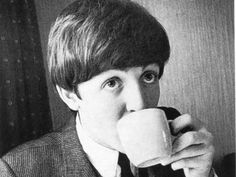
All the lonely people, where do they all come from…
(Paul McCartney)
 Karens' Descant
I liked this one quite a bit, Karen. Well done.
LikeLike
Thank you, Mary.
LikeLike
I’m not so much lonely just depressed and angry about our government! Also I’m having a hard time forgiving friends and family who voted for Trump.Sent from my iPad
LikeLike
I hear you! Today’s siding with Russia over who started the Ukrainian war was despicable.
LikeLike
You’ve really captured the essence of loneliness—at least the forms I’ve experienced.
I agree our culture still finds a way to blame the lonely person. We all bear some responsibility for our happiness, but I think we also have been taught unrealistic expectations— we’re not taught to expect or cope with loneliness, which makes it even harder when it occurs.
This piece is a good PSA. I’m glad it isn’t your current state. I do hope you’ll have time to catch up about our Tucson experiences. M and F are good for me, and I’ll be back this weekend.
LikeLike
Thanks, Ellen, I’m not sure what a PSA is?? Yes, to all above!
LikeLike